Kirjojen hintavertailu. Mukana 12 392 219 kirjaa ja 12 kauppaa.

Kirjahaku

Etsi kirjoja tekijän nimen, kirjan nimen tai ISBN:n perusteella.

1000 tulosta hakusanalla Keith D Graham

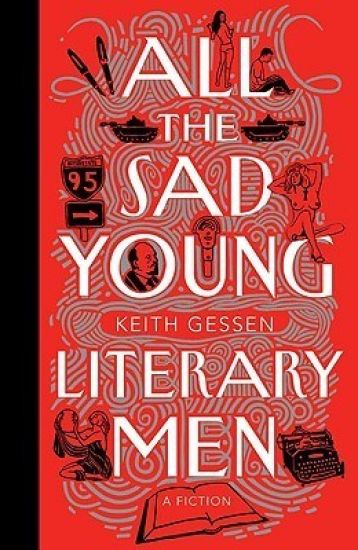
All the Sad Young Literary Men

All the Sad Young Literary Men

Keith Gessen

PENGUIN BOOKS
2009
nidottu
By the author of A Terrible Country and Raising Raffi, a novel of love, sadness, wasted youth, and literary and intellectual ambition--"wincingly funny" (Vogue) Keith Gessen is a brave and trenchant new literary voice. Known as an award-winning translator of Russian and a book reviewer for publications including The New Yorker and The New York Times, Gessen makes his debut with this critically acclaimed novel, a charming yet scathing portrait of young adulthood at the opening of the twenty-first century. The novel charts the lives of Sam, Mark, and Keith as they overthink their college years, underthink their love lives, and struggle to find a semblance of maturity, responsibility, and even literary fame.
The Secret History of MI6, 1909-1949

The Secret History of MI6, 1909-1949

Keith Jeffery

PENGUIN BOOKS
2011
nidottu
The authorized history of the world's oldest and most storied foreign intelligence service, drawing extensively on hitherto secret documents. Britain's Special Intelligence Service, commonly called MI6, is not only the oldest and most storied foreign intelligence unit in the world--it is also the only one to open its archives to an outside researcher. The result, in this authorized history, is an unprecedented and revelatory look at an organization that essentially created, over the course of two world wars, the modern craft of spying. Here are the true stories that inspired Ian Fleming's James Bond's novels and John le Carr George Smiley novels. Examining innovations from invisible ink and industrial-scale cryptography to dramatic setbacks like the Nazi sting operations to bag British operatives, this groundbreaking history is as engrossing as any thriller--and much more revealing.
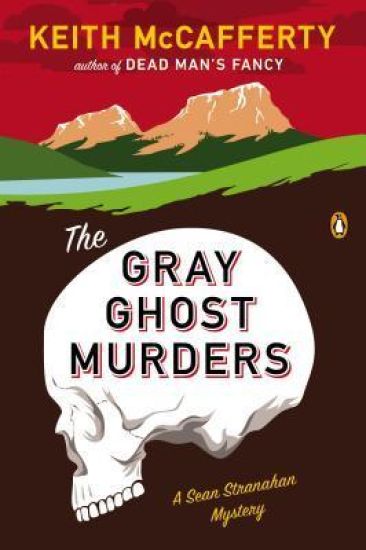
The Gray Ghost Murders

The Gray Ghost Murders

Keith McCafferty

Penguin USA
2013
pokkari
Cold Hearted River, the sixth in the series, is now available. “Truly wonderful. . . . A mystery that unfolds with grace and humor against a setting of stunning beauty and danger.” —Nevada Barr, New York Times bestselling author of the Anna Pigeon MysteriesThe Gray Ghost Murders is the second novel in the acclaimed Sean Stranahan mystery seriesFourteen months after moving to Montana, fly fisherman, painter, and sometime private detective Sean Stranahan is still sleeping in his office-cum-art-studio, but he's no longer a newcomer. He now knows the rivers and has a new sweetheart, Martinique. And when the bear-ravaged remains of two men are found on Sphinx Mountain, Sheriff Martha Ettinger once more turns to Stranahan for help in solving what smells like murder. Meanwhile, he's also been hired by a group of eccentric fishermen to find their valuable, and possibly stolen, Gray Ghost fly. Could the theft be connected to the gray ghosts haunting the mountain? To find out, Stranahan will cross paths, and arms, with some of the most powerful people in the Madison Valley.
Dead Man's Fancy

Dead Man's Fancy

Keith McCafferty

Penguin USA
2015
pokkari
The third novel starring Montana's favorite fly fisherman-cum-detective Sean Stranahan, for fans of Craig Johnson and C. J. Box.Cold Hearted River, the sixth in the series, is forthcoming from Viking. Wolves howl as a riderless horse returns at sunset to the Culpepper Dude Ranch in the Madison Valley. The missing woman, Nanika Martinelli, is better known as the Fly Fishing Venus, a red-haired river guide who lures clients the way dry flies draw trout. As Sheriff Martha Ettinger follows hoof tracks in the snow, she finds one of the men who has fallen under the temptress's spell impaled on the antler tine of a giant bull elk, a kill that's been claimed by a wolf pack. An accident? If not, is the killer human or animal? With painter, fly fisherman, and sometimes private detective Sean Stranahan's help, Ettinger will follow clues that point to an animal rights group called the Clan of the Three-Clawed Wolf and to their svengali master, whose eyes blaze with pagan fire. In their most dangerous adventure yet, Stranahan and Ettinger find themselves in the crossfire of wolf lovers, wolf haters, and a sister bent on revenge, and on the trail of an alpha male gone terribly wrong.
Buffalo Jump Blues

Buffalo Jump Blues

Keith McCafferty

Penguin USA
2017
nidottu
In the fifth novel in the Sean Stranahan mystery series, Montana's favorite fly fisherman-detective tackles a case of lost love, murder, and wildlife politics. Cold Hearted River, the sixth in the series, is now available. "Keith McCafferty is a top-notch, first-rate, can't-miss novelist."--C.J. Box, #1 New York Times bestselling author In the wake of Fourth of July fireworks in Montana's Madison Valley, Hyalite County sheriff Martha Ettinger and Deputy Sheriff Harold Little Feather investigate a horrific scene at the Palisades cliffs, where a herd of bison have fallen to their deaths. Victims of blind panic caused by the pyrotechnics, or a ritualistic hunting practice dating back thousands of years? The person who would know is beyond asking, an Indian man found dead among the bison, his leg pierced by an arrow. Farther up the valley, fly fisherman, painter, and sometime private detective Sean Stranahan has been hired by the beautiful Ida Evening Star, a Chippewa Cree woman who moonlights as a mermaid at the Trout Tails Bar & Grill, to find her old flame, John Running Boy. The cases seem unrelated--until Sean's search leads him right to the brink of the buffalo jump. With unforgettable characters and written with Spur Award Winner Keith McCafferty's signature grace and wry humor, Buffalo Jump Blues weaves a gripping tale of murder, wildlife politics, and lost love.
Cold Hearted River

Cold Hearted River

Keith Mccafferty

Penguin USA
2018
nidottu
In the sixth novel in the acclaimed Sean Stranahan mystery series, Montana's favorite detective finds himself on the trail of Ernest Hemingway's missing steamer trunk. “Keith McCafferty is a top-notch, first-rate, can’t-miss novelist.”—C.J. Box, #1 New York Times bestselling author When a woman goes missing in a spring snowstorm and is found dead in a bear's den, Sheriff Martha Ettinger reunites with her once-again lover Sean Stranahan to investigate. In a pannier of the dead woman's horse, they find a wallet of old trout flies, the leather engraved with the initials EH. Only a few days before, Patrick Willoughby, the president of the Madison River Liars and Fly Tiers Club, had been approached by a man selling fishing gear that he claimed once belonged to Ernest Hemingway. A coincidence? Sean doesn't think so, and he soon finds himself on the trail of a stolen trunk rumored to contain not only the famous writer's valuable fly fishing gear but priceless pages of unpublished work. The investigation will take Sean through extraordinary chapters in Hemingway's life. Inspired by a true story, Cold Hearted River is a thrilling adventure, moving from Montana to Michigan, where a woman grapples with the secrets in her heart, to a cabin in Wyoming under the Froze To Death Plateau, and finally to the ruins in Havana, where an old man struggles to complete his life's mission one true sentence at a time.
The Broken Ladder: How Inequality Affects the Way We Think, Live, and Die
"A persuasive and highly readable account." --President Barack Obama "Brilliant. . . . an important, fascinating read arguing that inequality creates a public health crisis in America." --Nicholas Kristof, New York Times "The Broken Ladder is an important, timely, and beautifully written account of how inequality affects us all." --Adam Alter, New York Times bestselling author of Irresistible and Drunk Tank Pink A timely examination by a leading scientist of the physical, psychological, and moral effects of inequality. The levels of inequality in the world today are on a scale that have not been seen in our lifetimes, yet the disparity between rich and poor has ramifications that extend far beyond mere financial means. In The Broken Ladder psychologist Keith Payne examines how inequality divides us not just economically; it also has profound consequences for how we think, how we respond to stress, how our immune systems function, and even how we view moral concepts such as justice and fairness. Research in psychology, neuroscience, and behavioral economics has not only revealed important new insights into how inequality changes people in predictable ways but also provided a corrective to the flawed view of poverty as being the result of individual character failings. Among modern developed societies, inequality is not primarily a matter of the actual amount of money people have. It is, rather, people's sense of where they stand in relation to others. Feeling poor matters--not just being poor. Regardless of their average incomes, countries or states with greater levels of income inequality have much higher rates of all the social maladies we associate with poverty, including lower than average life expectancies, serious health problems, mental illness, and crime. The Broken Ladder explores such issues as why women in poor societies often have more children, and why they have them at a younger age; why there is little trust among the working class in the prudence of investing for the future; why people's perception of their social status affects their political beliefs and leads to greater political divisions; how poverty raises stress levels as effectively as actual physical threats; how inequality in the workplace affects performance; and why unequal societies tend to become more religious. Understanding how inequality shapes our world can help us better understand what drives ideological divides, why high inequality makes the middle class feel left behind, and how to disconnect from the endless treadmill of social comparison.
Hide and Snake

Hide and Snake

Keith Baker

Houghton Mifflin
1995
nidottu
In this amusing picture book, a colorful snake challenges children to find him as he slithers through pages of familiar objects.'Baker's elaborate acrylic designs, variety of lush hues, and sly wit provide a feast for the eyes while maintaining the cohesive personality of the book from page to page.'--Publishers Weekly
The Magic Fan

The Magic Fan

Keith Baker

Clarion Books
1997
nidottu
When Yoshi, a remarkable young Japanese builder, runs out of ideas, a magic fan inspires him with new projects. It is only after losing the fan that Yoshi discovers he can depend on his own imagination after all. "Fan-shaped cutout pages are splendid enhancements to this well-designed, stylish tale."--Publishers Weekly
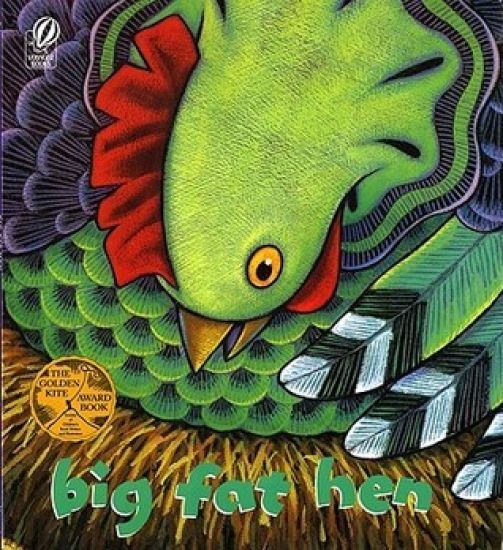
Big Fat Hen

Big Fat Hen

Keith Baker

Houghton Mifflin
1999
nidottu
One, two, buckle my shoe. Three, four, shut the door . . . . Nine, ten, big fat hen Now young children can enjoy a popular nursery rhyme and learn to count, too. Keith Baker's delightful illustrations filled with eggs and chicks (and bugs) are sure to tickle little ones for hours of read-aloud fun.
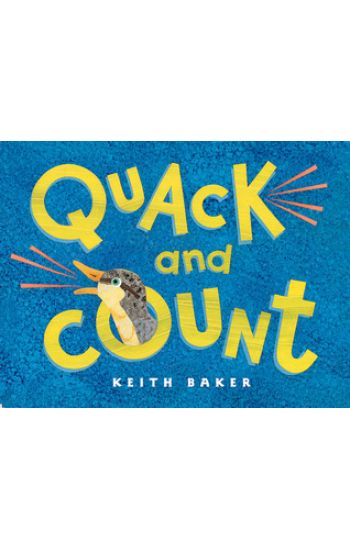
Quack and Count

Quack and Count

Keith Baker

Clarion Books
2003
sidottu
Slip, slide, leap, and dive with a family of seven lively ducklings as they get ready to fly for the very first time. It's an adventure little ones will want to recount again and again
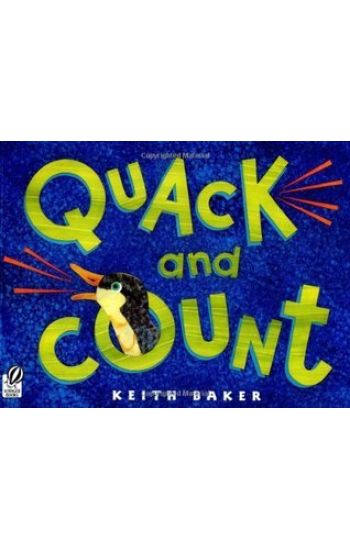
Quack and Count

Quack and Count

Keith Baker

Clarion Books
2004
nidottu
Slip, slide, leap, and dive with a family of seven lively ducklings as they get ready to fly for the very first time. Keith Baker's playful, rhyming text and bold collage illustrations capture the excitement of a day's adventures--and gently introduce counting.
Hickory Dickory Dock

Hickory Dickory Dock

Keith Baker

Harcourt Children's Books
2007
sidottu
This clever twist on the Mother Goose rhyme introduces youngsters to counting and telling time by following a variety of animals as they each react to the clock as it strikes one through twelve.
Songs for "Great Leaders"

Songs for "Great Leaders"

Keith Howard

Oxford University Press Inc
2020
sidottu
Famously reclusive and secretive, North Korea can be seen as a theatre that projects itself through music and performance. The first book-length account of North Korean music and dance in any language other than Korean, Songs for "Great Leaders" pulls back the curtain on this theatre for the first time.Renowned ethnomusicologist Keith Howard moves from the first songs written in the northern part of the divided Korean peninsula in 1946 to the performances in February 2018 by a North Korean troupe visiting South Korea for the Pyeongchang Winter Olympic Games. Through an exceptionally wide range of sources and a perspective of deep cultural competence, Howard explores old revolutionary songs and new pop songs, developments of Korean instruments, the creation of revolutionary operas, and massspectacles, as well as dance and dance notation, and composers and compositions. The result is a nuanced and detailed account of how song, together with other music and dance production, forms the soundtrack to the theater of daily life, embedding messages that tell the official history, the exploitsof leaders, and the socialist utopia yet-to-come. Based on fieldwork, interviews, and resources in private and public archives and libraries in North Korea, South Korea, China, North America and Europe, Songs for "Great Leaders" opens up the North Korean regime in a way never before attempted or possible.
The Economy of the Word

The Economy of the Word

Keith Tribe

Oxford University Press Inc
2015
sidottu
It was only in the sixteenth century that texts began to refer to the significance of "economic activity"---of sustaining life. This was not because the ordinary business of life was thought unimportant, but because the principles governing economic conduct were thought to be obvious or uncontroversial. The subsequent development of economic writing thus parallels the development of capitalism in Western Europe. From the seventeenth to the twenty-first century there has been a constant shift in content, audience, and form of argument as the literature of economic argument developed. This book proposes that to understand the various forms that economic literature has taken, we need to adopt a more literary approach in economics specifically, to adopt the instruments and techniques of philology. This way we can conceive the history of economic thought to be an on-going work in progress, rather than the story of the emergence of modern economic thinking. This approach demands that we pay attention to the construction of particular texts, showing the work of economic argument in different contexts. In sum, we need to pay attention to the economy of the word. ^l The Economy of the Word is divided into three parts. The first explains what the term economy has meant from Antiquity to Modernity, coupling this conceptual history with an examination of how the idea of national income was turned into a number during the first half of the twentieth century. The second part is devoted to Adam Smith's Wealth of Nations, considering first the manner in which Smith deals with international trade, and then the way in which the book was read in the course of the nineteenth century. Part III examines the sources used by Karl Marx and Léon Walras in developing their economic analysis, drawing attention to their shared intellectual context in French political economy.
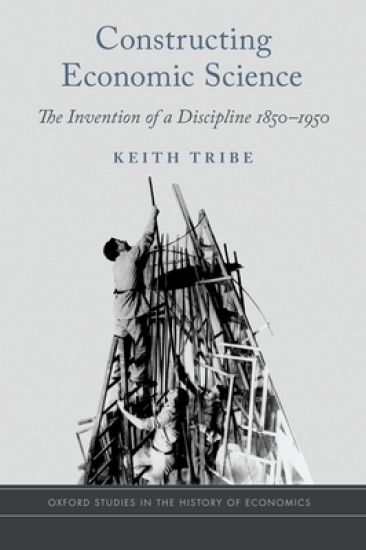
Constructing Economic Science

Constructing Economic Science

Keith Tribe

OXFORD UNIVERSITY PRESS INC
2022
sidottu
An accessible account of the role of the modern university in the creation of economics During the late nineteenth century concerns about international commercial rivalry were often expressed in terms of national provision for training and education, and the role of universities in such provision. It was in this context that the modern university discipline of economics emerged. The first undergraduate economics program was inaugurated in Cambridge in 1903; but this was merely a starting point. Constructing Economic Science charts the path through commercial education to the discipline of economics and the creation of an economics curriculum that could then be replicated around the world. Rather than describing this transition epistemologically, as a process of theoretical creation, Keith Tribe shows how the new "science" of economics was primarily an institutional creation of the modern university. He demonstrates how finance, student numbers, curricula, teaching, new media, the demands of employment, and more broadly, the international perception that industrializing economies required a technically-skilled workforce, all played their part in shaping economics as we know it today. This study explains the conditions originally shaping the science of economics, providing in turn a foundation for an understanding of the way in which this new language transformed public policy.
How Cancer Crossed the Color Line

How Cancer Crossed the Color Line

Keith Wailoo

Oxford University Press Inc
2017
nidottu
In the course of the 20th century, cancer went from being perceived as a white woman's nemesis to a "democratic disease" to a fearsome threat in communities of color. Drawing on film and fiction, on medical and epidemiological evidence, and on patients' accounts, Keith Wailoo tracks this transformation in cancer awareness, revealing how not only awareness, but cancer prevention, treatment, and survival have all been refracted through the lens of race. Spanning more than a century, the book offers a sweeping account of the forces that simultaneously defined cancer as an intensely individualized and personal experience linked to whites, often categorizing people across the color line as racial types lacking similar personal dimensions. Wailoo describes how theories of risk evolved with changes in women's roles, with African-American and new immigrant migration trends, with the growth of federal cancer surveillance, and with diagnostic advances, racial protest, and contemporary health activism. The book examines such powerful and transformative social developments as the mass black migration from rural south to urban north in the 1920s and 1930s, the World War II experience at home and on the war front, and the quest for civil rights and equality in health in the 1950s and '60s. It also explores recent controversies that illuminate the diversity of cancer challenges in America, such as the high cancer rates among privileged women in Marin County, California, the heavy toll of prostate cancer among black men, and the questions about why Vietnamese-American women's cervical cancer rates are so high. A pioneering study, How Cancer Crossed the Color Line gracefully documents how race and gender became central motifs in the birth of cancer awareness, how patterns and perceptions changed over time, and how the "war on cancer" continues to be waged along the color line.
Exemplars of Truth

Exemplars of Truth

Keith Lehrer

Oxford University Press Inc
2019
sidottu
This monograph is both an intellectual summation as well as a philosophical advancement of key themes of the work of Keith Lehrer on several key topics--including knowledge, self-trust, autonomy, and consciousness. He here attempts to integrate these themes and develop an intellectual system that can constructively solve philosophical problems. The system is indebted to the modern work of Sellars, Quine, and Chisholm, as well as historically to Hume and Reid. At the core of this system lies Lehrer's theory of knowledge, which he previously called a coherence theory of knowledge but now calls a defensibility theory. Lehrer argues that knowledge requires the capacity to justify or defend the target claim of knowledge in terms of a background system. Defensibility is an internal capacity supplied by that system to meet objections to the claim. This theory however leaves open the problem of "experience"--noted by other philosophers--i.e. how to explain the special role of experience in a background system even granted we are fallible in describing it. Lehrer offers a solution to the problem of experience, arguing that reflection on experience converts the experience itself into an exemplar, something like a sample that becomes a vehicle or term of representation. The exemplar represents itself and extends to represent the external world. It exhibits something about evidence and truth concerning experience that, as Wittgenstein noted, cannot be fully described but can only be shown. Exemplar representation is the missing link of a background system to truth about the world.