Kirjojen hintavertailu. Mukana 11 627 363 kirjaa ja 12 kauppaa.

Kirjahaku

Etsi kirjoja tekijän nimen, kirjan nimen tai ISBN:n perusteella.

1000 tulosta hakusanalla Keith G. Laufenberg

Fireflies

Fireflies

Keith Carter

University of Texas Press
2009
sidottu
In Fireflies, Keith Carter presents a magical gallery of photographs of children and the world they inhabit. The collection includes both new work and iconic images such as "Fireflies," "The Waltz," "Chicken Feathers," "Megan's New Shoes," and "Angel" selected from all of Carter's rare and out-of-print books. When making these images, Carter often asked the children, "do you have something you would like to be photographed with?" This creative collaboration between photographer and subject has produced images that conjure up stories, dreams, and imaginary worlds. Complementing the photographs is an essay in which Carter poetically traces the wellsprings of his interest in photographing children to his own childhood experiences in Beaumont, Texas. As he recalls days spent exploring in the woods and creeks, it becomes clear that his art flows from a deep reservoir of sights and sounds imprinted in early childhood. A lyrical meditation on the joys, wonders, and anxieties of childhood, Fireflies brings us back to the small truths that are often pushed aside or forgotten when we become adults.
From Uncertain to Blue

From Uncertain to Blue

Keith Carter

University of Texas Press
2011
sidottu
"In the beginning, there was no real plan, just a road trip that became a journey." In the years 1986 and 1987, Keith Carter and his wife, Patricia, visited one hundred small Texas towns with intriguing names like Diddy Waw Diddy, Elysian Fields, and Poetry. He says, "I tried to make my working method simple and practical: one town, one photograph. I would take several rolls of film but select only one image to represent that dot on my now-tattered map. The titles of the photographs are the actual names of the small towns. . . ." Carter created a body of work that evoked the essence of small-town life for many people, including renowned playwright and fellow Texan, Horton Foote. In 1988, Carter published his one town/one picture collection in From Uncertain to Blue, a landmark book that won acclaim both nationally and internationally for the artistry, timelessness, and universal appeal of its images-and established Carter as one of America's most promising fine art photographers.Now a quarter century after the book's publication, From Uncertain to Blue has been completely re-envisioned and includes a new essay in which Carter describes how the search for photographic subjects in small towns gradually evolved into his first significant work as an artist. He also offers additional insight into his creative process by including some of his original contact sheets. And Patricia Carter gives her own perspective on their journey in her amplified notes about many of the places they visited as they discovered the world of possibilities from Uncertain to Blue.
Landowners in Colonial Peru

Landowners in Colonial Peru

Keith A. Davies

University of Texas Press
1984
nidottu
In 1540 a small number of Spaniards founded the city of Arequipa in southwestern Peru. These colonists, later immigrants, and their descendants devoted considerable energy to exploiting the surrounding area. At first, like many other Spaniards in the Americas, they relied primarily on Indian producers; by the late 1500s they had acquired land and established small farms and estates. This, the first study to examine the agrarian history of a region in South America from the mid-sixteenth through late-seventeenth century, demonstrates that colonials exploited the countryside as capitalists. They ran their rural enterprises as efficiently as possible, expanded their sources of credit and labor, tapped widespread markets, and lobbied strenuously to influence the royal government. The reasons for such behavior have seldom been explored beyond the colonists’ evident need to sustain themselves and their dependents.Arequipa’s case suggests another fundamental cause of capitalist behavior in colonial South America: rural wealth was inextricably tied to the colonists’ desire to reinforce and improve their stature. Arequipa’s Spanish families of the upper and middle social levels consistently employed land and its proceeds to attract prominent spouses, to acquire prestigious political and military posts, and to enhance their standing by becoming benefactors of the Church. They rarely lost sight of the crucial role that wealth played in their lives. Thus, when the region’s economy flourished, as it did during the late 1500s, they expanded and improved their holdings. When it faltered at the beginning of the next century, they made every effort to retain properties, even fragmenting land to accommodate family members and new spouses. Unlike patterns sometimes suggested for Spanish America, many Arequipan colonial families possessed land and retained it over many generations. Neither the increasingly rich Church nor a few powerful persons managed to build up extensive estates.Landowners in Colonial Peru explains how and why rural property became so important. It emphasizes both the capitalist bent of Hispanics and the manner in which wealth served social aspirations. The approach makes clear that many of the economic and social characteristics so often attributed to eighteenth- and nineteenth-century Latin Americans were present from the early Colonial period.
Montana Justice

Montana Justice

Keith Edgerton

University of Washington Press
2004
pokkari
Since the days of the wild West, Montanans have struggled to be "tough on crime" with limited resources. During Montana's early territorial years, "criminal justice" was almost nonexistent: a few towns had inadequate and chronically overcrowded jails; occasional prisoners were sent east to the federal penitentiary in Detroit; and vigilantes summarily dealt with others suspected of crimes. In 1871, the federal government funded a penitentiary in Deer Lodge that was turned over to Montana when it achieved statehood in 1889. In this absorbing book, Keith Edgerton provides a social history of the Montana Penitentiary, with a primary focus on its early, formative years.After statehood, Montana leased its penitentiary to contractors, who utilized cheap inmate labor to turn a profit for themselves and for the state. Warden Frank Conley became a regional political boss and amassed a personal fortune, using inmates for road construction and a variety of public and private projects. Eventually, charges of corruption led to his ouster by Governor Joseph M. Dixon and sparked a trial and heated controversy that resulted in Dixon's political downfall.After 1921 the prison system came under full control of the state government. Although there were changes at the penitentiary during the rest of the twentieth century--and two full-scale riots in the 1950s--there was also a depressing repetition of corruption, neglect, and underfunding.
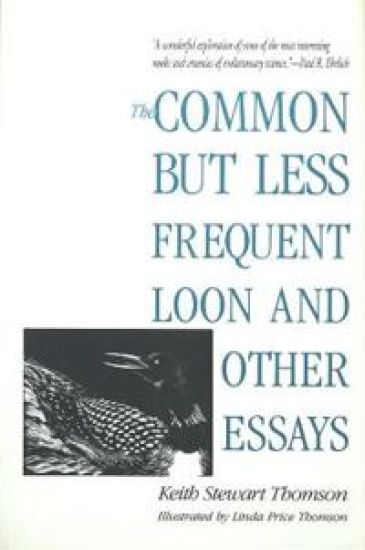
The Common but Less Frequent Loon and Other Essays

The Common but Less Frequent Loon and Other Essays

Keith Stewart Thomson

Yale University Press
1996
pokkari
From an acclaimed biologist, a view of science as a great intellectual adventure “Thomson loves biology and literature with equal passion. . . . Writing with rare eloquence, he mourns the current death of literary merit in scientific literature, drawing a parallel between the demise of cogent expression and the fate of the loons on his favorite New Hampshire lake.”—Charles Solomon, Los Angeles Times The great Piltdown fraud, the mystery of how a shark swims with an asymmetric tail, the debate over dinosaur extinction, the haunting beauty of a loon on a northern lake—these are only a few of the subjects discussed by Keith Stewart Thomson in this wide-ranging book. At once instructive and entertaining, the book celebrates the aesthetic, literary, and intellectual aspects of science and conveys what is involved in being a scientist today—the excitement of discovery and puzzle solving, the debate over what to read and what to write, and the element of promotion that seems to be necessary to stimulate research and funding. Keith Thomson, a well-known biologist who writes a column for the distinguished bimonthly magazine American Scientist, here presents some of his favorite essays from that periodical in a book of three parts, each introduced by a new essay. In the first section, “The Uses of Diversity,” he ponders such questions as why we care passionately and expensively about the dusky seaside sparrow and how and why we rescued the flowering tree Franklinia from extinction. The second section, “On Being a Scientist,” includes an autobiographical account of Thomson’s life and his views on what makes being a scientist special and interesting. The last section, “The Future of Evolution,” gives examples of how the study of evolution is entering one of the most dramatic stages in its own development. Thomson presents science as a great intellectual adventure—a search of why things are as they are—most rewarding when it is accompanied by an appreciation of the subtleties and aesthetic qualities of the objects studied. His book will enable nonscientists to open their minds to the pleasures of science and scientists to become more articulate and passionate about what they do.
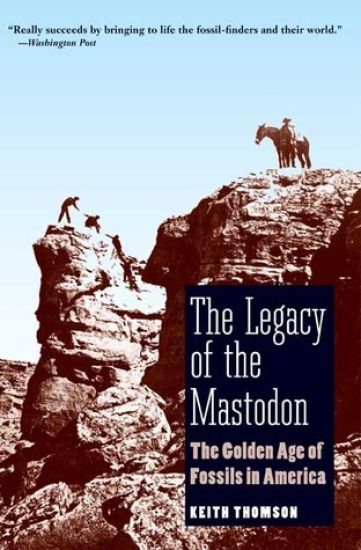
The Legacy of the Mastodon

The Legacy of the Mastodon

Keith Stewart Thomson

Yale University Press
2009
pokkari
A history of the early days of fossil hunting in America, replete with high adventure, ruthless competitors, and amazing scientific discoveries The uncovering in the mid-1700s of fossilized mastodon bones and teeth at Big Bone Lick, Kentucky, signaled the beginning of a great American adventure. The West was opening up and unexplored lands beckoned. Unimagined paleontological treasures awaited discovery: strange horned mammals, birds with teeth, flying reptiles, gigantic fish, diminutive ancestors of horses and camels, and more than a hundred different kinds of dinosaurs. In this exciting book, Keith Thomson tells the story of the grandest period of fossil discovery in American history, the years from 1750 to 1890. The volume begins with Thomas Jefferson, whose keen interest in the American mastodon led him to champion the study of fossil vertebrates. The book continues with vivid descriptions of the actual work of prospecting for fossils—a pick in one hand, a rifle in the other—and enthralling portraits of Joseph Leidy, Ferdinand Hayden, Edward Cope, and Othniel Marsh among other major figures in the development of the science of paleontology. Shedding new light on these scientists’ feuds and rivalries, on the connections between fossil studies in Europe and America, and on paleontology’s contributions to America’s developing national identity, The Legacy of the Mastodon is itself a fabulous discovery for every reader to treasure.
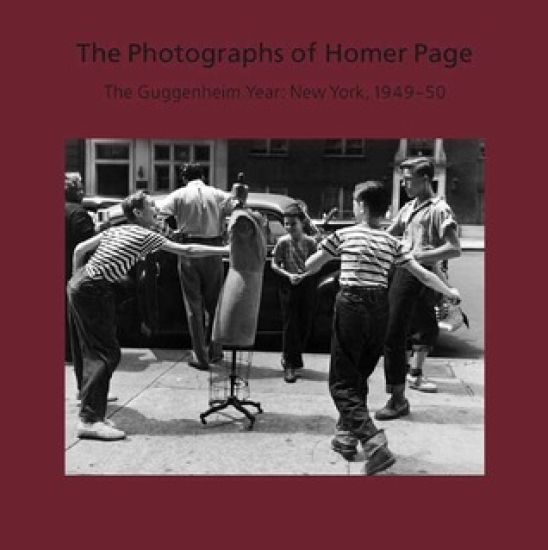
The Photographs of Homer Page

The Photographs of Homer Page

Keith F. Davis

Yale University Press
2009
sidottu
This stunning volume represents a major photo-historical discovery: it is the first book on Homer Page (1918–1985), a brilliant but overlooked photographer active in the late 1940s and 50s. It focuses on his previously unpublished photographs of New York taken while a Guggenheim Fellow from 1949 to 1950. First recognized by Ansel Adams in 1944, California-born Page exhibited in a major show of young artists at the Museum of Modern Art, New York, in 1946. Four years later, he was invited to participate in MoMA’s seminal photography symposium, alongside 10 other prominent photographers, including Walker Evans, Irving Penn, and Aaron Siskind. In photographs that echo those of Walker Evans, Dorothea Lange, and Robert Frank, Page uniquely synthesized documentary and artistic concerns. His work as a Guggenheim Fellow––which depicts pedestrians in motion, friends and family members conversing, commuters, children playing, political rallies and protests, and isolated figures resting and watching––offers a fascinating look at New York during the late 1940s and represents the culmination of Page’s most important work. The Photographs of Homer Page features a plate section of these compelling and often poignant images together with texts by the artist, a bibliography, and an essay by noted scholar Keith F. Davis examining Page’s life and career––including his connections with Lange, Nancy and Beaumont Newhall, and Edouard Steichen. Distributed for The Nelson-Atkins Museum of ArtExhibition Schedule:The Nelson-Atkins Museum of Art (February 14–June 7, 2009)
What Intelligence Tests Miss

What Intelligence Tests Miss

Keith E. Stanovich

Yale University Press
2010
pokkari
An engaging discussion of the important cognitive characteristics missing from IQ tests Critics of intelligence tests—writers such as Robert Sternberg, Howard Gardner, and Daniel Goleman—have argued in recent years that these tests neglect important qualities such as emotion, empathy, and interpersonal skills. However, such critiques imply that though intelligence tests may miss certain key noncognitive areas, they encompass most of what is important in the cognitive domain. In this book, Keith E. Stanovich challenges this widely held assumption.Stanovich shows that IQ tests (or their proxies, such as the SAT) are radically incomplete as measures of cognitive functioning. They fail to assess traits that most people associate with “good thinking,” skills such as judgment and decision making. Such cognitive skills are crucial to real-world behavior, affecting the way we plan, evaluate critical evidence, judge risks and probabilities, and make effective decisions. IQ tests fail to assess these skills of rational thought, even though they are measurable cognitive processes. Rational thought is just as important as intelligence, Stanovich argues, and it should be valued as highly as the abilities currently measured on intelligence tests.
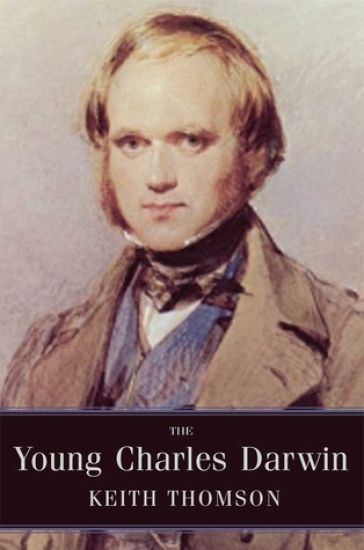
The Young Charles Darwin

The Young Charles Darwin

Keith Stewart Thomson

Yale University Press
2010
pokkari
An investigation of Charles Darwin as a young naturalist and how he arrived at his revolutionary ideas What sort of person was the young naturalist who developed an evolutionary idea so logical, so dangerous, that it has dominated biological science for a century and a half? How did the quiet and shy Charles Darwin produce his theory of natural selection when many before him had started down the same path but failed? This book is the first to inquire into the range of influences and ideas, the mentors and rivals, and the formal and informal education that shaped Charles Darwin and prepared him for his remarkable career of scientific achievement. Keith Thomson concentrates on Darwin’s early life as a schoolboy, a medical student at Edinburgh, a theology student at Cambridge, and a naturalist aboard the Beagle on its famous five-year voyage. Closely analyzing Darwin’s Autobiography and scientific notebooks, the author draws a fully human portrait of Darwin for the first time: a vastly erudite and powerfully ambitious individual, self-absorbed but lacking self-confidence, hampered as much as helped by family, and sustained by a passion for philosophy and logic. Thomson’s account of the birth and maturing of Darwin’s brilliant theory is fascinating for the way it reveals both his genius as a scientist and the human foibles and weaknesses with which he mightily struggled.
Timothy H. O'Sullivan

Timothy H. O'Sullivan

Keith F. Davis; Jane L. Aspinwall

Yale University Press
2011
sidottu
Clarence King's Survey, undertaken between 1867 and 1872, covered a vast swath of terrain, from the border of California eastward to the edge of the Great Plains. It was the first survey to include a full-time photographer—Timothy O'Sullivan—who produced about 450 finished photographs in large-format and smaller-format stereographs. O'Sullivan's images convey a distinct individual quality of perception, at once direct and laconic, as well as a perfect union of objective fact and personal interpretation. As such, O'Sullivan remains the most admired, studied, and debated photographer who worked on the great western surveys of the 19th century. This handsome and enlightening book aims to enrich and enlarge our understanding of O'Sullivan's pivotal body of western photographs by emphasizing the idea of context. This ambition encompasses several frames of reference: O'Sullivan's best-known images in relation to his larger body of survey work; the function his photographs served in relation to the survey's overall goals and methodologies; and the King Survey itself as a logical part of a complex and prolonged expeditionary endeavor. The volume also includes an essential catalogue raisonné of O'Sullivan's King Survey work. Distributed for The Nelson-Atkins Museum of Art Exhibition Schedule: Art Institute of Chicago(10/22/11-01/15/12) Nelson-Atkins Museum of Art(04/14/12-08/26/12)
Private Doubt, Public Dilemma

Private Doubt, Public Dilemma

Keith Stewart Thomson

Yale University Press
2015
sidottu
A distinguished scholar urges scientists and religious thinkers to become colleagues rather than adversaries in areas where their fields overlap “Refreshingly modest and nondogmatic. . . . Brims with lively anecdotes.”—John Horgan, Wall Street Journal Each age has its own crisis—our modern experience of science-religion conflict is not so very different from that experienced by our forebears, Keith Thomson proposes in this thoughtful book. He considers the ideas and writings of Thomas Jefferson and Charles Darwin, two men who struggled mightily to reconcile their religion and their science, then looks to more recent times when scientific challenges to religion (evolutionary theory, for example) have given rise to powerful political responses from religious believers. Today as in the eighteenth century, there are pressing reasons for members on each side of the religion-science debates to find common ground, Thomson contends. No precedent exists for shaping a response to issues like cloning or stem cell research, unheard of fifty years ago, and thus the opportunity arises for all sides to cooperate in creating a new ethics for the common good.
Jefferson's Shadow

Jefferson's Shadow

Keith Stewart Thomson

Yale University Press
2015
pokkari
A unique account of Thomas Jefferson’s passion for science, the influence of science on his vision for America, and the amazing extent of his scientific contributions In the voluminous literature on Thomas Jefferson, little has been written about his passionate interest in science. This new and original study of Jefferson presents him as a consummate intellectual whose view of science was central to both his public and his private life. Keith Stewart Thomson reintroduces us in this remarkable book to Jefferson’s eighteenth-century world and reveals the extent to which Jefferson used science, thought about it, and contributed to it, becoming in his time a leading American scientific intellectual. With a storyteller’s gift, Thomson shows us a new side of Jefferson. He answers an intriguing series of questions—How was Jefferson’s view of the sciences reflected in his political philosophy and his vision of America’s future? How did science intersect with his religion? Did he make any original contributions to scientific knowledge?—and illuminates the particulars of Jefferson’s scientific endeavors. Thomson discusses Jefferson’s theories that have withstood the test of time, his interest in the practical applications of science to societal problems, his leadership in the use of scientific methods in agriculture, and his contributions toward launching at least four sciences in America: geography, paleontology, climatology, and scientific archaeology. A set of delightful illustrations, including some of Jefferson’s own sketches and inventions, completes this impressively researched book.
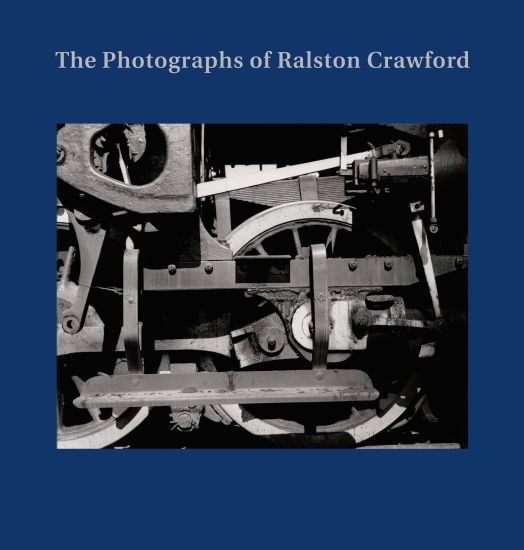
The Photographs of Ralston Crawford

The Photographs of Ralston Crawford

Keith F. Davis

Yale University Press
2019
sidottu
Best known for his modernist paintings and prints, the multitalented artist Ralston Crawford (1906–1978) maintained a deep and intensive interest in photography throughout his career, using the camera as a tool of both documentary and artistic expression. This exquisitely produced publication provides a fresh, comprehensive look at Crawford’s photographs from 1938 through the mid-1970s, including both well-known works and previously unpublished images. Some of his photographic images served as the basis for paintings and prints, but many more were made for their own sake as photographs, capturing a wide variety of subjects, from pristine industrial forms to the vibrant street life and musical culture of New Orleans. This volume locates Crawford’s photographic production in the context of his overall artistic career and within the creative currents of his time, enhancing our understanding of Crawford as an artist and serving as the best and most up-to-date study of his photographs. Distributed for The Hall Family Foundation in association with The Nelson-Atkins Museum of ArtExhibition Schedule:The Nelson-Atkins Museum of Art, Kansas City (10/26/18–04/07/19)
In Pursuit of Civility

In Pursuit of Civility

Keith Thomas

Yale University Press
2020
pokkari
A SUNDAY TIMES, EVENING STANDARD, SPECTATOR AND NEW STATESMAN BOOK OF THE YEAR“In this gloriously rich book, Keith Thomas, one of our greatest living historians, explores how the idea of civility, from lavatory habits to table manners, evolved in early modern England.”—Dominic Sandbrook, Sunday Times “One of the most entertaining books imaginable.”—Philip Hensher, Spectator "Our finest living historian gives a dismayingly entertaining survey of what was held to be civilised behaviour and what barbarous in England between 1500 and 1800.”—Claire Tomalin, New Statesman Keith Thomas's seminal studies Religion and the Decline of Magic, Man and the Natural World, and The Ends of Life, explored the beliefs, values and social practices of the years between 1500 and 1800. In Pursuit of Civility continues this quest by examining what the English people thought it meant to be `civilized' and how that condition differed from being `barbarous' or `savage' . Thomas shows how the upper ranks of society sought to distinguish themselves from their social inferiors by developing distinctive forms of moving, speaking and comporting themselves - and how the common people in turn developed their own forms of civility. The belief of the English in their superior civility shaped their relations with the Welsh, the Scots and the Irish. By legitimizing international trade, colonialism, slavery, and racial discrimination, it was fundamental to their dealings with the native peoples of North America, India, and Australia. Yet not everyone shared this belief in the superiority of Western civilization. In Pursuit of Civility throws light on the early origins of anti-colonialism and cultural relativism, and goes on to examine some of the ways in which the new forms of civility were resisted. With all the author’s distinctive authority and brilliance - based as ever on wide reading, abounding in fresh insights, and illustrated by many striking quotations and anecdotes from contemporary sources - In Pursuit of Civility transforms our understanding of the past. In so doing, it raises important questions as to the role of manners in the modern world.
Power and Responsibility in Education

Power and Responsibility in Education

Keith Watson

Continuum International Publishing Group Ltd.
1996
sidottu
This study, by more than 130 contributors, assesses the moves to decentralize educational administration. The text contains overviews by individual authors, and joint papers forming dialogues between different academic contenders. It provides a survey of educational policies and planning, and an analysis of the changes in England and Wales. Curriculum control, privatization and leadership issues are also debated. This book is one of four volumes which consider the educational dilemmas facing governments, professional educators and practising administrators in the current educational climate. The issues are addressed from international and comparative perspectives.
Paired Reading, Writing and Spelling

Paired Reading, Writing and Spelling

Keith Topping

Continuum International Publishing Group Ltd.
1995
nidottu
Describing specific structured methods for developing and improving literacy skills, this work provides detailed advice about successful organization, coupled with photocopiable masters of necessary materials. The methods are designed with the intention that all students and teachers can benefit, regardless of age and ability. They require no complex technology or expensive materials.
My Damage

My Damage

Keith Morris; Jim Ruland

Da Capo Press Inc
2017
pokkari
Keith Morris is a true punk icon. No one else embodies the sound of Southern Californian hardcore the way he does. With his waist-length dreadlocks and snarling vocals, Morris is known the world over for his take-no-prisoners approach on the stage and his integrity off of it. Over the course of his forty-year career with Black Flag, the Circle Jerks, and OFF!, he's battled diabetes, drug and alcohol addiction, and the record industry...and he's still going strong.My Damage is more than a book about the highs and lows of a punk rock legend. It's a story from the perspective of someone who has shared the stage with just about every major figure in the music industry and has appeared in cult films like The Decline of Western Civilization and Repo Man. A true Hollywood tale from an L.A. native, My Damage reveals the story of Morris's streets, his scene, and his music--as only he can tell it.
Angels of Destruction

Angels of Destruction

Keith Donohue

Crown Publishing Group (NY)
2009
nidottu
"A magical tale of love and redemption that is as wonderfully written as it is captivating . . . Angels earns its wings."-Pittsburgh Post-Gazette Margaret Quinn lives alone, quietly mourning the disappearance of her only child, who fled ten years earlier to join a radical student group known as the Angels of Destruction. On a cold winter's night, a nine-year-old girl arrives on Margaret's doorstep, claiming to be an orphan with no place to go. This child beguiles Margaret, and together they hatch a plan to pass her off as her newly found granddaughter, Norah Quinn. Their conspiracy is made vulnerable by Norah's magical revelations to the children of the town, and by a lone figure shadowing the girl, who threatens to reveal the child's true identity and purpose. Who are these strangers really? And what is their connection to the past, the Angels, and Margaret's long-missing daughter?