Kirjojen hintavertailu. Mukana 11 244 527 kirjaa ja 12 kauppaa.

Kirjahaku

Etsi kirjoja tekijän nimen, kirjan nimen tai ISBN:n perusteella.

1000 tulosta hakusanalla Keith L. Cook

Everyday Cryptography

Everyday Cryptography

Keith M. Martin

Oxford University Press
2025
nidottu
Cryptography is a vital technology that underpins the security of information in computer networks. This book presents a comprehensive introduction to the role that cryptography plays in supporting digital security for everyday technologies such as the internet, mobile phones, Wi-Fi networks, payment cards and cryptocurrencies. This book is intended to be introductory, self-contained and widely accessible. It is suitable for a first read on cryptography. Almost no prior knowledge of mathematics is required since the book deliberately avoids the details of the mathematical techniques underpinning cryptographic mechanisms. Instead, it concerns what a normal user or practitioner of cyber security needs to know about cryptography in order to understand the design and use of everyday cryptographic applications. This includes the implementation of cryptography and key management. By focusing on the fundamental principles of modern cryptography rather than the technical details of the latest technology, the main part of the book is relatively timeless. The application of these principles illustrated by considering a number of contemporary uses of cryptography. These include emerging themes, such as post-quantum cryptography and the increased demand for cryptographic tools supporting privacy. The book also considers the wider societal impact of use of cryptography, including ransomware and the challenge of balancing the conflicting needs of society and national security when using cryptography. A reader of this book will not only be able to understand the everyday use of cryptography, but also be able to interpret future developments in this fascinating and crucially important area of technology.
A Cartography of Resistance

A Cartography of Resistance

Keith Grint

Oxford University Press
2024
nidottu
Resistance is universal, but why does it occur, and fail or succeed? Resistance is often regarded in traditional management books as a problem to be overcome because it is seen as short-sighted or self-interested. Grint suggests, however, that resistance is not necessarily right or wrong. From resistance to the Roman Empire, to slavery, to the Nazis, to racism, to the state and capital, to patriarchy, and to imperialism, this book ranges across time and place to explain the success or failure of resistance. While many contemporary approaches focus on leadership as the explanatory variable, A Cartography of Resistance expands the approach to include management and command of resistance movements - and of their opponents. Many of the case studies explore the failures, as well as the successes, of resistance and the book suggests that even the failures reveal a fundamental truth about the human condition: just because the situation looks bleak for those suffering from oppression does not mean they surrendered meekly. Rather many seemed to adopt the same attitude that led Sisyphus to keep rolling the boulder up the hill: they were determined not to let their situation define or defeat them.
A Cartography of Resistance

A Cartography of Resistance

Keith Grint

Oxford University Press
2024
sidottu
Resistance is universal, but why does it occur, and fail or succeed? Resistance is often regarded in traditional management books as a problem to be overcome because it is seen as short-sighted or self-interested. Grint suggests, however, that resistance is not necessarily right or wrong. From resistance to the Roman Empire, to slavery, to the Nazis, to racism, to the state and capital, to patriarchy, and to imperialism, this book ranges across time and place to explain the success or failure of resistance. While many contemporary approaches focus on leadership as the explanatory variable, A Cartography of Resistance expands the approach to include management and command of resistance movements - and of their opponents. Many of the case studies explore the failures, as well as the successes, of resistance and the book suggests that even the failures reveal a fundamental truth about the human condition: just because the situation looks bleak for those suffering from oppression does not mean they surrendered meekly. Rather many seemed to adopt the same attitude that led Sisyphus to keep rolling the boulder up the hill: they were determined not to let their situation define or defeat them.
Mutiny and Leadership

Mutiny and Leadership

Keith Grint

Oxford University Press
2024
nidottu
Whenever leadership emerges within a group, there will be resistance to that leadership. Discontent may manifest in a number of ways, and action will always be determined by factors such as resource, numbers, time, space, and the legitimacy of the resistance. What, then, turns discontent into mutiny? Mutiny is often associated with the occasional mis-leadership of the masses by politically inspired hotheads, or a spontaneous and unusually romantic gesture of defiance against a uniquely overbearing military superior. In reality it is seldom either and usually has far more mundane origins, not in the absolute poverty of the subordinates but in the relative poverty of the relationships between leaders and the led in a military situation. The roots of mutiny lie in the leadership skills of a small number of leaders, and what transforms that into a constructive dialogue, or a catastrophic disaster, depends on how the leaders of both sides mobilize their supporters and their networks. Using contemporary leadership theory to cast a critical light on an array of mutinies throughout history, this book suggests we consider mutiny as a permanent possibility that is further encouraged or discouraged in some contexts. From mutinies in ancient Roman and Greek armies to those that toppled the German and Russian states and forced governments to face their own disastrous policies, and changed them forever, this book covers an array of cases across land, sea, and air that still pose a threat to military establishments today. The critical theoretical line also puts into sharp relief the assumption that oftentimes people have little choice in how they respond to circumstances not of their own making. If mutineers could choose to resist what they saw as tyranny, then so can we.
The Metaphysics of Knowledge

The Metaphysics of Knowledge

Keith Hossack

Oxford University Press
2007
sidottu
The Metaphysics of Knowledge presents the thesis that knowledge is an absolutely fundamental relation, with an indispensable role to play in metaphysics, philosophical logic, and philosophy of mind and language. Knowledge has been generally assumed to be a propositional attitude like belief. But Keith Hossack argues that knowledge is not a relation to a content; rather, it a relation to a fact. This point of view allows us to explain many of the concepts of philosophical logic in terms of knowledge. Hossack provides a theory of facts as structured combinations of particulars and universals, and presents a theory of content as the property of a mental act that determines its value for getting knowledge. He also defends a theory of representation in which the conceptual structure of a content is taken to picture the fact it represents. This permits definitions to be given of reference, truth, and necessity in terms of knowledge. Turning to the metaphysics of mind and language, Hossack argues that a conscious state is one that is identical with knowledge of its own occurrence. This allows us to characterise subjectivity, and, by illuminating the 'I'-concept, allows us to gain a better understanding of the concept of a person. Language is then explained in terms of knowledge, as a device used by a community of persons for exchanging knowledge by testimony. The Metaphysics of Knowledge concludes that knowledge is too fundamental to be constituted by something else, such as one's functional or physical state; other things may cause knowledge, but do not constitute it.
Field Marshal Sir Henry Wilson

Field Marshal Sir Henry Wilson

Keith Jeffery

Oxford University Press
2008
nidottu
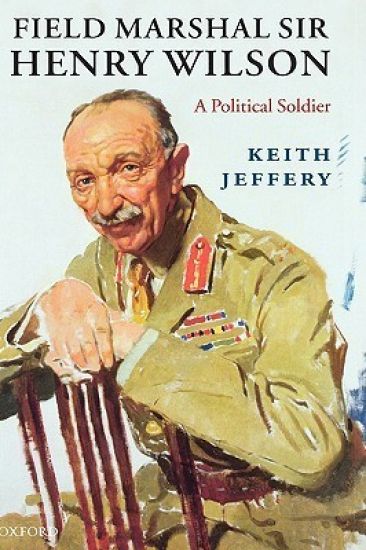
Field Marshal Sir Henry Wilson, an Irishman who in June 1922 was assassinated on his doorstep in London by Irish republicans, was one of the most controversial British soldiers of the modern age. Before 1914 he did much to secure the Anglo-French alliance and was responsible for the planning which saw the British Expeditionary Force successfully despatched to France after the outbreak of war with Germany. A passionate Irish unionist, he gained a reputation as an intensely 'political' soldier, especially during the 'Curragh crisis' of 1914 when some officers resigned their commisssions rather than coerce Ulster unionists into a Home Rule Ireland. During the war he played a major role in Anglo-French liaison, and ended up as Chief of the Imperial General Staff, professional head of the army, a post he held until February 1922. After Wilson retired from the army, he became an MP and was chief security adviser to the new Northern Ireland government. As such, he became a target for nationalist Irish militants, being identified with the security policies of the Belfast regime, though wrongly with Protestant sectarian attacks on Catholics. He is remembered today in unionist Northern Ireland as a kind of founding martyr for the state. Wilson's reputation was ruined in 1927 with the publication of an official biography, which quoted extensively and injudiciously from his entertaining, indiscreet, and wildly opinionated diaries, giving the impression that he was some sort of Machiavellian monster. In this first modern biography, using a wide variety of official and private sources for the first time, Keith Jeffery reassesses Wilson's life and career and places him clearly in his social, national, and political context.
Law as Last Resort

Law as Last Resort

Keith Hawkins

Oxford University Press
2003
sidottu
This is a book about the life of the legal system. Its concern is legal decision-making, its focus the handling of prosecution cases in a regulatory agency. In almost all legal disputing formalities are employed as a last resort for a small proportion of cases. Case attrition is a constant feature in the legal system, whether criminal or civil, since extensive pre-trial negotiations search for solutions to problems that avoid the costs, risks, and delays of trial. This book analyzes the attrition of cases by studying decisions made about their creation, handling, disposal, and prosecution. Exploring these issues asks questions about the public face of law, the meaning of formal processes, and their impact on pre-trial legal manoeuvring. To prosecute is to enforce the law in both a public and a consequential way. In enforcing regulation prosecution visibly takes sides in the fundamental dilemma of regulatory control about how far law should justifiably intervene in business. Using extensive data collected over a fifteen-year period, and with privileged access to the UK Health and Safety Executive, the book presents a multi-level analysis of decisions about prosecution policy and individual cases in a variety of inspectorates.
Law as Last Resort

Law as Last Resort

Keith Hawkins

Oxford University Press
2003
nidottu
This is a book about the life of the legal system. Its concern is legal decision-making, its focus the handling of prosecution cases in a regulatory agency. In almost all legal disputing formalities are employed as a last resort for a small proportion of cases. Case attrition is a constant feature in the legal system, whether criminal or civil, since extensive pre-trial negotiations search for solutions to problems that avoid the costs, risks, and delays of trial. This book analyzes the attrition of cases by studying decisions made about their creation, handling, disposal, and prosecution. Exploring these issues asks questions about the public face of law, the meaning of formal processes, and their impact on pre-trial legal manoeuvring. To prosecute is to enforce the law in both a public and a consequential way. In enforcing regulation prosecution visibly takes sides in the fundamental dilemma of regulatory control about how far law should justifiably intervene in business. Using extensive data collected over a fifteen-year period, and with privileged access to the UK Health and Safety Executive, the book presents a multi-level analysis of decisions about prosecution policy and individual cases in a variety of inspectorates.
The Arts of Leadership

The Arts of Leadership

Keith Grint

Oxford University Press
2001
nidottu
An investigation into how we can best understand leadership, using historical case studies and essay portraits. Are leaders born or made? Do they have particular traits or are we all potential leaders? Do the requirements for leadership change over time or are there timeless patterns?
The Ends of Life

The Ends of Life

Keith Thomas

Oxford University Press
2009
sidottu
How should we live? That question was no less urgent for English men and women who lived between the early sixteenth and late eighteenth centuries than for this book's readers. Keith Thomas's masterly exploration of the ways in which people sought to lead fulfilling lives in those centuries between the beginning of the Reformation and the heyday of the Enlightenment illuminates the central values of the period, while casting incidental light on some of the perennial problems of human existence. Consideration of the origins of the modern ideal of human fulfilment and of obstacles to its realization in the early modern period frames an investigation that ranges from work, wealth, and possessions to the pleasures of friendship, family, and sociability. The cult of military prowess, the pursuit of honour and reputation, the nature of religious belief and scepticism, and the desire to be posthumously remembered are all drawn into the discussion, and the views and practices of ordinary people are measured against the opinions of the leading philosophers and theologians of the time. The Ends of Life offers a fresh approach to the history of early modern England, by one of the foremost historians of our time. It also provides modern readers with much food for thought on the problem of how we should live and what goals in life we should pursue.
American Political Thought

American Political Thought

Keith E. Whittington

Oxford University Press
2016
nidottu
American Political Thought: Readings and Materials presents a diverse collection of writings, speeches, judicial opinions, and other political documents, offering an introduction to the controversies and disputes that have mobilized Americans since the first settlements in North America. Ranging from the Colonial era to the present day-and featuring both traditional readings and lesser-known documents-this reader takes a historical approach that helps students see how political, economic, and social conditions led to the development of specific political ideas. Each chapter includes a substantial introduction and each reading is enriched by headnotes and discussion questions. Visit the Companion Website at http: //global.oup.com/us/companion.websites/9780199338863/ for additional readings and materials.
Addiction

Addiction

Keith Humphreys

Oxford University Press
2023
nidottu
Very Short Introductions: Brilliant, Sharp, Inspiring Addiction is a subject which straddles public and personal interests; societal and criminal justice concerns; and family, social, and medical responses. It is a continuing area of uncertainty and concern for society and professionals trained in the field. This Very Short Introduction presents the basic facts about addiction: what it is, how and why it develops, how it is treated, and how society can respond to it. Addictions to both illicit drugs and licit drugs (e.g., alcohol) are covered, as is the possibility that certain behaviours not involving drug use (e.g., compulsive gambling) can qualify as addictions. Keith Humphreys provides a jargon-free account of our present understanding of addiction, from treatment evaluations to studies on the effects of public policies. He also illuminates the personal experience of addiction and recovery. Humphreys considers why some people become addicted and others do not, what treatments exist to help people who are addicted, and how the laws and regulations society establishes about drugs affects the rate and experience of addiction. ABOUT THE SERIES: The Very Short Introductions series from Oxford University Press contains hundreds of titles in almost every subject area. These pocket-sized books are the perfect way to get ahead in a new subject quickly. Our expert authors combine facts, analysis, perspective, new ideas, and enthusiasm to make interesting and challenging topics highly readable.
The Case for Contextualism

The Case for Contextualism

Keith DeRose

Oxford University Press
2009
sidottu
It's an obvious enough observation that the standards that govern whether ordinary speakers will say that someone knows something vary with context: What we are happy to call "knowledge" in some ("low-standards") contexts we'll deny is "knowledge" in other ("high-standards") contexts. But do these varying standards for when ordinary speakers will attribute knowledge, and for when they are in some important sense warranted in attributing knowledge, reflect varying standards for when it is or would be true for them to attribute knowledge? Or are the standards that govern whether such claims are true always the same? And what are the implications for epistemology if these truth-conditions for knowledge claims shift with context? Contextualism, the view that the epistemic standards a subject must meet in order for a claim attributing "knowledge" to her to be true do vary with context, has been hotly debated in epistemology and philosophy of language during the last few decades. In The Case for Contextualism Keith DeRose offers a sustained state-of-the-art exposition and defense of the contextualist position, presenting and advancing the most powerful arguments in favor of the view and against its "invariantist" rivals, and responding to the most pressing objections facing contextualism.
The Appearance of Ignorance

The Appearance of Ignorance

Keith DeRose

Oxford University Press
2018
sidottu
Contextualism, the view that the epistemic standards a subject must meet in order for a claim attributing "knowledge" to her to be true do vary with context, has been hotly debated in epistemology and philosophy of language during the last few decades. This volume presents, develops, and defends contextualist solutions to two of the stickiest problems in epistemology: the puzzles of skeptical hypotheses and of lotteries. It is argued that, at least by ordinary standards for knowledge, we do know that skeptical hypotheses are false, and that we've lost the lottery. Why it seems that we don't know that they're false tells us a lot, both about what knowledge is and how knowledge attributions work. The Appearance of Ignorance is the companion volume to Keith DeRose's 2009 title The Case for Contextualism: Knowledge, Skepticism, and Context, Volume 1.
Leadership

Leadership

Keith Grint

Oxford University Press
2010
nidottu
The subject of leadership raises many questions: What is it? How does it differ from management and command? Are leaders born or bred? Who are the leaders? Do we actually need leaders? Inevitably, the answers are provocative and partial; leadership is a hugely important topic of debate. There are constant calls for 'greater' or 'stronger' leadership, but what this actually means, how we can evaluate it, and why it's important are not very clear. In this Very Short Introduction Keith Grint prompts the reader to rethink their understanding of what leadership is. He examines the way leadership has evolved from its earliest manifestations in ancient societies, highlighting the beginnings of leadership writings through Plato, Sun Tzu, Machiavelli and others, to consider the role of the social, economic, and political context undermining particular modes of leadership. Exploring the idea that leaders cannot exist without followers, and recognising that we all have diverse experiences and assumptions of leadership, Grint looks at the practice of management, its history, future, and influence on all aspects of society. ABOUT THE SERIES: The Very Short Introductions series from Oxford University Press contains hundreds of titles in almost every subject area. These pocket-sized books are the perfect way to get ahead in a new subject quickly. Our expert authors combine facts, analysis, perspective, new ideas, and enthusiasm to make interesting and challenging topics highly readable.
England, Ireland, Scotland, Wales

England, Ireland, Scotland, Wales

Keith Robbins

Oxford University Press
2010
nidottu
Keith Robbins, building on his previous writing on the modern history of the interlocking but distinctive territories of the British Isles, takes a wide-ranging, innovative and challenging look at the twentieth-century history of the main bodies, at once national and universal, which have collectively constituted the Christian Church. The protracted search for elusive unity is emphasized. Particular beliefs, attitudes, policies and structures are located in their social and cultural contexts. Prominent individuals, clerical and lay, are scrutinized. Religion and politics intermingle, highlighting, for churches and states, fundamental questions of identity and allegiance, of public and private values, in a century of ideological conflict, violent confrontation (in Ireland), two world wars and protracted Cold War. The massive change experienced by the countries and people of the Isles since 1900 has encompassed shifting relationships between England, Ireland (and Northern Ireland), Scotland and Wales, the end of the British Empire, the emergence of a new Europe and, latterly, major immigration of adherents of Islam, Hinduism, Sikhism and other faiths from outside Europe: developments scarcely conceivable at the outset. Such a broad contextual perspective provides an essential background to understanding the puzzling ambiguities evident both in secularization and enduring Christian faith. Robbins provides a cogent and compelling overview of this turbulent century for the churches of the Isles.
The Ends of Life

The Ends of Life

Keith Thomas

Oxford University Press
2010
nidottu
How should we live? That question was no less urgent for English men and women who lived between the early sixteenth and late eighteenth centuries than for this book's readers. Keith Thomas's masterly exploration of the ways in which people sought to lead fulfilling lives in those centuries between the beginning of the Reformation and the heyday of the Enlightenment illuminates the central values of the period, while casting incidental light on some of the perennial problems of human existence. Consideration of the origins of the modern ideal of human fulfilment and of obstacles to its realization in the early modern period frames an investigation that ranges from work, wealth, and possessions to the pleasures of friendship, family, and sociability. The cult of military prowess, the pursuit of honour and reputation, the nature of religious belief and scepticism, and the desire to be posthumously remembered are all drawn into the discussion, and the views and practices of ordinary people are measured against the opinions of the leading philosophers and theologians of the time. The Ends of Life offers a fresh approach to the history of early modern England, by one of the foremost historians of our time. It also provides modern readers with much food for thought on the problem of how we should live and what goals in life we should pursue.
Bonfire of the Liberties

Bonfire of the Liberties

Keith Ewing

Oxford University Press
2010
sidottu
This provocative book confronts the corrosion of civil liberties under successive New Labour governments since 1997. It argues that the last decade has seen a wholesale failure of constitutional principle and exposed the futility of depending on legal rights to restrict the power of executive government. It considers the steps necessary to prevent the continued decline of political standards, arguing that only through rebalancing political power can civil liberties be adequately protected. Relying on extensive new research of inaccessible sources, the book examines the major battlegrounds over civil liberties under New Labour, including the growth and abuse of police power, state surveillance and counter-terrorist measures. It unfolds a compelling narrative of the major battles fought before Parliament and in the courts, and attacks the failure of the political and legal systems to offer protection to those suffering abuses of their civil liberty at the hands of an aggressive Executive. In doing so, it offers a definitive account of the struggle for civil liberty in modern Britain, and a controversial argument for the reforms necessary to contain executive power.
Bonfire of the Liberties

Bonfire of the Liberties

Keith Ewing

Oxford University Press
2010
nidottu
This provocative book confronts the corrosion of civil liberties under successive New Labour governments since 1997. It argues that the last decade has seen a wholesale failure of constitutional principle and exposed the futility of depending on legal rights to restrict the power of executive government. It considers the steps necessary to prevent the continued decline of political standards, arguing that only through rebalancing political power can civil liberties be adequately protected. Relying on extensive new research of inaccessible sources, the book examines the major battlegrounds over civil liberties under New Labour, including the growth and abuse of police power, state surveillance and counter-terrorist measures. It unfolds a compelling narrative of the major battles fought before Parliament and in the courts, and attacks the failure of the political and legal systems to offer protection to those suffering abuses of their civil liberty at the hands of an aggressive Executive. In doing so, it offers a definitive account of the struggle for civil liberty in modern Britain, and a controversial argument for the reforms necessary to contain executive power.
Jeroboam's Royal Drama

Jeroboam's Royal Drama

Keith Bodner

Oxford University Press
2012
sidottu
Among the most challenging biblical figures to understand is Jeroboam son of Nebat, the first monarch of northern Israel whose story is told in 1 Kings 11-14. This book explores the characterization of Jeroboam in the Hebrew text, and traces his rags to riches career trajectory. What are the circumstances whereby this widow's son is elevated to the position of king, with a conditional promise for a lasting dynasty? A close reading of the narrative reveals a literary achievement of great subtlety and complexity. Even though he becomes the negative standard for the rest of Israel's royal history, Jeroboam's portrait is far more nuanced than is often realized and yields a host of surprises for the engaged reader. Numerous issues are raised in the 1 Kings 11-14 material, including questions of power, leadership, and the role of the prophetic office in national affairs. Against the grain of conventional interpretation that tends to idealize or vilify biblical characters, Keith Bodner's study locates the arrival of Jeroboam's kingship as a direct response to scandalous activity within the Solomonic empire.