Kirjojen hintavertailu. Mukana 12 390 323 kirjaa ja 12 kauppaa.

Kirjahaku

Etsi kirjoja tekijän nimen, kirjan nimen tai ISBN:n perusteella.

1000 tulosta hakusanalla Ken Schultz

Subcultures

Subcultures

Ken Gelder

Routledge
2007
nidottu
This book presents a cultural history of subcultures, covering a remarkable range of subcultural forms and practices. It begins with London’s ‘Elizabethan underworld’, taking the rogue and vagabond as subcultural prototypes: the basis for Marx’s later view of subcultures as the lumpenproletariat, and Henry Mayhew’s view of subcultures as ‘those that will not work’. Subcultures are always in some way non-conforming or dissenting. They are social - with their own shared conventions, values, rituals, and so on – but they can also seem ‘immersed’ or self-absorbed. This book identifies six key ways in which subcultures have generally been understood:through their often negative relation to work: idle, parasitical, hedonistic, criminaltheir negative or ambivalent relation to classtheir association with territory - the ‘street’, the ‘hood’, the club - rather than propertytheir movement away from home into non-domestic forms of ‘belonging’their ties to excess and exaggeration (as opposed to restraint and moderation)their refusal of the banalities of ordinary life and in particular, of massification.Subcultures looks at the way these features find expression across many different subcultural groups: from the Ranters to the riot grrrls, from taxi dancers to drag queens and kings, from bebop to hip hop, from dandies to punk, from hobos to leatherfolk, and from hippies and bohemians to digital pirates and virtual communities. It argues that subcultural identity is primarily a matter of narrative and narration, which means that its focus is literary as well as sociological. It also argues for the idea of a subcultural geography: that subcultures inhabit places in particular ways, their investment in them being as much imaginary as real and, in some cases, strikingly utopian.
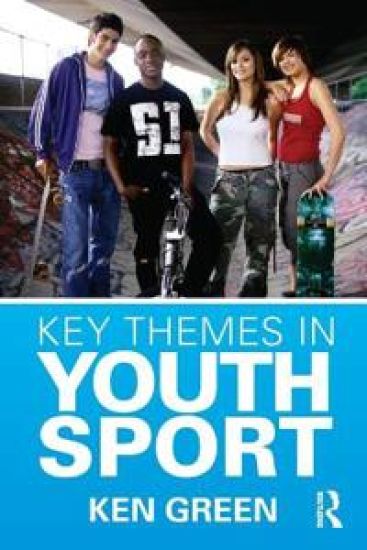
Key Themes in Youth Sport

Key Themes in Youth Sport

Ken Green

Routledge
2010
sidottu
Key Themes in Youth Sport is a concise, easy to read guide to core concepts in the study of young people’s relationship with sport, exercise and leisure. Designed to help students get to grips with the basics and go on to master the central ideas and debates in contemporary youth sport, this book reflects the multi-disciplinary interest in youth sport, exploring perspectives from sociology, psychology, physiology, sports policy, sports development, and physical education.
Key Themes in Youth Sport

Key Themes in Youth Sport

Ken Green

Routledge
2010
nidottu
Key Themes in Youth Sport is a concise, easy to read guide to core concepts in the study of young people’s relationship with sport, exercise and leisure. Designed to help students get to grips with the basics and go on to master the central ideas and debates in contemporary youth sport, this book reflects the multi-disciplinary interest in youth sport, exploring perspectives from sociology, psychology, physiology, sports policy, sports development, and physical education.
Dictionary of Ecodesign

Dictionary of Ecodesign

Ken Yeang; Lillian Woo

Routledge
2010
sidottu
The first guide to the terminology of sustainable design. Written by an internationally renowned expert in the field, this illustrated dictionary provides over 1500 definitions and explanations of ecodesign terms.Providing a unique resource for the practitioner and student, this book leaves the reader free to 'dip' in and out of the book allowing for 'bite-sized' learning at their own convenience. It is an essential reference for all architects, engineers, planners and environmentalists involved in designing and planning projects and schemes in the built environment.
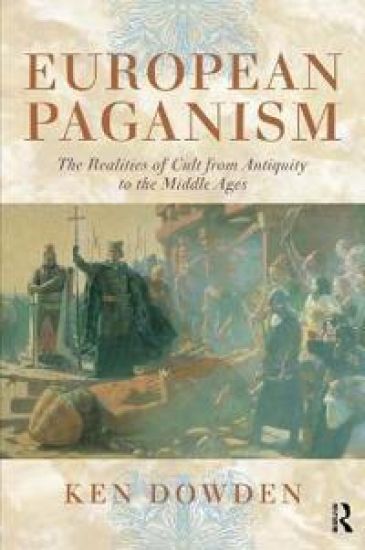
European Paganism

European Paganism

Ken Dowden

Routledge
2008
nidottu
European Paganism provides a comprehensive and accessible overview of ancient pagan religions throughout the European continent.Before there where Christians, the peoples of Europe were pagans. Were they bloodthirsty savages hanging human offerings from trees? Were they happy ecologists, valuing the unpolluted rivers and mountains? In European Paganism Ken Dowden outlines and analyses the diverse aspects of pagan ritual and culture from human sacrifice to pilgrimage lunar festivals and tree worship. It includes:* a 'timelines' chart to aid with chronology* many quotations from ancient and modern sources translated from the original language where necessary, to make them accessible* a comprehensive bibliography and guide to further reading.
Radical Traditions in Education in the 21st Century
For much of the twentieth century, education was powerfully if never decisively shaped by the activities of social and political movements. Covering a range of issues – from classroom practice to policy agenda - this book traces the impact of such movements on educational practice. It also considers their current predicament: one of the unstudied aims of the neo-liberal policies that have swept through education has been to sever the education/social movement connection, and in doing so to create new agencies of educational change, with very different orientations and commitments from those of the past. At the same time, however, as it seeks to sideline the past, policy orthodoxy also tries, in significant ways, seeks to make use of ideas and practices deriving from the practice of an earlier period. Examining the continuing conflicts that attend the imposition of neo-liberal policies, the book explores the uncertain future of radical educational traditions. It draws attention to the significance of these issues for a research community that, itself under pressure from new policy orthodoxies, has often overlooked them.
Radical Traditions in Education in the 21st Century
For much of the twentieth century, education was powerfully if never decisively shaped by the activities of social and political movements. Covering a range of issues – from classroom practice to policy agenda - this book traces the impact of such movements on educational practice. It also considers their current predicament: one of the unstudied aims of the neo-liberal policies that have swept through education has been to sever the education/social movement connection, and in doing so to create new agencies of educational change, with very different orientations and commitments from those of the past. At the same time, however, as it seeks to sideline the past, policy orthodoxy also tries, in significant ways, seeks to make use of ideas and practices deriving from the practice of an earlier period. Examining the continuing conflicts that attend the imposition of neo-liberal policies, the book explores the uncertain future of radical educational traditions. It draws attention to the significance of these issues for a research community that, itself under pressure from new policy orthodoxies, has often overlooked them.
Concrete Mix Design, Quality Control and Specification

Concrete Mix Design, Quality Control and Specification

Ken W. Day; James Aldred; Barry Hudson

CRC Press
2013
sidottu
The nature of concrete is rapidly changing, and with it, there are rising concerns. Thoroughly revised and updated, this fourth edition of Concrete Mix Design, Quality Control and Specification addresses current industry practices that provide inadequate durability and fail to eliminate problems with underperforming new concrete and defective testing. Many specifications now require additional criteria in an attempt to improve durability or other properties. This book discusses the trend towards adding performance requirements to existing prescriptive specifications. It also explores the matter of prescription versus performance specification and especially the specification of non-strength-related performance such as durability. What’s new in the Fourth Edition: Examines water-to-cement ratio as a declining criterion of quality and durability Discusses the diminishing availability of suitable natural sands and growing industry concerns regarding the environmental impact of their use Considers advances in concrete admixtures and their ever-increasing use Advocates reliability of testing as a vital feature of the shift from prescriptive to performance specifications Addresses cement replacement materials as they relate to greenhouse gas and sustainability Concrete Mix Design, Quality Control and Specification explores producing, designing, controlling, or specifying concrete, and addresses issues related with sustainability and the impact of new concrete materials such as ready mixed geopolymers, magnesium oxide, and calcium carbonate. The text is an ideal resource for concrete technologists, producers and specifiers, and contractors on large projects
Yeats and Theosophy

Yeats and Theosophy

Ken Monteith

Routledge
2012
nidottu
When H. P. Blavatsky, the controversial head of the turn of the century movement Theosophy, defined "a true Theosophist" in her book The Key to Theosophy, she could have just as easily have been describing W. B. Yeats. Blavatsky writes, "A true Theosophist must put in practice the loftiest moral ideal, must strive to realize his unity with the whole of humanity, and work ceaselessly for others." Although Yeats joined Blavatsky's group in 1887, and subsequently left to help form The Golden Dawn in 1890, Yeats's career as poet and politician were very much in line with the methods set forth by Blavatsky's doctrine. My project explores how Yeats employs this pop-culture occultism in the creation of his own national literary aesthetic. This project not only examines the influence theosophy has on the literary work Yeats produced in the late 1880's and 1890's, but also Yeats's work as literary critic and anthology editor during that time. While Yeats uses theosophy's metaphysical world view to provide an underlying structure for some of his earliest poetry and drama, he uses theosophy's methods of investigation and argument to discover a metaphysical literary tradition which incorporates all of his own literary heroes into an Irish cultural tradition. Theosophy provides a methodology for Yeats to argue that both Shelley and Blake (for example) are part of a tradition that includes himself. Basing his argument in theosophy, Yeats can argue that the Irish people are a distinct race with a culture more "sincere" and "natural" than that of England.
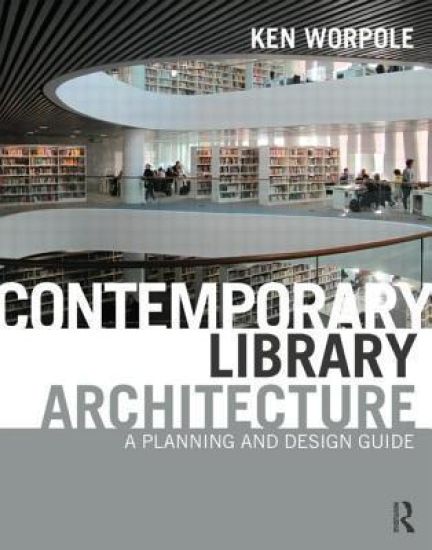
Contemporary Library Architecture
Focusing on the practical issues which need to be addressed by anyone involved in library design, here Ken Worpole offers his renowned expertise to architects, planners, library professionals, students, local government officers and members interested in creating and sustaining successful library buildings and services. Contemporary Library Architecture: A Planning and Design Guide features: a brief history of library architecture an account of some of the most distinctive new library designs of the 20th & 21st centuries an outline of the process for developing a successful brief and establishing a project management teama delineation of the commissioning processpractical advice on how to deal with vital elements such as public accessibility, stock-holding, ICT, back office functions, children’s services, co-location with other services such as learning centres and tourist & information services an sustainability in depth case studies from around the world, including public and academic libraries from the UK, Europe and the USfull colour illustrations throughout, showing technical details and photographs. This book is the ultimate guide for anyone approaching library design.
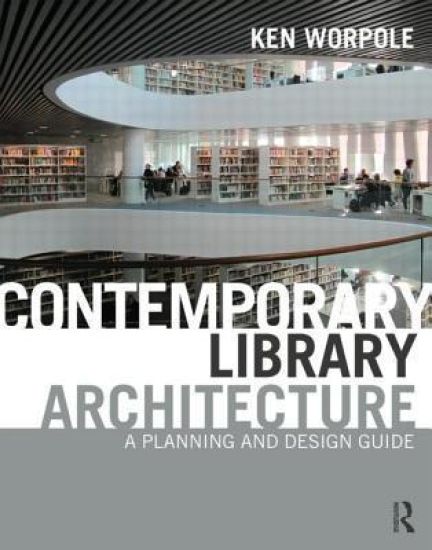
Contemporary Library Architecture
Focusing on the practical issues which need to be addressed by anyone involved in library design, here Ken Worpole offers his renowned expertise to architects, planners, library professionals, students, local government officers and members interested in creating and sustaining successful library buildings and services. Contemporary Library Architecture: A Planning and Design Guide features: a brief history of library architecture an account of some of the most distinctive new library designs of the 20th & 21st centuries an outline of the process for developing a successful brief and establishing a project management teama delineation of the commissioning processpractical advice on how to deal with vital elements such as public accessibility, stock-holding, ICT, back office functions, children’s services, co-location with other services such as learning centres and tourist & information services an sustainability in depth case studies from around the world, including public and academic libraries from the UK, Europe and the USfull colour illustrations throughout, showing technical details and photographs. This book is the ultimate guide for anyone approaching library design.
Socialism and Underdevelopment

Socialism and Underdevelopment

Ken Post; Philip Wright

Routledge
2010
sidottu
In this book, first published in 1989, Ken Post and Phil Wright provide a critical analysis of socialist construction in underdeveloped countries. Pointing out that all the socialist revolutions of the twentieth century have occurred in underdeveloped peripheral capitalist countries, they focus on the relationship between socialism and underdevelopment. They bring together the insights of both development theory and the political economy of socialism, and draw upon their direct experience of the state socialist societies as diverse as North Korea, Yugoslavia, Vietnam, and the Soviet Union.
Social Networks and Japanese Democracy

Social Networks and Japanese Democracy

Ken'ichi Ikeda; Sean Richey

Routledge
2011
sidottu
Many who critique democracy as practiced in East Asia suggest that the Confucian political culture of these nations prevents democracy from being the robust participatory type, and limits it to a spectacle designed to create obedience from the public. Certainly some East Asian nations have had elections for decades, but for democracy to be meaningful, a country needs an active public sphere, political tolerance, egalitarian beliefs, and vigorous political participation. The Asian-values debate focuses on whether the creation of this optimal version of democracy in East Asian nations will be hindered by their shared Confucian cultural heritage and at the centre of this debate is whether there is an active political culture in East Asia that allows citizens to freely discuss, debate, and disagree about politics. With Japan as its focus, this book examines the role of social networks and political discussion in Japanese political culture and asks whether discursive participatory democracy is indeed possible in East Asia. In order to answer this question the authors undertook the largest academic political survey ever conducted in Japan to give the book exceptional empirical credence. This data reveals how the Japanese people interact politically, concluding that through the powerful influence of social networks on Japanese political behaviour, Japan has a more globalized and less hierarchical society where Confucian culture is not dominant and where creation of a vibrant civil society is possible.This book will be invaluable for students and scholars of Japanese politics, democracy, civil society, and globalization.
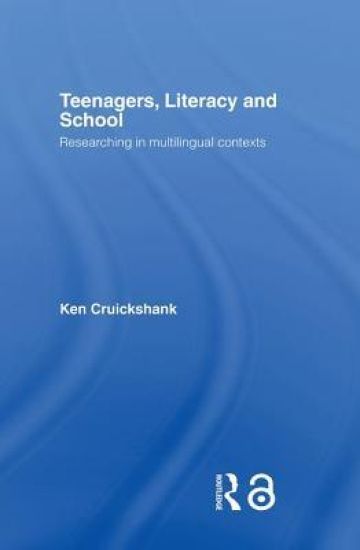
Teenagers, Literacy and School

Teenagers, Literacy and School

Ken Cruickshank

Routledge
2012
nidottu
This unique and timely book follows the experiences of four Arabic teenagers, their families and their community, focusing on the role of literacy in their daily lives and the differences between home and school. The author looks at the conflict between expectations and practices at school and in the home, arguing that problems are inevitable where class and cultural differences exist.Emerging themes include:how literacy practices in the community are undergoing rapid change due to global developments in technologyhow the patterns of written and spoken language in English and Arabic in the home are linked with social practices in logical and coherent wayshow many of the family practices that differ from school culture and language become marginalised.Built around these insightful case studies yet grounded in theory, this book is of immediate relevance to teachers working in multicultural contexts and students and lecturers in language/literacy or on TESOL courses.
Principles of Structure

Principles of Structure

Ken Wyatt; Richard Hough

CRC Press
2013
nidottu
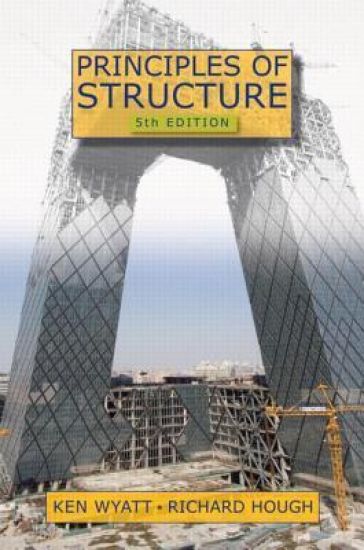
Since its first publication in 1974, Principles of Structure has established itself at the forefront of introductory texts for students of architecture, building and project management seeking a basic understanding of the behavior and design of building structures. It provides a simple quantitative introduction to structural engineering, while also drawing connections to real buildings that are more complex. Retaining the style and format of earlier editions, this Fifth Edition brings the text and examples into alignment with international practice. It also features six new buildings from around the world, illustrating the principles described in the text. The book begins with a chapter explaining forces and their effects. Other chapters cover ties and struts, loadings, graphical statics, bracings, shears and moments, stresses, deflections, and beam design. There is also an appendix with a fuller explanation of fundamentals for readers unfamiliar with the basic concepts of geometry and statics.The book offers a unique format with right-hand pages containing text and left-hand pages containing complementary commentary including explanations and expansions of points made in the text and worked examples. This cross-referencing gives readers a range of perspectives and a deeper understanding of each topic. The simple mathematical approach and logical progression—along with the hints and suggestions, worked examples and problem sheets—give beginners straightforward access to elementary structural engineering.
Tackling Behaviour in your Primary School

Tackling Behaviour in your Primary School

Ken Reid; Nicola S. Morgan

Routledge
2012
nidottu
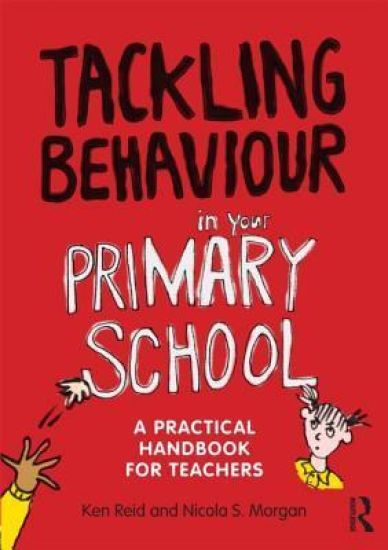
Tackling Behaviour in the Primary School provides ready-made advice and support for classroom professionals and can be used, read and adapted to suit the busy everyday lives of teachers working in primary schools today. This valuable text sets the scene for managing behaviour in the primary classroom in the context of the Children Act 2004 agenda, making it highly relevant to trainee primary teachers, learning school mentors, classroom assistants, behaviour specialists and senior management teams. As experts in the field of behaviour management, the authors draw on their many years of experience to provide evidenced whole-school strategies, extensively-researched concepts and step-by-step behaviour programmes. Topics covered include: Understanding behaviour How to measure behaviour and why this can be an effective approach Using and implementing whole-school behaviour policies Honing your classroom management skills Managing bullying Dealing with specific classroom difficulties Working effectively and supportively with parents.Drawing on case-studies throughout, this handbook will help you to understand and deal with the most confrontational of classroom behaviour. Tackling Behaviour in the Primary School provides all staff, parents and carers engaged in health, education and social services with a ready-made resource packed full of strategies, ideas, activities and solutions to help manage behaviour in even the toughest of classrooms.
Terror in Our Time

Terror in Our Time

Ken Booth; Tim Dunne

Routledge
2011
sidottu
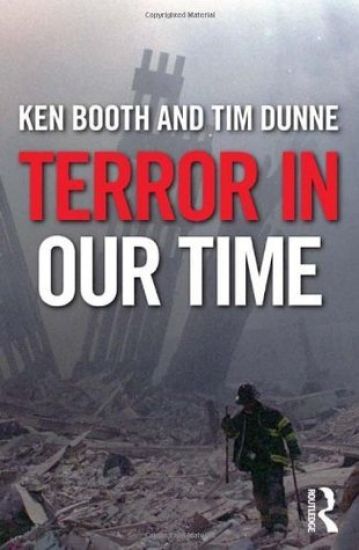
Written by two leading scholars, this book is an accessible overview of the global political consequences of the 9/11 terror attacks. The War on Terror has defined the first decade of this century. It has been marked by the deaths of thousands of people, political turmoil, massive destruction, and intense fear. Regardless of the name it goes under, the long war on terror will continue to affect lives across the world. Its catalyst, 9/11, did not have to happen, nor did the character of the responses. This book offers a set of novel interpretations of how we got here, where we are, and where we should be heading. It is organised around twelve penetrating and readable essays, full of novel interpretations and succinct summaries of complex ideas and events. In their examination of those aspects of global order touched by terror, the authors argue that the dangers of international terrorism are not overblown. Future 9/11s are possible: so is a more just and law-governed world. Terrorism cannot be disinvented, but with more intelligent policies than have been on show these past ten years, it can be overcome and made politically anachronistic.This book will be essential reading for all students of terrorism studies, international security, war and conflict studies and IR in general, as well as of much interest to well-informed lay readers.
Terror in Our Time

Terror in Our Time

Ken Booth; Tim Dunne

Routledge
2011
nidottu
Written by two leading scholars, this book is an accessible overview of the global political consequences of the 9/11 terror attacks. The War on Terror has defined the first decade of this century. It has been marked by the deaths of thousands of people, political turmoil, massive destruction, and intense fear. Regardless of the name it goes under, the long war on terror will continue to affect lives across the world. Its catalyst, 9/11, did not have to happen, nor did the character of the responses. This book offers a set of novel interpretations of how we got here, where we are, and where we should be heading. It is organised around twelve penetrating and readable essays, full of novel interpretations and succinct summaries of complex ideas and events. In their examination of those aspects of global order touched by terror, the authors argue that the dangers of international terrorism are not overblown. Future 9/11s are possible: so is a more just and law-governed world. Terrorism cannot be disinvented, but with more intelligent policies than have been on show these past ten years, it can be overcome and made politically anachronistic.This book will be essential reading for all students of terrorism studies, international security, war and conflict studies and IR in general, as well as of much interest to well-informed lay readers.
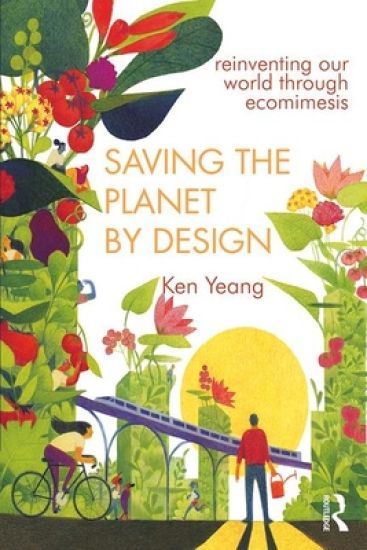
Saving The Planet By Design

Saving The Planet By Design

Ken Yeang

Routledge
2019
nidottu
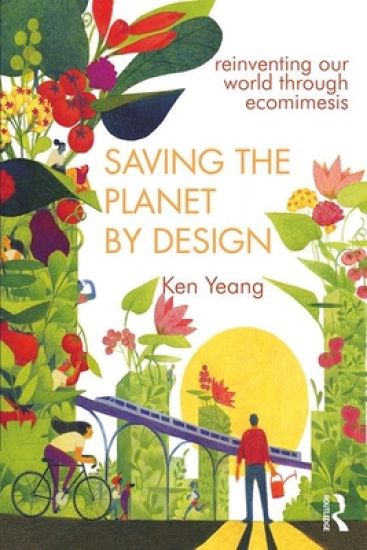
Can we ‘save the Planet’? For a resilient, durable and sustainable future for human society, we need to repurpose, reinvent, redesign, remake and recover our human-made world so that our built environment is benignly and seamlessly biointegrated with Nature to function synergistically with it. These are the multiple tasks that humanity must carry out imminently if there is to be a future for human society and all lifeforms and their environments on the Planet. Addressing this is the most compelling question for those whose daily work impacts on Nature, such as architects, engineers, landscape architects, town planners, environmental policy makers, builders and others, but it is a question that all of humanity needs to urgently address.Presented here are two key principles as the means to carry out these tasks – ‘ecocentricity’ being guided by the science of ecology, and ‘ecomimesis’ as designing and making the built environment including all artefacts based on the emulation and replication of the ‘ecosystem’ concept. Designing with ecology is contended here as the authentic approach to green design from which the next generation of green design will emerge, going beyond current use of accreditation systems. For those who subscribe to this principle, this is articulated here, showing how it can be implemented by design. Adopting these principles is fundamental in our endeavour to save our Planet Earth, and changes profoundly and in entirety the way we design, make, manage and operate our built environment.
Saving The Planet By Design

Saving The Planet By Design

Ken Yeang

Routledge
2019
sidottu
Can we ‘save the Planet’? For a resilient, durable and sustainable future for human society, we need to repurpose, reinvent, redesign, remake and recover our human-made world so that our built environment is benignly and seamlessly biointegrated with Nature to function synergistically with it. These are the multiple tasks that humanity must carry out imminently if there is to be a future for human society and all lifeforms and their environments on the Planet. Addressing this is the most compelling question for those whose daily work impacts on Nature, such as architects, engineers, landscape architects, town planners, environmental policy makers, builders and others, but it is a question that all of humanity needs to urgently address.Presented here are two key principles as the means to carry out these tasks – ‘ecocentricity’ being guided by the science of ecology, and ‘ecomimesis’ as designing and making the built environment including all artefacts based on the emulation and replication of the ‘ecosystem’ concept. Designing with ecology is contended here as the authentic approach to green design from which the next generation of green design will emerge, going beyond current use of accreditation systems. For those who subscribe to this principle, this is articulated here, showing how it can be implemented by design. Adopting these principles is fundamental in our endeavour to save our Planet Earth, and changes profoundly and in entirety the way we design, make, manage and operate our built environment.