The evolution of modern architecture has been inextricably entangled in issues of politics, nationalism, and the environment, creating a tension between local context and global development that is unresolved to this day. In this context, few writers have exerted as much influence on architectural theory and practice as Kenneth Frampton. In this illustrated volume, twenty-nine contributors from around the world amplify and pay tribute to his writing and thought. Intended for all those concerned with the built environment, this book offers further evidence of how this scholar, humanist, and teacher has shaped our understanding of the working reality of the architect. The premise of Modern Architecture and the Lifeworld is rooted in Frampton’s understanding of how architecture must engage with both cultural and constructional imperatives; and it addresses strategies for grappling with contemporary concerns such as regional identity amidst urban globalization, and tectonic culture and landform in the construction of place.Supported by the Graham Foundation for Advanced Studies in the Fine Arts.
Immerse yourself in the flamboyant world of designer Kenneth Jay Lane, whose gorgeous costume jewelry has ornamented the world's most famous and powerful women for more than forty years. Over 670 sparkling color images present Lane's wide-ranging and innovative jewelry, featuring designs inspired by the fabled, exotic, and romantic cultures of the world, including Ancient Egypt, China, India, Ancient Greece and Rome, Byzantium, Arabia, Pre-Columbian and Native Southwest America, Tribal Africa, and Europe. Explore the varied motifs this master jeweler used, taken from every aspect of the natural world, and the many materials employed, including metals and plastics and dazzling costume gemstones. The accompanying text provides much useful information, including marks employed by Lane, and wonderful, whimsical quips by K. J. Lane himself. Anyone passionate for jewelry and the jeweler's art will treasure this book.
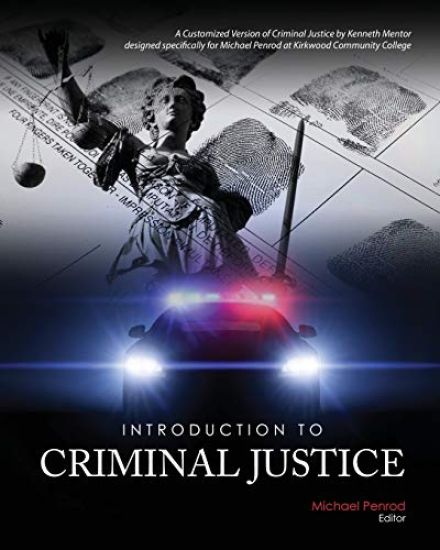
How do we learn about criminal justice? From what sources do we get this information? How do we filter the massive amount of information available to us on a given subject especially one as controversial as criminal justice?Introduction to Criminal Justice Customized recognizes controversies faced by the criminal justice system. ""Real world"" examples are offered throughout the text, in each case highlighting difficult choices faced by our society, the justice system, and those attempting to develop a clear and unbiased policy. Ideally, these examples will help readers gain the critical thinking skills needed to reach logical conclusions regarding these controversies.
Nine of Schubert's beautiful art songs arranged for the mid-level performer. List: Lachen und Weinen, Nacht und Traume, Selige Welt, Schwangesang, Die Liebe hat Gelogen, Die Liebe, An die Musik, Trost in Thranen, Der Tod und das Madchen
Nine of Schubert's beautiful art songs arranged for the mid-level performer. List: Lachen und Weinen, Nacht und Traume, Selige Welt, Schwangesang, Die Liebe hat Gelogen, Die Liebe, An die Musik, Trost in Thranen, Der Tod und das Madchen
Nine of Schubert's beautiful art songs arranged for the mid-level performer. List: Lachen und Weinen, Nacht und Traume, Selige Welt, Schwangesang, Die Liebe hat Gelogen, Die Liebe, An die Musik, Trost in Thranen, Der Tod und das Madchen
Nine of Schubert's beautiful art songs arranged for the mid-level performer. List: Lachen und Weinen, Nacht und Traume, Selige Welt, Schwangesang, Die Liebe hat Gelogen, Die Liebe, An die Musik, Trost in Thranen, Der Tod und das Madchen
Nine of Schubert's beautiful art songs arranged for the mid-level performer. List: Lachen und Weinen, Nacht und Traume, Selige Welt, Schwangesang, Die Liebe hat Gelogen, Die Liebe, An die Musik, Trost in Thranen, Der Tod und das Madchen
Nine of Schubert's beautiful art songs arranged for the mid-level performer. List: Lachen und Weinen, Nacht und Traume, Selige Welt, Schwangesang, Die Liebe hat Gelogen, Die Liebe, An die Musik, Trost in Thranen, Der Tod und das Madchen
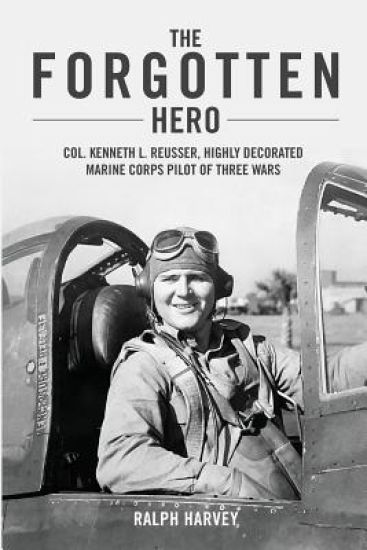
Growing up in a small farming community near the Oregon coast, Ken Reusser saw a 1920s barnstormer and dreamed of becoming a military pilot. Coming of age during the Great Depression, he overcame many obstacles and learned to fly in the pre-war Civilian Pilot Training program (CPT). Enlisting in the Naval Reserve, Reusser completed naval flight training as an enlisted Aviation Cadet and accepted a commission in the Marine Corps upon graduation. After that, it was off to war. Ken Reusser's twenty-seven year military career included two combat tours as a fighter pilot in the Pacific during World War Two, a deployment as a carrier-based pilot aboard U.S.S. Sicily (CVE-118) during the Korean War, and a period commanding Marine Air group 16 during the helicopter air war in Vietnam. Known as an aggressive combat leader, he was officially credited with shooting down 1.5 enemy aircraft in WW II, and was awarded a Navy Cross for a daring, high altitude intercept mission over Okinawa. Flying an F4U off Sicily near Inchon, South Korea, he was awarded another Navy Cross for leading an audacious attack on a tank repair factory and then destroying a concealed tanker at anchors. But his bold exploits and long list of medals came at a steep price. Reusser was shot down five times: twice in WW II, twice in Korea, and once more in Vietnam, and suffered serious wounds in all three wars. The Forgotten Hero is more than the true story of a celebrated Marine Corps pilot. This long awaited biography reveals Ken Reusser's entire life story, including both triumphs and tragedies, and provides a testament to the power of one man's faith, determination and courage. Leader quotes: "This biography goes well beyond the retelling of brave deeds and fearless exploits. Every aspect of Col. Reusser's remarkable life is covered with meticulous detail that left this reader in absolute awe. It is not often that one man's life can cover the sweep of history, but here is a compelling narrative that does so with style, momentum and depth. It should not be missed." - Peter A. Young, a former Naval Flight Officer, flew the Grumman A-6A Intruder as a bombardier/navigator over South and North Vietnam and Laos. "Colonel Ken Reusser is an American hero whose service and sacrifice represent true valor. From flying the skies over Guadalcanal, to serving with the legendary Black Sheep squadron in Korea, to surviving the harrowing crash of his helicopter in Vietnam, Col. Ken Reusser is a Marine who should be recalled with the top aviators of all time." "Meticulously researched and vividly written, The Forgotten Hero is amazingly detailed and a must read chronicle of a highly decorated aviator whose story deserves to be remembered." - Kevin Bennett, general manager of the American Heroes Channel. "Colonel Kenneth Reusser was an amazing man and an amazing Marine. This book provides insight into his commitment to get the job done in combat-very specific details are provided. His commitment to serve our nation in time of war is a great example of why America wins wars-our military people who do more than is required of them. Reusser is an example of why America is great." - Lt. Col. Denny Gillem, U.S. Army (ret), is a West Point graduate, and a highly decorated airborne infantry officer and war planner. For many years Col. Gillem has hosted the nationally syndicated radio program Frontlines of Freedom. "The Forgotten Hero contains everything you should know about his life and the dangerous combat missions Ken Reusser flew in World War II, the Korean War and Vietnam." - Col. Warren MacQuarrie (ret), was a Marine Corps pilot who flew PBJ (B-25) Mitchell bombers during WW II and F4U Corsairs in Korea. Like Ken, Col. MacQuarrie also had a tour commanding Marine Air Group 16 in Vietnam, where the unit operated UH-1E, CH-46 and CH-53 helicopters.
The Golden Age was published in 1895, by a British writer Kenneth Grahame. What's interesting about The Golden Age is that in this book, Grahame uses the metaphor of Ancient Greek legends and stories as parallels to his own life. The adults are termed "The Olympians" appearing remote, inaccessible, and lofty to a child. Their activities are incomprehensible to the young mind while they had no interest in the doings of their wards. Grahame's humorous yet ironical tone lends a touch of fun to the adult world as seen through the eyes of a child.
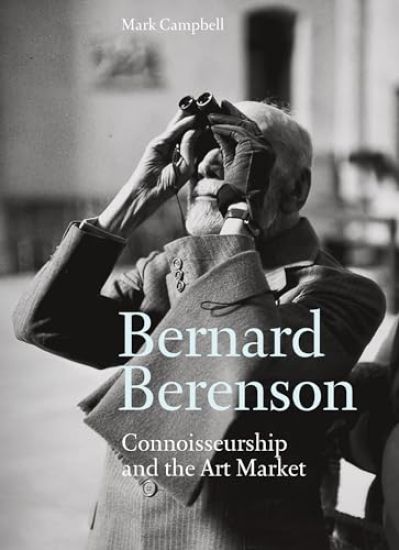
Bernard Berenson (1865-1959) was a Lithuanian American connoisseur who was a hugely significant figure in the evolution of the commercial art world from the late 1880s to the 1940s. This book examines his conception of connoisseurship and its impact through his famous protégés, including Geoffrey Scott, Meyer Shapiro, John Walker and especially, art historian of Civilisation fame, Kenneth Clark. This is framed through a biographical account of his complex and duplicitous character, together with a description of his important methods for determining authorship and assigning value to Renaissance artworks. In terms of the assignation of authorship and the determination of value, Berenson remains a seminal if contradictory figure in the history of the art market, for whom the artwork was subject to a series of negotiations and the act of connoisseurship was both an aesthetic pursuit and a ‘scientific process’. Berenson’s commercial dealings ran counter to his own assertion that the connoisseur needed to be ‘disinterested’ in their consideration of art and engaged in an other-worldly ‘art in life’. The book examines Berenson’s complex and lucrative dealings with the industrialists of the American Gilded Age, including Isabella Stewart Gardiner. These transactions were enmeshed in issues of authenticity and forgery, as well as inflated estimates and unscrupulous skimming from both clients and business partners, including the notorious Duveen Brothers. These negotiations afforded him such celebrity and financial gain that 'everyone', as Marcel Proust once quipped, 'wanted to know about Berenson'. In this way, Berenson is not only an historic figure, but also a precursor to those sometimes slippery intermediaries who appear throughout the history of contemporary art.