Kirjojen hintavertailu. Mukana 11 447 266 kirjaa ja 12 kauppaa.

Kirjahaku

Etsi kirjoja tekijän nimen, kirjan nimen tai ISBN:n perusteella.

1000 tulosta hakusanalla Kumar Pankaj

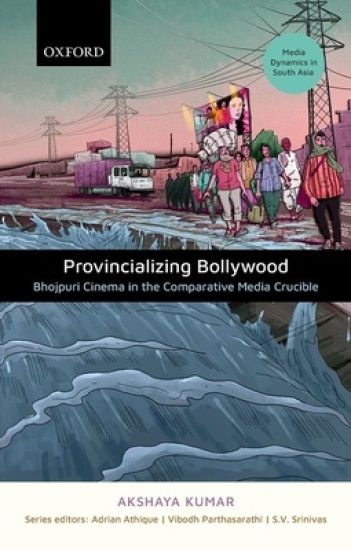
Provincializing Bollywood

Provincializing Bollywood

Akshaya Kumar

OUP India
2021
sidottu
Provincializing Bollywood argues that Bhojpuri cinema exemplifies the overflow of a provincial derivative form that defies its place in the given scheme of things. Situating it at the intersection of vernacular media production and the infrastructural-political reordering of provincial north India, the book shows that Bhojpuri media's characteristic 'disobedience' is marked by a libidinal excess - simultaneously scandalizing and moralizing - to address the inexact calculi of Bhojpuri speaking region's'underdevelopment'. Bhojpuri media therefore demands that it is assessed not merely for its internal content but within the comparative media crucible, marked by interpenetrating forms and histories as diverse as those of ecological distress, musical traditions, gendered segregation, real estate, urban resettlements, and highway modernities. Foregrounding the libidinal excess, language politics, and curatorial informalities, Provincializing Bollywood synthesizes Bhojpuri media's spectacular public insubordination and its invocation of a shared debt, which is by no means regional in its provenance.

Principles and Practice of Clinical Cardiovascular Genetics

Principles and Practice of Clinical Cardiovascular Genetics

Dhavendra Kumar; Perry Elliott

Oxford University Press Inc
2010
sidottu
Consisting of contributions from experts in all specialties of cardiovascular genetics and applied clinical cardiology, Principles and Practice of Clinical Cardiovascular Genetics serves as the comprehensive volume for any clinician or resident in cardiology and genetics. Each chapter provides a detailed and comprehensive account on the molecular genetics and clinical practice related to specific disorders or groups of disorders, including Marfan syndrome, thoracic and abdominal aortic aneurysms, hypertrophic, dilated and restrictive cardiomyopathies and Arrhythmogenic right ventricular cardiomyopathy, as well as many others. All sections comprehensively address cardiovasuclar genetic disorders, beginning with an introduction and including separate sections on the disease's basic biological aspects, specific genetic mechanisms or issues, clinical aspects, genetic management (e.g., genetic diagnosis, risk assessment, genetic counseling, genetic testing), and clinical management issues. The final section exclusively addresses the management of cardiovascular genetic disorders, specifically considering stem cell therapy, genetic counseling, pharmacogenomics and the social and ethical issues surrounding disease treatment.
A Better Ape

A Better Ape

Victor Kumar; Richmond Campbell

OXFORD UNIVERSITY PRESS INC
2022
sidottu
Humans are moral creatures. Among all life on Earth, we alone experience rich moral emotions, follow complex rules governing how we treat one another, and engage in moral dialogue. But how did human morality evolve? And can humans become morally evolved? In A Better Ape, Victor Kumar and Richmond Campbell draw on the latest research in the biological and social sciences to explain the key role that morality has played in human evolution. They explore the moral traits that humans share with chimpanzees; how a more complex moral mind enabled Homo sapiens to arise and out-compete other human species; and the place of morality alongside historic revolutions in technology and social organization. Throughout the book, Kumar and Campbell argue that morality co-evolved with intelligence and complex sociality. Morality prevents societal collapse and enables complex knowledge. After unearthing the ancient origins of human morality, Kumar and Campbell use evolutionary theory to deliver profound insights about how to advance moral progress and resist moral regress, such as reducing animal suffering on industrial farms; capitalizing on the recent revolution in gay rights to foster a nascent revolution in transgender rights; opposing intersectional inequality that impacts women and people of color in lower socioeconomic classes; and addressing major problems of global inequality, especially impending crises of injustice caused by anthropogenic climate change. Understanding how we evolved--and how we continue to evolve--can help us become a better ape.
Organizational Change and Development

Organizational Change and Development

Dipak Kumar Bhattacharyya

OUP India
2011
nidottu
The book focuses on change and development as organizational phenomena. The entire text is divided into 5 sections viz., Understanding Organizational Processes and Change, Management of Change, Nature of Organizational Development, OD Interventions and Strategies, and Contemporary Issues in OD, as the concluding part. With a strong conceptual foundation, the book takes the readers through the entire processes and stages of change as seen and experienced worldwide. The main strength of the book lies in its exhaustive treatment to a wide array of topics along with various exhibits on change management in Indian and global organizations. The role of leadership, organizational culture and technology as integral parts of any change initiative are dealt with in detail. Later part of the book covers various OD models and tools, change management strategies and contemporary issues such as diversity management. The language is simple and enhances learning for the reader with various snapshots of different stages/levels of change and OD at organizations worldwide. The book is aimed at MBA students who specialize in HR and Strategy areas. Industry practitioners and change consultants will also benefit greatly with the title.
The Joycean Labyrinth

The Joycean Labyrinth

Udaya Kumar

Clarendon Press
1991
sidottu
This powerful and unusual study examines the relations between the textual organization of Ulysses and the notions of time, language, and poetics implicit in the novel. Making use of recent developments in philosophy and literary theory, Udaya Kumar takes issue with those who, like Richard Ellmann, see Ulysses as a fully coherent text. Instead, he argues that the novel is a complex transitional text involving various degrees of mediation between opposing impulses such as naturalism and schematism, unification and detotalization. The book begins with an examination of the pervasive use of repetition in Ulysses and shows that this results in a disruption of linear time and creates a `textual memory'. This argument is further developed in relation to the question of time and the sign, where Ulysses is shown to display a differentiated and heterogeneous temporal experience. Finally, examining Joyce's early theories, it is argued that Ulysses implies a radical notion of tradition as the site of difference and of the work of art as the reperformance of elements from tradition. The concluding chapter clarifies this idea in relation to other strands in modernism and postmodernism.
Semiconductor Nanophotonics

Semiconductor Nanophotonics

Prasanta Kumar Basu; Bratati Mukhopadhyay; Rikmantra Basu

Oxford University Press
2022
sidottu
Nanometre sized structures made of semiconductors, insulators, and metals and grown by modern growth technologies or by chemical synthesis exhibit novel electronic and optical phenomena due to the confinement of electrons and photons. Strong interactions between electrons and photons in narrow regions lead to inhibited spontaneous emission, thresholdless laser operation, and Bose-Einstein condensation of exciton-polaritons in microcavities. Generation of sub-wavelength radiation by surface plasmon-polaritons at metal-semiconductor interfaces, creation of photonic band gaps in dielectrics, and realization of nanometer sized semiconductor or insulator structures with negative permittivity and permeability, known as metamaterials, are further examples in the area of Nanophotonics. The studies help develop spasers and plasmonic nanolasers of subwavelength dimensions, paving the way to use plasmonics in future data centres and high-speed computers working at THz bandwidth with less than a few fJ/bit dissipation. The present book is aimed at graduate students and researchers providing them with an introductory textbook on Semiconductor Nanophotonics. It gives an introduction to electron-photon interactions in Quantum Wells, Wires, and Dots and then discusses the processes in microcavities, photonic band gap materials, metamaterials, and related applications. The phenomena and device applications under strong light-matter interactions are discussed, mostly by using classical and semi-classical theories. Numerous examples and problems accompany each chapter.
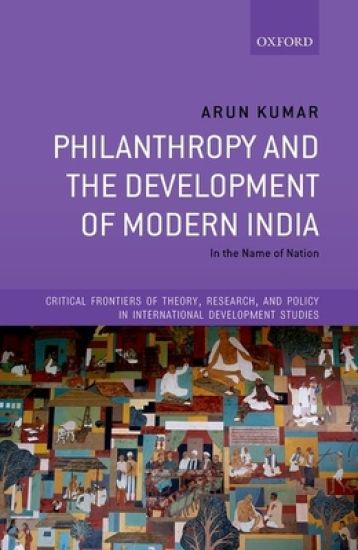
Philanthropy and the Development of Modern India

Philanthropy and the Development of Modern India

Arun Kumar

Oxford University Press
2021
sidottu
Drawing on the history of the philanthropy of India's economic elites, Arun Kumar discusses how their ideas and understanding of development have shifted and changed over time. Going beyond the more familiar criticisms of development's entanglements with colonialism, Kumar interrogates the changes in development imaginaries in terms of modernity's entanglements with the national question, including anti-colonial nationalism and post-colonial nation-building during the twentieth century. Development, he suggests, can be usefully read and critiqued as national-modern. Philanthropy and the Development of Modern India plots the careers of the national-modern in four main sites of development: civil society, community, science and technology, and selfhood. In an unusual move reading socio-economic nationalist reform from the first half of the twentieth century alongside post-colonial development from the second half, Kumar uncovers the lineages of contemporary development ideas such as self-care, self-reliance, merit, etc. In all this, elites were driven by a 'pedagogic reflex': to teach different sections of Indian society of how to be modern and developed. Contrary to development studies' characterization of elites as anti-development or captors of scarce resources, Kumar shows how elites longed for development for others. Development provided the moral justification, in their calculations, for protecting their commercial interests as they navigated the turbulent Indian twentieth century.
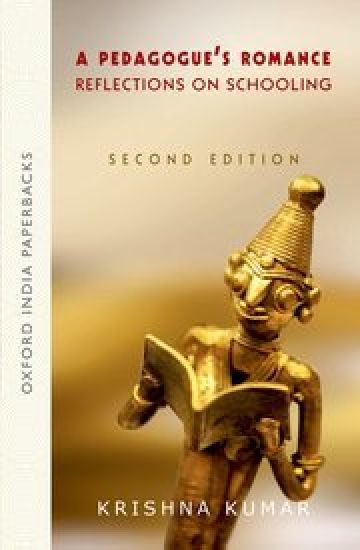
A Pedagogue's Romance

A Pedagogue's Romance

Krishna Kumar

OUP India
2015
nidottu
The Indian education system impacts all of us directly or indirectly at various points in our lives. We are often critical and angry, and readily offer solutions that nobody seems willing to implement. In this selection of shorter essays, Krishna Kumar takes us into what he calls the 'inner world of education'. We go inside schools and training institutes, delve into the public examination system and textbooks, to analytically distinguish the system from the concept of education. At the same time, the author alerts us to the wider cultural, economic, and technological factors that influence the system and its key players-the students and teachers. This second edition of A Pedagogue's Romance presents some additional material along with an updated introduction. Full of creative ideas presented in an accessible style and with passion, the volume will attract teachers, decision-makers, activists, guardians, and students.
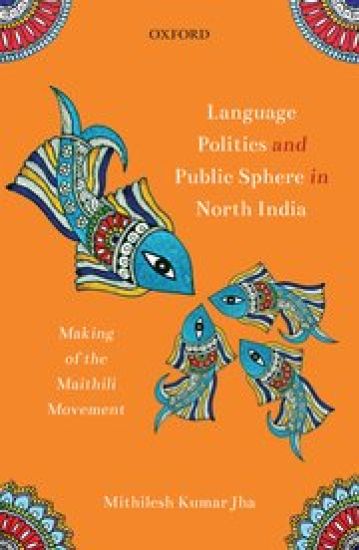
Language Politics and Public Sphere in North India
Moving beyond the existing scholarship on language politics in north India which mainly focuses on Hindi-Urdu debates, Language Politics and Public Sphere in North India examines the formation of Maithili movement in the context of expansion of Hindi as the 'national' language. It revisits the dynamic hierarchy through which a distinction is produced between 'major' and 'minor' languages. The movement for recognition of Maithili as an independent language has grown assertive even when the authority of Hindi is resolutely reinforced. The book also examines increasing politicization of the Maithili movement -- from Hindi-Maithili ambiguities and antagonisms, to territorial consciousness, and subsequently to separate statehood demand, along with the persistent popular indifference. Mithilesh Jha examines such processes historically, tracing the formation of Maithili movement from mid-nineteenth century until its inclusion into the eighth schedule of the Indian constitution in 2003.
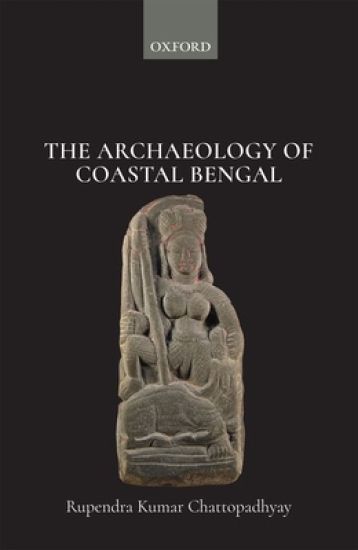
The Archaeology of Coastal Bengal

The Archaeology of Coastal Bengal

Rupendra Kumar Chattopadhyay

OUP India
2018
sidottu
Research work on coastal Bengal has mostly focused on maritime trading networks. In a clear departure from the existing scholarship, this volume questions the linearity of considering trade as the sole determinant of creation of settlement in the coastal regions. Focusing on settlement strategies, Chattopadhyay unravels how human societies, through successive generations, have adapted to the coastal environment and bioregime. First-hand data, procured through extensive fieldwork, forms the sound basis of this work. From structural remains, ceramic and bone implements, and stone tools, to terracotta figurines and inscriptions, a vast array of sources, including epigraphic and literary sources, is analysed. Significantly, the volume also highlights the interconnection between coastal geography and the hinterland. Chattopadhyay's meticulously researched work offers a geographical and temporal frame which allows the research on coastal Bengal to be viewed as an integral part of the archaeological developments in not only the subcontinent but also the adjoining region of the Southeast Asian countries.
Badalte Gaon, Badalta Dehat

Badalte Gaon, Badalta Dehat

Satendra Kumar

OUP India
2018
nidottu
Everyday life in contemporary rural India is characterized by an increased sense of mobility, inequality, and uncertainty. Ordinary villagers often find themselves caught between the promises and failures of democracy and development. This ethnographic study of the village of Khanpur (in Uttar Pradesh, north India) is an attempt to grasp everyday life in rural India. Drawing on descriptions of village life, interspersed with theoretical analyses, the author examines how ordinary people construct their own sense of their lives and their futures in everyday activities: working on farms, attending college, searching for non-farm employment, celebrating religious rituals, and dealing with local elections and democracy. The villagers confront growing economic and moral uncertainty; they creatively harmonize public discourse and local practice; and sometimes they resolve incoherence and unease through the use of irony. In so doing, they perform everyday village and caste ethics and re-create transient political, economic, and moral communities at a time of massive social dislocation. Satendra Kumar in this lucid book shows, in no uncertain terms, that villages in Uttar Pradesh and elsewhere have been and continue to be vibrant grounds for the production of culture, sociality, hope, politics, and persons. He also addresses anthropology's forfeiture of the village as a subject of study in an era of globalization.
Election Commission of India

Election Commission of India

Ujjwal Kumar Singh; Anupama Roy

OUP India
2019
sidottu
Responding to a pressing need for a focussed study of India's public institutions, Singh and Roy put together the first comprehensive monograph-length study of the Election Commission (EC) of India. They probe the consistent credibility that the EC enjoys as a non-partisan constitutional body entrusted with the responsibility of conducting elections in India. The EC is generally seen as a regulatory body which enforces rules to conduct elections effectively and efficiently. The authors argue that the EC must be seen as performing a range of functions, not all of which are regulatory. The EC is actively engaged in framing and implementing rules to ascertain procedural certainty in order to ensure the democratic principle of uncertainty of electoral outcome. Innovations in conducting elections which are often seen through the lens of electoral 'management' and 'electoral integrity' have become part of the deliberative content of elections. The work also examines the relationship between the legal-institutional frameworks of electoral governance within the larger institutional matrix of democracy, and the political field in which they are located. The latter, the authors argue, both limit and enable the effectiveness of the EC in the shared space of democracy in India.
Michel Foucault

Michel Foucault

Pradip Kumar Bose

OUP India
2019
nidottu
This new Bangla book discusses Michel Foucault's political and philosophical thoughts in the last decade of his career. The author argues that this decade was one of his most restless, creative, and fascinating. He discusses and analyses Foucauldian theories, such as sexuality, governmentality, bio-politics, and bio-power, as also his concern with the politics of truth, which includes his thoughts on modernity and critique. The book attempts to offer an intellectual history of Foucault's last decade and tries to show how a thinker thinks between the possible and the as-yet unimaginable. The author also engages with the period when Foucault positioned Kant as a critique of modernity. Through his essays on critique and Enlightenment, the author argues, Foucault was searching for another kind of critical philosophy. The essays in this book thus attempt to show the thinking in motion of an innovative intellectual of the twentieth century and in the process try to trace the finer nuances of Foucault's new critical philosophy.
Short Selling

Short Selling

Amit Kumar

Columbia University Press
2015
sidottu
When an investor believes a stock is overvalued and will soon drop in price, he might decide to "short" it. First, he borrows an amount of the stock, and then sells it. He waits for the stock to tank before buying back the same amount of shares at a deflated price. After returning the shares to his lender, he pockets the difference-unless any one of several hard-to-predict variables interferes, and the stock fails to drop. Since these variables are so hard to predict, short selling is difficult for even seasoned investors. It takes great talent and experience to isolate the best short ideas for falling stocks-skills Amit Kumar developed and honed over decades of market analysis and trading. This book shares his short-selling framework, built on themes common to falling stocks and the market's endemic strengths and cycles. Featuring key case studies and exclusive interviews with successful fund managers Bill Ackman (Pershing Square Capital Management) and Mark Roberts (Off Wall Street Consulting Group), Kumar shows investors how to avoid traps and profit from well-researched short ideas. Investors may not always act on short ideas, but they can avoid losses by using Kumar's framework to identify overvalued stocks. Professionals and amateur investors alike will benefit from this fundamental research approach, which transforms short selling into a long-term strategy.
Mobile Broadcasting with WiMAX

Mobile Broadcasting with WiMAX

Amitabh Kumar

Focal Press
2008
nidottu
Written exclusively from broadcasters perspective, Mobile Broadcasting with WiMAX will help you move ahead in the use of WiMAX technologies. Whether you are an engineer, content provider, manager, or operator and planning such services, this book helps you understand the dimensions of this new medium and integration of communication, broadcasting and Multimedia technologies. The book oulines migrating to a new generation of broadcasting which integrates the Mobile, Wireless and Fixed network domains, then gives you a complete picture on what is happening in the field. The book is divided into five parts as follows: PART I Gives an introduction to Broadband Wireless Technologies and Mobile WiMAX. Wi-Fi including 802.11a,b,n and g, WiMAX technologies with focus on Mobile WiMAX 802.16e, and provides a global overview of deployment of Wireless broadband networks. PART-II is about Mobile Multimedia broadcasting and Mobile TV technologies, based on both cellular and broadband wireless. PART III covers Resources for Mobile multimedia broadcasting and comprises of four structured chapters on Spectrum for WiMAX networks, WiMAX terrestrial broadcasting networks, client devices for WiMAX and an update of on chipsets developments. Part IV is devoted to the Network Architectures and the integration of WiMAX with other networks, both fixed and mobile. Part V deals with Software architectures and Applications which help the process of mobile multimedia broadcasting. Case studies of prominent networks are given with country specific examples.
Say You’ll Be My Jaan

Say You’ll Be My Jaan

Naina Kumar

PENGUIN BOOKS LTD
2024
pokkari
'A warm, smart, sexy, and absolutely charming debut' COLLEEN HOOVER, It Ends With Us-----"Think of it like Tinder. Except your parents are the algorithm"Meghna has tried everything to find her jaan: blind dates, the dreaded apps, even attempting conversations with strangers. Everything except arranged marriage.Then Seth, her best friend and the-one-who-got-away, asks her to be his "best man" and suddenly her parent's taste doesn't seem so bad. Which is how she meets the cranky but handsome Karthik, who knows marriage is not for him.They’re the perfect match – if not the one their parents think they are making – and a deal is struck. They’ll announce their engagement: Karthik will be excused from his mother’s set-ups and Meghna will have a date for the wedding from her nightmares.But how can you fake it and get away with it, when you’re not faking it at all?For fans of WEDDING SEASON, SAY YOU'LL BE MY JAAN is brimming with characters you can't help but fall for, off-the-charts chemistry and all the joy of a 90s romcom as it takes a fresh look on that age old search for your other half.-----Everyone’s falling hard for Say You’ll Be My Jaan'The type of South Asian diaspora romance I’ve always wished for. Naina Kumar’s debut is spectacular' Nisha Sharma, Dating Dr. Dil'A fresh and charming story about finding love without losing yourself' Linda Holmes, Evvie Drake Starts Over'This debut about love, culture, family, and friendship is absolutely irresistible?I didn’t want to put it down' Sarah Adler, Mrs. Nash’s Ashes'An instant romance classic!' Farah Heron, Accidentally Engaged'Stuffed to the brim with emotion, chemistry, and all the best microtropes' Ava Wilder, Will They or Won’t They
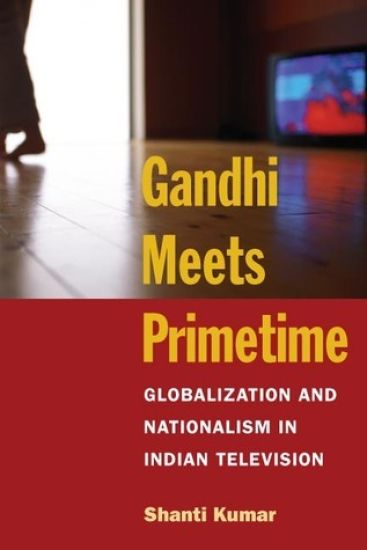
Gandhi Meets Primetime

Gandhi Meets Primetime

Shanti Kumar

University of Illinois Press
2005
nidottu
Shanti Kumar's Gandhi Meets Primetime examines how cultural imaginations of national identity have been transformed by the rapid growth of satellite and cable television in postcolonial India. To evaluate the growing influence of foreign and domestic satellite and cable channels since 1991, the book considers a wide range of materials including contemporary television programming, historical archives, legal documents, policy statements, academic writings and journalistic accounts. Kumar argues that India's hybrid national identity is manifested in the discourses found in this variety of empirical sources. He deconstructs representations of Mahatma Gandhi as the Father of the Nation on the state-sponsored network Doordarshan and those found on Rupert Murdoch's STAR TV network. The book closely analyzes print advertisements to trace the changing status of the television set as a cultural commodity in postcolonial India and examines publicity brochures, promotional materials and programming schedules of Indian-language networks to outline the role of vernacular media in the discourse of electronic capitalism. The empirical evidence is illuminated by theoretical analyses that combine diverse approaches such as cultural studies, poststructuralism and postcolonial criticism.
Outside the Box

Outside the Box

Deepa Kumar

University of Illinois Press
2008
nidottu
Outside the Box presents an in-depth study of media representation of the 1997 United Parcel Service (UPS) workers' strike. Deepa Kumar delineates the history of the strike, how it coincided with the rise of globalization, and how the mainstream media were pressured to incorporate pro-labor arguments that challenged the dominant logic of neoliberalism. Drawing on a textual analysis of over five hundred news reports, Kumar argues that media reform is more complicated than is suggested by liberal media theorists. She makes a case for a dialectical understanding, developing a "dominance/resistance model" for media analysis.
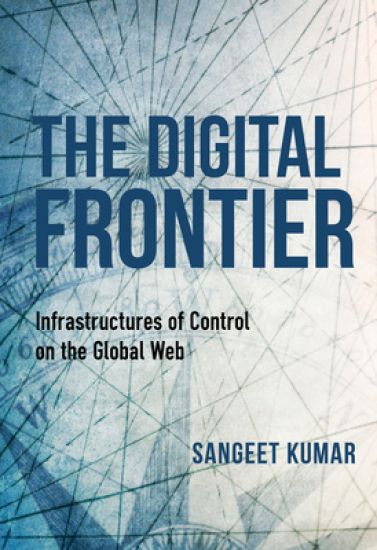
The Digital Frontier

The Digital Frontier

Sangeet Kumar

Indiana University Press
2021
sidottu
The global web and its digital ecosystem can be seen as tools of emancipation, communication, and spreading knowledge or as means of control, fueled by capitalism, surveillance, and geopolitics. The Digital Frontier interrogates the world wide web and the digital ecosystem it has spawned to reveal how their conventions, protocols, standards, and algorithmic regulations represent a novel form of global power. Sangeet Kumar shows the operation of this power through the web's "infrastructures of control" visible at sites where the universalizing imperatives of the web run up against local values, norms, and cultures. These include how the idea of the "global common good" is used as a ruse by digital oligopolies to expand their private enclosures, how seemingly collaborative spaces can simultaneously be exclusionary as they regulate legitimate knowledge, how selfhood is being redefined online along Eurocentric ideals, and how the web's political challenge is felt differentially by sovereign nation states. In analyzing this new modality of cultural power in the global digital ecosystem, The Digital Frontier is an important read for scholars, activists, academics and students inspired by the utopian dream of a truly representative global digital network.