
Kirjahaku
Etsi kirjoja tekijän nimen, kirjan nimen tai ISBN:n perusteella.
1000 tulosta hakusanalla Kurt Jahn-Nottebohm
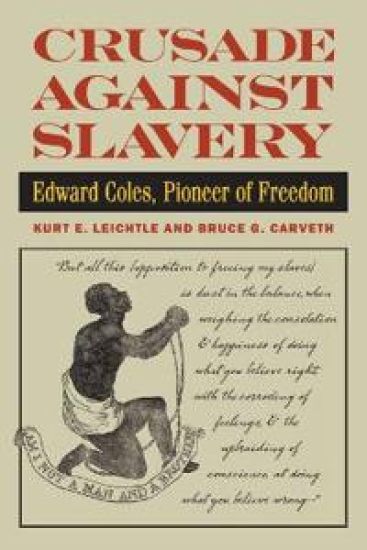
Crusade Against Slavery
Kurt E. Leichtle; Bruce G. Carveth
Southern Illinois University Press
2018
nidottu
Edward Coles was a wealthy heir to a central Virginia plantation, an ardent emancipator, the second governor of Illinois, the loyal personal secretary to President James Madison, and a close antislavery associate of Thomas Jefferson. Yet never before has a full-length book detailed his remarkable life story and his role in the struggle to free all slaves. In Crusade Against Slavery, Kurt E. Leichtle and Bruce G. Carveth correct this oversight with the first modern and complete biography of a unique but little-known and quietly influential figure in American history.Rejecting slavery from a young age, Coles's early wishes to free his family's slaves initially were stymied by legal, practical, and family barriers. Instead he went to Washington, D.C., where his work in the White House was a life-changing blend of social glitter, secretarial drudge, and distasteful political patronage. Returning home, he researched places where he could live out his ideals. After considerable planning and preparation, he left his family's Virginia tobacco plantation in 1819 and started the long trip west to Edwardsville, Illinois, pausing along the Ohio River on an emotional April morning to free his slaves and offer each family 160 acres of Illinois land of their own. Some continued to work for Coles, while others were left to find work for themselves. This book revisits the lives of the slaves Coles freed, including a noted preacher and contributor to the founding of what is now the second-oldest black Baptist organization in America.Crusade Against Slavery details Coles's struggles with frontier life and his surprise run and election to the office of Illinois governor as well as his continuing antislavery activities. At great personal cost, he led the effort to block a constitutional convention that would have legalized slavery in the state, which resulted in an acrimonious civil suit brought on by his political enemies, who claimed he violated the law by not issuing a bond of emancipation for his slaves. Although initially convicted by a partisan jury, Coles was vindicated when the Illinois Supreme Court overturned the decisions of the lower courts. Through the story of Coles's moral and legal battles against slavery, Leichtle and Carveth unearth new perspectives on an institution that was on unsure footing yet strongly ingrained in the business interests at the economic base of the fledgling state.In 1831, after less than a decade in Illinois-and after losing a bid for Congress-Coles left for Philadelphia, where he remained in correspondence with Madison about the issue of slavery. Drawing on previous incomplete treatments of Coles's life, including his own short memoir, Crusade Against Slavery includes the first published analysis of Madison's failure to free his slaves despite his plans to do so through his will and a fascinating exploration of Coles's struggle to understand Madison's inability to live up to the ideals both men shared.

Wireless Dada: Telegraphic Poetics in the Avant-Garde demonstrates that the poetics of the Dada movement were profoundly influenced by the telegraph and the technological and social transformations that it brought about in the nineteenth and early twentieth centuries. While telegraphy's impact on other avant-gardes such as Italian futurism and German expressionism is widely acknowledged, its formative role in Dada poetics has been largely neglected. Yet the telegraph exerted an unmistakable influence on the Dada movement, providing a fundamentally new paradigm for understanding language that proved well suited to an avant-garde in search of revolutionary means of expression.Drawing on methods and insights from media history and theory, avant-garde studies, and German literary studies, Kurt Beals shows how the telegraph and the cultural discourses that surrounded it shaped the radical works of this seminal avant-garde movement. The "nonsense" strain in Dada is frequently seen as a response to the senseless violence of the First World War. However, Beals argues, it was not just the war that turned Dada poetry into a jumble of senseless signals—it was also the wireless.

After the violent upheaval and bloodshed that accompanied the collapse of one of the most brutal Communist regimes in Eastern Europe, Romania has made important progress in the development of a democratic political system and in the building of a market economy. Written by an American specialist and a Romanian scholar, the Historical Dictionary of Romania is an essential, up-to-date reference work on this country. Its concise dictionary entries detail the important people, places, events, and institutions in the new Romania as well as its previous regimes. It also provides significant detail about Romania's economy, society, political situation, language, and culture. A comprehensive bibliography, divided by subject, allows scholars access to additional sources of information. The introduction gives a brief overview of the county's geography, history, population, and history. This handy reference work also includes two maps, a chronology, and a list of rulers of Romania.

Since 1841, 200 Jewish men and women have served in the United States Congress. Their ranks have included Democrats and Republicans, Whigs and Socialists, radicals and reactionaries—a microcosm of the political diversity of the United States. Their influence in Congress has been significant, yet they have been largely overlooked in the history books. In The Jews of Capitol Hill: A Compendium of Jewish Congressional Members, Kurt F. Stone profiles all of the Jews who have served in the House or the Senate. This volume features entries on every Jewish member of Congress, from David Levy Yulee, who, in 1841, was elected to the 27th Congress as a Delegate from the Territory of Florida, to the Jewish senators and representatives of the 111th Congress. Arranged in chronological order, the members range from Bella Abzug to Edward Zorinsky and feature such historical figures as Barry Goldwater, Jacob Javits, Herbert Lehman, and Abraham Ribicoff, along with those still serving in Congress, such as Barney Frank, Dianne Feinstein, Joseph Lieberman, and Al Franken. Each entry identifies the member's political party and years of service, provides a biographical sketch, and includes references for further study. This is the most comprehensive and extensive resource on the legacy of Jewish representation and influence in the United States Congress.

Known for his bold and aggressive leadership, Kurt “Panzer” Meyer was one of the most highly decorated German soldiers of World War II. Successively commanding a motorcycle company, a reconnaissance battalion, a grenadier regiment, and the Hitler Youth Panzer Division, Meyer saw intense combat across Europe: the invasion of Poland, the fall of France in 1940, the sweep through the Balkans and Greece, the bitter fighting on the Eastern Front, and the 1944 campaign for Normandy, where he fell into Allied hands and was charged with war crimes. His firsthand account, written with unmatched vividness and immediacy, conveys the grim reality of war as well as the bravery of the young men he commanded.
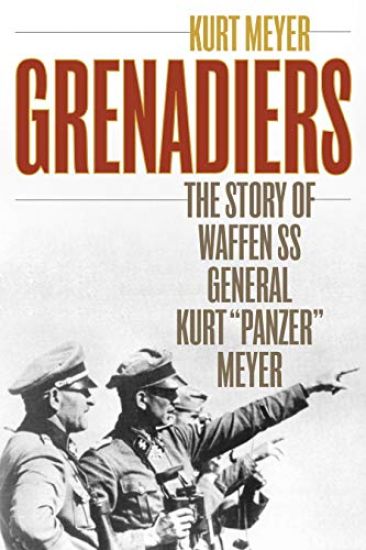
Reprint of the classic World War II memoir German General Kurt "Panzer" Meyer's autobiography is a fascinating insight into the mind of one of Germany's most highly decorated and successful soldiers of World War II. If you love small-unit actions, this is the book for you. Follow Meyer with the 1st SS-Panzer Division "Leibstandarte" and the 12th SS-Panzer Division "Hitlerjugend," from the first day of the war in Poland, through service in France, Russia, and Greece, up until his capture in Normandy in 1944 and his postwar trials and tribulations.

International Responses to Mass Atrocities in Africa
Kurt Mills
University of Pennsylvania Press
2015
sidottu
Since the end of World War II and the founding of the United Nations, genocide, crimes against humanity and other war crimes-mass atrocities-have been explicitly illegal. When such crimes are committed, the international community has an obligation to respond: the human rights of the victims outweigh the sovereignty claims of states that engage in or allow such human rights violations. This obligation has come to be known as the responsibility to protect. Yet, parallel to this responsibility, two other related responsibilities have developed: to prosecute those responsible for the crimes, and to provide humanitarian relief to the victims-what the author calls the responsibility to palliate. Even though this rhetoric of protecting those in need is well used by the international community, its application in practice has been erratic at best. In International Responses to Mass Atrocities in Africa, Kurt Mills develops a typology of responses to mass atrocities, investigates the limitations of these responses, and calls for such responses to be implemented in a more timely and thoughtful manner. Mills considers four cases of international responses to mass atrocities-in Rwanda, the Democratic Republic of the Congo, Uganda, and Darfur-putting the cases into historical context and analyzing them according to the typology, showing how the responses interact. Although all are intended to address human suffering, they are very different types of actions and accomplish different things, over different timescales, on different orders of magnitude, and by very different types of actors. But the critical question is whether they accomplish their objectives in a mutually supportive way-and what the trade-offs in using one or more of these responses may be. By expanding the understanding of international responsibilities, Mills provides critical analysis of the possibilities for the international community to respond to humanitarian crises.
In a collection of concise autobiographical essays, the renowned novelist offers his views on his own life, from growing up during the Great Depression to his fame as a writer, as well as his reflections on art, politics, and everyday life in America. Reprint. 200,000 first printing.
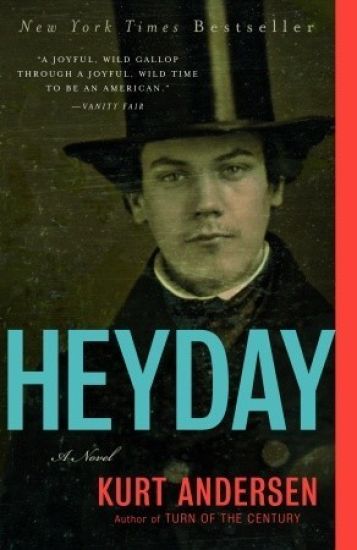
Heyday is a brilliantly imagined, wildly entertaining tale of America's boisterous coming of age-a sweeping panorama of madcap rebellion and overnight fortunes, palaces and brothels, murder and revenge-as well as the story of a handful of unforgettable characters discovering the nature of freedom, loyalty, friendship, and true love. In the middle of the nineteenth century, modern life is being born: the mind-boggling marvels of photography, the telegraph, and railroads; a flood of show business spectacles and newspapers; rampant sex and drugs and drink (and moral crusades against all three); Wall Street awash with money; and giddy utopian visions everywhere. Then, during a single amazing month at the beginning of 1848, history lurches: America wins its war of manifest destiny against Mexico, gold is discovered in northern California, and revolutions sweep across Europe-sending one eager English gentleman off on an epic transatlantic adventure. . . . Amid the tumult, aristocratic Benjamin Knowles impulsively abandons the Old World to reinvent himself in New York, where he finds himself embraced by three restless young Americans: Timothy Skaggs, muckraking journalist, daguerreotypist, pleasure-seeker, stargazer; the fireman Duff Lucking, a sweet but dangerously damaged veteran of the Mexican War; and Duff's dazzling sister Polly Lucking, a strong-minded, free thinking actress (and discreet part-time prostitute) with whom Ben falls hopelessly in love. Beckoned by the frontier, new beginnings, and the prospects of the California Gold Rush, all four set out on a transcontinental race west-relentlessly tracked, unbeknownst to them, by a cold-blooded killer bent on revenge. A fresh, impeccable portrait of an era startlingly reminiscent of our own times, Heyday is by turns tragic and funny and sublime, filled with bona fide heroes and lost souls, visionaries (Walt Whitman, Charles Darwin, Alexis de Tocqueville) and monsters, expanding horizons and narrow escapes. It is also an affecting story of four people passionately chasing their American dreams at a time when America herself was still being dreamed up-an enthralling, old-fashioned yarn interwoven with a bracingly modern novel of ideas. "In this utterly engaging novel, the author of Turn of the Century brings 19th-century America vividly to life . . . While this is a long book, it moves quickly, with historical detail that's involving but never a drag on the action; the characters are beautifully drawn. A terrific book; highly recommended." -Library Journal"Heyday is fuled by manic energy, fanatical research, and a wicked sense of humor.... It's a joyful, wild gallop through a joyful, wild time to be an American." -Vanity Fair

NAMED ONE OF THE BEST BOOKS OF THE YEAR BY"The Washington Post - San Francisco Chronicle" In "True Believers, " Kurt Andersen--the New York Times bestselling and critically acclaimed author of "Heyday" and "Turn of the Century"--delivers his most powerful and moving novel yet. Dazzling in its wit and effervescent insight, this kaleidoscopic tour de force of cultural observation and seductive storytelling alternates between the present and the 1960s--and indelibly captures the enduring impact of that time on the ways we live now. Karen Hollander is a celebrated attorney who recently removed herself from consideration for appointment to the U.S. Supreme Court. Her reasons have their roots in 1968--an episode she's managed to keep secret for more than forty years. Now, with the imminent publication of her memoir, she's about to let the world in on that shocking secret--as soon as she can track down the answers to a few crucial last questions. As junior-high-school kids back in the early sixties, Karen and her two best friends, Chuck and Alex, roamed suburban Chicago on their bikes looking for intrigue and excitement. Inspired by the exotic romance of Ian Fleming's James Bond novels, they acted out elaborate spy missions pitting themselves against imaginary Cold War villains. As friendship carries them through childhood and on to college--in a polarized late-sixties America riven by war and race as well as sex, drugs, and rock and roll--the bad guys cease to be the creatures of make-believe. Caught up in the fervor of that extraordinary and uncanny time, they find themselves swept into a dangerous new game with the highest possible stakes. Today, only a handful of people are left who know what happened. As Karen reconstructs the past and reconciles the girl she was then with the woman she is now, finally sharing pieces of her secret past with her national-security-cowboy boyfriend and activist granddaughter, the power of memory and history and luck become clear. A resonant coming-of-age story and a thrilling political mystery, "True Believers" is Kurt Andersen's most ambitious novel to date, introducing a brilliant, funny, and irresistible new heroine to contemporary fiction. Look for special features inside. Join the Random House Reader's Circle for author chats and more. Praise for "True Believers" "Funny, fiendishly smart."--"San Francisco Chronicle" "A great American novel."--"Vanity Fair" "A big, swinging novel . . . a] colorful story . . . This could be the most rambunctious meeting your book club will have for a long time.""--The Washington Post"" " "Intelligent and insightful . . . Think "The Heart Is a Lonely Hunter" and "Atonement, " a '60s-era female Holden Caulfield. . . . Andersen is an agile storyteller. . . . There are] witty, occasionally even profound observations about the '60s and today.""--USA Today"" " "So epic: Part thriller, part coming-of-age tale, the novel alternates between the present and the 1960s, capturing some of America's most pivotal moments in history like a time capsule.""--Marie Claire"" " "This is an ambitious and remarkable novel, wonderfully voiced, about memory, secrets, guilt, and the dangers of certitude. Moreover, it asks essential questions about what it means to be an American and, in a sense, what it means to be America."--"Booklist" (starred review)" " "Fascinating and wisely observant.""--O: The Oprah Magazine"
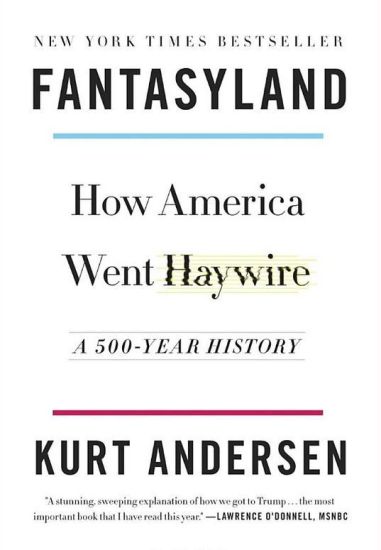
Fantasyland: How America Went Haywire: A 500-Year History
Kurt Andersen
Random House Trade
2018
nidottu
How did we get here?In this sweeping, eloquent history of America, Kurt Andersen shows that what?s happening in our country today?this post-factual, ?fake news? moment we?re all living through?is not something new, but rather the ultimate expression of our national character. America was founded by wishful dreamers, magical thinkers, and true believers, by hucksters and their suckers. Fantasy is deeply embedded in our DNA.Over the course of five centuries?from the Salem witch trials to Scientology to the Satanic Panic of the 1980s, from P. T. Barnum to Hollywood and the anything-goes, wild-and-crazy sixties, from conspiracy theories to our fetish for guns and obsession with extraterrestrials?our love of the fantastic has made America exceptional in a way that we?ve never fully acknowledged. From the start, our ultra-individualism was attached to epic dreams and epic fantasies?every citizen was free to believe absolutely anything, or to pretend to be absolutely anybody. With the gleeful erudition and tell-it-like-it-is ferocity of a Christopher Hitchens, Andersen explores whether the great American experiment in liberty has gone off the rails.Fantasyland could not appear at a more perfect moment. If you want to understand Donald Trump and the culture of twenty-first-century America, if you want to know how the lines between reality and illusion have become dangerously blurred, you must read this book.

Since its original publication in 1968, "Welcome to the Monkey House" has been one of Kurt Vonnegut's most beloved works. This special edition celebrates a true master of the short-story form by including multiple variant drafts of what would eventually be the title story. In a fascinating accompanying essay, "Building the Monkey House: At Kurt Vonnegut's Writing Table,"""noted Vonnegut scholar Gregory D. Sumner walks readers through Vonnegut's process as the author struggles--false start after false start--to hit upon what would be one of his greatest stories. The result is the rare chance to watch a great writer hone his craft in real time. Praise for Kurt Vonnegut "Kurt Vonnegut is, in my view, the great, urgent passionate American writer of our century."--George Saunders "Vonnegut's fiction itches to seize the human truth by its large handles."--John Updike

The Iroquois nation, one of the most impressive Native American communities encountered by early European settlers, is commonly perceived as having plunged into a steep decline in the late seventeenth century due to colonial encroachment into the Great Lakes region. Kurt Jordan challenges long-standing interpretations that depict the Iroquois as defeated, colonized peoples by demonstrating that an important tribe of that confederacy, the Senecas, maintained an impressive political and economic autonomy and resisted colonialism with a high degree of success.By combining archaeological data grounded in the material culture of the Seneca Townley-Read site with historical documents, Jordan answers larger questions about the Seneca's sustainability and durability in an era of intense colonial pressures. He offers a detailed reconstruction of daily life in the Seneca community and demonstrates that they were extremely selective about which aspects of European material culture, plant and animal species, and lifeways they allowed into their territory, even as the eastern Mohawk Iroquois populations were truly colonized.

"Elegantly demolishes the prevailing scholarly view that Seneca culture suffered gradual decline during the eighteenth century. Jordan has combined archaeology and history to provide us with a new and compelling picture of the Seneca."--William Engelbrecht, Buffalo State College "Jordan's archaeological approach to eighteenth-century Native American settlement patterns is original and creative. It sets a promising new standard for interdisciplinary investigations of the potential complexity underlying domestic and settlement choices."--Martha L. Sempowski, Rochester Museum and Science Center and Seneca Archaeology Research Project The Iroquois confederacy, one of the most influential Native American polities encountered by early European settlers, is commonly perceived as having plunged into steep decline in the late seventeenth century due to colonial encroachment into the Great Lakes region. Kurt Jordan challenges long-standing interpretations that depict the Iroquois as defeated, colonized peoples by demonstrating that an important nation of that confederacy, the Senecas, maintained an impressive political and economic autonomy and resisted colonialism with a high degree of success. Following the 1700-1701 treaties with the English, French, and western Indian groups that ended the Twenty Years' War, the Seneca commitment to neutrality was tested by western Indian attacks on their territory. French and English agents were frequent visitors to Seneca country, encouraging factional competition. This period also witnessed the opening of Iroquois territory to western Indian groups who wanted to trade with the English at Albany, and the formation of alliances between Senecas and western groups that made transit across Seneca territory possible. In the midst of these pressures, the Seneca maintained an impressive level of political and economic autonomy with a high degree of success. Using historical and archaeological analysis, Kurt A. Jordan interrogates the concept of colonialism by demonstrating that the Seneca Iroquois (a member of the Six Nations Iroquois, or Haudenosaunee, confederacy) were entangled with, but not dominated by, Europeans during the first half of the eighteenth century. Even two hundred years after their initial engagement with Europeans, Senecas were extremely selective about which aspects of European material culture, plant and animal species, and lifeways they allowed into their territory. Centering his analysis on the Townley-Read archaeological site near Geneva, New York, Jordan uses artifactual, faunal, botanical, textual, and spatial evidence to assess Seneca community structure, housing, subsistence practices, alliance and trade relations during the first half of the eighteenth century. He demonstrates that Seneca construction of dispersed communities during this period was an opportunistic innovation with a myriad of economic and ecological benefits; that house forms used by Iroquois exhibited much less European "influence" than scholars usually assert; and that the fur trade economy of western Iroquois Nations remained viable at least through the mid-eighteenth century. These findings refute long-standing scholarly interpretations of eighteenth-century Iroquois political and economic development, which primarily have been based on documents written by colonial officials seeking to control Iroquois actions. By incorporating archaeological data and reassessing historical documents in light of new archaeological evidence, Jordan gives conclusive and solid support for a positive interpretation of the state of Seneca society in the first half of the eighteenth century and vividly depicts the local developments that made the "Seneca Restoration" possible.

Any student of American history knows of Washington, Jefferson, and the other statesmen who penned the documents that form the legal foundations of our nation, but many other great minds contributed to the development of the young republic's judicial system -- figures such as William Littell, Ben Monroe, and John J. Marshall. These men, some of Kentucky's earliest law reporters, are the forgotten trailblazers who helped establish the foundation of the state's court system.In Writing the Legal Record: Law Reporters in Nineteenth-Century Kentucky, Kurt X. Metzmeier provides portraits of the men whose important yet understudied contributions helped create a new common law inspired by English legal traditions but fully grounded in the decisions of American judges. He profiles individuals such as James Hughes, a Revolutionary War veteran who worked as a legislator to reform confusing property laws inherited from Virginia. Also featured is George M. Bibb, a prominent U.S. senator and the secretary of the treasury under President John Tyler.To shed light on the pioneering individuals responsible for collecting and publishing the early opinions of Kentucky's highest court, Metzmeier reviews nearly a century of debate over politics, institutional change, human rights, and war. Embodied in the stories of these early reporters are the rich history of the Commonwealth, the essence of its legal system, and the origins of a legal print culture in America.

The first comprehensive account of the relation of collections of imperial beasts to narrative practices in England, The Novel and the Menagerie explores an array of imaginative responses to the empire as a dominant, shaping factor in English daily life. Kurt Koenigsberger argues that domestic English novels and collections of zoological exotica (especially zoos, circuses, traveling menageries, and colonial and imperial exhibitions) share important aesthetic strategies and cultural logics: novels about English daily life and displays featuring collections of exotic animals both strive to relate Englishness to a larger empire conceived as an integrated whole. Koenigsberger's investigations range from readings of novels by authors such as Charles Dickens, Virginia Woolf, Salman Rushdie, and Angela Carter to analyses of ballads, handbills, broadsides, and memoirs of showmen. Attending closely to the collective English practices of imagining and delineating the empire as a whole, The Novel and the Menagerie works at the juncture of literary criticism, colonial discourse studies, and cultural analysis to historicize the notion of totality in the theory and practice of the English novel. In exploring the shapes of the novel in England and of the English institutions that collected exotic animals, it offers fresh readings of familiar literary texts and opens up new ways of understanding the character of imperial Englishness across the nineteenth and twentieth centuries.
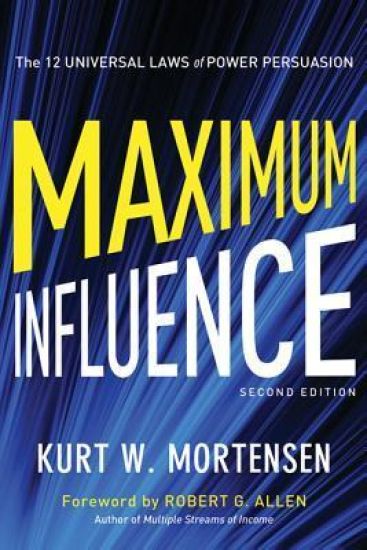
How would you like to be able to read anyone instantly? Get people to trust you instinctively? Change minds easily? Convince anyone to give you almost anything? The secret lies in the 12 Laws of Persuasion.These “powers” are not unobtainable Jedi mind tricks but are actual skills that everyday people can discover and develop within themselves--today! Author and leading authority on persuasion, motivation, and influence Kurt Mortenson has studied the traits, habits, and mindsets of master influencers for over 20 years and has formed what the calls the 12 Laws of Persuasion, which anyone can master and put to work for themselves.These laws include:The law of dissonanceThe law of contractThe law of expectationThe law of esteemThe law of obligationIn Maximum Influence, you will learn why each law works, how to use each one, and what to avoid in carrying it out.Complete with new case studies and cutting-edge influencing techniques, this invaluable, must-have resource provides the keys to mastering the crucial tool anyone must develop and utilize to find success and prosperity--influence!

The cinematographer must translate the ideas and emotions contained in a script into something that can be physically seen and felt onscreen, helping the director to fulfil the vision of the film. The shots may look good, but they will not serve the story until the composition, lenses, and lighting express, enhance, and reveal the underlying emotions and subtext of the story. By making physical the ideas and emotions of the story, the cinematographer supports blocking as a visual form of the story through these tools.Rather than delve into technical training, Basic Cinematography helps to train the eye and heart of cinematographers as visual storytellers, providing them with a strong foundation for their work, so that they’re ready with creative ideas and choices on set in order to make compelling images that support the story.The book includes tools, tables, and worksheets on how to enhance students and experienced filmmakers with strong visual storytelling possibilities, including such features as: Dramatic script analysis that will help unlock blocking, composition, and lighting ideas that reveal the visual story Ten tools of composition Psychological impact of lenses, shot sizes, and camera movement Six elements of lighting for visual storytelling What to look for beneath the "hood" of cameras, including using camera log, RAW, and LUTs Dramatic analysis chart and scene composition chart to help plan your shoots Case studies from such visually cinematic shows and documentaries as Netflix’s Godless, Jessica Jones, The Crown, and Chef’s Table, as well as examples from classroom exercises Features insights from the DP of Jessica Jones, Manuel Billeter, and the DP of Chef’s Table, Adam Bricker.

The cinematographer must translate the ideas and emotions contained in a script into something that can be physically seen and felt onscreen, helping the director to fulfil the vision of the film. The shots may look good, but they will not serve the story until the composition, lenses, and lighting express, enhance, and reveal the underlying emotions and subtext of the story. By making physical the ideas and emotions of the story, the cinematographer supports blocking as a visual form of the story through these tools.Rather than delve into technical training, Basic Cinematography helps to train the eye and heart of cinematographers as visual storytellers, providing them with a strong foundation for their work, so that they’re ready with creative ideas and choices on set in order to make compelling images that support the story.The book includes tools, tables, and worksheets on how to enhance students and experienced filmmakers with strong visual storytelling possibilities, including such features as: Dramatic script analysis that will help unlock blocking, composition, and lighting ideas that reveal the visual story Ten tools of composition Psychological impact of lenses, shot sizes, and camera movement Six elements of lighting for visual storytelling What to look for beneath the "hood" of cameras, including using camera log, RAW, and LUTs Dramatic analysis chart and scene composition chart to help plan your shoots Case studies from such visually cinematic shows and documentaries as Netflix’s Godless, Jessica Jones, The Crown, and Chef’s Table, as well as examples from classroom exercises Features insights from the DP of Jessica Jones, Manuel Billeter, and the DP of Chef’s Table, Adam Bricker.