

Kirjahaku
Etsi kirjoja tekijän nimen, kirjan nimen tai ISBN:n perusteella.
1000 tulosta hakusanalla Linus Reichlin
Links Between Communication Competency and Social Competency During and After an Artist's Career
Shahab Nahvi
Abbott Press
2014
pokkari



Lines of Thinking in Aesthetics
Steven Brutus
Createspace Independent Publishing Platform
2012
nidottu

As an analyst, philosopher and militant, Félix Guattari anticipated decentralized forms of political activism that have become increasingly evident around the world since the events of Seattle in 1999. Lines of Flight offers an exciting introduction to the sometimes difficult and dense thinking of an increasingly important 20th century thinker. An editorial introduction by Andrew Goffey links the text to Guattari’s long-standing involvement with institutional analysis, his writings with Deleuze, and his consistent emphasis on the importance of group practice - his work with CERFI in the early 1970s in particular. Considering CERFI’s work on the ‘genealogy of capital’ it also points towards the ways in which Lines of Flight anticipates Guattari’s later work on Integrated World Capitalism and on ecosophy.Providing a detailed and clearly documented account of his micropolitical critique of psychoanalytic, semiological and linguistic accounts of meaning and subjectivity, this work offers an astonishingly fresh set of conceptual tools for imaginative and engaged thinking about capitalism and effective forms of resistance to it.

A collection of the very best recent journalism of A. A. Gill, 'by miles, the most brilliant journalist of our age' (Lynn Barber).

Vicious interstellar conflict with an indestructible alien species. Bloody civil war over the last habitable zones of the cosmos. Political unrest, militaristic police forces, dire threats to the Solar System… Humanity is on the ropes, and after years of fighting a two-front war with losing odds, so is North American Defense Corps officer Andrew Grayson. He dreams of dropping out of the service one day, alongside his pilot girlfriend, but as warfare consumes entire planets and conditions on Earth deteriorate, he wonders if there will be anywhere left for them to go. After surviving a disastrous space-borne assault, Grayson is reassigned to a ship bound for a distant colony—and packed with malcontents and troublemakers. His most dangerous battle has just begun. In this sequel to the bestselling Terms of Enlistment, a weary soldier must fight to prevent the downfall of his species…or bear witness to humanity’s last, fleeting breaths.
Lines of Space: Source of Fundamental forces and constituent of all matter in the Universe
Devinder Kumar Dhiman
Createspace Independent Publishing Platform
2013
nidottu
'Lines of Space' is a unique and interesting approach to creation of matter from empty space. The Author has presented this notion by primarily discussing the established theories of physics in an interactive dialogue with his son in order to simplify them and then comparing them with the new idea of 'Lines of Space'.The author conjectured that, in the beginning of the Universe, there was dense uniform space which converted into matter by contraction and caused different stresses in the remaining space, which in turn gave rise to fundamental forces. The author developed mathematical formulae to find this stress at various locations in the universe and established its relation with cause of Gravitation, bending of Light, expansion of the Universe, Theory of Relativity and creation of subatomic particles. Thus, he has presented in this book, an absolutely new, ground-breaking, plausible and fascinating look in to the world of physics where all matter in the universe is created from space itself and the fundamental forces subsist due to stress in the 'Lines of Space'.
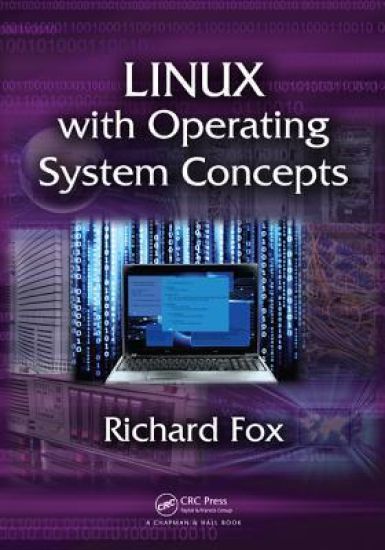
A True Textbook for an Introductory Course, System Administration Course, or a Combination Course Linux with Operating System Concepts merges conceptual operating system (OS) and Unix/Linux topics into one cohesive textbook for undergraduate students. The book can be used for a one- or two-semester course on Linux or Unix. It is complete with review sections, problems, definitions, concepts, and relevant introductory material, such as binary and Boolean logic, OS kernels, and the role of the CPU and memory hierarchy. Details for Introductory and Advanced Users The book covers Linux from both the user and system administrator positions. From a user perspective, it emphasizes command line interaction. From a system administrator perspective, the text reinforces shell scripting with examples of administration scripts that support the automation of administrator tasks. Thorough Coverage of Concepts and Linux Commands The author incorporates OS concepts not found in most Linux/Unix textbooks, including kernels, file systems, storage devices, virtual memory, and process management. He also introduces computer science topics, such as computer networks and TCP/IP, binary numbers and Boolean logic, encryption, and the GNUs C compiler. In addition, the text discusses disaster recovery planning, booting, and Internet servers.



Linux and Solaris Recipes for Oracle DBAs, 2nd Edition is an example–based book on managing Oracle Database under Linux and Solaris. The book is written for database administrators who need to get work done and lack the luxury of curling up fireside with a stack of operating-system documentation. What this book provides instead is task-oriented coverage designed around the needs of the Oracle Database Administrator. Find the right chapter. Look up the task to perform. See the solution. Implement the solution straight away in your own environment. Get the job done. New in this edition is coverage of Oracle's own Solaris operating system. Oracle Corporation has been working diligently to bring commonality between Solaris and and Linux, and this book takes advantage of those efforts to provide task-oriented solutions that work on common distributions of Linux such as Red Hat Enterprise Linux and Oracle Enterprise Linux while also accommodating the growing numberof Oracle Solaris customers. Examples in the book match the tasks DBAs perform daily, even hourly. Solutions come first in the book, but alway are followed by close explanations of the details.Database administrators won't go wrong with Linux and Solaris Recipes for Oracle DBAs. It's the book to buy if you're after clear and reliable examples to help in getting the job done, and getting home to your family.Takes you directly from problem to solutionCovers the "right" mix of operating-system tasks for database administratorsRespects your time by being succinct and to–the–pointIncludes coverage of Solaris in addition to common Linux distributionsWhat You Will LearnExecute Linux and Solaris commands applicable to Oracle Database.Automate critical DBA tasks via operating-system shell scripts.Monitor, tune, and optimize Linux and Solaris servers for Oracle.Setup a VirtualBox environment for the Oracle database.Perform system administration tasks relevant to Oracle Database.Remotely (and securely!) manage Oracle on Linux and Solaris.Who This Book Is ForLinux and Solaris Recipes for Oracle DBAs is a book for Oracle database administrators who want to expertly operate Oracle databases on the Linux and Solaris operating systems. If you’re new to Linux and Solaris and can benefit from detailed examples showing how to perform tasks that Oracle DBAs perform on Linux and Solaris servers, then this book is what you need to help you get the job done, and get home on time.
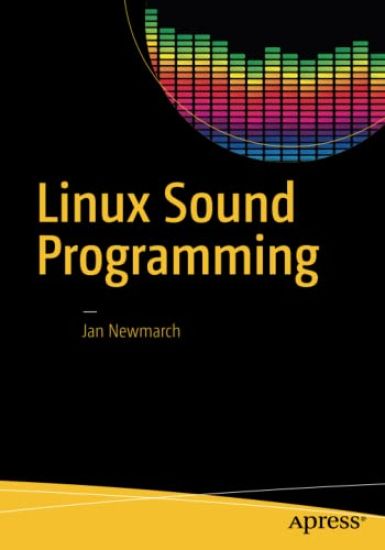
Program audio and sound for Linux using this practical, how-to guide. You will learn how to use DSPs, sampled audio, MIDI, karaoke, streaming audio, and more. Linux Sound Programming takes you through the layers of complexity involved in programming the Linux sound system. You’ll see the large variety of tools and approaches that apply to almost every aspect of sound. This ranges from audio codecs, to audio players, to audio support both within and outside of the Linux kernel.What You'll LearnWork with sampled audioHandle Digital Signal Processing (DSP)Gain knowledge of MIDIBuild a Karaoke-like applicationHandle streaming audio Who This Book Is ForExperienced Linux users and programmers interested in doing multimedia with Linux.

Build and manage large estates, and use the latest OpenSource management tools to breakdown a problems. This book is divided into 4 parts all focusing on the distinct aspects of Linux system administration. The book begins by reviewing the foundational blocks of Linux and can be used as a brief summary for new users to Linux and the OpenSource world. Moving on to Part 2 you'll start by delving into how practices have changed and how management tooling has evolved over the last decade. You’ll explore new tools to improve the administration experience, estate management and its tools, along with automation and containers of Linux. Part 3 explains how to keep your platform healthy through monitoring, logging, and security. You'll also review advanced tooling and techniques designed to resolve technical issues. The final part explains troubleshooting and advanced administration techniques, and less known methods for resolving stubborn problems.With Linux System Administration for the 2020s you'll learn how to spend less time doing sysadmin work and more time on tasks that push the boundaries of your knowledge. What You'll Learn Explore a shift in culture and redeploy rather than fixImprove administration skills by adopting modern toolingAvoid bad practices and rethink troubleshootingCreate a platform that requires less human interventionWho This Book Is ForEveryone from sysadmins, consultants, architects or hobbyists.
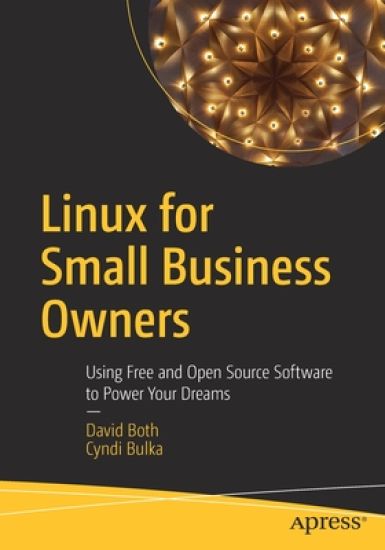
Learn how you can take complete control and run your small business with powerful, free open source software (FOSS). This book introduces small business owners to the power and security of Linux and other FOSS tools to manage any small business as well as the many advantages it has over expensive, proprietary software. While exploring the reasons for using Free Open Source Software, you'll investigate the assertion that, “The value of any software lies in its usefulness not in its price,” set forth by Linux Torvalds, the creator of Linux. This book examines the use of Linux and also the other Free Open Source Software you need to meet your business challenges including the usual accounting, Email, web browsing, word-processing tasks. You will be introduced to advanced tools such as those that enable you to create audio and video clips you can use to promote your business or that can even be your primary product, such as how-to instruction.Most small business owners perform many tasks including that of administering their computers. This book shows you how to find and install new software you need to run your business and keep it up to date using the tools already provided by Linux and the secure, trusted repositories available online. It also explores how to decide which tasks to do in-house and which you might want to sub out to external resources such as advertising and contact services to attract and keep customers. Linux for Small Business Owners provides some logic, reason, and explanation for each of the steps that are needed and the tools used to implement Linux in your small business. It is a detailed guide to removing Windows from your computers and installing Linux and some commonly used open source software like the LibreOffice suite of programs, accounting, and other software useful to many small businesses. It also provides the information and tools necessary to manage and maintain Linux and applications up-to-date and secure.What You'll Learn Understand what the term "free/open source" means and how you can apply it to your business.Look at the operational and financial advantages of using Free Open Source Software instead of expensive, proprietary software.See why you will never need to pay for anti-virus and anti-malware software again.Replace expensive software like Microsoft Office with open source tools such as LibreOffice Review the factors required to make an informed decision about switching to Linux.Install new applications, updates to Linux, and the application software.Explore why backups are critical, how to create them, and how to use them to restore lost data. Who This Book Is For Ideal for small business owners and owner-operated small businesses looking to streamline operations,save money, time and energy managing the common problems associated with using more popular operating systems.
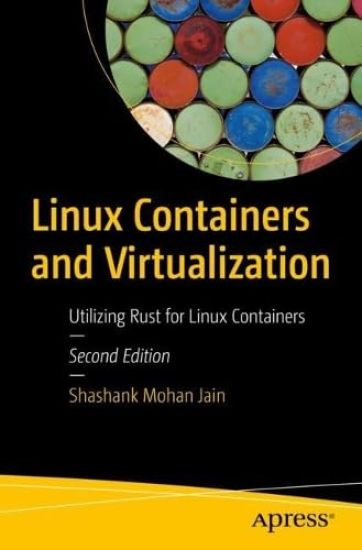
This book is a practical, comprehensive guide to creating secure and efficient Linux containers using the Rust programming language. It utilizes a hands-on approach to teach Rust's programming constructs, security features, and its application in containerization. Author Shashank Mohan Jain starts with a gentle introduction to Rust to help you grasp the language's core concepts, syntax, and unique memory safety guarantees. He then transitions into the realm of Linux container development, where Rust shines as a robust and secure language for building containerized applications. Through hands-on examples, you will gain a deep understanding of how to harness Rust's features to create lightweight and secure Linux containers and how to leverage its strong type system and ownership model to eliminate common bugs and ensure memory safety in containerized applications. As you progress, you’ll explore the intricacies of working with system resources, networking, and interacting withthe host operating system while maintaining isolation and security within the containers, as well as how Rust's concurrency model can build performant and responsive containerized applications. The book also covers advanced topics such as secure configuration handling, logging, and handling authentication within your containerized environment. After completing this book, you will be well-versed in Rust programming, equipped to create efficient and secure Linux containers, and confident in your ability to develop containerized applications for a variety of use cases. What You Will Learn Understand the basics of the Rust programming languageUnderstand Rust's security featuresCreate Linux constructs like namespaces in RustDevelop your own container runtime using Rust Who This Book Is For Developers, Architects and SREs working with cloud applications and dealing with container based workloads.

Linux Shell Commands: A Tutorial Quick Reference for Desktop Users
Viktor Becher
Createspace Independent Publishing Platform
2013
nidottu