Kirjojen hintavertailu. Mukana 11 342 296 kirjaa ja 12 kauppaa.

Kirjahaku

Etsi kirjoja tekijän nimen, kirjan nimen tai ISBN:n perusteella.

1000 tulosta hakusanalla Mac Conner

extendedDesync - A Self-Organizing MAC Protocol for Dynamic Topologies

extendedDesync - A Self-Organizing MAC Protocol for Dynamic Topologies

Clemens Mühlberger

Sudwestdeutscher Verlag Fur Hochschulschriften AG
2018
pokkari
Biologically inspired self-organization methods can help to manage the access control to the shared communication medium of Wireless Sensor Networks. One lightweight approach is the primitive of desynchronization, which relies on the periodic transmission of short control messages - similar to the periodical pulses of oscillators. This primitive of desynchronization has already been successfully implemented as MAC protocol for single-hop topologies. Moreover, there are also some concepts of such a protocol for multi-hop topologies available. However, the existing implementations may handle just a certain class of multi-hop topologies or are not robust against topology dynamics. In addition to the sophisticated access control of the sensor nodes of a Wireless Sensor Network in arbitrary multi-hop topologies, the communication protocol has to be lightweight, applicable, and scalable. These characteristics are of particular interest for distributed and randomly deployed networks (e.g., by dropping nodes off an airplane).
Leistungsbewertung von PHY und MAC für W-LAN-Systeme

Leistungsbewertung von PHY und MAC für W-LAN-Systeme

Sheetal Patil; Prashant Patil

Verlag Unser Wissen
2024
pokkari
Ein funktionsreiches IEEE 802.11 Physical und MAC Modell, das eine gr ere Chance hat, ein realistisches Modell zu sein, ist sowohl f r Forscher im Bereich der digitalen Kommunikation als auch f r Netzwerkforscher von gr tem Interesse. Dieses Buch ist ein Versuch, ein nahezu realistisches IEEE 802.11a Physical Layer Modell zu untersuchen, zu entwerfen und zu implementieren, mit allen Ph nomenen, die mit dieser Schicht verbunden sind. Verschiedene Ausbreitungsmodelle, d.h. Modelle f r gro e Pfadverluste und Fading, Formeln zur Berechnung der Bitfehlerrate in Abh ngigkeit von der Art der verwendeten Modulation und dem untersuchten Kanaltyp, Vorw rtsfehlerkorrekturmechanismen, die in IEEE 802.11a eingesetzt werden, und damit zusammenh ngende Fragen, der Einfluss des Viterbi-Decoders auf die Bitfehlerrate und schlie lich Modelle zur Bitfehlerverteilung sind die wichtigsten Themen, die in dieser Arbeit behandelt werden.
Kom i gang med Mac

Kom i gang med Mac

Daniel Riegels

Digimental
2014
nidottu
Har du akkurat kjøpt din første Mac? Eller har du bare aldri kommet riktig i gang med å utnytte alle de smarte funksjonene? Så er dette heftet noe for deg. I dette heftet lærer du alt fra hvordan du navigerer i grensesnittet, til hvordan du får glede av de mer avanserte programmene på Mac-maskinen din. Underveis vil du finne massevis av nyttige tips som kan gjøre livet litt lettere i det daglige dataarbeidet. Heftet er skrevet som en visuell guide. Det vil si at heftet er bygget opp som en kokebok, med én lett forståelig instruksjon på hver side. Det betyr at du også kan bruke heftet som et oppslagsverk. Heftet tar utgangspunkt i det nyeste operativsystemet til Mac OS X 10.9 Mavericks.
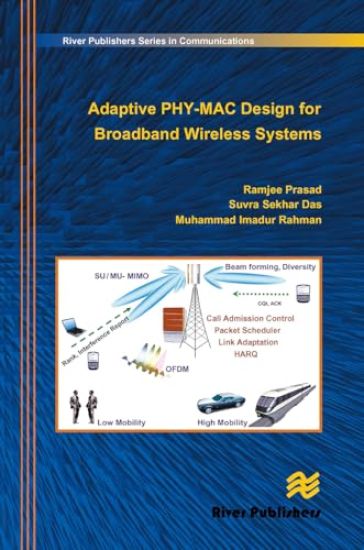
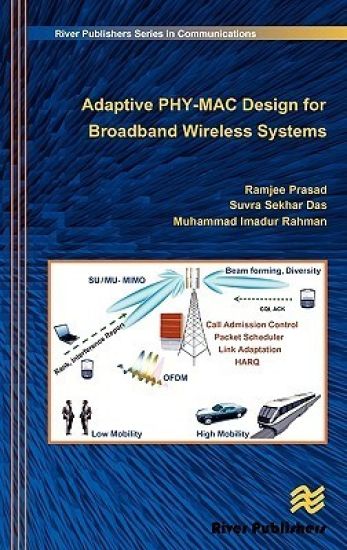
Adaptive PHY-MAC Design for Broadband Wireless Systems

Adaptive PHY-MAC Design for Broadband Wireless Systems

Ramjee Prasad; Suvra Sekhar Das; Muhammad Imadur Rahman

River Publishers
2024
nidottu
The next generation mobile communication networks (4G) have the challenging target of The next generation mobile communication networks (4G) have the challenging target of providing a peak data rate of 1 Gigabit per second local area and 100 Megabit per second wide area. The ability to offer such high data rates in 100MHz bandwidth requires overall a very high spectral efficiency, and hence the need for multi-antenna techniques (MIMO) with spatial multiplexing, fast dynamic link adaptation and packet scheduling, wideband access techniques, and most likely non-contention based spectrum sharing among multiple operators. Many of these required technology components and techniques are well researched and established. Adaptive PHY-MAC Design for Broadband Wireless Systems explains how one can integrate and optimise their use in providing the target cell data rates with high availability. The authors address the ability to cope with interference and enhanced physical layer processing, and simultaneously, the multifaceted system level design. Focus is also on the selection of technology components and techniques, which leads to the highest spectral efficiency and peak data rate availability with reasonable Quality of Service (QoS) support, such as improved outage scenario, reduced delay, guaranteed bit rate, etc.In short, this book will answer questions such as, how individual techniques relate to each other, how can we benefit the gains by suitable combinations of different technologies and how to choose different technological solutions in different scenarios, etc.The next generation mobile communication networks (4G) have the challenging target of The next generation mobile communication networks (4G) have the challenging target of providing a peak data rate of 1 Gigabit per second local area and 100 Megabit per second wide area.
Adaptive PHY-MAC Design for Broadband Wireless Systems

Adaptive PHY-MAC Design for Broadband Wireless Systems

Ramjee Prasad; Suvra Sekhar Das; Muhammad Imadur Rahman

River Publishers
2010
sidottu
The next generation mobile communication networks (4G) have the challenging target of The next generation mobile communication networks (4G) have the challenging target of providing a peak data rate of 1 Gigabit per second local area and 100 Megabit per second wide area. The ability to offer such high data rates in 100MHz bandwidth requires overall a very high spectral efficiency, and hence the need for multi-antenna techniques (MIMO) with spatial multiplexing, fast dynamic link adaptation and packet scheduling, wideband access techniques, and most likely non-contention based spectrum sharing among multiple operators. Many of these required technology components and techniques are well researched and established. Adaptive PHY-MAC Design for Broadband Wireless Systems explains how one can integrate and optimise their use in providing the target cell data rates with high availability. The authors address the ability to cope with interference and enhanced physical layer processing, and simultaneously, the multifaceted system level design. Focus is also on the selection of technology components and techniques, which leads to the highest spectral efficiency and peak data rate availability with reasonable Quality of Service (QoS) support, such as improved outage scenario, reduced delay, guaranteed bit rate, etc.In short, this book will answer questions such as, how individual techniques relate to each other, how can we benefit the gains by suitable combinations of different technologies and how to choose different technological solutions in different scenarios, etc.The next generation mobile communication networks (4G) have the challenging target of The next generation mobile communication networks (4G) have the challenging target of providing a peak data rate of 1 Gigabit per second local area and 100 Megabit per second wide area.