Kirjojen hintavertailu. Mukana 11 244 527 kirjaa ja 12 kauppaa.

Kirjahaku

Etsi kirjoja tekijän nimen, kirjan nimen tai ISBN:n perusteella.

1000 tulosta hakusanalla Maral Atmaca

Moral Talk

Moral Talk

Joe Spencer-Bennett

Routledge
2018
sidottu
This book is about moral talk in contemporary British political discourse, drawing on speeches, debates and radio phone-ins. Using a critical sociolinguistic approach, Spencer-Bennett explores the language people use to communicate moral judgement and highlights the relations between the things that people say, the contexts in which they are said and the circulating ideologies about meaning and morality. This is key reading for students and scholars studying language, politics and critical discourse analysis, within linguistics and anthropology.
Moral Evil in Practical Ethics
The concept of evil is one of the most powerful in our moral vocabulary, and is commonly used today in both religious and secular spheres to condemn ideas, people, their actions, and much else besides. Yet appeals to evil in public debate have often deepened existing conflicts, through corruption of rational discourse and demonization of the other. With its religious overtones and implied absolutism, the concept of evil seems ill-suited to advancing public discourse and pro-social relations in a liberal democracy, as evidenced by its use in the abortion debate. International relations have also suffered from references to an ‘axis of evil.’ Recently, however, philosophers have begun reconceptualising evil within a secular, moral framework, using the idea of evil as the worst kind of immorality to inform and shape our responses to issues like torture, genocide and rape as a weapon of war. This book continues this trend, exploring a constructive role for the concept of evil in practical ethics.Part I of the book begins with two examinations of the concept itself, one focusing primarily on its secular manifestations and the other on evil in its religious context. Individuals are perhaps the primary focus of attributions of evil, and Part II looks at two particular manifestations of evil, in bullying and in mass killing, before considering the nature of evil as an immoral character trait. Part III moves beyond the individual to issues of collective evildoing, evil environments, and political evil. The final part considers responses to evil: can some evil be unforgiveable, and to what extent should we ‘enhance’ ourselves morally so as to prevent future evildoing?These essays, written by leading philosophers from around the world, including the late Claudia Card, will take the philosophical debate on moral evil in practical ethics to a new level.
Moral Responsibility and the Problem of Many Hands

Moral Responsibility and the Problem of Many Hands

Ibo van de Poel; Lambèr Royakkers; Sjoerd D. Zwart

Routledge
2018
nidottu
When many people are involved in an activity, it is often difficult, if not impossible, to pinpoint who is morally responsible for what, a phenomenon known as the ‘problem of many hands.’ This term is increasingly used to describe problems with attributing individual responsibility in collective settings in such diverse areas as public administration, corporate management, law and regulation, technological development and innovation, healthcare, and finance. This volume provides an in-depth philosophical analysis of this problem, examining the notion of moral responsibility and distinguishing between different normative meanings of responsibility, both backward-looking (accountability, blameworthiness, and liability) and forward-looking (obligation, virtue). Drawing on the relevant philosophical literature, the authors develop a coherent conceptualization of the problem of many hands, taking into account the relationship, and possible tension, between individual and collective responsibility. This systematic inquiry into the problem of many hands pertains to discussions about moral responsibility in a variety of applied settings.
Moral Responsibility and Alternative Possibilities
This book explores an important issue within the free will debate: the relation between free will and moral responsibility. In his seminal article 'Alternate Possibilities and Moral Responsibility', Harry Frankfurt launched a vigorous attack on the standard conception of that relation, questioning the claim that a person is morally responsible for what she has done only if she could have done otherwise. Since then, Frankfurt's thesis has been at the center of philosophical discussions on free will and moral responsibility. Moral Responsibility and Alternative Possibilities, edited by David Widerker and Michael McKenna, draws together the most recent work on Frankfurt's thesis by leading theorists in the area of free will and responsibility. As the majority of the essays appear here for the first time, Moral Responsibility and Alternative Possibilities offers the newest developments in this important debate.
Moral Threats and Dangerous Desires

Moral Threats and Dangerous Desires

Deborah Lupton

Routledge
2017
sidottu
Since 1981, AIDS has had an enormous impact upon the popular imagination. Few other diseases this century have been greeted with quite the same fear, loathing, and prejudice against those who develop it. The mass media, and in particular, the news media, have played a vital part in "making sense" of AIDS. This volume takes an interdisciplinary perspective, combining cultural studies, history of medicine, and contemporary social theory to examine AIDS reporting. There have been three major themes dominating coverage: the "gay-plague" dominant in the early 1980s, panic-stricken visions of the end of the world as AIDS was said to pose a threat to everyone, in the late 1980s; and a growing routinising of coverage in the 1990s. This book lays bare the sub-textual ideologies giving meaning to AIDS news reports, including anxieties about pollution and contagion, deviance, bodily control, the moral meanings of risk, the valorisation of drugs and medical science. Drawing together the work of cultural and politicaltheorists, sociologists and historians who have written about medicine, disease and the body, as well as that of theorists in Europe and the USA who have focused their attention specificaiiy on AIDS, this book explores the wide theoretical debate about the importance of language in the social construction of illness and disease. This text offers insights into the sociocultural context in which attitudes towards people with HIV or AIDS and people's perceptions of risk from HIV infection are developed and the responses of governments to the AIDS epidemic are formulated.
Moral and Spiritual Leadership in an Age of Plural Moralities
In crisis situations, such as terror attacks or societal tensions caused by migration, people tend to look for explicit moral and spiritual leadership and are often inclined to vote for so-called 'strong leaders'. Is there a way to resist the temptation of the simplistic solutions that these ‘strong leader’ offer, and instead encourage constructive engagement with the complex demands of our times? This volume utilises relational and dialogical perspectives to examine and address many of the issues surrounding the moral and spiritual guidance articulated in globalizing Western societies.The essays in this collection focus on the concept of plural moralities, understood as divergent visions on what is a 'good life', both in an ethical, aesthetical, existential, and spiritual sense. They explore the political-cultural context and consequences of plural moralities as well as discussing challenges, possibilities, risks, and dangers from the perspective of two promising relational theories: social constructionism and dialogical self theory. The overarching argument is that it is possible to constructively put in nuanced moral and spiritual guidance into complex, plural societies.By choosing a clear theoretical focus on relational approaches to societal challenges, this interdisciplinary book provides both a broad scope and a coherent argument. It will be of great interest to scholars of social and political psychology, leadership and organization, religious studies, and pedagogy.
Moral Reality and the Empirical Sciences
Are there objective moral truths (things that are morally right or wrong independently of what anybody thinks about them)? To answer this question more and more scholars have recently begun to appeal to evidence from scientific disciplines such as psychology, neuroscience, biology, and anthropology. This book investigates this novel scientific approach in a comprehensive, empirically focused, partly clarificatory, and partly metatheoretical way. It argues for two main theses. First, it is possible for the empirical sciences to contribute to the moral realism/anti-realism debate. And second, most appeals to science that have so far been proposed are insufficiently empirically substantiated.The book’s main chapters address four prominent science-based arguments for or against the existence of objective moral truths: the presumptive argument, the argument from moral disagreement, the sentimentalist argument, and the evolutionary debunking argument. For each of these arguments Thomas Pölzler first identifies the sense in which its underlying empirical hypothesis would have to be true in order for the argument to work. Then he shows that the available scientific evidence fails to support this hypothesis. Finally, he also makes suggestions as to how to test the hypothesis more validly in future scientific research.Moral Reality and the Empirical Sciences is an important contribution to the moral realism/anti-realism debate that will appeal both to philosophers and scientists interested in moral psychology and metaethics.
Moral Development and the Social Environment
The chapters in this volume are about moral dilemmas in two senses. First the authors focus on dilemmas, both real and hypothetical, which require moral judgements. The 'Heinz-Dilemma' part of Kohlberg's scoring systems is used as a point for level of moral development. There is also a Second sense, as those who study moral reasoning being in a dilemma as they attempt to integrate information from the domains of philosophy and psychology.
Moral Dilemmas and Ethical Reasoning
This book deals with moral dilemmas and the development of ethical reasoning in two senses. First, the editor focuses on dilemmas, both real and hypothetical, which require moral judgments. The ""Heinz dilemma,"" part of Kohlberg's scoring system for level of moral development, is in some cases used as a point of departure for discussion. Problems with this particular dilemma as a scoring item are examined in detail, along with problems generated by similar dilemmas for moral reasoning in everyday life.Those who study moral reasoning and its development are in somewhat of a dilemma as they attempt to integrate information from the domains of philosophy and psychology. These essays investigate domain issues in varied cultural settings, and across genders and age ranges for what have been proposed as universals in moral judgment, as well as formulate theories that reflect both empirical evidence and logical process.The essays share a conception of human nature as inherently social, as well as a healthy respect for the problems or dilemmas which human sociality carries in its wake. Some of these problems are theoretical, such as those having to do with the moral reasoning or the classic issues of values justification. Other problems are practical, such as those having to do with distributive justice or methods of moral education. This volume will shed light on the process of resolving dilemmas both within philosophy and psychology.
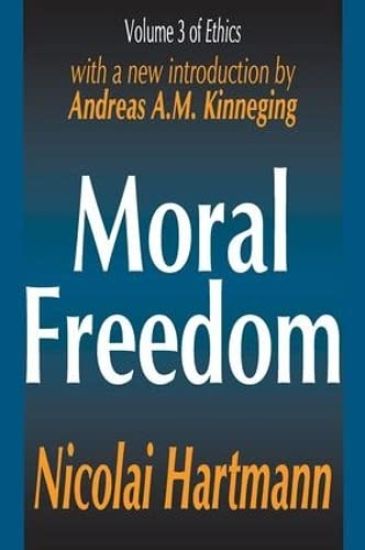
Moral Freedom

Moral Freedom

Nicolai Hartmann

Routledge
2017
sidottu
Ethics is Nicolai Hartmann's magnum opus on moral philosophy. Volume 1, Moral Phenomena, is concerned with the nature and structure of ethical phenomena. Volume 2, Moral Values, describes all values as forming a complex and imperfectly known system. The final volume, Moral Freedom, deals with one of the oldest puzzles in both philosophy and theology: the individual's freedom of the will.Freedom of the will is a necessary precondition of morality. Without it, there is no morality in the full sense of the word. In Moral Freedom Hartmann sets out to refute the determinist view that freedom of the will is impossible. Following Kant, while rejecting his transcendentalism, Hartmann first discusses the tension between causality and the freedom of the will.The tension between the determination by moral values and the freedom of the will is next examined, a crucial issue completely overlooked by Kant and virtually all other modern philosophers, but recognized by the scholastics. Why should we believe in the freedom of the will with regard to the moral values? Are there good reasons for thinking that it exists? If freedom of the will vis-a-vis the moral values does exist, how is it to be conceived? Moral Freedom concludes with the famous postscript on the antinomies between ethics and religion.Hartmann's Ethics may well be the most outstanding treatise on moral philosophy in the twentieth century. Andreas Kinneging's introduction sheds light on the volume's continuing relevance.
Moral Intuitions

Moral Intuitions

Wilson James

Routledge
2021
sidottu
The most acclaimed criminologist in the United States, James Q. Wilson, long concerned with the problem of evil deeds, now turns his attention to the reverse side of the coin: why most people perform honorably and well. Eschewing genetic and biological explanations, Wilson argues that most societies that survive do so because they require cooperation between people as a collective, while permitting advantages to accrue to individuals who excel. Wilson shows that questions of human character, of sympathy, and of our moral sentiments, can be treated in a serious yet compelling manner. His claim is that moral intuition is the mechanism by which humans can best evaluate moral philosophy. He tries to link personal sentiments to historical societies. The work attempts to show how subjective elements are not always irrational, and can in fact, help provide an objective, normative vision of key elements in a good society. James Q. Wilson is the James Collins Professor Emeritus at the University of California, Los Angeles, and prior to that, Shattuck Professor of Government at Harvard University. He is the author of fourteen books, including Crime and Public Policy published by Transaction. This is the second of the Hans L. Zetterberg Lecture Series delivered at the City University of Stockholm in 1998.
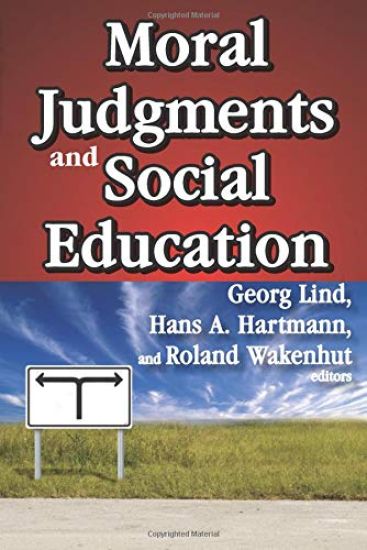
Moral Judgments and Social Education
The study of morality is an empirical as well as conceptual task, one that involves data collection, statistical analysis, and the formulation and testing of hypotheses. This volume is about moral judgment, especially its exercise in selected social settings. The contributors are psychologists, sociologists, and philosophers of morality, most of whom have collaborated on long-ranged research projects in Europe involving socialization.These essays make it clear that moral judgment is a complex phenomena. The book fuses developmental psychology, sociology, and social psychology. It relates this directly to the work of Jean Piaget and Lawrence Kohlberg, who wrote the introduction to the book. Whether moral reasoning has a content-specific domain, or whether its structures transcend specific issues of justice, obedience, and rights, these and similar questions suggest that moral philosophers and ethical theorists have much to say about the human condition.The contributors represent diverse disciplines; but they have as their common concern the topic of the interaction of individual or group-specific moral development and social milieu. Although deeply involved in empirical research, they maintain that research on moral development can be pursued properly only in conjunction with a well-formulated theory of the relationship between society, cognition, and behavior. Moral development is an institutional as well as individual concern for schools, universities, and the military. It is rooted in the ability to formulate genuine and coherent moral judgments that reflect social conditions at two levels: individual socialization and historical development of the social system. This classic volume, now available in paperback, not only exemplifies that framework, but also makes an important contribution to it.
Moral Obligations
There are many ways of writing about the moral life; Moral Obligations follows the way of what philosophers call ""meta-ethics"": the analysis, not of particular moral problems, but of how the concepts used in formulating and solving them, concepts like ""right"" and ""obligatory,"" have significance and power over us. The meta-ethical part of this book is preceded by a discussion of action, in which Wren lays the foundations for the argument that moral obligation is a part of the formal structure of human agency.Wren's argument is practical and social-psychological: it is to help all, starting with those who are already committed to some version of the ethic of individual dignity, to promote interagency fellowship and peace as a result of seeing a certain truth, namely, the truth that the urgency of their feelings of moral obligation derives from a unspoken intention to belong to a community of agents.Moral Obligations begins with the philosophy of action, and then it reviews the historical debate about the nature of obligation and its social context. This is followed by a section about action in general: it establishes the standpoint of the agent and makes an inventory of several species of action. Later chapters summarize the foregoing themes, with emphasis on the unspoken side of intention, and develop them in conjunction with an analysis of the hypothetical imperative. The work closes with a discussion of the dilemma of membership in competing moral communities.
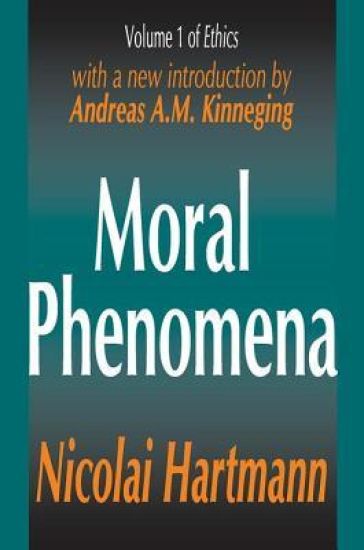
Moral Phenomena
Since the nineteenth century, moral philosophy in the Western world has been dominated by utilitarianism, Kantianism, and relativism. Only a few philosophers have been able to escape from this Procrustean bed. Foremost among these few is Nicolai Hartmann (1882-1950). Together with Henri Bergson and Martin Heidegger, Hartmann was instrumental in restoring metaphysics. Hartmann's metaphysics differs markedly from that of both Bergson and Heidegger, in his indebtedness to Plato.In 1926, Hartmann published a massive treatise, Ethik, which was translated into English by Stanton Coit and published as Ethics in 1932. Ethics is probably the most outstanding treatise on moral philosophy in the twentieth century. The central concept of the book is "value." Drawing upon the pre-modern view of ethics, Hartmann maintains that values are objectively given, part and parcel of the order of being. We cannot invent values, we can merely discover them.The first part of Ethics is concerned with the structure of ethical phenomena and criticizes utilitarianism, Kantianism, and relativism as misleading approaches. After some introductory thoughts concerning the competence of practical philosophy, Hartmann discusses the essence of moral values, including their absoluteness and ideal being, and the essence of the "ought." Hartmann is both controversial and compelling. He provides a moral philosophy that rejects the subjectivism of the ruling approaches, without taking recourse to older theological notions on the foundation of the ethical. In sum: Hartmann's Ethics constitutes an impressive and preeminent contribution to moral philosophy.
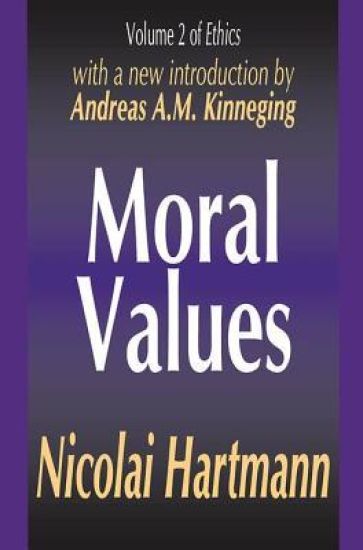
Moral Values

Moral Values

Nicolai Hartmann

Routledge
2017
sidottu
Nicolai Hartmann (1882-1950), along with Henri Bergson and Martin Heidegger, was instrumental in restoring metaphysics to the study of philosophy. Unlike his contemporaries, however, Hartmann was clearly influenced by Plato. His tour-de-force, Ethik, published in English in 1932 as Ethics, may be the most outstanding work on moral philosophy produced in the twentieth century.In the first part of Ethics (Moral Phenomena), Hartmann was concerned with the structure of ethical phenomena, and criticized utilitarianism, Kantianism, and relativism as misleading approaches. In the second part, Moral Values, the author describes all values as forming a complex and as yet imperfectly known system. The actualization of the non-moral and elementary moral values is a necessary condition for the actualization of the higher values. It is on this account that rudimentary values have a prior claim.Hartmann outlines the main features of the chief virtues, and shows that the moral disposition required in any exigency is always a specific synthesis of various and often conflicting values. Specifically describing fundamental moral values-such as goodness, nobility, and vitality-and special moral values-such as justice, wisdom, courage, self-control, trustworthiness, and modesty-Hartmann takes theoretical philosophy and brings it very much into the realm of the practical.A compelling and insightful volume, Moral Values remains an essential contribution to the moral and ethical literature of the twentieth century. Hartmann offers a self-contained system of ethics that yet offers a conservative outlook on social life.
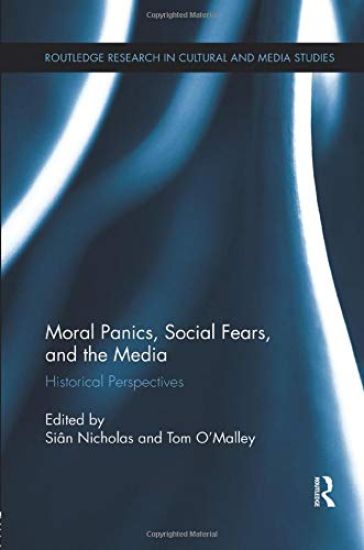
Moral Panics, Social Fears, and the Media
The media have always played a central role in organising the way ideas flow through societies. But what happens when those ideas are disruptive to normal social relations? Bringing together work by scholars in history, media and cultural studies and sociology, this collection explores this role in more depth and with more attention paid to the complexities behind conventional analyses. Attention is paid to morality and regulation; empire and film; the role of women; authoritarianism; wartime and fears of treachery; and fears of cultural contamination.The book begins with essays that contextualise the theoretical and historiographical issues of the relationship between social fears, moral panics and the media. The second section provides case studies which illustrate the ways in which the media has participated in, or been seen as the source of, the creation of threats to society. Finally, the third section then shows how historical research calls into question simple assumptions about the relationship between the media and social disruption.
Moral Obligations and Sovereignty in International Relations
How has contemporary humanitarianism become the dominant framework for how states construct their moral obligations to non-citizens? To answer this question, this book examines the history of humanitarianism in international relations by tracing the relationship between transnational moral obligation and sovereignty from the 16th century to the present. Whereas existing studies of humanitarianism examine the diffusion of such norms or their transmission by non-state actors, this volume explicitly links humanitarianism to the broader concept of sovereignty. Rather than only focusing on the expansion of humanitarian norms, it examines how sovereignty both challenges and sets limits on them. Humanitarian norms are shown to act just as much to reinforce the logic of sovereignty as they do to challenge it. Contemporary humanitarianism is often described in universalist terms, which suggests that humanitarian activity transcends borders in order to provide assistance to those who suffer. In contrast, this book suggests a more counterintuitive and complex understanding of moral obligation, namely that humanitarian discourse not only provides a framework for legitimate humanitarian action, but it also establishes the limits of moral obligation. It will be of great interest to a wide audience of scholars and students in international relations theory, constructivism and norms, and humanitarianism and politics.
Moral Thought in Educational Practice
This book demonstrates how pervasive moral thought can be in educational thought and practice. By analyzing research on the moral and intellectual qualities in curriculum, as well as the integration of personhood and citizenship development in classroom work, this book demonstrates the primacy of the moral in various educational settings. With an additional emphasis on morality as it pertains to teaching as a vocation, Moral Thought in Educational Practice examines the objectives of teacher education and offers an account of moral purposes within the knowledge base for teaching.
Moral Disagreement

Moral Disagreement

Rach Cosker-Rowland

Routledge
2020
sidottu
Widespread moral disagreement raises ethical, epistemological, political, and metaethical questions. Is the best explanation of our widespread moral disagreements that there are no objective moral facts and that moral relativism is correct? Or should we think that just as there is widespread disagreement about whether we have free will but there is still an objective fact about whether we have it, similarly, moral disagreement has no bearing on whether morality is objective? More practically, is it arrogant to stick to our guns in the face of moral disagreement? Must we suspend belief about the morality of controversial actions such as eating meat and having an abortion? And does moral disagreement affect the laws that we should have? For instance, does disagreement about the justice of heavily redistributive taxation affect whether such taxation is legitimate?In this thorough and clearly written introduction to moral disagreement and its philosophical and practical implications, Rach Cosker-Rowland examines and assesses the following topics and questions:How does moral disagreement affect what we should do and believe in our day-to-day lives?Epistemic peerhood and moral disagreements with our epistemic peersMetaethics and moral disagreementRelativism, moral objectivity, moral realism, and non-cognitivismMoral disagreement and normative ethicsLiberalism, democracy, and disagreementMoral compromiseMoral uncertainty.Combining clear philosophical analysis with summaries of the latest research and suggestions for further reading, Moral Disagreement is ideal for students of ethics, metaethics, political philosophy, and philosophical topics that are closely related such as relativism and scepticism. It will also be of interest to those in related disciplines such as ethics and public policy and philosophy of law.
Moral Disagreement

Moral Disagreement

Rach Cosker-Rowland

Routledge
2020
nidottu
Widespread moral disagreement raises ethical, epistemological, political, and metaethical questions. Is the best explanation of our widespread moral disagreements that there are no objective moral facts and that moral relativism is correct? Or should we think that just as there is widespread disagreement about whether we have free will but there is still an objective fact about whether we have it, similarly, moral disagreement has no bearing on whether morality is objective? More practically, is it arrogant to stick to our guns in the face of moral disagreement? Must we suspend belief about the morality of controversial actions such as eating meat and having an abortion? And does moral disagreement affect the laws that we should have? For instance, does disagreement about the justice of heavily redistributive taxation affect whether such taxation is legitimate?In this thorough and clearly written introduction to moral disagreement and its philosophical and practical implications, Rach Cosker-Rowland examines and assesses the following topics and questions:How does moral disagreement affect what we should do and believe in our day-to-day lives?Epistemic peerhood and moral disagreements with our epistemic peersMetaethics and moral disagreementRelativism, moral objectivity, moral realism, and non-cognitivismMoral disagreement and normative ethicsLiberalism, democracy, and disagreementMoral compromiseMoral uncertainty.Combining clear philosophical analysis with summaries of the latest research and suggestions for further reading, Moral Disagreement is ideal for students of ethics, metaethics, political philosophy, and philosophical topics that are closely related such as relativism and scepticism. It will also be of interest to those in related disciplines such as ethics and public policy and philosophy of law.