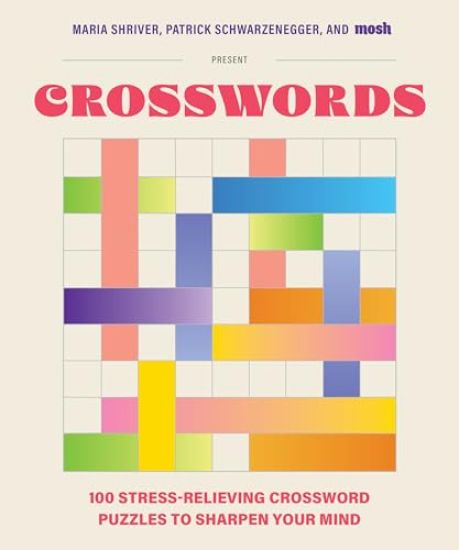
100 crossword puzzles to help you relieve stress and sharpen your mind Doing crosswords is a fantastic way to stay mentally fit and expand your knowledge. With 100 easy- to medium-level puzzles in a minimalist, stylish design, this crossword collection is perfect for anyone looking for a fun way to stimulate their brain 100 crosswords of varying themes: Enjoy modern and fun clues covering pop culture, sports, healthy living, history, and moreEasy- to medium-level puzzles: Engaging puzzles suitable for crossword enthusiasts of all skill levelsExpert contributors: Created by renowned contributors whose work has been featured in the New York Times, New Yorker, Wall Street Journal, and moreTravel size: The book's 6" x 9" size makes it perfect for travel or on-the-go solvingLayflat and easy to read: The book lays flat for easy writing, and the puzzle grids and clues spread across two pages for readabilityHigh quality: Durable cover and premium paper, totaling 224 pages Answer key included: Solutions to all puzzles are provided at the back of the book for quick reference This crossword book is brought to you by MOSH, a mission-driven brain health and wellness company that was founded by Maria Shriver and Patrick Schwarzenegger to inspire optimal brain health at every stage of life through nutrition, education, research, and advocacy. For more information, visit www.moshlife.com.
Solo Fiedrich von Schiller, animado por el caracter stico esp ritu rom ntico e imaginativo, se tom la libertad de provocar un encuentro entre las reinas Mar a Estuardo e Isabel I. En el presente caso, desaparecen los episodios sentimentales y se da paso a un cruel retrato de la soberana inglesa quien, como se sabe, tuvo una larga disputa con la reina de Escocia, por el tema de la sucesi n al trono ingl s Mar a Estuardo, reina de Escocia, es una de esas figuras misteriosas y atrayentes cuya vida contin a a n hoy siendo pol mica.Friedrich Schiller (Marbach, Alemania, 1759 - Weimar, id., 1805) fue un poeta y dramaturgo alem n. Hijo de un cirujano militar, estudi medicina y derecho en la Escuela Militar de Stuttgart, en lugar de teolog a, tal como era su deseo. Sin tener en cuenta las prohibiciones de la disciplina militar, empez a interesarse por la literatura protorom ntica del Sturm und Drang y, en 1781, estren su primera pieza teatral, Los bandidos, drama antiautoritario que le supuso la deposici n del cargo de cirujano mayor y la prohibici n de escribir obras que pudieran atentar contra el orden social, siempre en rebeld a, expuso su concepci n idealista de la historia, consagr ndolo como el mejor escritor alem n de todos los tiempos.
The Parent's Assistant is the first collection of children's stories by Maria Edgeworth, published by Joseph Johnson in 1796. The first edition (Part I) had five stories: Lazy Lawrence, Tarlton, The Little Dog Trusty, The Orange Man and The False Key. Barring Out was included in the second edition of Part I published the same year. In later editions more material was added, most notably, "The Purple Jar", and a play for children, Old Poz. 1] The 1865 American edition contained the following stories: "Lazy Lawrence", "Tarlton", "The False Key", "The Birthday Present", "Simple Susan", "The Bracelets", "The Little Merchants", "Old Poz", "The Mimic", "Mademoiselle Panache", "The Basket Woman", "The White Pigeon", "The Orphans", "Waste Not, Want Not", "Forgive and Forget", "The Barring Out, or Party Spirit", and "Eton Montem" ................. Maria Edgeworth (1 January 1768 - 22 May 1849) was a prolific Anglo-Irish writer of adults' and children's literature. She was one of the first realist writers in children's literature and was a significant figure in the evolution of the novel in Europe. She held advanced views, for a woman of her time, on estate management, politics and education, and corresponded with some of the leading literary and economic writers, including Sir Walter Scott and David Ricardo. Early life: Maria Edgeworth was born at Black Bourton, Oxfordshire. She was the second child of Richard Lovell Edgeworth (who eventually fathered 22 children by four wives) and Anna Maria Edgeworth; Maria was thus an aunt of Francis Ysidro Edgeworth. She spent her early years with her mother's family in England, until her mother's death when Maria was five. When her father married his second wife Honora Sneyd in 1773, she went with him to his estate, Edgeworthstown, in County Longford, Ireland. Maria was sent to Mrs. Lattafi re's school in Derby after Honora fell ill in 1775. After Honora died in 1780 Maria's father married Honora's sister Elizabeth (then socially disapproved and legally forbidden from 1833 until the Deceased Wife's Sister's Marriage Act 1907). Maria transferred to Mrs. Devis's school in London. Her father's attention became fully focused on her in 1781 when she nearly lost her sight to an eye infection. Returning home at the age of 14, she took charge of her many younger siblings and was home-tutored in law, Irish economics and politics, science, and literature by her father. She also started her lifelong correspondences with learned men, mainly members of the Lunar Society. She became her father's assistant in managing the Edgeworthstown estate, which had become run-down during the family's 1777-1782 absence; she would live and write there for the rest of her life. With their bond strengthened, Maria and her father began a lifelong academic collaboration "of which she was the more able and nimble mind." Present at Edgeworthstown was an extended family, servants and tenants. She observed and recorded the details of daily Irish life, later drawing on this experience for her novels about the Irish. She also mixed with the Anglo-Irish gentry, particularly Kitty Pakenham (later the wife of Arthur Wellesley, 1st Duke of Wellington), Lady Moira, and her aunt Margaret Ruxton of Black Castle. Margaret supplied her with the novels of Anne Radcliffe and William Godwin and encouraged her in her writing. Though Maria Edgeworth spent most of her childhood in England, her life in Ireland had a profound impact on both her thinking and views surrounding her Irish culture. Fauske and Kaufman conclude, " She] used her fiction to address the inherent problems of acts delineated by religious, national, racial, class based, sexual, and gendered identities." Edgeworth used works such Castle Rackrent and Harrington to express her feelings on controversial issues.............
Leonora is a novel written by Maria Edgeworth and published in 1806. Although Edgeworth is known for having her novels (Castle Rackrent, The Absentee) address issues of nationalism in an Anglo-Irish context, Leonora instead privileges English manners over French ones. The plot of the novel centers on the newly married Leonora and her decision to bring back to England a woman who had been exiled to France. The woman, Olivia, is known as a "coquette," and her controversial behavior with regard to her marriage had driven her to France, where she cultivated an aristocratic, "French" sensibility that exists apart from conventional morality. The novel is written in an epistolary style, which means all of the action is mediated through personal letters and the letter-writers' points-of-view. By having the main characters tell the story through their own perspectives, the reader gets to read full articulations of competing sensibilities and philosophies, although the narrative clearly prefers Leonora's prudent reserve over Olivia's extravagant emotional displays. Indeed, this novel can be read as a critique of Sensibility, a behavioral phenomenon that tries to correlate a person's emotional sensitivity with her elevated moral sentiments. Olivia, a self-professed woman of Sensibility, often makes dramatic displays of feeling that are described by others as "theatrical," or contrived, and in her personal correspondence with her French friend, Gabrielle, Olivia makes grand claims about sentiment and love that, conveniently, justify her insatiable need for attention, particularly male attention. While a conventional reading of Jane Austen's Sense and Sensibility dismisses the heroine Marianne's Sensibility as romantic teenage folly, Edgeworth's novel Leonora emphasizes Olivia's behavior as hypocritical narcissism. Maria Edgeworth's letter to Mrs. Pruxton at Black Castle, Navan, dated 8 June 1806, reads: "------ Lady Olivia in ' Leonora ' is now supposed by all Dublin to be a portrait of Lady Asgill wife of Sir Charles Asgill, 2nd Baronet] and that wherever they go they have to defend me by asserting that I'm not acquainted with the said Lady Asgill. Very luckily I never did meet her at Lady Holt's where she was intimate. She was educated by Mademoiselle Le Noir who was Miss Bracebridge's governess and who was more like Mademoiselle Panache than Lady Asgill is - to Olivia - at all events this fancy of the Dublin fine world promotes the sale of the book and I am content. -------." Lady Bessborough, writing to Granville Leveson Gower from Paris on Thursday, 23 December 1802, had this to say about Maria Edgeworth: ".....I was introduc'd by him Fran ois de la Harpe] to the famous Miss Edgeworth and her Brother (Castle Rackrent &c. By the by, I am sure she wrote it all herself, for the brother seems a fool and a coxcomb; she very ugly, but delightful.)"... Maria Edgeworth (1 January 1768 - 22 May 1849) was a prolific Anglo-Irish writer of adults' and children's literature. She was one of the first realist writers in children's literature and was a significant figure in the evolution of the novel in Europe. She held advanced views, for a woman of her time, on estate management, politics and education, and corresponded with some of the leading literary and economic writers, including Sir Walter Scott and David Ricardo......
Patronage is a four volume fictional work by Anglo-Irish writer Maria Edgeworth and published in 1814. It is one of her later books, after such successes as Castle Rackrent (1800), Belinda (1801), Leonora (1806) and The Absentee in 1812, to name a few. The novel is a long and ambitious one which she began writing in 1809. It is the longest of her novels. Patronage as a book is path-making; it was among the first novels with a thesis and as such, it opened the way for Sir Walter Scott's historical novels. In the novel, Edgeworth focuses on and scrupulously explores the various types of patronage and the many forms it takes in all strata of English society. Despite the rigor of her analysis, Edgeworth obtains a sense of subtlety through her ingenious use of variations in characterizatons and a well diversified plot. The plot is made up of many incidents, great and small, that take the reader through a wide range of situations. Much like her contemporary, Jane Austen, Edgeworth had a gift for conveying social conventions through brilliant dialogue and acute moral observations. However, unlike Austen, Edgeworth's writing diverges into essay and an overemphasis on ideas (of which she has a large number) and veers once or twice into the didactic. The literary scholar Alastair Fowler notes her "flawless ear for speech" and ability to produce "brilliant dialogue", as well as the way her various subplots are linked by chains of causation that rest ultimately on a trivial plot element, much as Austen later was able to do so superbly. Edgeworth was eldest daughter of Richard Lovell Edgeworth, the Anglo-Irish politician, writer and inventor who had 21 other children with four wives. This book received the imprimatur of her famous father when published........ Maria Edgeworth (1 January 1768 - 22 May 1849) was a prolific Anglo-Irish writer of adults' and children's literature. She was one of the first realist writers in children's literature and was a significant figure in the evolution of the novel in Europe. She held advanced views, for a woman of her time, on estate management, politics and education, and corresponded with some of the leading literary and economic writers, including Sir Walter Scott and David Ricardo. Early life: Maria Edgeworth was born at Black Bourton, Oxfordshire. She was the second child of Richard Lovell Edgeworth (who eventually fathered 22 children by four wives) and Anna Maria Edgeworth; Maria was thus an aunt of Francis Ysidro Edgeworth. She spent her early years with her mother's family in England, until her mother's death when Maria was five. When her father married his second wife Honora Sneyd in 1773, she went with him to his estate, Edgeworthstown, in County Longford, Ireland. Maria was sent to Mrs. Lattafi re's school in Derby after Honora fell ill in 1775. After Honora died in 1780 Maria's father married Honora's sister Elizabeth (then socially disapproved and legally forbidden from 1833 until the Deceased Wife's Sister's Marriage Act 1907). Maria transferred to Mrs. Devis's school in London. Her father's attention became fully focused on her in 1781 when she nearly lost her sight to an eye infection. Returning home at the age of 14, she took charge of her many younger siblings and was home-tutored in law, Irish economics and politics, science, and literature by her father. She also started her lifelong correspondences with learned men, mainly members of the Lunar Society. She became her father's assistant in managing the Edgeworthstown estate, which had become run-down during the family's 1777-1782 absence; she would live and write there for the rest of her life. With their bond strengthened, Maria and her father began a lifelong academic collaboration "of which she was the more able and nimble mind." Present at Edgeworthstown was an extended family, servants and tenants. She observed and recorded the details of daily Irish life, later drawing on this experience for her novels about t
Patronage is a four volume fictional work by Anglo-Irish writer Maria Edgeworth and published in 1814. It is one of her later books, after such successes as Castle Rackrent (1800), Belinda (1801), Leonora (1806) and The Absentee in 1812, to name a few. The novel is a long and ambitious one which she began writing in 1809. It is the longest of her novels. Patronage as a book is path-making; it was among the first novels with a thesis and as such, it opened the way for Sir Walter Scott's historical novels. In the novel, Edgeworth focuses on and scrupulously explores the various types of patronage and the many forms it takes in all strata of English society. Despite the rigor of her analysis, Edgeworth obtains a sense of subtlety through her ingenious use of variations in characterizatons and a well diversified plot. The plot is made up of many incidents, great and small, that take the reader through a wide range of situations. Much like her contemporary, Jane Austen, Edgeworth had a gift for conveying social conventions through brilliant dialogue and acute moral observations. However, unlike Austen, Edgeworth's writing diverges into essay and an overemphasis on ideas (of which she has a large number) and veers once or twice into the didactic. The literary scholar Alastair Fowler notes her "flawless ear for speech" and ability to produce "brilliant dialogue", as well as the way her various subplots are linked by chains of causation that rest ultimately on a trivial plot element, much as Austen later was able to do so superbly. Edgeworth was eldest daughter of Richard Lovell Edgeworth, the Anglo-Irish politician, writer and inventor who had 21 other children with four wives. This book received the imprimatur of her famous father when published.... Maria Edgeworth (1 January 1768 - 22 May 1849) was a prolific Anglo-Irish writer of adults' and children's literature. She was one of the first realist writers in children's literature and was a significant figure in the evolution of the novel in Europe. She held advanced views, for a woman of her time, on estate management, politics and education, and corresponded with some of the leading literary and economic writers, including Sir Walter Scott and David Ricardo. Early life: Maria Edgeworth was born at Black Bourton, Oxfordshire. She was the second child of Richard Lovell Edgeworth (who eventually fathered 22 children by four wives) and Anna Maria Edgeworth; Maria was thus an aunt of Francis Ysidro Edgeworth. She spent her early years with her mother's family in England, until her mother's death when Maria was five. When her father married his second wife Honora Sneyd in 1773, she went with him to his estate, Edgeworthstown, in County Longford, Ireland. Maria was sent to Mrs. Lattafi re's school in Derby after Honora fell ill in 1775. After Honora died in 1780 Maria's father married Honora's sister Elizabeth (then socially disapproved and legally forbidden from 1833 until the Deceased Wife's Sister's Marriage Act 1907). Maria transferred to Mrs. Devis's school in London. Her father's attention became fully focused on her in 1781 when she nearly lost her sight to an eye infection. Returning home at the age of 14, she took charge of her many younger siblings and was home-tutored in law, Irish economics and politics, science, and literature by her father. She also started her lifelong correspondences with learned men, mainly members of the Lunar Society....
Patronage is a four volume fictional work by Anglo-Irish writer Maria Edgeworth and published in 1814. It is one of her later books, after such successes as Castle Rackrent (1800), Belinda (1801), Leonora (1806) and The Absentee in 1812, to name a few. The novel is a long and ambitious one which she began writing in 1809. It is the longest of her novels. Patronage as a book is path-making; it was among the first novels with a thesis and as such, it opened the way for Sir Walter Scott's historical novels. In the novel, Edgeworth focuses on and scrupulously explores the various types of patronage and the many forms it takes in all strata of English society. Despite the rigor of her analysis, Edgeworth obtains a sense of subtlety through her ingenious use of variations in characterizatons and a well diversified plot. The plot is made up of many incidents, great and small, that take the reader through a wide range of situations. Much like her contemporary, Jane Austen, Edgeworth had a gift for conveying social conventions through brilliant dialogue and acute moral observations. However, unlike Austen, Edgeworth's writing diverges into essay and an overemphasis on ideas (of which she has a large number) and veers once or twice into the didactic. The literary scholar Alastair Fowler notes her "flawless ear for speech" and ability to produce "brilliant dialogue", as well as the way her various subplots are linked by chains of causation that rest ultimately on a trivial plot element, much as Austen later was able to do so superbly. Edgeworth was eldest daughter of Richard Lovell Edgeworth, the Anglo-Irish politician, writer and inventor who had 21 other children with four wives. This book received the imprimatur of her famous father when published. .................. Maria Edgeworth (1 January 1768 - 22 May 1849) was a prolific Anglo-Irish writer of adults' and children's literature. She was one of the first realist writers in children's literature and was a significant figure in the evolution of the novel in Europe. She held advanced views, for a woman of her time, on estate management, politics and education, and corresponded with some of the leading literary and economic writers, including Sir Walter Scott and David Ricardo. Early life: Maria Edgeworth was born at Black Bourton, Oxfordshire. She was the second child of Richard Lovell Edgeworth (who eventually fathered 22 children by four wives) and Anna Maria Edgeworth; Maria was thus an aunt of Francis Ysidro Edgeworth. She spent her early years with her mother's family in England, until her mother's death when Maria was five. When her father married his second wife Honora Sneyd in 1773, she went with him to his estate, Edgeworthstown, in County Longford, Ireland.............
Patronage is a four volume fictional work by Anglo-Irish writer Maria Edgeworth and published in 1814. It is one of her later books, after such successes as Castle Rackrent (1800), Belinda (1801), Leonora (1806) and The Absentee in 1812, to name a few. The novel is a long and ambitious one which she began writing in 1809. It is the longest of her novels. Patronage as a book is path-making; it was among the first novels with a thesis and as such, it opened the way for Sir Walter Scott's historical novels. In the novel, Edgeworth focuses on and scrupulously explores the various types of patronage and the many forms it takes in all strata of English society. Despite the rigor of her analysis, Edgeworth obtains a sense of subtlety through her ingenious use of variations in characterizatons and a well diversified plot. The plot is made up of many incidents, great and small, that take the reader through a wide range of situations. Much like her contemporary, Jane Austen, Edgeworth had a gift for conveying social conventions through brilliant dialogue and acute moral observations. However, unlike Austen, Edgeworth's writing diverges into essay and an overemphasis on ideas (of which she has a large number) and veers once or twice into the didactic. The literary scholar Alastair Fowler notes her "flawless ear for speech" and ability to produce "brilliant dialogue", as well as the way her various subplots are linked by chains of causation that rest ultimately on a trivial plot element, much as Austen later was able to do so superbly. Edgeworth was eldest daughter of Richard Lovell Edgeworth, the Anglo-Irish politician, writer and inventor who had 21 other children with four wives. This book received the imprimatur of her famous father when published............. Maria Edgeworth (1 January 1768 - 22 May 1849) was a prolific Anglo-Irish writer of adults' and children's literature. She was one of the first realist writers in children's literature and was a significant figure in the evolution of the novel in Europe. She held advanced views, for a woman of her time, on estate management, politics and education, and corresponded with some of the leading literary and economic writers, including Sir Walter Scott and David Ricardo. Early life: Maria Edgeworth was born at Black Bourton, Oxfordshire. She was the second child of Richard Lovell Edgeworth (who eventually fathered 22 children by four wives) and Anna Maria Edgeworth; Maria was thus an aunt of Francis Ysidro Edgeworth. She spent her early years with her mother's family in England, until her mother's death when Maria was five. When her father married his second wife Honora Sneyd in 1773, she went with him to his estate, Edgeworthstown, in County Longford, Ireland. Maria was sent to Mrs. Lattafi re's school in Derby after Honora fell ill in 1775. After Honora died in 1780 Maria's father married Honora's sister Elizabeth (then socially disapproved and legally forbidden from 1833 until the Deceased Wife's Sister's Marriage Act 1907). Maria transferred to Mrs. Devis's school in London. Her father's attention became fully focused on her in 1781 when she nearly lost her sight to an eye infection. Returning home at the age of 14, she took charge of her many younger siblings and was home-tutored in law, Irish economics and politics, science, and literature by her father. She also started her lifelong correspondences with learned men, mainly members of the Lunar Society.................
Harrington is an 1817 novel by British novelist Maria Edgeworth. The novel was written in response to a letter from a Jewish-American reader who complained about Edgeworth's stereotypically anti-semitic portrayals of Jews in Castle Rackrent (1800), Belinda (1801), The Absentee (1812), and her Moral Tales (1801) for children. The novel is an autobiography of a "recovering anti-Semite", whose youthful prejudices are undone by contact with various Jewish characters, particularly a young woman. It also makes parallels between the religious discrimination of the Jews and the Catholics in Ireland. Set between the Jewish Naturalization Act of 1753 and the Gordon Riots of 1780, the timeframe highlights these connections. Synopsis Harrington follows the protagonist of the same name who explores his memories to better understand his views on Jews. The novel begins with Harrington's early image of Jews, formed by stories told by his maid of Simon the Jew. Harrington says that the stories of Simon the Jew were " used upon every occasion to reduce me to passive obedience." His parents further strengthen this image by rewarding Harrington's antisemitism. Only after attending public school and meeting the bully Mowbray are Harrington's views on Jews changed. Mowbray's tormenting of the Jewish peddler Jacob causes this sudden shift in thinking. The story shifts to a romance novel with the introduction of Berenice Montenero, an American Jew who moved to England with her wealthy father. Harrington's family and friends are alarmed at his choice of a Jewish woman, a relationship further impeded by the advances of Harrington's old rival Mowbray. Seeking marriage into a wealthy family, Mowbray's attempts to court Berenice are denied. As revenge, Mowbray brings charges of insanity against Harrington, a situation further compounded by his family threatening to disown him. To marry Berenice, Harrington must overcome these obstacles and prove himself to Mr. Montenero. He is thus tested "by experiences designed to arouse his enthusiasm and fear."Mowbray is exposed as the culprit behind Harrington's supposed insanity and Harrington is deemed worthy of marriage to Berenice. This strange courtship is concluded with the revelation by Mr. Montenero, "I have tried you to the utmost, and am satisfied both of the steadiness of your principles and of the strength of your attachment to my daughter-Berenice is not a Jewess."... Maria Edgeworth (1 January 1768 - 22 May 1849) was a prolific Anglo-Irish writer of adults' and children's literature. She was one of the first realist writers in children's literature and was a significant figure in the evolution of the novel in Europe. She held advanced views, for a woman of her time, on estate management, politics and education, and corresponded with some of the leading literary and economic writers, including Sir Walter Scott and David Ricardo. Early life: Maria Edgeworth was born at Black Bourton, Oxfordshire. She was the second child of Richard Lovell Edgeworth (who eventually fathered 22 children by four wives) and Anna Maria Edgeworth; Maria was thus an aunt of Francis Ysidro Edgeworth. She spent her early years with her mother's family in England, until her mother's death when Maria was five. When her father married his second wife Honora Sneyd in 1773, she went with him to his estate, Edgeworthstown, in County Longford, Ireland. Maria was sent to Mrs. Lattafi re's school in Derby after Honora fell ill in 1775. After Honora died in 1780 Maria's father married Honora's sister Elizabeth (then socially disapproved and legally forbidden from 1833 until the Deceased Wife's Sister's Marriage Act 1907)......
Harrington is an 1817 novel by British novelist Maria Edgeworth. The novel was written in response to a letter from a Jewish-American reader who complained about Edgeworth's stereotypically anti-semitic portrayals of Jews in Castle Rackrent (1800), Belinda (1801), The Absentee (1812), and her Moral Tales (1801) for children. The novel is an autobiography of a "recovering anti-Semite", whose youthful prejudices are undone by contact with various Jewish characters, particularly a young woman. It also makes parallels between the religious discrimination of the Jews and the Catholics in Ireland. Set between the Jewish Naturalization Act of 1753 and the Gordon Riots of 1780, the timeframe highlights these connections. Synopsis Harrington follows the protagonist of the same name who explores his memories to better understand his views on Jews. The novel begins with Harrington's early image of Jews, formed by stories told by his maid of Simon the Jew. Harrington says that the stories of Simon the Jew were " used upon every occasion to reduce me to passive obedience." His parents further strengthen this image by rewarding Harrington's antisemitism. Only after attending public school and meeting the bully Mowbray are Harrington's views on Jews changed. Mowbray's tormenting of the Jewish peddler Jacob causes this sudden shift in thinking. The story shifts to a romance novel with the introduction of Berenice Montenero, an American Jew who moved to England with her wealthy father. Harrington's family and friends are alarmed at his choice of a Jewish woman, a relationship further impeded by the advances of Harrington's old rival Mowbray. Seeking marriage into a wealthy family, Mowbray's attempts to court Berenice are denied. As revenge, Mowbray brings charges of insanity against Harrington, a situation further compounded by his family threatening to disown him. To marry Berenice, Harrington must overcome these obstacles and prove himself to Mr. Montenero. He is thus tested "by experiences designed to arouse his enthusiasm and fear."Mowbray is exposed as the culprit behind Harrington's supposed insanity and Harrington is deemed worthy of marriage to Berenice. This strange courtship is concluded with the revelation by Mr. Montenero, "I have tried you to the utmost, and am satisfied both of the steadiness of your principles and of the strength of your attachment to my daughter-Berenice is not a Jewess."... Maria Edgeworth (1 January 1768 - 22 May 1849) was a prolific Anglo-Irish writer of adults' and children's literature. She was one of the first realist writers in children's literature and was a significant figure in the evolution of the novel in Europe. She held advanced views, for a woman of her time, on estate management, politics and education, and corresponded with some of the leading literary and economic writers, including Sir Walter Scott and David Ricardo. Early life: Maria Edgeworth was born at Black Bourton, Oxfordshire. She was the second child of Richard Lovell Edgeworth (who eventually fathered 22 children by four wives) and Anna Maria Edgeworth; Maria was thus an aunt of Francis Ysidro Edgeworth. She spent her early years with her mother's family in England, until her mother's death when Maria was five. When her father married his second wife Honora Sneyd in 1773, she went with him to his estate, Edgeworthstown, in County Longford, Ireland. Maria was sent to Mrs. Lattafi re's school in Derby after Honora fell ill in 1775. After Honora died in 1780 Maria's father married Honora's sister Elizabeth (then socially disapproved and legally forbidden from 1833 until the Deceased Wife's Sister's Marriage Act 1907)......
Harrington is an 1817 novel by British novelist Maria Edgeworth. The novel was written in response to a letter from a Jewish-American reader who complained about Edgeworth's stereotypically anti-semitic portrayals of Jews in Castle Rackrent (1800), Belinda (1801), The Absentee (1812), and her Moral Tales (1801) for children. The novel is an autobiography of a "recovering anti-Semite", whose youthful prejudices are undone by contact with various Jewish characters, particularly a young woman. It also makes parallels between the religious discrimination of the Jews and the Catholics in Ireland. Set between the Jewish Naturalization Act of 1753 and the Gordon Riots of 1780, the timeframe highlights these connections. Synopsis Harrington follows the protagonist of the same name who explores his memories to better understand his views on Jews. The novel begins with Harrington's early image of Jews, formed by stories told by his maid of Simon the Jew. Harrington says that the stories of Simon the Jew were " used upon every occasion to reduce me to passive obedience." His parents further strengthen this image by rewarding Harrington's antisemitism. Only after attending public school and meeting the bully Mowbray are Harrington's views on Jews changed. Mowbray's tormenting of the Jewish peddler Jacob causes this sudden shift in thinking. The story shifts to a romance novel with the introduction of Berenice Montenero, an American Jew who moved to England with her wealthy father. Harrington's family and friends are alarmed at his choice of a Jewish woman, a relationship further impeded by the advances of Harrington's old rival Mowbray. Seeking marriage into a wealthy family, Mowbray's attempts to court Berenice are denied. As revenge, Mowbray brings charges of insanity against Harrington, a situation further compounded by his family threatening to disown him. To marry Berenice, Harrington must overcome these obstacles and prove himself to Mr. Montenero. He is thus tested "by experiences designed to arouse his enthusiasm and fear."Mowbray is exposed as the culprit behind Harrington's supposed insanity and Harrington is deemed worthy of marriage to Berenice. This strange courtship is concluded with the revelation by Mr. Montenero, "I have tried you to the utmost, and am satisfied both of the steadiness of your principles and of the strength of your attachment to my daughter-Berenice is not a Jewess."... Maria Edgeworth (1 January 1768 - 22 May 1849) was a prolific Anglo-Irish writer of adults' and children's literature. She was one of the first realist writers in children's literature and was a significant figure in the evolution of the novel in Europe. She held advanced views, for a woman of her time, on estate management, politics and education, and corresponded with some of the leading literary and economic writers, including Sir Walter Scott and David Ricardo. Early life: Maria Edgeworth was born at Black Bourton, Oxfordshire. She was the second child of Richard Lovell Edgeworth (who eventually fathered 22 children by four wives) and Anna Maria Edgeworth; Maria was thus an aunt of Francis Ysidro Edgeworth. She spent her early years with her mother's family in England, until her mother's death when Maria was five. When her father married his second wife Honora Sneyd in 1773, she went with him to his estate, Edgeworthstown, in County Longford, Ireland. Maria was sent to Mrs. Lattafi re's school in Derby after Honora fell ill in 1775. After Honora died in 1780 Maria's father married Honora's sister Elizabeth (then socially disapproved and legally forbidden from 1833 until the Deceased Wife's Sister's Marriage Act 1907)......
Harrington is an 1817 novel by British novelist Maria Edgeworth. The novel was written in response to a letter from a Jewish-American reader who complained about Edgeworth's stereotypically anti-semitic portrayals of Jews in Castle Rackrent (1800), Belinda (1801), The Absentee (1812), and her Moral Tales (1801) for children. The novel is an autobiography of a "recovering anti-Semite", whose youthful prejudices are undone by contact with various Jewish characters, particularly a young woman. It also makes parallels between the religious discrimination of the Jews and the Catholics in Ireland. Set between the Jewish Naturalization Act of 1753 and the Gordon Riots of 1780, the timeframe highlights these connections. Synopsis Harrington follows the protagonist of the same name who explores his memories to better understand his views on Jews. The novel begins with Harrington's early image of Jews, formed by stories told by his maid of Simon the Jew. Harrington says that the stories of Simon the Jew were " used upon every occasion to reduce me to passive obedience." His parents further strengthen this image by rewarding Harrington's antisemitism. Only after attending public school and meeting the bully Mowbray are Harrington's views on Jews changed. Mowbray's tormenting of the Jewish peddler Jacob causes this sudden shift in thinking. The story shifts to a romance novel with the introduction of Berenice Montenero, an American Jew who moved to England with her wealthy father. Harrington's family and friends are alarmed at his choice of a Jewish woman, a relationship further impeded by the advances of Harrington's old rival Mowbray. Seeking marriage into a wealthy family, Mowbray's attempts to court Berenice are denied. As revenge, Mowbray brings charges of insanity against Harrington, a situation further compounded by his family threatening to disown him. To marry Berenice, Harrington must overcome these obstacles and prove himself to Mr. Montenero. He is thus tested "by experiences designed to arouse his enthusiasm and fear."Mowbray is exposed as the culprit behind Harrington's supposed insanity and Harrington is deemed worthy of marriage to Berenice. This strange courtship is concluded with the revelation by Mr. Montenero, "I have tried you to the utmost, and am satisfied both of the steadiness of your principles and of the strength of your attachment to my daughter-Berenice is not a Jewess."... Maria Edgeworth (1 January 1768 - 22 May 1849) was a prolific Anglo-Irish writer of adults' and children's literature. She was one of the first realist writers in children's literature and was a significant figure in the evolution of the novel in Europe. She held advanced views, for a woman of her time, on estate management, politics and education, and corresponded with some of the leading literary and economic writers, including Sir Walter Scott and David Ricardo. Early life: Maria Edgeworth was born at Black Bourton, Oxfordshire. She was the second child of Richard Lovell Edgeworth (who eventually fathered 22 children by four wives) and Anna Maria Edgeworth; Maria was thus an aunt of Francis Ysidro Edgeworth. She spent her early years with her mother's family in England, until her mother's death when Maria was five. When her father married his second wife Honora Sneyd in 1773, she went with him to his estate, Edgeworthstown, in County Longford, Ireland. Maria was sent to Mrs. Lattafi re's school in Derby after Honora fell ill in 1775. After Honora died in 1780 Maria's father married Honora's sister Elizabeth (then socially disapproved and legally forbidden from 1833 until the Deceased Wife's Sister's Marriage Act 1907)......
Maria Edgeworth (1 January 1768 - 22 May 1849) was a prolific Anglo-Irish writer of adults' and children's literature. She was one of the first realist writers in children's literature and was a significant figure in the evolution of the novel in Europe. She held advanced views, for a woman of her time, on estate management, politics and education, and corresponded with some of the leading literary and economic writers, including Sir Walter Scott and David Ricardo. Early life: Maria Edgeworth was born at Black Bourton, Oxfordshire. She was the second child of Richard Lovell Edgeworth (who eventually fathered 22 children by four wives) and Anna Maria Edgeworth; Maria was thus an aunt of Francis Ysidro Edgeworth. She spent her early years with her mother's family in England, until her mother's death when Maria was five. When her father married his second wife Honora Sneyd in 1773, she went with him to his estate, Edgeworthstown, in County Longford, Ireland. Maria was sent to Mrs. Lattafi re's school in Derby after Honora fell ill in 1775. After Honora died in 1780 Maria's father married Honora's sister Elizabeth (then socially disapproved and legally forbidden from 1833 until the Deceased Wife's Sister's Marriage Act 1907). Maria transferred to Mrs. Devis's school in London. Her father's attention became fully focused on her in 1781 when she nearly lost her sight to an eye infection. Returning home at the age of 14, she took charge of her many younger siblings and was home-tutored in law, Irish economics and politics, science, and literature by her father. She also started her lifelong correspondences with learned men, mainly members of the Lunar Society. She became her father's assistant in managing the Edgeworthstown estate, which had become run-down during the family's 1777-1782 absence; she would live and write there for the rest of her life. With their bond strengthened, Maria and her father began a lifelong academic collaboration "of which she was the more able and nimble mind." Present at Edgeworthstown was an extended family, servants and tenants. She observed and recorded the details of daily Irish life, later drawing on this experience for her novels about the Irish. She also mixed with the Anglo-Irish gentry, particularly Kitty Pakenham (later the wife of Arthur Wellesley, 1st Duke of Wellington), Lady Moira, and her aunt Margaret Ruxton of Black Castle. Margaret supplied her with the novels of Anne Radcliffe and William Godwin and encouraged her in her writing. Though Maria Edgeworth spent most of her childhood in England, her life in Ireland had a profound impact on both her thinking and views surrounding her Irish culture. Fauske and Kaufman conclude, " She] used her fiction to address the inherent problems of acts delineated by religious, national, racial, class based, sexual, and gendered identities." Edgeworth used works such Castle Rackrent and Harrington to express her feelings on controversial issues.
Maria Edgeworth (1 January 1768 - 22 May 1849) was a prolific Anglo-Irish writer of adults' and children's literature. She was one of the first realist writers in children's literature and was a significant figure in the evolution of the novel in Europe. She held advanced views, for a woman of her time, on estate management, politics and education, and corresponded with some of the leading literary and economic writers, including Sir Walter Scott and David Ricardo. Early life: Maria Edgeworth was born at Black Bourton, Oxfordshire. She was the second child of Richard Lovell Edgeworth (who eventually fathered 22 children by four wives) and Anna Maria Edgeworth; Maria was thus an aunt of Francis Ysidro Edgeworth. She spent her early years with her mother's family in England, until her mother's death when Maria was five. When her father married his second wife Honora Sneyd in 1773, she went with him to his estate, Edgeworthstown, in County Longford, Ireland. Maria was sent to Mrs. Lattafi re's school in Derby after Honora fell ill in 1775. After Honora died in 1780 Maria's father married Honora's sister Elizabeth (then socially disapproved and legally forbidden from 1833 until the Deceased Wife's Sister's Marriage Act 1907). Maria transferred to Mrs. Devis's school in London. Her father's attention became fully focused on her in 1781 when she nearly lost her sight to an eye infection. Returning home at the age of 14, she took charge of her many younger siblings and was home-tutored in law, Irish economics and politics, science, and literature by her father. She also started her lifelong correspondences with learned men, mainly members of the Lunar Society. She became her father's assistant in managing the Edgeworthstown estate, which had become run-down during the family's 1777-1782 absence; she would live and write there for the rest of her life. With their bond strengthened, Maria and her father began a lifelong academic collaboration "of which she was the more able and nimble mind." Present at Edgeworthstown was an extended family, servants and tenants. She observed and recorded the details of daily Irish life, later drawing on this experience for her novels about the Irish. She also mixed with the Anglo-Irish gentry, particularly Kitty Pakenham (later the wife of Arthur Wellesley, 1st Duke of Wellington), Lady Moira, and her aunt Margaret Ruxton of Black Castle. Margaret supplied her with the novels of Anne Radcliffe and William Godwin and encouraged her in her writing. Though Maria Edgeworth spent most of her childhood in England, her life in Ireland had a profound impact on both her thinking and views surrounding her Irish culture. Fauske and Kaufman conclude, " She] used her fiction to address the inherent problems of acts delineated by religious, national, racial, class based, sexual, and gendered identities." Edgeworth used works such Castle Rackrent and Harrington to express her feelings on controversial issues.
Maria Edgeworth (1 January 1768 - 22 May 1849) was a prolific Anglo-Irish writer of adults' and children's literature. She was one of the first realist writers in children's literature and was a significant figure in the evolution of the novel in Europe. She held advanced views, for a woman of her time, on estate management, politics and education, and corresponded with some of the leading literary and economic writers, including Sir Walter Scott and David Ricardo. Early life: Maria Edgeworth was born at Black Bourton, Oxfordshire. She was the second child of Richard Lovell Edgeworth (who eventually fathered 22 children by four wives) and Anna Maria Edgeworth; Maria was thus an aunt of Francis Ysidro Edgeworth. She spent her early years with her mother's family in England, until her mother's death when Maria was five. When her father married his second wife Honora Sneyd in 1773, she went with him to his estate, Edgeworthstown, in County Longford, Ireland. Maria was sent to Mrs. Lattafi re's school in Derby after Honora fell ill in 1775. After Honora died in 1780 Maria's father married Honora's sister Elizabeth (then socially disapproved and legally forbidden from 1833 until the Deceased Wife's Sister's Marriage Act 1907). Maria transferred to Mrs. Devis's school in London. Her father's attention became fully focused on her in 1781 when she nearly lost her sight to an eye infection. Returning home at the age of 14, she took charge of her many younger siblings and was home-tutored in law, Irish economics and politics, science, and literature by her father. She also started her lifelong correspondences with learned men, mainly members of the Lunar Society. She became her father's assistant in managing the Edgeworthstown estate, which had become run-down during the family's 1777-1782 absence; she would live and write there for the rest of her life. With their bond strengthened, Maria and her father began a lifelong academic collaboration "of which she was the more able and nimble mind." Present at Edgeworthstown was an extended family, servants and tenants. She observed and recorded the details of daily Irish life, later drawing on this experience for her novels about the Irish. She also mixed with the Anglo-Irish gentry, particularly Kitty Pakenham (later the wife of Arthur Wellesley, 1st Duke of Wellington), Lady Moira, and her aunt Margaret Ruxton of Black Castle. Margaret supplied her with the novels of Anne Radcliffe and William Godwin and encouraged her in her writing. Though Maria Edgeworth spent most of her childhood in England, her life in Ireland had a profound impact on both her thinking and views surrounding her Irish culture. Fauske and Kaufman conclude, " She] used her fiction to address the inherent problems of acts delineated by religious, national, racial, class based, sexual, and gendered identities." Edgeworth used works such Castle Rackrent and Harrington to express her feelings on controversial issues.
Helen is a novel by Maria Edgeworth (1767-1849). It was written in 1834, late in the writer's life. Helen tells the story of a young orphan, Helen Stanley, whose guardian, Dean Stanley, has squandered his fortune and left Helen without means of support. She is forced to take up residence with the local vicar, whose wife is astonished that none of the Stanleys' aristocratic friends have offered a refuge to her. Eventually, however, the Davenant family returns from abroad and invite Helen to their daughter's new home, Clarendon Park. (Cecilia Davenant has just married General Clarendon.) Helen journeys to join her dear friend Cecilia (a charming socialite), and the first half of the novel describes Helen's experiences among the most fortunate of Britain's elite under the tutelage of Lady Davenant, who in some ways favors Helen over her own daughter Cecilia. In the second and more dramatic half of the novel, Lady Davenant departs with her husband, who has been named ambassador at the Court of St. Petersburg, Russia. Helen is left to the care of General Clarendon and Cecilia. By this time she is engaged to Granville Beauclerc, a young and handsome man who is another of Lady Davenant's favorites. All does not run smoothly for Helen, however. Before her marriage, Cecilia has carried on an amorous correspondence with Colonel d'Aubigny, a worthless rou who has since died. These letters reappear in a packet addressed to Cecilia's husband. Cecilia implores Helen to act as if the letters were addressed to her rather than to Cecilia. Helen, from misguided devotion to her friend and gratitude for Cecilia's kind hospitality, agrees to the deception. This first step leads to more and more serious consequences, until finally Helen's reputation is in tatters. Beauclerc is forced to fight a duel in defense of his fianc e, after which he must flee from England. Cecilia still refuses to recognize the letters as hers, out of fear of losing her own husband if she admits to the correspondence. The General is convinced that Helen is faithless. She refuses to stay where she is not respected and chooses exile in Wales with the General's sister, where she becomes dangerously ill. Even the birth of Cecilia's first child, a son, does not encourage her to confess to her husband, and Helen gives up all hope of exoneration. The d nouement comes when Lady Davenant, also dangerously ill, returns to London at the same time as the General finally discovers his wife's deception and vows to separate from Cecilia for life. Helen's character is redeemed, Beauclerc returns to England when his adversary recovers from his wounds, and the novel ends happily for all the protagonists with Lady Davenant saying that she is "now, and not till now, happy--perfectly happy in Love and Truth "....... Maria Edgeworth (1 January 1768 - 22 May 1849) was a prolific Anglo-Irish writer of adults' and children's literature. She was one of the first realist writers in children's literature and was a significant figure in the evolution of the novel in Europe. She held advanced views, for a woman of her time, on estate management, politics and education, and corresponded with some of the leading literary and economic writers, including Sir Walter Scott and David Ricardo. Early life: Maria Edgeworth was born at Black Bourton, Oxfordshire. She was the second child of Richard Lovell Edgeworth (who eventually fathered 22 children by four wives) and Anna Maria Edgeworth; Maria was thus an aunt of Francis Ysidro Edgeworth. She spent her early years with her mother's family in England, until her mother's death when Maria was five. When her father married his second wife Honora Sneyd in 1773, she went with him to his estate, Edgeworthstown, in County Longford, Ireland. Maria was sent to Mrs. Lattafi re's school in Derby after Honora fell ill in 1775....
Lord Colambre, the sensitive hero of the novel, finds that his mother Lady Clonbrony's attempts to buy her way into the high society of London are only ridiculed, while his father, Lord Clonbrony, is in serious debt as a result of his wife's lifestyle. Colambre travels incognito to Ireland to see the country that he still considers his home. When he returns to London he assists his father to pay off the debts, on condition that the Clonbrony family return to live in Ireland.,,, Maria Edgeworth (1 January 1768 - 22 May 1849) was a prolific Anglo-Irish writer of adults' and children's literature. She was one of the first realist writers in children's literature and was a significant figure in the evolution of the novel in Europe. She held advanced views, for a woman of her time, on estate management, politics and education, and corresponded with some of the leading literary and economic writers, including Sir Walter Scott and David Ricardo. Early life: Maria Edgeworth was born at Black Bourton, Oxfordshire. She was the second child of Richard Lovell Edgeworth (who eventually fathered 22 children by four wives) and Anna Maria Edgeworth; Maria was thus an aunt of Francis Ysidro Edgeworth. She spent her early years with her mother's family in England, until her mother's death when Maria was five. When her father married his second wife Honora Sneyd in 1773, she went with him to his estate, Edgeworthstown, in County Longford, Ireland. Maria was sent to Mrs. Lattafi re's school in Derby after Honora fell ill in 1775. After Honora died in 1780 Maria's father married Honora's sister Elizabeth (then socially disapproved and legally forbidden from 1833 until the Deceased Wife's Sister's Marriage Act 1907). Maria transferred to Mrs. Devis's school in London. Her father's attention became fully focused on her in 1781 when she nearly lost her sight to an eye infection. Returning home at the age of 14, she took charge of her many younger siblings and was home-tutored in law, Irish economics and politics, science, and literature by her father. She also started her lifelong correspondences with learned men, mainly members of the Lunar Society. She became her father's assistant in managing the Edgeworthstown estate, which had become run-down during the family's 1777-1782 absence; she would live and write there for the rest of her life. With their bond strengthened, Maria and her father began a lifelong academic collaboration "of which she was the more able and nimble mind." Present at Edgeworthstown was an extended family, servants and tenants. She observed and recorded the details of daily Irish life, later drawing on this experience for her novels about the Irish. She also mixed with the Anglo-Irish gentry, particularly Kitty Pakenham (later the wife of Arthur Wellesley, 1st Duke of Wellington), Lady Moira, and her aunt Margaret Ruxton of Black Castle. Margaret supplied her with the novels of Anne Radcliffe and William Godwin and encouraged her in her writing. Though Maria Edgeworth spent most of her childhood in England, her life in Ireland had a profound impact on both her thinking and views surrounding her Irish culture. Fauske and Kaufman conclude, " She] used her fiction to address the inherent problems of acts delineated by religious, national, racial, class based, sexual, and gendered identities." Edgeworth used works such Castle Rackrent and Harrington to express her feelings on controversial issues............
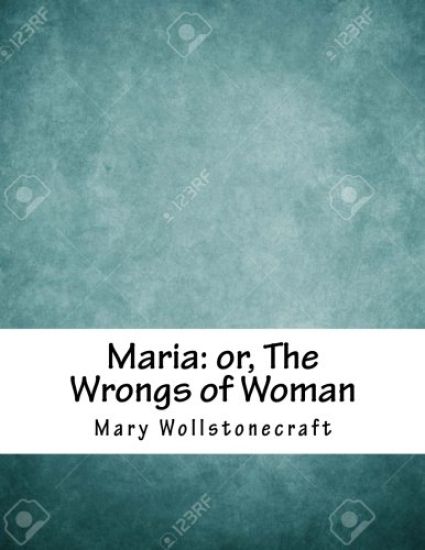
Wollstonecraft's philosophical and gothic novel revolves around the story of a woman imprisoned in an insane asylum by her husband. It focuses on the societal rather than the individual "wrongs of woman" and criticizes what Wollstonecraft viewed as the patriarchal institution of marriage in eighteenth-century Britain and the legal system that protected it. Source: Wikipedia]
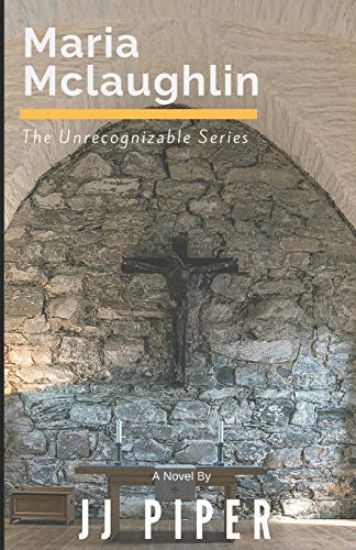
After the clinic shuts down and Maria loses her dream job, she finds herself working 12 hour shifts at the local hospital. She knows she should feel lucky but something is missing. With both her sisters long gone, Maria is left alone with her over-bearing mother. She decides something has to change... but God's plan isn't always our plan.