Dieses Buch enth lt drei Artikel, die sich trotz ihres unterschiedlichen Formats mit dem Thema bersetzung befassen. Der erste bewertet lexikalisch kreative Elemente in spanischen bersetzungen von Jo o Guimar es Rosas Roman Grande Sert o: Veredas, genauer gesagt die von den bersetzern gefundenen L sungen in Bezug auf nicht im W rterbuch enthaltene Begriffe der spanischen Sprache wie yagunzo und sert n unter kulturellen Gesichtspunkten. Die Studie st tzt sich auf die theoretischen berlegungen von Valent n Garc a Yebra zur bersetzung sowie auf die Sprach- und bersetzungstheorien von Antoine Berman und Georges Mounin. Auch die Studie von Prof. Dr. Walnice Nogueira Galv o in The Forms of the False sowie die von G nter Lorenz aufgezeichneten Selbstzeugnisse Rosas tragen zu diesem Artikel bei. Im zweiten Teil wird analysiert, wie bestimmte Schwierigkeiten, mit denen die bersetzer bei der bertragung von Jo o Guimar es Rosas Grande Sert o: Veredas (1956) ins Spanische konfrontiert waren, im Hinblick auf den unterschiedlichen Stil des Autors, insbesondere die Verwendung des Konjunktivs und die Syntax, gel st wurden. Der dritte Teil enth lt eine kommentierte bersetzung von Daniel Mayers Kurzgeschichte El ngel.
This book contains three articles which, despite having different formats, deal with translation. The first evaluates lexically creative items in Spanish translations of Jo o Guimar es Rosa's novel, Grande Sert o: Veredas, more specifically the solutions found by the translators with regard to non-dictionary terms in the Spanish language, such as yagunzo and sert n, from a cultural point of view. The study is guided by Valent n Garc a Yebra's theoretical reflections on translation, as well as the linguistic and translation theories of Antoine Berman and Georges Mounin. Also contributing to this article is the study carried out by Prof Dr Walnice Nogueira Galv o, in The Forms of the False; as well as Rosa's own testimonies recorded by G nter Lorenz. The second analyses how certain difficulties faced by translators when translating Jo o Guimar es Rosa's Grande Sert o: Veredas (1956) into Spanish were resolved, in terms of the author's different style, more specifically the use of the subjunctive and syntax. The third presents an annotated translation of Daniel Mayer's short story El ngel.
Ce livre contient trois articles qui, bien que de formats diff rents, traitent de la traduction. Le premier value les l ments lexicalement cr atifs dans les traductions espagnoles du roman de Jo o Guimar es Rosa, Grande Sert o: Veredas, et plus particuli rement les solutions trouv es par les traducteurs en ce qui concerne les termes non dictionnaires de la langue espagnole, tels que yagunzo et sert n, d'un point de vue culturel. L' tude est guid e par les r flexions th oriques de Valent n Garc a Yebra sur la traduction, ainsi que par les th ories linguistiques et traductologiques d'Antoine Berman et de Georges Mounin. L' tude r alis e par le professeur Walnice Nogueira Galv o, dans Les formes du faux, ainsi que les t moignages de Rosa enregistr s par G nter Lorenz contribuent galement cet article. La deuxi me analyse la mani re dont ont t r solues certaines difficult s rencontr es par les traducteurs lors de la traduction en espagnol de Grande Sert o: Veredas (1956) de Jo o Guimar es Rosa, en ce qui concerne le style diff rent de l'auteur, plus particuli rement l'utilisation du subjonctif et la syntaxe. La troisi me pr sente une traduction annot e de la nouvelle El ngel de Daniel Mayer.
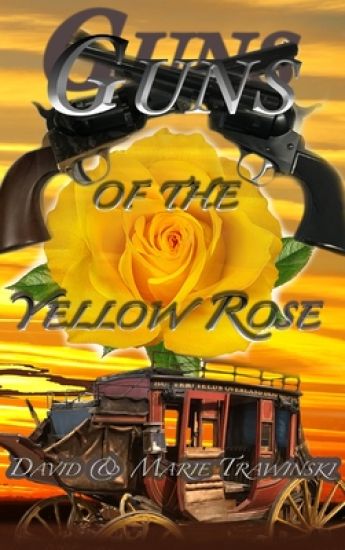
"Guns of the Yellow Rose" is the sequel to "Ever Blooms the Rose". Set in Cartersville in the 1870s, The protagonist Virgil Clay-Harris is a Confederate sharpshooter survivor of the Civil War. His woman is Deekie, a spirited young woman always looking for her next adventure. Clay pines for his runaway "Diddy" who abandoned the family just before the Civil War. He is rumored to be in Texas, held by a gang as a gunsmith, illegally converting old percussion revolvers over to take metal bullets. Clay wishes only to go there and free him from his forced servitude. Clay and Deekie are driven by the economic collapse, the Panic of 1873, to seek traveling work. Clay hires on as an armed protector for a gambler making his way by wagon to first to Nashville and then on to Memphis. There the gambler intends to board a riverboat. While in that Mississippi River port town, a sequence of bad luck awaits them all. Clay and Deekie then take advantage of the Butterfield Overland Stage Coach to make a break for Fort Worth, Texas, to find Clay's "Diddy". Along the way, they become acquainted with a vigilante trail rider and an undercover Pinkerton Agent, both of whom we come to learn have interests of their own in finding Clay's Diddy. All parties converge on Fort Worth in the raucous Hell's Have Acre district. The novel comes to an adventurous encounter with the Stone Canyon Gang, providing the climax to this adventure.
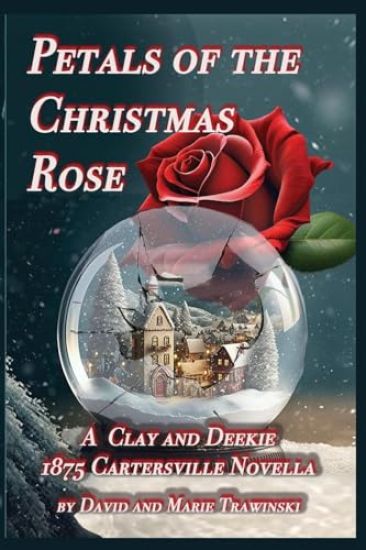
A cozy mystery set in 1875 Cartersville, Georgia. Clay and Deekie get involved in the investigation surrounding the death of an elderly woman, whose German immigrant neighbor is accusing a beautiful young gypsy woman of having murdered. A mysterious snow globe that Deekie buys for Clay as a Christmas present causes an unexpected chain of events to transpire, leading to the solving of the murder mystery.
A cozy mystery set in 1875 Cartersville, Georgia. Clay and Deekie get involved in the investigation surrounding the death of an elderly woman, whose German immigrant neighbor is accusing a beautiful young gypsy woman of having murdered. A mysterious snow globe that Deekie buys for Clay as a Christmas present causes an unexpected chain of events to transpire, leading to the solving of the murder mystery.
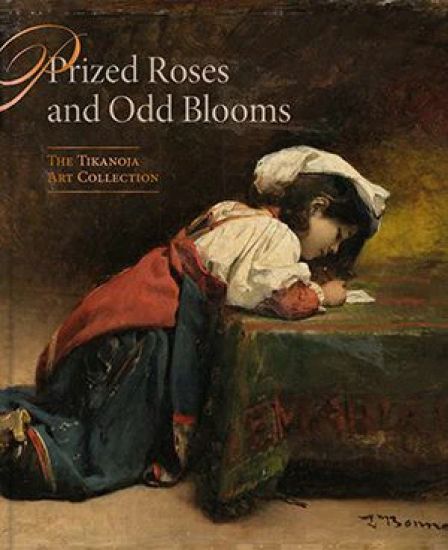
Prized Roses and Odd Blooms introduces the art collection donated to the City of Vaasa in 1951 by the Finnish industrialist Frithjof Tikanoja (1877-1964). Tikanoja took an interest in art during the First World War. He befriended and socialized with many artists and cultural figures after his marriage to Ruusa Myntti, who came from an artistic family. The Tikanoja Art Collection is distinguished by rarities including 19th and 20th century French masterpieces by such artists as Gustave Courbet, Edgar Degas, Paul Gauguin, and Henri Matisse, the likes of which are seldom seen in Finnish collections. The bulk of the collection consists of Finnish art, including famous names such as Akseli Gallen-Kallela, Victor Westerholm and Maria Wiik, as well as a wealth of paintings by Tikanoja's contemporaries such as Eemu Myntti ja Arvi Mäenpää. The eclectic collection also includes pieces by non-mainstream artists and lesser-known names. The expert articles shed light on the works in the collection, Tikanoja's special interests, and the influence of the Finnish national epic (The Kalevala) and the culture of Lapland.Prized Roses and Odd Blooms (Taiteen jaloruusuja ja outoja kukkia) esittelee taidekokoelman, jonka kauppaneuvos Frithjof Tikanoja (1877-1964) lahjoitti vuonna 1951 Vaasan kaupungille. Tikanojan kiinnostus kuvataiteeseen heräsi jo ensimmäisen maailmansodan aikana. Avioiduttuaan Ruusa Myntin kanssa hän verkostoitui ystävyys- ja sukusitein moniin taiteilijoihin ja kulttuuripersoonallisuuksiin. Tikanojan taidekokoelma sisältää Suomen oloissa harvinaisia esimerkkejä ranskalaisesta 1800-luvun ja 1900-luvun alun maalaustaiteesta. Edustettuina ovat muun muassa Gustave Courbet, Edgar Degas, Paul Gauguin ja Henri Matisse. Kokoelman pääosan muodostaa suomalainen taide. Akseli Gallen-Kallelan, Victor Westerholmin ja Maria Wiikin ohella kokoelmassa on runsaasti Tikanojan aikalaisen kuten Eemu Myntin ja Arvi Mäenpään teoksia. Lisäksi monipuoliseen kokoelmaan kuuluu teoksia valtavirran ulkopuolella toimineilta ja vähemmän tunnetuilta taiteilijoilta. Kirjan asiantuntija-artikkeleissa avataan kokoelmateoksia ja kerrotaan Frithjof Tikanojan kiinnostuksen kohteista, Kalevalasta ja Lapin kulttuurista.
Lorna Martin; Paddy Cunneen; Alaedinne Chouiref; Soumer Daghastani; Omar Madkour; Alia Mossallam; Arzé Khodr; Dave Anderson; Oliver Emanuel; Uma Nada-Rajah; Ann Marie Di Manbro
Over 20 years, A Play, A Pie and A Pint has famously commissioned and produced more than 600 plays, providing countless opportunities for writers, actors and directors to develop their craft and try out new ideas. Productions are simple, rehearsal times short and the subject matter diverse. Audiences at Glasgow’s Òran Mór get a new play at lunchtime every week lasting no more than an hour, accompanied by a pie and a pint. To celebrate the beloved theatrical institution’s 20th anniversary, this second collection includes critically acclaimed plays and favourites as voted by the public and members of the theatre company. Includes the plays: Rose (Lorna Martin)Fleeto (Paddy Cunneen)One Day in Spring (various)Tír na nÓg (Dave Anderson)Storytelling (Oliver Emanuel)The Great Replacement (Uma Nada-Rajah)Write-Off (Aodhan Gallagher)Rachel’s Cousins (Ann Marie Di Mambro) ‘a bedrock of the Scottish theatre industry’ The Guardian
Stop the Curse, Receive God's Blessings is an inspirational Christian self help guide to a victorious walk with the LORD. Generational curses, word curses, and Satanic curses can be reversed so that the blessing of the Lord can overtake the believer in Jesus and equip them to fulfill their destiny in God. Chapter 4 is most interesting. The title is "The Mystery of Divine Intelligence in Human DNA". The next chapter has prayer strategies and specific prayers to set people free from curses and other Satanic hooks. The last chapter is all about God's blessings, for the "blessing of the Lord maketh rich and He adds no sorrow with it."