

Kirjahaku
Etsi kirjoja tekijän nimen, kirjan nimen tai ISBN:n perusteella.
1000 tulosta hakusanalla Martin Fowler

One of the most powerful and provocative voices to emerge from the social and political unrest preceding the Civil War, the abolitionist and political activist Delany is today considered to have been among the earliest black nationalists. This volume offers a concise introduction to Delany's extraordinary career: included in full is the rousing separatist oration 'Political Destiny of the Colored Race on the American Continent,' followed by a substantial selection from Delany's sole published novel, Blake, often hailed as one of the masterpieces of nineteenth-century American literature. The volume concludes with an epistolary debate between Delany and Frederick Douglass, situating Delany's ideas in relation to those of Douglass and of Harriet Beecher Stowe. This volume is one of a number of editions that have been drawn from the pages of the acclaimed Broadview Anthology of American Literature; like the others, it is designed to make a range of material from the anthology available in a format convenient for use in a wide variety of contexts.
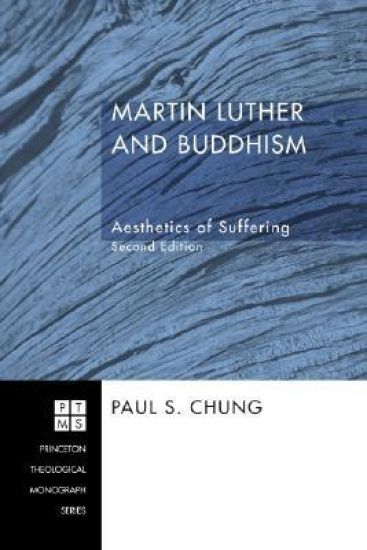
Description: Martin Luther and Buddhism: Aesthetics of Suffering carefully traces the historical and theological context of Luther's breakthrough in terms of articulating justification and justice in connection to the Word of God and divine suffering. Chung critically and constructively engages in dialogue with Luther and with later interpreters of Luther such as Barth and Moltmann, placing the Reformer in dialogue not only with Asian spirituality and religions but also with emerging global theology of religions. Endorsements: "After reading I put this book down with great surprise and decided to encourage students and anyone interested in theology in Europe, America and Asia to urgently and repeatedly read it." --Jurgen Moltmann, Professor Emeritus at the University of Tubingen. ""Dr. Chung is engaged in a deeply theological reflection about Buddhism and Protestantism. His work is original and profound."" --John B. Cobb, Jr., Ingraham Professor Emeritus at the Claremont School of Theology ""Of all the 'turns' in Luther studies, the turn to Asia, so eloquently and powerfully heralded by Paul Chung, might end up being the most significant one both ecumenically and theologically. As a scholar fully conversant with both the best of Western and Asian traditions, Dr. Chung is uniquely qualified for helping us read not only in Buddhist context but also in a wider contextual and global horizon. This is the direction of international systematic-hermeneutical theology for the third millennium "" --Veli-Matti K rkk inen, Professor of Systematic Theology, Fuller Theological Seminary, and Docent of Ecumenics, University of Helsinki. ""The primary goal of interreligious dialogue is mutual creative transformation. For this reason alone, Martin Luther and Buddhism deserves the attention of both Christians and Buddhists."" --Paul O. Ingram, Professor Emeritus, Pacific Lutheran University ""The book on Martin Luther and Buddhism by Paul Chung is a fascinating attempt to develop an emancipation theology of religions in the Asian context of poverty and suffering as well as of religious plurality."" --Ulrich Duchrow, Professor of Systematic Theology, University of Heidelberg ""Paul S. Chung's response to the challenge of religious pluralism is bold, timely, and provocative, as he engages Buddhism in Asia--with its notion of dukkha (suffering)--Luther's theology of the cross, and Karl Barth's accent on the universal reign of Jesus Christ."" --Winston D. Persaud, Professor of Systematic Theology, Wartburg Theological Seminary ""Bringing together Luther's theology with Buddhist understanding as embedded in Asian culture is a huge challenge. Dr. Chung takes on this challenge with a far-ranging breadth of knowledge and creative insight, especially for interfaith dialogue."" --Karen L. Bloomquist, Director for Theology and Studies at the Lutheran World Federation and Adjunct Professor of Theological Ethics, Wartburg Theological Seminary About the Contributor(s): Paul S. Chung is Assistant Professor of Lutheran Witness and World Christianity at Wartburg Theological Seminary in Dubuque, Iowa.

Martin Luther's Two Ways of Viewing Life and the Educational Foundation of a Lutheran Ethos
Leonard S Smith
Wipf Stock Publishers
2011
pokkari
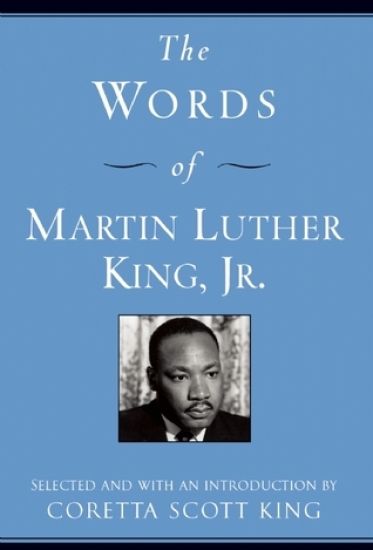
More than 120 quotations on the community of man, racism, civil rights, justice and freedom, faith and religion, nonviolence, and peace. 16 photos, chronology.

Martin Luther King, Jr., had hoped to be a Baptist preacher in a Southern city. Instead, by the time he was assassinated in 1968 at the age of 39, he had been awarded the Nobel Peace Prize and had led millions of people in a nonviolent movement that shattered forever the Southern system of segregation of the races. His eloquent, passionate advocacy of civil and human rights, rooted in the techniques of peaceful demonstration pioneered by Mahatma Gandhi, brought a new dimension of dignity to people's lives and a new hope for freedom and the community of man. Throughout his brief life, his words communicated his vision, his passion, and his faith, and they demonstrated his gift to inspire others to follow his lead. He asked to be remembered as a "drum major for justice," and he is. Created as a living memorial to the philosophies and ideas of Dr. Martin Luther King, Jr., this essential volume includes more than 120 quotations from the greatest civil rights leader's speeches, sermons, and writings, along with 16 historical photographs. Selected and introduced by Coretta Scott King, this book helps keep the dream alive by focusing on seven areas of his concern: the community of man, racism, civil rights, justice and freedom, faith and religion, nonviolence, and peace. The message these words convey is as inspiring and fundamental to life today as it ever was during his lifetime. As Dr. King said, "Human progress is neither automatic nor inevitable. . . .This is no time for apathy or complacency. This is a time for vigorous and positive action."
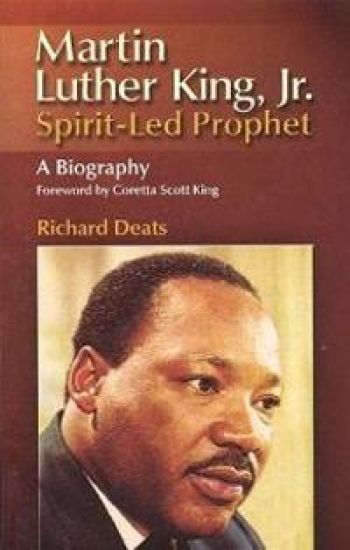
Martin Luther King, Jr., Spirit-Led Prophet
New City Press
2015
pokkari
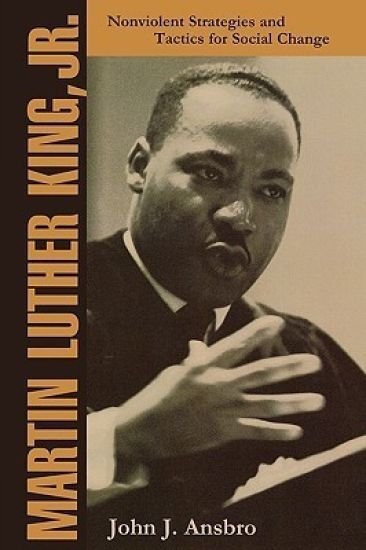
Examines his contribution as a philosopher and theologian to issues of racial and social justice and his drive to eradicate oppression through the doctrine of nonviolence.

In this collection of essays, noted scholar and activist Vincent Harding reflects on the forgotten legacy of Martin Luther King, and the meaning of his life today.
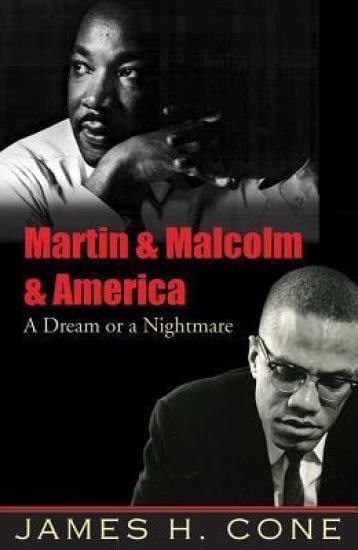
This groundbreaking and highly acclaimed work examines the two most influential African-American leaders of this century. While Martin Luther King, Jr., saw America as "essentially a dream . . . as yet unfulfilled," Malcolm X viewed America as a realized nightmare. James Cone cuts through superficial assessments of King and Malcolm as polar opposites to reveal two men whose visions are complementary and moving toward convergence.
Moldovan explores an aspect of Martin Luther King's legacy that has been largely overlooked by scholars until now. Martin Luther King Jr. is a unique study of Dr. King's preaching and emerging theology spanning from his student days to his tragic death. The influence of Dr. King's religious convictions is conveyed through the personal accounts of his listeners. This study of theology and homiletics attests to Martin Luther King's indelible mark on American society. Moldovan traces the power and influence of Dr. King's words on those who heard him in Selma, Birmingham, and Chicago during the Civil Rights era.

This book offers a rich introduction to Heidegger that reveals Poggeler's sound scholarship and philosophical criticism.
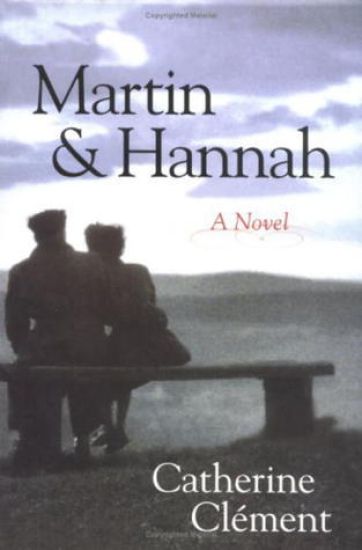
Germany, 1975. Two women near the end of their lives come together at the bedside of an old man, after having spent the last fifty years vying for first place in his heart. While one of the 20th century's greatest minds slumbers in the grip of nightmares, the two enemies sit in a nearby room and declare a truce. One is the man's wife, a woman who has always played her role as the devoted mother and the obedient, bourgeois Hausfrau to the Great Man and the tyrannical husband. The other is his former student and lover, nearly twenty years his junior. She is the Jewish intellectual consumed by her clear-sightedness.He is the brilliant and famous philosopher, now tormented by his Nazi past. In this wide-ranging score, each performer has an individual theme, yet each shares some of the notes of the others. But, above all, this fugue for three voices reveals the mark of the greatest tragedy of the century: for the characters are Martin Heidegger, his wife Elfriede, and Hannah Arendt. Catherine Clement skilfully paints a chiaroscuro portrait of forbidden love, recreating a famous love affair while turning the subtle intricacies of philosophy into memorable, enduring fiction.
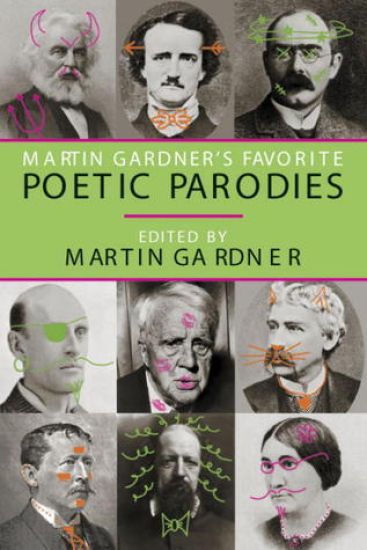
Martin Gardner's Favorite Poetic Parodies
Prometheus Books
2002
sidottu
Whether you love poetry or just don't get it, you will love these often hilarious poetic parodies. Martin Gardner has assembled his favourites, many by famous authors in their own right (Robert Sherwood, G.K. Chesterton, A.E. Housman, Bret Harte). Gardner does us the favour of putting the original poems first, followed by their parodies, thus providing a sampling of some of the best-known poems in English while demonstrating how easily the profound can be made to look ridiculous.

(Book). Martin the Guitar has been purchased by the famous folk singer Robert, and is now on the road performing for audiences everywhere. Martin loves to make music with his new friends, Tthe Harmonica Family, and is in Florida performing with them at a Folk Festival. Just before the performance, Martin and his little friends are kidnapped Will Martin show his friends his courage? Who will come to the rescue? Is romance in Martin the Guitar's future? Download free music by author Harry Musselwhite to accompany the book at martintheguitar.com.
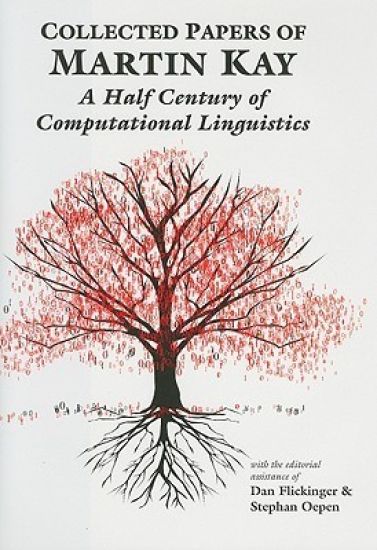
Since the dawn of the age of computers, researchers have been pushing the limits of available processing power to tackle the formidable challenge of developing software that can understand ordinary human language. At the forefront of this quest for the past fifty years, Martin Kay has been a constant source of new algorithms that have proven fundamental to progress in computational linguistics. "Collected Papers of Martin Kay", the first comprehensive collection of his works to date, opens a window into the growth of an increasingly important field of scientific research and development.
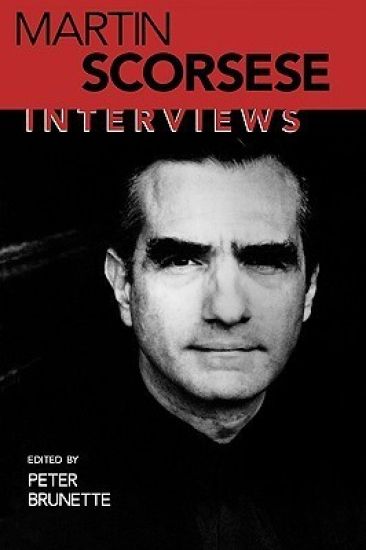
Martin Scorsese
University Press of Mississippi
1999
nidottu
From the moment he captured the film world's attention with Mean Streets (1973), a portrait of life at the fringes of the Mob, it was clear that a dazzling cinematic talent had arrived on the scene. With Robert DeNiro, one of the most talented young actors from this film, Scorsese went on to make some of the greatest American films of the postwar period, including Taxi Driver (1976), Raging Bull (1980), and Goodfellas (1990). A Scorsese film seldom fails to stir controversy, for his devotion to realism has led him to forthrightly depict violence and its frightening randomness in the modern world. His biblical film also created quite a stir. This adaptation of Kazantzakis's The Last Temptation of Christ generated outrage among conservative religious leaders. Scorsese, however, has not limited himself to contemporary, violent urban dramas or new interpretations of biblical subjects. Other widely heralded Scorsese films include Alice Doesn't Live Here Anymore (1974), New York, New York (1977), The Last Waltz (1978), The King of Comedy (1983), After Hours (1985), The Color of Money (1986), Cape Fear (1991), The Age of Innocence (1993), Casino (1995), and Kundun (1998). These interviews begin with conversations about the highly autobiographical Mean Streets (1973), which first brought Scorsese serious attention, and end with conversations about Kundun, an overtly political biography of the Dalai Lama of Tibet, released in early 1998. ""I look for a thematic idea running through my movies, he says, and I see that it's the outsider struggling for recognition. I realize that all my life I've been an outsider, and above all, being lonely but never realizing it."" Peter Brunette , a professor of English and film studies at George Mason University, is the author of Roberto Rossellini and (forthcoming) The Films of Michelangelo Antonioni. With David Wills he co-authored Screen/Play: Derrida and Film Theory.
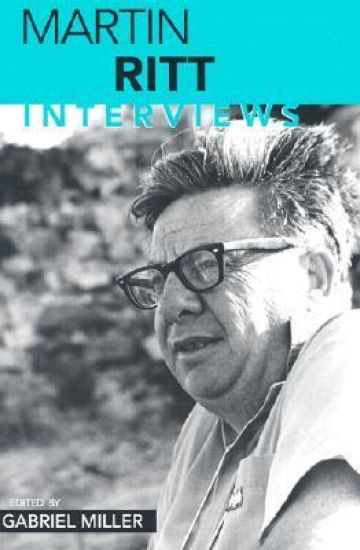
Martin Ritt
University Press of Mississippi
2003
nidottu
This collection of interviews provides a revealing self-portrait of Martin Ritt (1914-1990), America's preeminent maker of social films and one of the most sensitive portraitists of the rural South. Ritt's Hollywood career began in 1958 with Edge of the City and ended in 1990 with the release of Stanley and Iris. In all, he directed twenty-six movies, including some of Hollywood's most enduring films--Hud, Hombre, The Spy Who Came in from the Cold, The Brotherhood, The Molly Maguires, The Front, and Norma Rae. Although he gave mostly boilerplate interviews to the press when promoting a movie, Ritt provided more revealing interviews for seminars, oral histories, and documentary filmmakers. The most significant of these, published here for the first time, create a close-up portrait of this distinguished director of plays and films. Ritt speaks eloquently about his years with the Group Theatre and recreates the passion of the director Harold Clurman. He tells how the Group shaped his ideas about art and the communal nature of the theatrical enterprise, which he extended into his work in film. He speaks of his relationship with Clifford Odets and Elia Kazan, and he talks in detail about his experiences with the blacklist, directing and acting in TV during its Golden Age, his career as a theater director, and his experiences working with such actors as Paul Newman, Sally Field, Sophia Loren, Orson Welles, and Robert De Niro. Ritt discusses his philosophy of directing, the place of film in the history of art, his quarrels with ""auteur theory,"" and the influence of his politics on his work. Gabriel Miller, a professor of English at Rutgers University, is the author of The Films of Martin Ritt: Fanfare for the Common Man (University Press of Mississippi). Articles by him have appeared in the Los Angeles Times, American Book Review, and Literature/Film Quarterly, among other publications.


Martin Luther only meant for his 95 Theses to spark debate and hopefully a few changes in the Catholic Church. Instead, they changed the face of world history, sparking decades of violent religious conflict and war amongst the nations and peoples of Europe. Luther was a Catholic cleric whose chief problem with the Church was the practice of selling indulgences. Church leaders, though, would not sanction debate with him and excommunicated Luther. His cause was then championed by varied European royals who saw the chance to break from the Catholic Church and take control of valuable land. As the Protestants separated from the Catholic Church, they also split from each other into denominations like Lutheran, Anglican, and Calvinist. All of this was more than Luther sought or likely even wanted. But the Reformation remains a seminal moment in Western, indeed world, history and Martin Luther is its father. This book presents an overview of Martin Luther's life and his impact on Christianity and the face of the world. Following that is a list of carefully selected citations of literature about Luther and the religious change he spawned.Easy access is finally provided via author, title, and subject indexes.