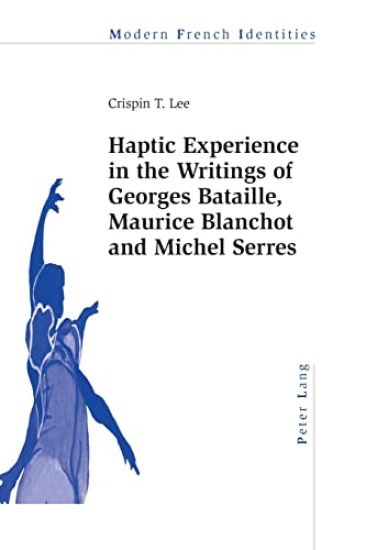
Our sensory relationships with the social and biological world have altered appreciably as a result of recent developments in internet and other mobile communication technologies. We now look at a screen, we touch either the screen or a keyboard in response to what we see and, somehow, an element of our sensory presence is transmitted elsewhere. It is often claimed that this change in the way we perceive the world and each other is without precedent, and is solely the result of twenty-first-century life and technologies. This book argues otherwise. The author analyses the evolving portrayals of ‘haptic’ sensations – that is, sensations that are at once tactile and visual – in the theories and prose of the writer-philosophers Georges Bataille (1897–1962), Maurice Blanchot (1907-2003) and Michel Serres (1930–). In exploring haptic perception in the works of Bataille, Blanchot and Serres, the author examines haptic theories postulated by Aloïs Riegl, Laura U. Marks, Mark Paterson and Jean-Luc Nancy.
Reproduction of the original. The publishing house Megali specialises in reproducing historical works in large print to make reading easier for people with impaired vision.
Reproduction of the original. The publishing house Megali specialises in reproducing historical works in large print to make reading easier for people with impaired vision.
This book, "La famille Bolero; piece en trois actes par Maurice HennequinPaul Bilhaud", by Maurice Hennequin, is a replication of a book originally published before 1903. It has been restored by human beings, page by page, so that you may enjoy it in a form as close to the original as possible. This book was created using print-on-demand technology. Thank you for supporting classic literature.
This book, "Un aventure imperiale; comedie en un acte par Maurice HennequinSerge Basset", by Maurice Hennequin, is a replication of a book originally published before 1910. It has been restored by human beings, page by page, so that you may enjoy it in a form as close to the original as possible. This book was created using print-on-demand technology. Thank you for supporting classic literature.











![Embryo-endocrine /Emeritat Diderot [hommage au Pr. Maurice PETITOUT]](/covers/9786137366295.jpg)