Kirjojen hintavertailu. Mukana 11 627 362 kirjaa ja 12 kauppaa.

Kirjahaku

Etsi kirjoja tekijän nimen, kirjan nimen tai ISBN:n perusteella.

1000 tulosta hakusanalla May

Mayhem

Mayhem

Sigrid Rausing

Penguin Books Ltd.
2018
pokkari
For years Sigrid Rausing watched helplessly as her brother Hans and his wife Eva succumbed to drug addiction. It afflicted a terrible toll on their family, culminating in Eva's tragic early death. As this death led to inquest and media circus, the world looked on in horror, but few understood the suffering endured by the Rausing family.In Mayhem, Sigrid explores the collateral damage addiction wreaks on loved ones. Telling her family's story, she examines painful and rarely discussed questions. What is it like to live with addiction in the family? How can you help without hurting the one you love? And what does it mean to survive another's addiction?
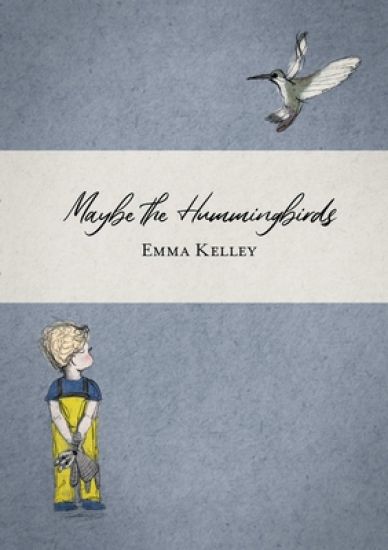
Maybe the Hummingbirds

Maybe the Hummingbirds

Emma Kelley

Lulu.com
2019
nidottu
This debut poetry book, featuring themes of family, love, and nature, is an adventure to discover the prettiness of words. The poems have depth, layers, and a flawless flow, and are arranged in a delicate balance of varying meter and rhyme styles.
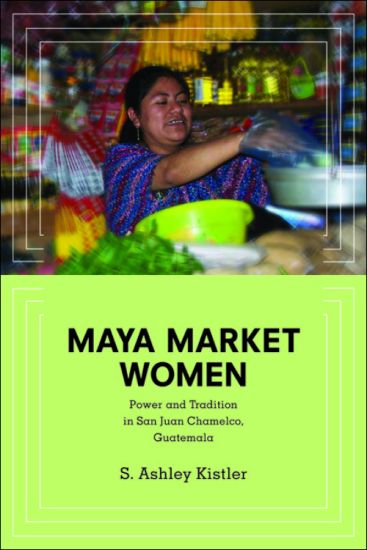
Maya Market Women

Maya Market Women

S. Ashley Kistler

University of Illinois Press
2014
sidottu
As cultural mediators, Chamelco's market women offer a model of contemporary Q'eqchi' identity grounded in the strength of the Maya historical legacy. Guatemala's Maya communities have faced nearly five hundred years of constant challenges to their culture, from colonial oppression to the instability of violent military dictatorships and the advent of new global technologies. In spite of this history, the people of San Juan Chamelco, Guatemala, have effectively resisted significant changes to their cultural identities. Chamelco residents embrace new technologies, ideas, and resources to strengthen their indigenous identities and maintain Maya practice in the 21st century, a resilience that sets Chamelco apart from other Maya towns. Unlike the region's other indigenous women, Chamelco's Q'eqchi' market women achieve both prominence and visibility as vendors, dominating social domains from religion to local politics. These women honor their families' legacies through continuation of the inherited, high-status marketing trade. In Maya Market Women, S. Ashley Kistler describes how market women gain social standing as mediators of sometimes conflicting realities, harnessing the forces of global capitalism to revitalize Chamelco's indigenous identity. Working at the intersections of globalization, kinship, gender, and memory, Kistler presents a firsthand look at Maya markets as a domain in which the values of capitalism and indigenous communities meet.
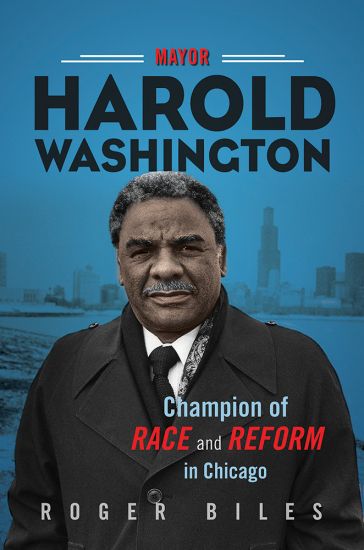
Mayor Harold Washington

Mayor Harold Washington

Roger Biles

University of Illinois Press
2018
sidottu
In 1983, Harold Washington made history by becoming Chicago's first African American mayor. The racially charged campaign and election heralded an era of bitter political divisiveness that obstructed his efforts to change city government. Roger Biles's sweeping biography provides a definitive account of Washington and his journey. Once in City Hall, Washington confronted the backroom deals, aldermanic thuggery, open corruption, and palm greasing that fueled the Chicago machine's autocratic political regime. His alternative: a vision of fairness, transparency, neighborhood empowerment, and balanced economic growth at one with his emergence as a dynamic champion for African American uplift and a crusader for progressive causes. Biles charts the countless infamies of the Council Wars era and Washington's own growth through his winning of a second term--a promise of lasting reform left unfulfilled when the mayor died in 1987. Original and authoritative, Mayor Harold Washington redefines a pivotal era in Chicago's modern history.
Maya Market Women

Maya Market Women

S. Ashley Kistler

University of Illinois Press
2014
nidottu
As cultural mediators, Chamelco's market women offer a model of contemporary Q'eqchi' identity grounded in the strength of the Maya historical legacy. Guatemala's Maya communities have faced nearly five hundred years of constant challenges to their culture, from colonial oppression to the instability of violent military dictatorships and the advent of new global technologies. In spite of this history, the people of San Juan Chamelco, Guatemala, have effectively resisted significant changes to their cultural identities. Chamelco residents embrace new technologies, ideas, and resources to strengthen their indigenous identities and maintain Maya practice in the 21st century, a resilience that sets Chamelco apart from other Maya towns. Unlike the region's other indigenous women, Chamelco's Q'eqchi' market women achieve both prominence and visibility as vendors, dominating social domains from religion to local politics. These women honor their families' legacies through continuation of the inherited, high-status marketing trade. In Maya Market Women, S. Ashley Kistler describes how market women gain social standing as mediators of sometimes conflicting realities, harnessing the forces of global capitalism to revitalize Chamelco's indigenous identity. Working at the intersections of globalization, kinship, gender, and memory, Kistler presents a firsthand look at Maya markets as a domain in which the values of capitalism and indigenous communities meet.
Mayor Harold Washington

Mayor Harold Washington

Roger Biles

University of Illinois Press
2020
nidottu
In 1983, Harold Washington made history by becoming Chicago's first African American mayor. The racially charged campaign and election heralded an era of bitter political divisiveness that obstructed his efforts to change city government. Roger Biles's sweeping biography provides a definitive account of Washington and his journey. Once in City Hall, Washington confronted the backroom deals, aldermanic thuggery, open corruption, and palm greasing that fueled the Chicago machine's autocratic political regime. His alternative: a vision of fairness, transparency, neighborhood empowerment, and balanced economic growth at one with his emergence as a dynamic champion for African American uplift and a crusader for progressive causes. Biles charts the countless infamies of the Council Wars era and Washington's own growth through his winning of a second term--a promise of lasting reform left unfulfilled when the mayor died in 1987. Original and authoritative, Mayor Harold Washington redefines a pivotal era in Chicago's modern history.
Maybe This Christmas

Maybe This Christmas

Sarah Morgan

Harlequin (uk)
2014
pokkari
â??This series is not to be missed it has everything you need romance, sex, jealousy, drama . . . you will not be disappointedâ?? Reader review ?????????? â??Absolutely loved this book . . . Sarah Morgan is such a talented writerâ?? Reader review ??????????
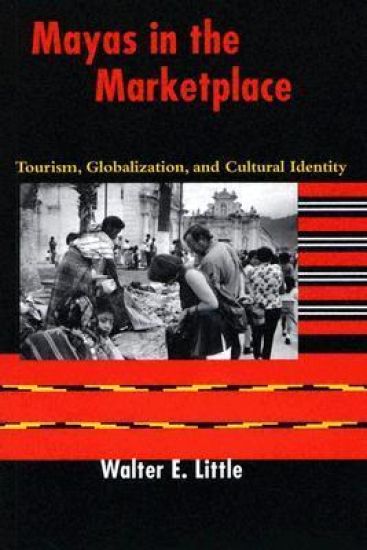
Mayas in the Marketplace

Mayas in the Marketplace

Walter E. Little

University of Texas Press
2004
pokkari
2005 — Best Book Award – New England Council of Latin American Studies Selling handicrafts to tourists has brought the Maya peoples of Guatemala into the world market. Vendors from rural communities now offer their wares to more than 500,000 international tourists annually in the marketplaces of larger cities such as Antigua, Guatemala City, Panajachel, and Chichicastenango. Like businesspeople anywhere, Maya artisans analyze the desires and needs of their customers and shape their products to meet the demands of the market. But how has adapting to the global marketplace reciprocally shaped the identity and cultural practices of the Maya peoples? Drawing on over a decade of fieldwork, Walter Little presents the first ethnographic study of Maya handicraft vendors in the international marketplace. Focusing on Kaqchikel Mayas who commute to Antigua to sell their goods, he explores three significant issues: how the tourist marketplace conflates global and local distinctions. how the marketplace becomes a border zone where national and international, developed and underdeveloped, and indigenous and non-indigenous come together. how marketing to tourists changes social roles, gender relationships, and ethnic identity in the vendors' home communities. Little's wide-ranging research challenges our current understanding of tourism's negative impact on indigenous communities. He demonstrates that the Maya are maintaining a specific, community-based sense of Maya identity, even as they commodify their culture for tourist consumption in the world market.
Maya Political Science

Maya Political Science

Prudence M. Rice

University of Texas Press
2004
pokkari
How did the ancient Maya rule their world? Despite more than a century of archaeological investigation and glyphic decipherment, the nature of Maya political organization and political geography has remained an open question. Many debates have raged over models of centralization versus decentralization, superordinate and subordinate status-with far-flung analogies to emerging states in Europe, Asia, and Africa. But Prudence Rice asserts that neither the model of two giant "superpowers" nor that which postulates scores of small, weakly independent polities fits the accumulating body of material and cultural evidence.In this groundbreaking book, Rice builds a new model of Classic lowland Maya (AD 179-948) political organization and political geography. Using the method of direct historical analogy, she integrates ethnohistoric and ethnographic knowledge of the Colonial-period and modern Maya with archaeological, epigraphic, and iconographic data from the ancient Maya. On this basis of cultural continuity, she constructs a convincing case that the fundamental ordering principles of Classic Maya geopolitical organization were the calendar (specifically a 256-year cycle of time known as the may) and the concept of quadripartition, or the division of the cosmos into four cardinal directions. Rice also examines this new model of geopolitical organization in the Preclassic and Postclassic periods and demonstrates that it offers fresh insights into the nature of rulership, ballgame ritual, and warfare among the Classic lowland Maya.
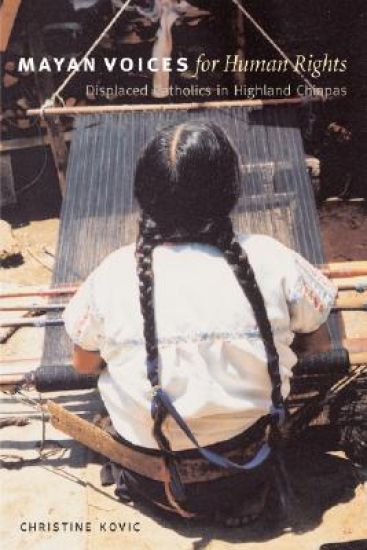
Mayan Voices for Human Rights

Mayan Voices for Human Rights

Christine Kovic

University of Texas Press
2005
pokkari
In the last decades of the twentieth century, thousands of Mayas were expelled, often violently, from their homes in San Juan Chamula and other highland communities in Chiapas, Mexico, by fellow Mayas allied with the ruling Institutional Revolutionary Party (PRI). State and federal authorities generally turned a blind eye to these human rights abuses, downplaying them as local conflicts over religious conversion and defense of cultural traditions. The expelled have organized themselves to fight not only for religious rights, but also for political and economic justice based on a broad understanding of human rights.This pioneering ethnography tells the intertwined stories of the new communities formed by the Mayan exiles and their ongoing efforts to define and defend their human rights. Focusing on a community of Mayan Catholics, the book describes the process by which the progressive Diocese of San Cristóbal and Bishop Samuel Ruiz García became powerful allies for indigenous people in the promotion and defense of human rights. Drawing on the words and insights of displaced Mayas she interviewed throughout the 1990s, Christine Kovic reveals how the exiles have created new communities and lifeways based on a shared sense of faith (even between Catholics and Protestants) and their own concept of human rights and dignity. She also uncovers the underlying political and economic factors that drove the expulsions and shows how the Mayas who were expelled for not being "traditional" enough are in fact basing their new communities on traditional values of duty and reciprocity.
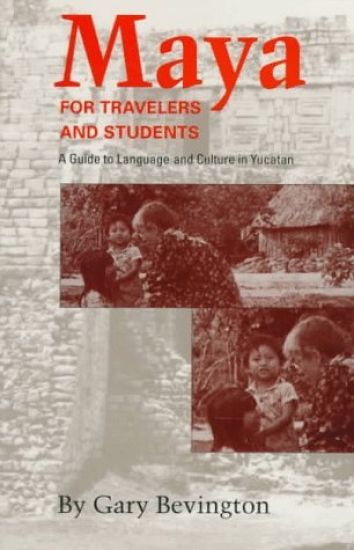
Maya for Travelers and Students

Maya for Travelers and Students

Gary Bevington

University of Texas Press
1995
pokkari
The Yucatan Peninsula draws many North American and European travelers each year to view the ruins of the pre-Columbian Classical Maya civilization and the abundant native flora and fauna. For these travelers, as well as armchair travelers and students, Gary Bevington has prepared the first general English-language introduction to Yucatec Maya, the native language of the people indigenous to the region. Written in nontechnical terms for learners who have a basic knowledge of simple Mexican Spanish, the book presents easily understood, practical information for anyone who would like to communicate with the Maya in their native language. In addition to covering the pronunciation and grammar of Maya, Bevington includes invaluable tips on learning indigenous languages "in the field." Most helpful are his discussions of the cultural and material worlds of the Maya, accompanied by essential words and expressions for common objects and experiences. A Maya-English-Spanish glossary with extensive usage examples and an English-Maya glossary conclude the book. Note: The supplemental audiocasette, Spoken Maya for Travelers and Students, is now available as a free download through the book's page on the University of Texas Press's website.
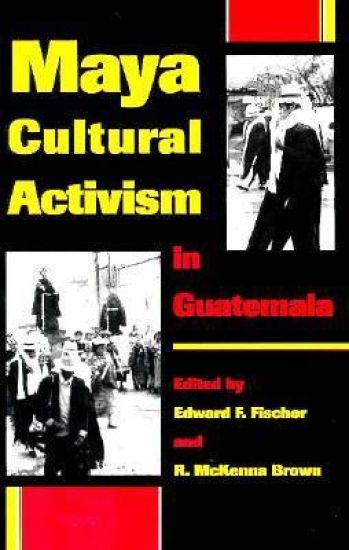
Maya Cultural Activism in Guatemala

Maya Cultural Activism in Guatemala

University of Texas Press
1996
pokkari
Maya Cultural Activism in Guatemala marks a new era in Guatemalan studies by offering an up-to-the-minute look at the pan-Maya movement and the future of the Maya people as they struggle to regain control over their cultural destiny. The successful emergence of what is in some senses a nationalism grounded in ethnicity and language has challenged scholars to reconsider their concepts of nationalism, community, and identity.Editors Edward F. Fischer and R. McKenna Brown have brought together essays by virtually all the leading U.S. experts on contemporary Maya communities and the top Maya scholars working in Guatemala today. Supplementing scholarly analysis of Mayan cultural activism is a position statement originating within the movement and more wide-ranging and personal reflections by anthropologists and linguists who have worked with the Maya over the years. Among the broader issues that come in for examination are the complex relations between U.S. Mayanists and the Mayan cultural movement, efforts to promote literacy in Mayan languages, the significance of woven textiles and native dress, the relations between language and national identity, and the cultural meanings that the present-day Maya have encountered in ancient Mayan texts and hieroglyphic writing.
Maya Intellectual Renaissance

Maya Intellectual Renaissance

Victor D. Montejo

University of Texas Press
2005
pokkari
When Mayan leaders protested the celebration of the Quincentenary of the "discovery" of America and joined with other indigenous groups in the Americas to proclaim an alternate celebration of 500 years of resistance, they rose to national prominence in Guatemala. This was possible in part because of the cultural, political, economic, and religious revitalization that occurred in Mayan communities in the later half of the twentieth century. Another result of the revitalization was Mayan students' enrollment in graduate programs in order to reclaim the intellectual history of the brilliant Mayan past. Victor Montejo was one of those students.This is the first book to be published outside of Guatemala where a Mayan writer other than Rigoberta Menchu discusses the history and problems of the country. It collects essays Montejo has written over the past ten years that address three critical issues facing Mayan peoples today: identity, representation, and Mayan leadership. Montejo is deeply invested in furthering the discussion of the effectiveness of Mayan leadership because he believes that self-evaluation is necessary for the movement to advance. He also criticizes the racist treatment that Mayans experience, and advocates for the construction of a more pluralistic Guatemala that recognizes cultural diversity and abandons assimilation. This volume maps a new political alternative for the future of the movement that promotes inter-ethnic collaboration alongside a reverence for Mayan culture.
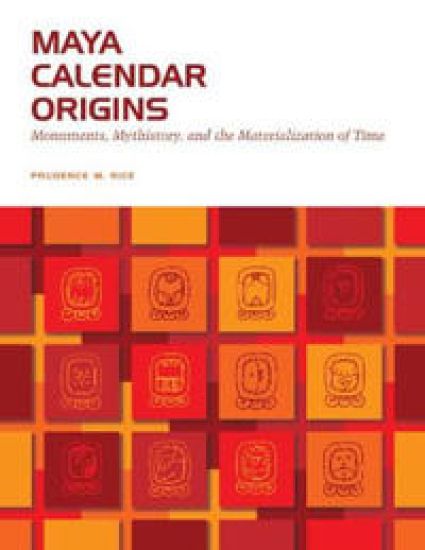
Maya Calendar Origins

Maya Calendar Origins

Prudence M. Rice

University of Texas Press
2007
pokkari
In Maya Political Science: Time, Astronomy, and the Cosmos, Prudence M. Rice proposed a new model of Maya political organization in which geopolitical seats of power rotated according to a 256-year calendar cycle known as the May. This fundamental connection between timekeeping and Maya political organization sparked Rice's interest in the origins of the two major calendars used by the ancient lowland Maya, one 260 days long, and the other having 365 days. In Maya Calendar Origins, she presents a provocative new thesis about the origins and development of the calendrical system.Integrating data from anthropology, archaeology, art history, astronomy, ethnohistory, myth, and linguistics, Rice argues that the Maya calendars developed about a millennium earlier than commonly thought, around 1200 BC, as an outgrowth of observations of the natural phenomena that scheduled the movements of late Archaic hunter-gatherer-collectors throughout what became Mesoamerica. She asserts that an understanding of the cycles of weather and celestial movements became the basis of power for early rulers, who could thereby claim "control" over supernatural cosmic forces. Rice shows how time became materialized-transformed into status objects such as monuments that encoded calendrical or temporal concerns-as well as politicized, becoming the foundation for societal order, political legitimization, and wealth. Rice's research also sheds new light on the origins of the Popol Vuh, which, Rice believes, encodes the history of the development of the Mesoamerican calendars. She also explores the connections between the Maya and early Olmec and Izapan cultures in the Isthmian region, who shared with the Maya the cosmovision and ideology incorporated into the calendrical systems.
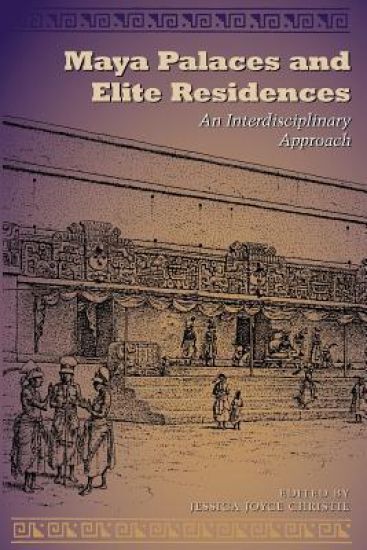
Maya Palaces and Elite Residences

Maya Palaces and Elite Residences

University of Texas Press
2003
nidottu
Maya "palaces" have intrigued students of this ancient Mesoamerican culture since the early twentieth century, when scholars first applied the term "palace" to multi-room, gallery-like buildings set on low platforms in the centers of Maya cities. Who lived in these palaces? What types of ceremonial and residential activities took place there? How do the physical forms and spatial arrangement of the buildings embody Maya concepts of social organization and cosmology?This book brings together state-of-the-art data and analysis regarding the occupants, ritual and residential uses, and social and cosmological meanings of Maya palaces and elite residences. A multidisciplinary team of senior researchers reports on sites in Belize (Blue Creek), Western Honduras (Copan), the Peten (Tikal, Dos Pilas, Aguateca), and the Yucatan (Uxmal, Chichen-Itza, Dzibilchaltun, Yaxuna). Archaeologist contributors discuss the form of palace buildings and associated artifacts, their location within the city, and how some palaces related to landscape features. Their approach is complemented by art historical analyses of architectural sculpture, epigraphy, and ethnography. Jessica Joyce Christie concludes the volume by identifying patterns and commonalties that apply not only to the cited examples, but also to Maya architecture in general.
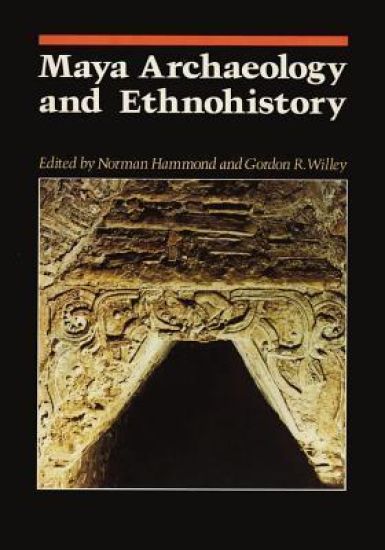
Maya Archaeology and Ethnohistory

Maya Archaeology and Ethnohistory

University of Texas Press
1979
nidottu
Embracing a wide range of research, this book offers various views on the intellectual history of Maya archaeology and ethnohistory and the processes operating in the rise and fall of Maya civilization. The fourteen studies were selected from those presented at the Second Cambridge Symposium on Recent Research in Mesoamerican Archaeology and are presented in three major sections. The first of these deals with the application of theory, both anthropological and historical, to the great civilization of the Classic Maya, which flourished in the Yucatan, Guatemala, and Belize during the first millennium A.D. The structural remains of the Classic Period have impressed travelers and archaeologists for over a century, and aspects of the development and decline of this strange and brilliant tropical forest culture are examined here in the light of archaeological research. The second section presents the results of field research ranging from the Highlands of Mexico east to Honduras and north into the Lowland heart of Maya civilization, and iconographic study of excavated material. The third section covers the ethnohistoric approach to archaeology, the conjunction of material and documentary evidence. Early European documents are used to illuminate historic Maya culture. This section includes transcriptions of previously unpublished archival material. Although not formally linked beyond their common field of inquiry, the essays here offer a conspectus of late-twentieth century Maya research and a series of case histories of the work of some of the leading scholars in the field.
Maya Glyphs

Maya Glyphs

Linda Schele

University of Texas Press
1982
nidottu
The key to the study of the language and history of the Classic Maya (A.D. 293–900) is the verb. Maya Glyphs: The Verbs is a comprehensive study of the verb morphology and syntax of the Maya writing system. Linda Schele's summary of methodology makes available in a single place many important discoveries and approaches to the Maya language. Hers is the first sourcebook to include so broad a range of dates and to identify for the first time so many Maya rulers and events. The admirably lucid text provides an excellent introduction to Maya hieroglyphics for the beginner, and, for the experienced Mayanist, it offers a fascinating explanation of methodology, including paraphrasing, and important information about syntactical structures, special verbal constructions, and literary conventions. Schele's extensive catalog of known verbal phrases is useful for a variety of purposes. Because it is organized according to verbal affix patterns, it provides the only available source for the distribution of such patterns in the writing system. At the same time it registers the date of each event, its agent and patient (if recorded), the dedication date of the monument on which the glyphs occur, and a pictorial illustration, rather than a T-number transcription, of each example. Extensive notes treating problems of dating, interpretation, and dynastic information contain theories about the meaning and function of the events recorded in the Maya inscriptions.
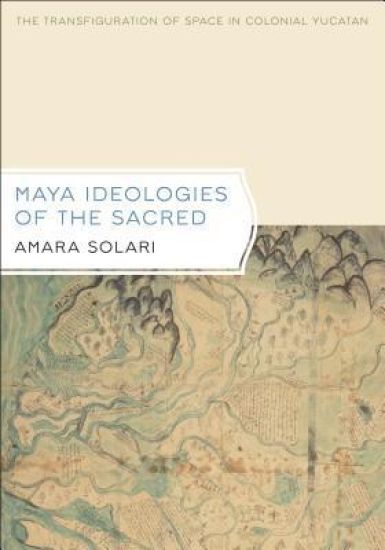
Maya Ideologies of the Sacred

Maya Ideologies of the Sacred

Amara Solari

University of Texas Press
2013
sidottu
As Spaniards built colonies in the New World, men of the cloth saw within ancient ruins and inhabited native towns great potential for easing the colonization effort. In the Yucatan, which is the locus of this study, Franciscan friars seized upon the opportunity to “conquer” Maya places for Christianity. Their practice of remaking a Maya town into a Christian town-often building their church on the very foundations of an ancient sacred site-represented the absolute triumph of their religion, the ultimate defeat of the pagan demonic forces by the true faith.This book addresses the Franciscan evangelical campaign of sixteenth-century Yucatan and investigates how Maya conceptions of space, landscape, and history influenced the conversion strategies adopted by the friars. Amara Solari analyzes colonial manuscripts written in Yucatec Mayan to discern how Maya communities conceived of land (and more abstractly, space) and how they encoded space with cultural significance. She demonstrates how these indigenous understandings of space and its history, a locale’s “spatial biography,” made the transference of sacrality possible. Using the Maya city of Itzmal as a case study, Solari examines the process of transferring sacrality and healing abilities from the Maya deity Itzamnaaj to a numinous statue of the Virgin Mary. She also reveals how the hybrid religious ideology that evolved allowed the native Maya population to subvert colonial political and religious programs and maintain community identity in the early years of the colonial period.
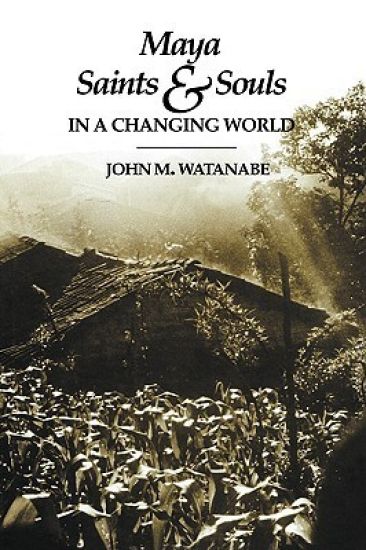
Maya Saints and Souls in a Changing World

Maya Saints and Souls in a Changing World

John M. Watanabe

University of Texas Press
1992
pokkari
The Maya of Santiago Chimaltenango have experienced increasingly rapid, even violent, integration into Guatemalan society in the last fifty years, yet they still distinguish themselves ethnically from Spanish-speaking Guatemalans and other Maya. Why this sense of ethnic identity persists-and also changes-over time is the focus of Maya Saints and Souls in a Changing World, a beautifully written ethnography of a Mam-speaking Maya town in the western highlands of Guatemala.John Watanabe uniquely explores how Chimaltecos themselves define their local distinctiveness. This approach uncovers significant continuities in lifeways and world view that might otherwise remain imperceptible to an outsider.Another important feature of the study is that it updates Charles Wagley's pioneering research in the community during the 1930s. Watanabe identifies both the external, historical factors that have prompted change in the community since Wagley's time and the people's responses to these changes.
Maya after War

Maya after War

Jennifer L. Burrell

University of Texas Press
2013
nidottu
Guatemala’s thirty-six-year civil war culminated in peace accords in 1996, but the postwar transition has been marked by continued violence, including lynchings and the rise of gangs, as well as massive wage-labor exodus to the United States. For the Mam Maya municipality of Todos Santos Cuchumatán, inhabited by a predominantly indigenous peasant population, the aftermath of war and genocide resonates with a long-standing tension between state techniques of governance and ancient community-level power structures that incorporated concepts of kinship, gender, and generation. Showing the ways in which these complex histories are interlinked with wartime and enduring family/class conflicts, Maya after War provides a nuanced account of a unique transitional postwar situation, including the complex influence of neoliberal intervention.Drawing on ethnographic field research over a twenty-year period, Jennifer L. Burrell explores the after-war period in a locale where community struggles span culture, identity, and history. Investigating a range of tensions from the local to the international, Burrell employs unique methodologies, including mapmaking, history workshops, and an informal translation of a historic ethnography, to analyze the role of conflict in animating what matters to Todosanteros in their everyday lives and how the residents negotiate power. Examining the community-based divisions alongside national postwar contexts, Maya after War considers the aura of hope that surrounded the signing of the peace accords, and the subsequent doubt and waiting that have fueled unrest, encompassing generational conflicts. This study is a rich analysis of the multifaceted forces at work in the quest for peace, in Guatemala and beyond.