Kirjojen hintavertailu. Mukana 12 152 606 kirjaa ja 12 kauppaa.

Kirjahaku

Etsi kirjoja tekijän nimen, kirjan nimen tai ISBN:n perusteella.

1000 tulosta hakusanalla Maya Eisel

The Ancient Urban Maya

The Ancient Urban Maya

Scott R. Hutson

University Press of Florida
2018
nidottu
Ancient cities were complex social, political, and economic entities, but they also suffered from inequality, poor sanitation, and disease—often more than rural areas. In The Ancient Urban Maya, Scott Hutson examines ancient Maya cities and argues that, despite the hazards of urban life, these places continued to lure people for many centuries. With built forms that welcomed crowds, neighborhoods that offered domestic comforts, marketplaces that facilitated the exchange of goods and ideas, and the opportunities to expand social networks and capital, the Maya used their cities in familiar ways.
How to Cheat in Maya 2017

How to Cheat in Maya 2017

Paul Naas

CRC Press Inc
2018
sidottu
This is not a book about Maya software with a few animation pointers thrown in here and there. This is a guide to Maya software written by professional animators. This book provides you with complete, set-by-step walkthroughs of essential animation techniques that increase your speed and efficiency while using Maya 2017 for character animation. From curves to constraints, this book covers all of the methods available in the latest version of Maya. Featuring gold-mine coverage this book teaches you new techniques for working with characters in animation tests and short films. Accompanied by a companion site, this is the one and only guide to get you up to speed.Key FeaturesComplete step-by-step, walkthroughs of essential techniques every animator needs to know.Features interviews with leading experts and experienced animation leads.Companion web site including all exercise/example scene files and extras such as video tutorials and animation files.Interlude articles covering everything from Reference Video to Resumes.
The Ancient Maya Marketplace

The Ancient Maya Marketplace

University of Arizona Press
2015
sidottu
Trading was the favorite occupation of the Maya, according to early Spanish observers such as Fray Diego de Landa (1566). Yet scholars of the Maya have long dismissed trade—specifically, market exchange—as unimportant. They argue that the Maya subsisted primarily on agriculture, with long-distance trade playing a minor role in a largely non-commercialized economy.The Ancient Maya Marketplace reviews the debate on Maya markets and offers compelling new evidence for the existence and identification of ancient marketplaces in the Maya Lowlands. Its authors rethink the prevailing views about Maya economic organization and offer new perspectives. They attribute the dearth of Maya market research to two factors: persistent assumptions that Maya society and its rainforest environment lacked complexity, and an absence of physical evidence for marketplaces—a problem that plagues market research around the world. Many Mayanists now agree that no site was self-sufficient, and that from the earliest times robust local and regional exchange existed alongside long-distance trade. Contributors to this volume suggest that marketplaces, the physical spaces signifying the presence of a market economy, did not exist for purely economic reasons but served to exchange information and create social ties as well.The Ancient Maya Marketplace offers concrete links between Maya archaeology, ethnohistory, and contemporary cultures. Its in-depth review of current research will help future investigators to recognize and document marketplaces as a long-standing Maya cultural practice. The volume also provides detailed comparative data for premodern societies elsewhere in the world.
ANIMALS AND THE MAYA IN SOUTHEAST MEXICO

ANIMALS AND THE MAYA IN SOUTHEAST MEXICO

The University of Arizona Press

University of Arizona Press
2005
sidottu
In Mexico's southeastern frontier state of Quintana Roo, game animals and other creatures that depend on old-growth forest are disappearing in the face of habitat destruction and overhunting. Traditionally, the Yucatec Maya have regarded animals as fellow members of a wider society, and in their religion animals enjoy the status of spiritual beings. But in recent years, the breakdown of cultural restraints on hunting has spiraled so far out of control that almost everything edible within easy reach of a road has become fair game. This book combines the insights of an anthropologist with the hands-on experience of a Maya campesino with the aim of improving the management of Quintana Roo's wild lands and animal resources. E. N. Anderson and Felix Medina Tzuc pool their knowledge to document Yucatec Maya understanding and use of animals and to address practical matters related to wider conservation issues. Although the Yucatec Maya's ethnobotany has been well documented, until now little has been recorded about their animal lore. Anderson and Medina Tzuc have compiled a wealth of information about traditional knowledge of animals in this corner of the Maya world. They have recorded most of the terms widely used for several hundred categories of animals in west central Quintana Roo, mapped them onto biological categories, and recorded basic information about wildlife management and uses. The book reflects a wealth of knowledge gathered from individuals regarded as experts on particular aspects of animal management, whether hunting, herding, or beekeeping. It also offers case studies of conservation successes and failures in various communities, pointing to the need for cooperation by the Mexican government and Maya people to save wildlife. Appendixes provide an extensive animal classification and a complete list of all birds identified in the area. Even though sustainable forestry has finally come to the Yucatan, sustainable game use is practiced by only a few communities.Animals and the Maya in Southeast Mexico is a complete ethnozoology for the region, offered in the hope that it will encourage the recognition of Quintana Roo's forests and wildlife as no less deserving of protection than ancient Maya cities.
Lifeways in the Northern Maya Lowlands

Lifeways in the Northern Maya Lowlands

Jennifer P. Mathews; Bethany A. Morrison

University of Arizona Press
2006
sidottu
The flat, dry reaches of the northern Yucatan Peninsula have been largely ignored by archaeologists drawn to the more illustrious sites of the south. This book is the first volume to focus entirely on the northern Maya lowlands, presenting a broad cross-section of current research projects in the region by both established and up-and-coming scholars. To address the heretofore unrecognized importance of the northern lowlands in Maya prehistory, the contributors cover key topics relevant to Maya studies: the environmental and historical significance of the region, the archaeology of both large and small sites, the development of agriculture, resource management, ancient politics, and long-distance interaction among sites. As a volume in the series Native Peoples of the Americas, it adds a human dimension to archaeological findings by incorporating modern ethnographic data. By exploring various social and political levels of Maya society through a broad expanse of time, Lifeways in the Northern Maya Lowlands not only reconstructs a little-known past, it also suggests the broad implications of archaeology for related studies of tourism, household economies, and ethno-archaeology.It is a benchmark work that pointedly demonstrates the need for researchers in both north and south to ignore modern geographic boundaries in their search for new ideas to further their understanding of the ancient Maya.
Construction of Maya Space

Construction of Maya Space

University of Arizona Press
2023
sidottu
Construction of Maya Spaces sheds new light on how Maya society may have shaped--and been shaped by--the constructed environment. Moving beyond the towering pyramids and temples often associated with Maya spaces, this volume focuses on how those in power used features such as walls, roads, rails, and symbolic boundaries to control those without power, and how the powerless pushed back. Through fifteen engaging chapters, contributors examine the construction of spatial features by ancient, historic, and contemporary Maya elite and nonelite peoples to understand how they used spaces differently. Through cutting-edge methodologies and case studies, chapters consider how and why Maya people connected and divided the spaces they used daily in their homes, in their public centers, in their sacred places such as caves, and across their regions to inform us about the mental constructs they used to create their lives and cultures of the past.Contributors Elias Alcocer Puerto Alejandra Alonso Olvera Traci Ardren Jaime J. Awe Alejandra Badillo Sánchez Nicolas C. Barth Grace Lloyd Bascopé Adolpho Iván Batún-Alpuche Elizabeth Beckner M. Kathryn Brown Bernadette Cap Miguel Covarrubias Reyna Juan Fernandez Diaz Alberto G. Flores Colin Thomas H. Guderjan C. Colleen Hanratty Héctor Hernández Álvarez Scott R. Hutson Joshua J. Kwoka Whitney Lytle Aline Magnoni Jennifer P. Mathews Stephanie J. Miller Shawn G. Morton Holley Moyes Shannon Plank Dominique Rissolo Patrick Rohrer Carmen Rojas Sandoval Justine M. Shaw J. Gregory Smith Travis W. Stanton Karl A. Taube Daniel Vallejo-Cáliz
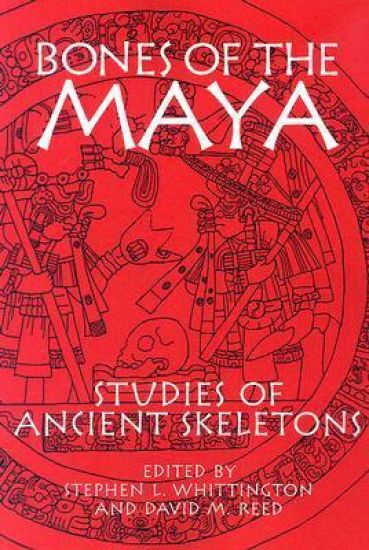
Bones of the Maya

Bones of the Maya

Carl Armstrong; Jane E. Buikstra; Diane Z. Chase; Mark N. Cohen; Della Collins Cook; Marie Elaine Danforth; Andres del Angel; Robert E. Ferrell

The University of Alabama Press
2005
sidottu
During the last 20 years new techniques in osteology have yielded findings on Maya diet and health that challenge the ecological model of collapse. This volume, which includes an index bibliography of the first 150 years of Maya osteology, brings together for the first time a broad spectrum of bioarchaeologists and reveals remarkable data on Maya genetic relationship, demography, and diseases.
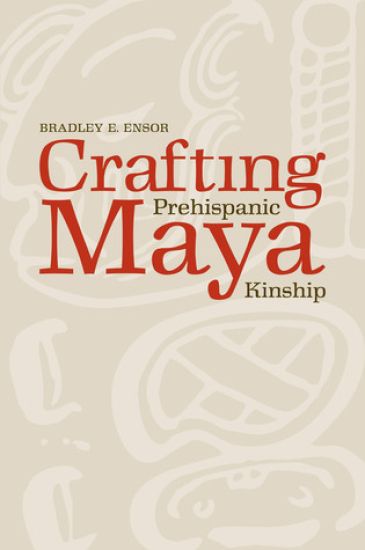
Crafting Prehispanic Maya Kinship

Crafting Prehispanic Maya Kinship

Bradley Ensor

The University of Alabama Press
2013
sidottu
By contextualizing classes and their kinship behavior within the overall political economy, Crafting Prehispanic Maya Kinship provides an example of how archaeology can help to explain the formation of disparate classes and kinship patterns within an ancient state-level society. Bradley E. Ensor provides a new theoretical contribution to Maya ethnographic, ethnohistoric, and archaeological research. Rather than operating solely as a symbolic order unobservable to archaeologists, kinship, according to Ensor, forms concrete social relations that structure daily life and can be reflected in the material remains of a society. Ensor argues that the use of cross-culturally identified and confirmed material indicators of postmarital residence and descent group organization enable archaeologists - those with the most direct material evidence on prehispanic Maya social organization - to overturn a traditional reliance on competing and problematic ethnohistorical models. Using recent data from an arch aeological project within the Chontalpa Maya region of Tabasco, Mexico, Ensor illustrates how archaeologists can interpret and explain the diversity of kinship behavior and its influence on gender within any given Maya social formation.
Bones of the Maya

Bones of the Maya

The University of Alabama Press
2006
nidottu
Includes an indexed bibliography of the first 150 years of Maya osteology. This volume pulls together a spectrum of bioarchaeologists that reveal remarkable data on Maya genetic relationship, demography, and diseases.
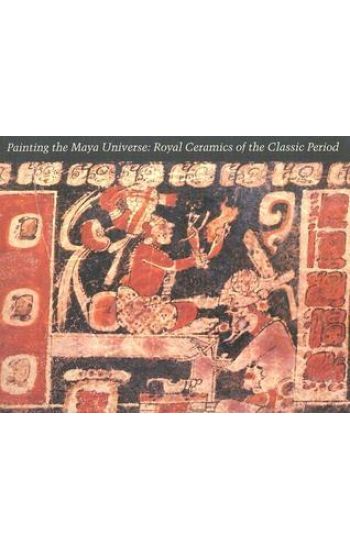
Painting the Maya Universe

Painting the Maya Universe

Dorie Reents-Budet

Duke University Press
1994
pokkari
Lavishly illustrated with nearly 400 color images, Painting the Maya Universe is the most thorough study and brilliant display of Classic Maya ceramic painting yet published. Building on twenty years of research and debate, Dorie Reents-Budet and her collaborators Joseph W. Ball, Ronald L. Bishop, Virginia M. Fields, and Barbara MacLeod bring together many perspectives, including the art historical, archaeological, epigraphical, and ethnohistorical, to examine one of the world’s great but overlooked painting traditions. With an emphasis on sixth- to eighth-century pottery featuring both pictorial and hieroglyphic imagery, Painting the Maya Universe presents an extraordinary exploration of the cultural roles and meanings of these Guatemalan, Belizean, and Mexican elite painted ceramics. Maya pottery is discussed both in aesthetic terms and for the important information it reveals about Maya society, artistry, politics, history, religion, and ritual. The range of ceramic painting styles developed during this period is also presented and defined in detail. Painting the Maya Universe is the first publication to present a definitive translation of the hieroglyphic texts painted on these objects. With many glyphs deciphered here for the first time, this analysis reveals much about how these vessels were perceived and used by the Maya, their owners’ names, and, in several cases, the names of the artists who created them. This information is combined with archaeological and other data, including nuclear chemical analyses, to correlate painting styles with specific Maya sites.Published in conjunction with Duke University Museum of Art and an exhibition touring the United States, Painting the Maya Universe presents an astonishing visual record as well as a monumental scholarly achievement. With photographs by Justin Kerr, the foremost photographer of pre-Columbian art, it includes over 90 unique full-color rollout photographs, each showing the entire surface of an object in a single frame. The book also addresses the questions and controversy regarding the loss of information that occurs when objects are removed from their archaeological context to become part of public and private collections. Painting the Maya Universe will energize discussion of Maya pottery, hieroglyphic texts, and iconography. Its photographs, a lasting resource on this great painting tradition, will stimulate and delight the eye. It is a breakthrough in art history and Latin American scholarship that will enrich general readers and scholars alike.
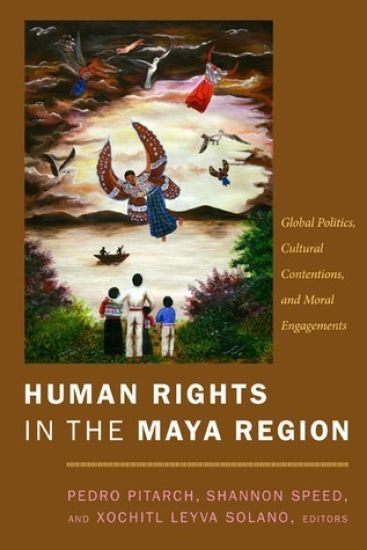
Human Rights in the Maya Region

Human Rights in the Maya Region

Duke University Press
2008
sidottu
In recent years Latin American indigenous groups have regularly deployed the discourse of human rights to legitimate their positions and pursue their goals. Perhaps nowhere is this more evident than in the Maya region of Chiapas and Guatemala, where in the last two decades indigenous social movements have been engaged in ongoing negotiations with the state, and the presence of multinational actors has brought human rights to increased prominence. In this volume, scholars and activists examine the role of human rights in the ways that states relate to their populations, analyze conceptualizations and appropriations of human rights by Mayans in specific localities, and explore the relationship between the individualist and “universal” tenets of Western-derived concepts of human rights and various Mayan cultural understandings and political subjectivities. The collection includes a reflection on the effects of truth-finding and documenting particular human rights abuses, a look at how Catholic social teaching validates the human rights claims advanced by indigenous members of a diocese in Chiapas, and several analyses of the limitations of human rights frameworks. A Mayan intellectual seeks to bring Mayan culture into dialogue with western feminist notions of women’s rights, while another contributor critiques the translation of the United Nations Declaration of Human Rights into Tzeltal, an indigenous language in Chiapas. Taken together, the essays reveal a broad array of rights-related practices and interpretations among the Mayan population, demonstrating that global-local-state interactions are complex and diverse even within a geographically limited area. So too are the goals of indigenous groups, which vary from social reconstruction and healing following years of violence to the creation of an indigenous autonomy that challenges the tenets of neoliberalism.Contributors: Robert M. Carmack, Stener Ekern, Christine Kovic, Xochitl Leyva Solano, Julián López García, Irma Otzoy, Pedro Pitarch, Álvaro Reyes, Victoria Sanford, Rachel Sieder, Shannon Speed, Rodolfo Stavenhagen, David Stoll, Richard Ashby Wilson
Human Rights in the Maya Region

Human Rights in the Maya Region

Duke University Press
2008
pokkari
In recent years Latin American indigenous groups have regularly deployed the discourse of human rights to legitimate their positions and pursue their goals. Perhaps nowhere is this more evident than in the Maya region of Chiapas and Guatemala, where in the last two decades indigenous social movements have been engaged in ongoing negotiations with the state, and the presence of multinational actors has brought human rights to increased prominence. In this volume, scholars and activists examine the role of human rights in the ways that states relate to their populations, analyze conceptualizations and appropriations of human rights by Mayans in specific localities, and explore the relationship between the individualist and “universal” tenets of Western-derived concepts of human rights and various Mayan cultural understandings and political subjectivities. The collection includes a reflection on the effects of truth-finding and documenting particular human rights abuses, a look at how Catholic social teaching validates the human rights claims advanced by indigenous members of a diocese in Chiapas, and several analyses of the limitations of human rights frameworks. A Mayan intellectual seeks to bring Mayan culture into dialogue with western feminist notions of women’s rights, while another contributor critiques the translation of the United Nations Declaration of Human Rights into Tzeltal, an indigenous language in Chiapas. Taken together, the essays reveal a broad array of rights-related practices and interpretations among the Mayan population, demonstrating that global-local-state interactions are complex and diverse even within a geographically limited area. So too are the goals of indigenous groups, which vary from social reconstruction and healing following years of violence to the creation of an indigenous autonomy that challenges the tenets of neoliberalism.Contributors: Robert M. Carmack, Stener Ekern, Christine Kovic, Xochitl Leyva Solano, Julián López García, Irma Otzoy, Pedro Pitarch, Álvaro Reyes, Victoria Sanford, Rachel Sieder, Shannon Speed, Rodolfo Stavenhagen, David Stoll, Richard Ashby Wilson
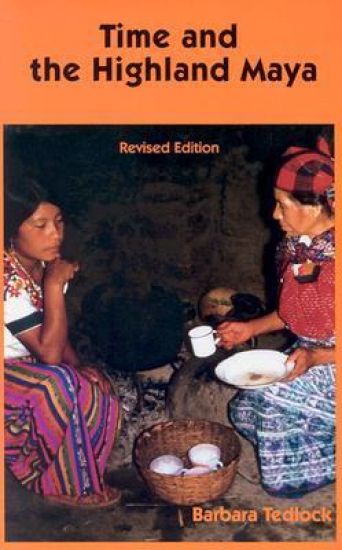
Time and the Highland Maya

Time and the Highland Maya

Barbara Tedlock

University of New Mexico Press
1992
sidottu
Described as a landmark in the ethnographic study of the Maya, this study of ritual and cosmology among the contemporary Quiche Indians of highland Guatemala has now been updated to address changes that have occurred in the last decade. The Classic Mayan obsession with time has never been better known. Here, Barbara Tedlock redirects our attention to the present-day keepers of the ancient calendar. Combining anthropology with formal apprenticeship to a diviner, she refutes long-held ethnographic assumptions and opens a door to the order of the Mayan cosmos and its daily ritual. Unable to visit the region for over ten years, Tedlock returned in 1989 to find that observance of the traditional calendar and religion is stronger than ever, despite a brutal civil war. ". . . a well-written, highly readable, and deeply convincing contribution. . . ." --Michael Coe
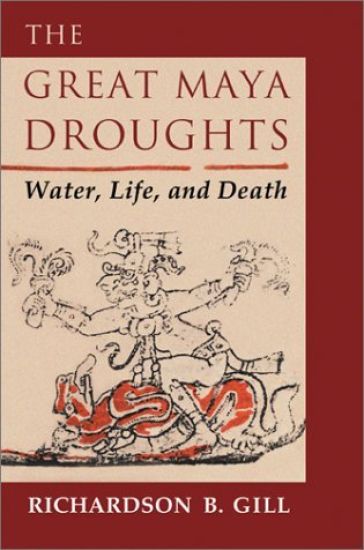
The Great Maya Droughts

The Great Maya Droughts

Richardson B. Gill

University of New Mexico Press
2001
nidottu
Between AD 800 and 1000, during what is known as the Classic Maya Collapse, unrelenting drought caused the deaths of millions of Maya people and initiated a cascade of internal collapses that destroyed their civilisation. Linking global, regional, and local climate change, the author explores how atmospheric processes, volcanism, ocean currents, and other natural forces combined to create a climate that pried apart the highly complex civilisation of the tropical Maya Lowlands in the ninth and tenth centuries. Drawing on knowledge of other prehistoric and historic droughts, this is a compelling study of the relationship of humans to their natural and physical environment. The author develops a new, scientific explanation of why the Classic Maya failed to adjust their behaviour and culture to the climatic conditions, and why civilisations in general sometimes collapse in the face of radical environmental change.
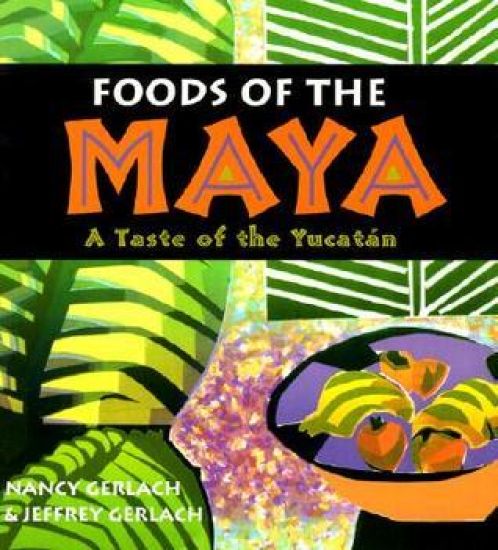
Foods of the Maya

Foods of the Maya

Nancy Gerlach; Jeffrey Gerlach

University of New Mexico Press
2002
nidottu
In an easy-to-follow format, this book provides handy background and travel information about Mexico and some of its ruins before dipping into the ninety-one recipes included here, organised according to meal course. There are recipes that will suit most everyone's palate, from sauces and salsas to soups and sausages; from vegetarian and meat appetisers and main dishes to simple drinks and desserts. Each section begins with a brief description of the course and the types of food involved. The recipes are clear and easy to understand -- one need not be a trained chef with a vast kitchen to create a tasty Yucatecan meal.
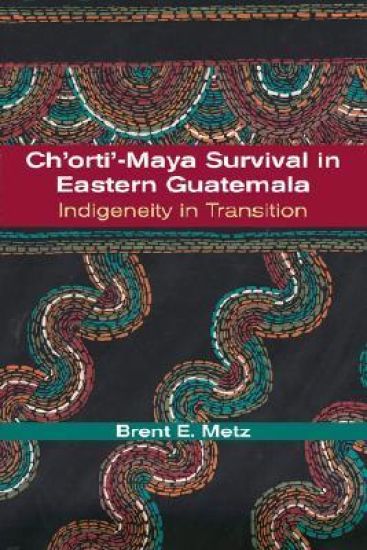
Ch'orti'-Maya Survival in Eastern Guatemala

Ch'orti'-Maya Survival in Eastern Guatemala

Brent E. Metz

University of New Mexico Press
2006
nidottu
Scholars and Guatemalans have characterised eastern Guatemala as 'Ladino' or non-Indian. The Ch'orti' do not exhibit the obvious indigenous markers found among the Mayas of western Guatemala, Chiapas, and the Yucatan Peninsula of Mexico. Few still speak Ch'orti', most no longer wear distinctive dress, and most community organizations have long been abandoned. During the colonial period, the Ch'orti' region was adjacent to relatively vibrant economic regions of Central America that included major trade routes, mines, and dye plantations. In the twentieth century, Ch'orti's directly experienced US-backed dictatorships, a 36-year Civil War from start to finish, and Christian evangelisation campaigns, all while their population has increased exponentially. These have had tremendous impacts on Ch'orti' identities and cultures. From 1991 to 1993, Brent Metz lived in three Ch'orti' Maya-speaking communities, learning the language, conducting household surveys, and interviewing informants. He found Ch'orti's to be ashamed of their indigeneity, and he was fortunate to be present and involved when many Ch'orti's joined the Maya Movement. He has continued to expand his ethnographic research of the Ch'orti' annually ever since and has witnessed how Ch'orti's are reformulating their history and identity.
Religious Transformation in Maya Guatemala

Religious Transformation in Maya Guatemala

University of New Mexico Press
2021
sidottu
Mayas, and indeed all Guatemalans, are currently experiencing the collapse of their way of life. This collapse is disrupting ideologies, symbols, life practices, and social structures that have undergirded their society for almost five hundred years, and it is causing rapid and massive religious transformation among the K'iche' Maya living in highland western Guatemala. Many Maya are converting to Christian Pentecostal faiths in which adherents and leaders become bodily agitated during worship.Drawing on over fifty years of research and data collected by field-school students, Hawkins argues that two factors-cultural collapse and systematic social and economic exclusion--explain the recent religious transformation of Maya Guatemala and the style and emotional intensity through which that transformation is expressed. Guatemala serves as a window on religious change around the world, and Hawkins examines the rapid pentecostalization of Christianity not only within Guatemala but also throughout the global South. The ""pentecostal wail,"" as he describes it, is ultimately an acknowledgment of the angst and insecurity of contemporary Maya.
Substance of the Ancient Maya

Substance of the Ancient Maya

UNIVERSITY OF NEW MEXICO PRESS
2024
sidottu
Substance of the Ancient Maya: Kingdoms and Communities, Objects and Beings collects twelve essays by top scholars, highlighting what is new in research pertaining to the ancient Maya. Subjects range from updated political histories of major kingdoms in the southern Maya Lowlands to explorations of the nature of Maya writing and materiality. These essays were inspired by the scholarship of Stephen Houston and celebrate his transdisciplinary commitment to research in anthropological archaeology, epigraphy, and art history.Collectively, these contributions show how the objects and beings that composed the Classic Maya world were both literal and sacred substances that mediated relations not only among living people but with gods and ancestors. A final chapter by Stephen Houston reflects on unfinished projects of the ancient Maya as a metaphor for all of the work yet to be done to move forward in our studies of the past.
Picasso and Maya: Father and Daughter

Picasso and Maya: Father and Daughter

Diana Widmaier-Picasso; Carmen Gimenez

Rizzoli International Publications
2020
sidottu
In 2016 and 2017, Diana Widmaier-Picasso curated two exhibitions for Gagosian: the first gathered works from the collection of her mother, Maya Ruiz-Picasso, Pablo Picasso s beloved eldest daughter; and the second commemorated the relationship between Picasso and Maya. More than just a catalog of these two exhibitions, this book is a comprehensive reference publication that explores the figure of Maya throughout Picasso s work and chronicles the relationship between the artist and his daughter. The volume features an intimate interview between Ruiz-Picasso and Widmaier-Picasso, along with archival photographs by Edward Quinn and from the Picasso family, many of which have never been published before. New scholarly essays complete the publication, with contributions by distinguished Picasso scholars such as Elizabeth Cowling, Carmen Gimenez, and Pepe Karmel. A section of the book is devoted to Picasso s plaster sculpture La Femme Enceinte (1959) and includes a discussion of Roe Ethridge s vivid, specially commissioned photographs of this work.
The Tomb of Maya and Meryt III

The Tomb of Maya and Meryt III

Barbara G. Aston; David A. Aston; Jacobus van Dijk

Egypt Exploration Society
2023
nidottu
This volume presents the pottery from the tomb of Maya and Meryt (located in the New Kingdom necropolis at Saqqara) in its archaeological context. Volume I was devoted to the reliefs, and volume II to the objects and skeletal remains from the tomb. The closely dated burial assemblage of Maya (Year 9 of Horemheb) and associated offering pottery form the basis for tracing the development of pottery forms in the late Eighteenth Dynasty and continuing into the Ramesside Period. The wealth of blue-painted pottery (amounting to 187 vessels) is carefully described, the motifs represented in the designs are discussed, and aspects of the chronological development of blue-painted pottery are illustrated. 96 colour photographs are included showing many of these beautiful blue-painted vessels. Numerous inscriptions on the pottery provide interesting information on the actual contents of the vessels provided for Maya's burial.