Kirjojen hintavertailu. Mukana 11 342 296 kirjaa ja 12 kauppaa.

Kirjahaku

Etsi kirjoja tekijän nimen, kirjan nimen tai ISBN:n perusteella.

1000 tulosta hakusanalla Megan Cuthbert

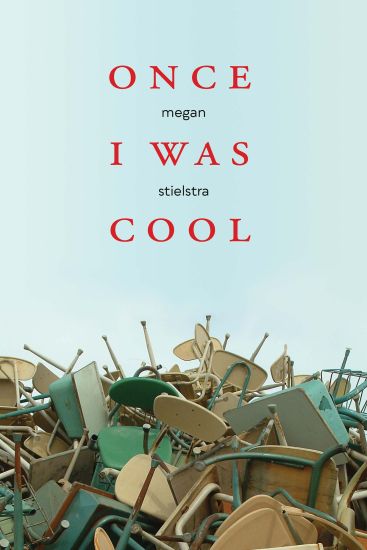
Once I Was Cool

Once I Was Cool

Megan Stielstra

Northwestern University Press
2021
nidottu
Once I Was Cool contrasts past aspirations with the mess and magic of the present. In her younger days, essayist Megan Stielstra saw Jane's Addiction at the Aragon Ballroom and fantasized about living on the same block, right in the thick of music and revelry. As an adult, she lives in a turreted condo across the street, with her husband, a child, and an onerous mortgage. It's just the home her young, cool self imagined. And it isn't what she expected, either. With conversational flourishes and on-the-mark descriptions, Stielstra's essays evoke the richness of her everyday life and the memories that are never far away. She remembers learning how to shoot a gun, a cancer scare, and-in a piece that was anthologized in The Best American Essays 2013-the time she eavesdropped on another new mother using her son's baby monitor. 'I shouldn't have listened,' she writes. 'But it was the first time since my son was born that I didn't feel alone.' Combining footnotes, electric sentences, and uproariously funny anecdotes (have you ever run into an ex while rolling on ecstasy?), Stielstra shows us that maturity is demanding, but its rewards are a gift.
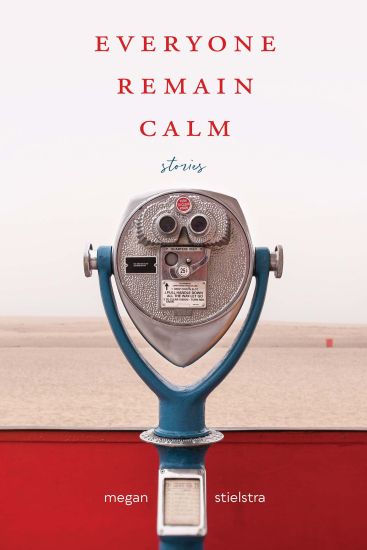
Everyone Remain Calm

Everyone Remain Calm

Megan Stielstra

Northwestern University Press
2021
nidottu
The stories in Everyone Remain Calm reveal landscapes where the surreal and the familiar clash, to visceral effect. A woman yearns for-and dreads-the snowfall that arrives whenever her ex-boyfriend returns to the home she shares with their son. Another character has red-blooded rebound sex with the Incredible Hulk. Marching bands blare all the way from New Orleans to the Midwest. There are wild shootouts, rising tides, and perils embedded in the act of storytelling itself. 'There are words that can kill you if you're not careful,' Stielstra writes. And the stories we tell ourselves are the most fantastic tales of all. Everyone Remain Calm is eerie, hilarious, moving, and down-to-earth, even as its characters defy the rules-sometimes in the ways we wish we could.
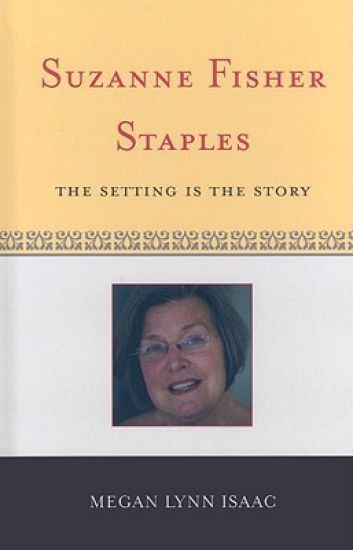
Suzanne Fisher Staples

Suzanne Fisher Staples

Megan Lynn Isaac

Scarecrow Press
2009
sidottu
After spending more than a decade as a journalist in South Asia, Suzanne Fisher Staples turned to writing realistic novels about young people coming of age in modern Pakistan, Afghanistan, and India, as well as the United States. Her elegant prose and compelling character development draw readers into lives and cultures that are always warmly appealing. In Suzanne Fisher Staples: The Setting Is the Story, Megan Lynn Isaac explores the award winning novels of this unusual writer. Comprised of eight chapters—one exploring each of Staples's works (six novels and a memoir) and an additional chapter detailing the critical reception of her most famous books, the Pakistani trilogy (Shabanu, Haveli and The House of Djinn)—Isaac considers the predominant themes, characters, and settings of each work and provides background information about the countries, religions, art forms, and other aspects of the cultures of South Asia that are central to Staples's writing. Original material from the author's interviews with Staples provides new insights into her work and experiences. Biographical information about Staples, both in chronological and narrative form, is also included, as well as a comprehensive bibliography of scholarly material related to Staples. This book will help scholars and fans of Staples to explore the themes and literary techniques employed by her, as well as to deepen their understanding of the cultures and traditions upon which she draws.
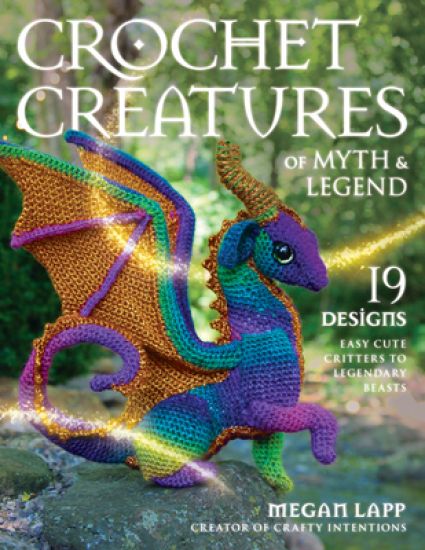
Crochet Creatures of Myth and Legend

Crochet Creatures of Myth and Legend

Megan Lapp

STACKPOLE BOOKS
2023
nidottu
Gargoyles, Griffins, and Hippogriffs, oh my! Since 2017, Megan Lapp of Crafty Intentions has built a following for her unique crochet creations. Her crochet creatures are like nothing else out there! They are intricately detailed and colourful, and yet with her step–by–step instructions, anyone can achieve her results. Crochet Creatures of Myth and Legend includes 13 cute critter patterns—small and adorable creatures that are quick and fun to make and a great place to start—and 6 standard size mythological beasts in all their glory, including a dragon, kraken, feathered serpent, owl griffin, phoenix, and unicorn. Megan’s imagination is always at play, and many of her patterns include various options for wing styles, feathers, and more. The dragon pattern is a masterpiece of options, with multiple variations for ears, back scales, tail, face plates, and more. Cute critters include Pegasus, Phoenix, Wyvern, Jackalope, and more. Grab your hook and a few colourful skeins of worsted weight yarn, and start crocheting your own creatures of myth and legend!
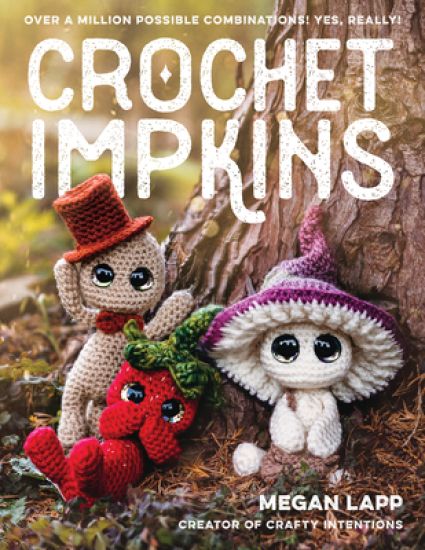
Crochet Impkins

Crochet Impkins

Megan Lapp

STACKPOLE BOOKS
2023
pokkari
Enter the world of the reclusive yet mischievous Impkins!I’m sure you have seen them out of the corner of your eye from time to time, racing from hiding place to nook or cranny—odd little creatures of stitch and stuffing, of endless variety in form and manner. In these pages, you will not find a taxonomy of their features or a list of the names by which you might call them, you will find guidance on something far more important—the techniques and methods by which you might craft one of these little stitchlings of your very own.It is a wonderful thing, I assure you, to bring an Impkin to life with hook and yarn, and herein you will find the detailed instructions necessary to craft one, with an endless array of options for ears, antennae, hats, wings, tails, scales, horns, hairstyles, clothing, and accessories. Each Impkin is unique, and only you can listen to find out what yours longs to be. Stitch by stitch, you’ll cast a spell, until at last you have made a brand-new creature. Don’t be surprised if it asks for a snazzy vest or a satchel to hold its treasures!Though hard to spot at first, when you see one Impkin you can be sure there are more around. Impkins are social little creatures; once you make one, it is sure to clamor for a multitude of friends from your hook!
Crochet Monsters

Crochet Monsters

Megan Lapp

STACKPOLE BOOKS
2024
pokkari
With 37 Monster body options, plus myriad variations for limbs, mouths and teeth, horns, antennae, tails, scales, and so much more, you will never make the same Monster twice. Choose from wide open mouths with fangs to adorable Monsters with bunny ears and a cat tail to Monsters with hair poufs and scales. Make one-eyed spiders or three-eyed aliens, dragons with scales or little friends that don’t match any known monster to date. There is nearly no limit to the variations you can combine! All Monsters use worsted weight and/or sport weight yarn and a size G-6 (4 mm) hook. Patterns are appropriate for beginner through advanced crocheters. If a stitch is new to you, just turn to the Glossary for detailed instructions on how to work it. Photos are included for each pattern piece and any complex stitches so you can be sure you are on the right track as you work. Choosing your next Monster’s look is half the fun. Get family and friends involved in picking options for their own Monster and share the creativity! Get excited for these Monsters to skitter, galumph, stomp, and roll right off your hook!
Crochet Snails and Mushroom Sprites

Crochet Snails and Mushroom Sprites

Megan Lapp

STACKPOLE BOOKS
2025
nidottu
Jump into this crochet cottagecore collection full of snail steeds and mushroom riders! Mushroom Sprites and Snails are a delightful pairing, offering endless possibilities for crafting magical creatures. With Mushroom Sprites available in various sizes, limb options, and cap styles, and Snails in small, medium, and giant sizes with round or pointed shells, this book provides everything you need to create a whimsical duo. As a bonus, you'll find instructions for leashes, reins, and saddles that allow the Mushroom Sprites to take their Snails on adventures through meadows and forests. Patterns are accessible for all skill levels, with simpler mushroom shapes for beginners and intricate spiraling shells and colorwork for more advanced crafters. All patterns include detailed photos so you can easily follow the instructions to create enchanting amigurumi. Use the included photo galleries and planning sheets to design your unique creatures and track your progress, and refer to the Glossary of Terms and Stitches for helpful guidance along the way. You'll soon be enjoying the company of a whole fairy ring of Mushroom Sprites and their Snail companions!
Stir It Up

Stir It Up

Megan J. Elias

University of Pennsylvania Press
2010
pokkari
For Americans who came of age in the mid-twentieth century, home economics conjures memories of burnt toast and sewing disasters. But as historian Megan Elias shows in Stir It Up, home economics began as an idealistic reform movement in higher education in the early 1900s. Leaders of this movement sought to discover and disseminate the best methods for performing domestic work while creating new professional options for women that were based on elements of home life. Home and family were treated as subjects for scientific analysis; students wore lab coats while baking bread and performed rigorous tests on the palatability of their work. The Federal Bureau of Home Economics supplied a grateful audience with informational bulletins as Americans seemed to accept the idea that home could be a site for social change. A major shift occurred in the 1950s, when new ideas about women's roles seemed to divert home economics into more traditional channels, and "home ec" became identified with the era's conformist culture. Even as home economists were redefining family dynamics and influencing government policies, such as school lunch programs, their field was becoming an object of scorn, especially to the feminists of the 1960s. Stir It Up explains what the successes and failures of home economists can tell us about American culture. The book concludes with an examination of contemporary attitudes toward domesticity, putting the phenomena of Martha Stewart, Rachael Ray, Ty Pennington, and the "Mommy Wars" into historical context.
Pan American Women

Pan American Women

Megan Threlkeld

University of Pennsylvania Press
2020
pokkari
In the years following World War I, women activists in the United States and Europe saw themselves as leaders of a globalizing movement to promote women's rights and international peace. In hopes of advancing alliances, U.S. internationalists such as Jane Addams, Carrie Chapman Catt, and Doris Stevens reached across the border to their colleagues in Mexico, including educator Margarita Robles de Mendoza and feminist Hermila Galindo. They established new organizations, sponsored conferences, and rallied for peaceful relations between the two countries. But diplomatic tensions and the ongoing Mexican Revolution complicated their efforts. In Pan American Women, Megan Threlkeld chronicles the clash of political ideologies between U.S. and Mexican women during an era of war and revolution. Promoting a "human internationalism" (in the words of Addams), U.S. women overestimated the universal acceptance of their ideas. They considered nationalism an ethos to be overcome, while the revolutionary spirit of Mexico inspired female citizens there to embrace ideas and reforms that focused on their homeland. Although U.S. women gradually became less imperialistic in their outlook and more sophisticated in their organizational efforts, they could not overcome the deep divide between their own vision of international cooperation and Mexican women's nationalist aspirations. Pan American Women exposes the tensions of imperialism, revolutionary nationalism, and internationalism that challenged women's efforts to build an inter-American movement for peace and equality, in the process demonstrating the importance of viewing women's political history through a wider geographic lens.
Pan American Women

Pan American Women

Megan Threlkeld

University of Pennsylvania Press
2014
sidottu
In the years following World War I, women activists in the United States and Europe saw themselves as leaders of a globalizing movement to promote women's rights and international peace. In hopes of advancing alliances, U.S. internationalists such as Jane Addams, Carrie Chapman Catt, and Doris Stevens reached across the border to their colleagues in Mexico, including educator Margarita Robles de Mendoza and feminist Hermila Galindo. They established new organizations, sponsored conferences, and rallied for peaceful relations between the two countries. But diplomatic tensions and the ongoing Mexican Revolution complicated their efforts. In Pan American Women, Megan Threlkeld chronicles the clash of political ideologies between U.S. and Mexican women during an era of war and revolution. Promoting a "human internationalism" (in the words of Addams), U.S. women overestimated the universal acceptance of their ideas. They considered nationalism an ethos to be overcome, while the revolutionary spirit of Mexico inspired female citizens there to embrace ideas and reforms that focused on their homeland. Although U.S. women gradually became less imperialistic in their outlook and more sophisticated in their organizational efforts, they could not overcome the deep divide between their own vision of international cooperation and Mexican women's nationalist aspirations. Pan American Women exposes the tensions of imperialism, revolutionary nationalism, and internationalism that challenged women's efforts to build an inter-American movement for peace and equality, in the process demonstrating the importance of viewing women's political history through a wider geographic lens.
Food on the Page

Food on the Page

Megan J. Elias

University of Pennsylvania Press
2017
sidottu
What is American food? From barbecue to Jell-O molds to burrito bowls, its history spans a vast patchwork of traditions, crazes, and quirks. A close look at these foods and the recipes behind them unearths a vivid map of American foodways: how Americans thought about food, how they described it, and what foods were in and out of style at different times. In Food on the Page, the first comprehensive history of American cookbooks, Megan J. Elias chronicles cookbook publishing from the early 1800s to the present day. Following food writing through trends such as the Southern nostalgia that emerged in the late nineteenth century, the Francophilia of the 1940s, countercultural cooking in the 1970s, and today's cult of locally sourced ingredients, she reveals that what we read about food influences us just as much as what we taste. Examining a wealth of fascinating archival material-and rediscovering several all-American culinary delicacies and oddities in the process-Elias explores the role words play in the creation of taste on both a personal and a national level. From Fannie Farmer to The Joy of Cooking to food blogs, she argues, American cookbook writers have commented on national cuisine while tempting their readers to the table. By taking cookbooks seriously as a genre and by tracing their genealogy, Food on the Page explains where contemporary assumptions about American food came from and where they might lead.
The Poet and the Antiquaries

The Poet and the Antiquaries

Megan L. Cook

University of Pennsylvania Press
2019
sidottu
Between 1532 and 1602, the works of Geoffrey Chaucer were published in no less than six folio editions. These were, in fact, the largest books of poetry produced in sixteenth-century England, and they significantly shaped the perceptions of Chaucer that would hold sway for centuries to come. But it is the stories behind these editions that are the focus of Megan L. Cook's interest in The Poet and the Antiquaries. She explores how antiquarians-historians, lexicographers, religious polemicists, and other readers with a professional, but not necessarily literary, interest in the English past-played an indispensable role in making Chaucer a figure of lasting literary and cultural importance. After establishing the antiquarian involvement in the publication of the folio editions, Cook offers a series of case studies that discuss Chaucer and his works in relation to specific sixteenth-century discourses about the past. She turns to early accounts of Chaucer's biography to show how important they were in constructing the poet as a figure whose life and works could be known, understood, and valued by later readers. She considers the claims made about Chaucer's religious views, especially the assertions that he was a proto-Protestant, and the effects they had on shaping his canon. Looking at early modern views on Chaucerian language, she illustrates how complicated the relations between past and present forms of English were thought to be. Finally, she demonstrates the ways in which antiquarian readers applied knowledge from other areas of scholarship to their reading of Middle English texts. Linking Chaucer's exceptional standing in the poetic canon with his role as a symbol of linguistic and national identity, The Poet and the Antiquaries demonstrates how and why Chaucer became not only the first English author to become a subject of historical inquiry but also a crucial figure for conceptualizing the medieval in early modern England.
Making the Miscellany

Making the Miscellany

Megan Heffernan

University of Pennsylvania Press
2021
sidottu
In Making the Miscellany Megan Heffernan examines the poetic design of early modern printed books and explores how volumes of compiled poems, which have always existed in practice, responded to media change in sixteenth- and seventeenth-century England. Heffernan's focus is not only the material organization of printed poetry, but also how those conventions and innovations of arrangement contributed to vernacular poetic craft, the consolidation of ideals of individual authorship, and centuries of literary history. The arrangement of printed compilations contains a largely unstudied and undertheorized archive of poetic form, Heffernan argues. In an evolving system of textual transmission, compilers were experimenting with how to contain individual poems within larger volumes. By paying attention to how they navigated and shaped the exchanges between poems and their organization, she reveals how we can witness the basic power of imaginative writing over the material text. Making the Miscellany is also a study of how this history of textual design has been differently told by the distinct disciplines of bibliography or book history and literary studies, each of which has handled-and obscured-the formal qualities of early modern poetry compilations and the practices that produced them. Revisiting these editorial and critical approaches, this book recovers a moment when compilers, poets, and readers were alert to a poetics of organization that exceeded the limits of the individual poem.
Citizens of the World

Citizens of the World

Megan Threlkeld

UNIVERSITY OF PENNSYLVANIA PRESS
2022
sidottu
Between 1900 and 1950, many internationalist U.S. women referred to themselves as "citizens of the world." This book argues that the phrase was not simply a rhetorical flourish; it represented a demand to participate in shaping the global polity and an expression of women's obligation to work for peace and equality. The nine women profiled here invoked world citizenship as they promoted world government-a permanent machinery to end war, whether in the form of the League of Nations, the United Nations, or a full-fledged world federation. These women agreed neither on the best form for such a government nor on the best means to achieve it, and they had different definitions of peace and different levels of commitment to genuine equality. But they all saw themselves as part of a global effort to end war that required their participation in the international body politic. Excluded from full national citizenship, they saw in the world polity opportunities for engagement and equality as well as for peace. Claiming world citizenship empowered them on the world stage. It gave them a language with which to advocate for international cooperation. Citizens of the World not only provides a more complete understanding of the kind of world these women envisioned and the ways in which they claimed membership in the global community. It also draws attention to the ways in which they were excluded from international institution-building and to the critiques many of them leveled at those institutions. Women's arguments for world government and their practices of world citizenship represented an alternative reaction to the crises of the first half of the twentieth century, one predicated on cooperation and equality rather than competition and force.
Memory and Power at L'Hermitage Plantation

Memory and Power at L'Hermitage Plantation

Megan M. Bailey

University Press of Florida
2024
sidottu
In this book, Megan Bailey uses archaeological data and historical records to document the treatment of enslaved people at L’Hermitage Plantation in Maryland from 1794 to 1827. Bailey uses the concept of the “nervous landscape”-a space where power is not absolute and where resistance is possible-to show how the Vincendière family’s fear of losing control of their workforce drove their brutality.Bailey shows how the Vincendières’ strategies to maintain their power were inscribed in the plantation’s landscapes through the design of the enslaved peoples’ village, which maximized surveillance and control while suppressing individuality. Despite the family’s behavior, enslaved people found ways to exercise agency, including through use of yard space, forming relationships with local residents, and running away. Considering fear and anxiety as a fundamental element of the colonial experience, Bailey argues that emotion should be considered in archaeological analyses of the past.Today, L’Hermitage Plantation is a part of the Monocacy National Battlefield operated by the National Park Service. Bailey discusses the public interpretation of the site and how excavations of the plantation highlighted a more complicated narrative than the prevailing story of Civil War conflict and heroism. Memory and Power at L’Hermitage Plantation uses archaeology to connect the Vincendières to the present-day landscape in a complex, layered narrative of precarity and control.
Memory and Power at L'Hermitage Plantation

Memory and Power at L'Hermitage Plantation

Megan M. Bailey

University Press of Florida
2024
pokkari
In this book, Megan Bailey uses archaeological data and historical records to document the treatment of enslaved people at L’Hermitage Plantation in Maryland from 1794 to 1827. Bailey uses the concept of the “nervous landscape”-a space where power is not absolute and where resistance is possible-to show how the Vincendière family’s fear of losing control of their workforce drove their brutality.Bailey shows how the Vincendières’ strategies to maintain their power were inscribed in the plantation’s landscapes through the design of the enslaved peoples’ village, which maximized surveillance and control while suppressing individuality. Despite the family’s behavior, enslaved people found ways to exercise agency, including through use of yard space, forming relationships with local residents, and running away. Considering fear and anxiety as a fundamental element of the colonial experience, Bailey argues that emotion should be considered in archaeological analyses of the past.Today, L’Hermitage Plantation is a part of the Monocacy National Battlefield operated by the National Park Service. Bailey discusses the public interpretation of the site and how excavations of the plantation highlighted a more complicated narrative than the prevailing story of Civil War conflict and heroism. Memory and Power at L’Hermitage Plantation uses archaeology to connect the Vincendières to the present-day landscape in a complex, layered narrative of precarity and control.
Abject Relations

Abject Relations

Megan Warin

Rutgers University Press
2009
sidottu
Abject Relations presents an alternative approach to anorexia, long considered the epitome of a Western obsession with individualism, beauty, self-control, and autonomy. Through detailed ethnographic investigations, Megan Warin looks at the heart of what it means to live with anorexia on a daily basis. Participants describe difficulties with social relatedness, not being at home in their body, and feeling disgusting and worthless. For them, anorexia becomes a seductive and empowering practice that cleanses bodies of shame and guilt, becomes a friend and support, and allows them to forge new social relations.Unraveling anorexia's complex relationships and contradictions, Warin provides a new theoretical perspective rooted in a socio-cultural context of bodies and gender. Abject Relations departs from conventional psychotherapy approaches and offers a different "logic," one that involves the shifting forces of power, disgust, and desire and provides new ways of thinking that may have implications for future treatment regimes.
Abject Relations

Abject Relations

Megan Warin

Rutgers University Press
2009
nidottu
Abject Relations presents an alternative approach to anorexia, long considered the epitome of a Western obsession with individualism, beauty, self-control, and autonomy. Through detailed ethnographic investigations, Megan Warin looks at the heart of what it means to live with anorexia on a daily basis. Participants describe difficulties with social relatedness, not being at home in their body, and feeling disgusting and worthless. For them, anorexia becomes a seductive and empowering practice that cleanses bodies of shame and guilt, becomes a friend and support, and allows them to forge new social relations.Unraveling anorexia's complex relationships and contradictions, Warin provides a new theoretical perspective rooted in a socio-cultural context of bodies and gender. Abject Relations departs from conventional psychotherapy approaches and offers a different "logic," one that involves the shifting forces of power, disgust, and desire and provides new ways of thinking that may have implications for future treatment regimes.
Divergent Paths to College

Divergent Paths to College

Megan M Holland

Rutgers University Press
2019
nidottu
In Divergent Paths to College, Megan M. Holland examines how high schools structure different pathways that lead students to very different college destinations based on race and class. She finds that racial and class inequalities are reproduced through unequal access to key sources of information, even among students in the same school and even in schools with well-established college-going cultures. As the college application process becomes increasingly complex and high-stakes, social capital, or relationships with people who can provide information as well as support and guidance, becomes much more critical. Although much has been written about the college-bound experience, we know less about the role that social capital plays, and specifically how high schools can serve as organizational brokers of social ties. The relationships that high schools cultivate between students and higher education institutions by inviting college admissions officers into their schools to market to students, is a particularly critical, yet unexplored source of college information.