

Kirjahaku
Etsi kirjoja tekijän nimen, kirjan nimen tai ISBN:n perusteella.
1000 tulosta hakusanalla Melissa Dassori


Genie in my Drink Bottle and Other Fun Writing Prompts
Melissa Gijsbers
Finish This Book Press
2022
pokkari
Genie In a drink bottle Trapped in a game Strange discoveries Melissa Gijsbers has compiled 52 writings prompts from the hundreds she's used over nearly a decade of working with young writers and put them together in one place for young writers to use to inspire their stories, poems, or any other form of writing.


Going Against the Grain: How Reducing and Avoiding Grains Can Revitalize Your Health
Melissa Smith
NTC Publishing Group,U.S.
2002
nidottu
Praise for "Going Against the Grain": 'Melissa Diane Smith has courageously and accurately tackled what has emerged as America's primary food-related health problem: disease and obesity attributable to the regular consumption of high-calorie, nutrient-poor, immune-disruptive grains' - Kenneth D. Fine, M.D., gluten sensitivity researcher and director of The Intestinal Health Institute, Dallas. 'An intriguing book loaded with practical nutrition advice that you won't want to stop reading' - Annemaria Ballin, Ph.D., founder and director of education, American Academy of Nutrition.In a society where wheat is a daily staple and the heart of the continent is endearingly called 'the bread basket,' it seems almost sacrilegious to promote the benefits of a low- to no-grain diet. But in "Going Against the Grain", nutritionist Melissa Diane Smith challenges conventional dietary wisdom - that grains should be the centerpiece of your diet - and explains why reducing or removing grains is the secret to successful long-term weight control and good health. Backed up by scientific research, professional experience, and her own health journey, Smith explains the surprising connection between a grain-rich diet and so many of the health problems plaguing us today, including obesity, heart disease, diabetes, some cancers, fatigue, and digestive disorders.In these pages, nutrition expert Smith reveals: why 'health' foods aren't always healthy; how to find tasty snack substitutes in a no-grain diet; how eating 'lite' can actually lead to weight gain; and how cutting back on grains can lower your risk for disease. Smith provides original menu plans and eating-out suggestions, so, with minimum effort and hassle, you too can go against the grain!
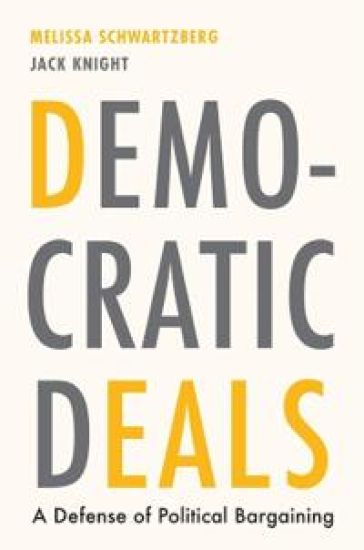
Two leading scholars of democracy make the case for political bargaining and define its proper limits.Bargains—grand and prosaic—are a central fact of political life. The distribution of bargaining power affects the design of constitutions, the construction of party coalitions, legislative outcomes, judicial opinions, and much more. But can political bargaining be justified in theory? If it inevitably involves asymmetric power, is it anything more than the exercise of sublimated force, emerging from and reifying inequalities?In Democratic Deals, Melissa Schwartzberg and Jack Knight defend bargaining against those who champion deliberation or compromise, showing that, under the right conditions and constraints, it can secure political equality and protect fundamental interests. The challenge, then, is to ensure that these conditions prevail. Drawing a sustained analogy to the private law of contracts—in particular, its concepts of duress and unconscionability—the authors articulate a set of procedural and substantive constraints on the bargaining process and analyze the circumstances under which unequal bargaining power might be justified in a democratic context. Institutions, Schwartzberg and Knight argue, can facilitate gains from exchange while placing meaningful limits on the exercise of unequal power.Democratic Deals examines frameworks of just bargaining in a range of contexts—constitution-making and legislative politics, among judges and administrative agencies, across branches of government, and between the state and private actors in the course of plea deals. Bargaining is an ineradicable fact of political life. Schwartzberg and Knight show that it can also be essential for democracy.
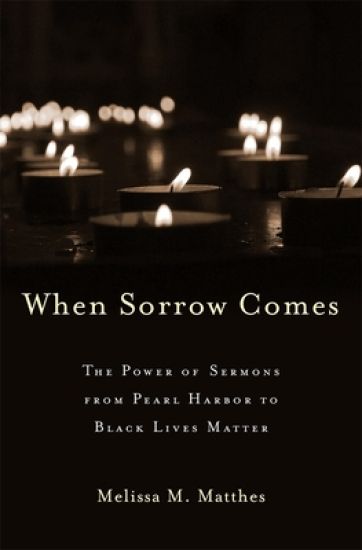
Since World War II, Protestant sermons have been an influential tool for defining American citizenship in the wake of national crises.In the aftermath of national tragedies, Americans often turn to churches for solace. Because even secular citizens attend these services, they are also significant opportunities for the Protestant religious majority to define and redefine national identity and, in the process, to invest the nation-state with divinity. The sermons delivered in the wake of crises become integral to historical and communal memory—it matters greatly who is mourned and who is overlooked.Melissa M. Matthes conceives of these sermons as theo-political texts. In When Sorrow Comes, she explores the continuities and discontinuities they reveal in the balance of state power and divine authority following the bombing of Pearl Harbor, the assassinations of JFK and MLK, the Rodney King verdict, the Oklahoma City bombing, the September 11 attacks, the Newtown shootings, and the Black Lives Matter movement. She argues that Protestant preachers use these moments to address questions about Christianity and citizenship and about the responsibilities of the Church and the State to respond to a national crisis. She also shows how post-crisis sermons have codified whiteness in ritual narratives of American history, excluding others from the collective account. These civic liturgies therefore illustrate the evolution of modern American politics and society.Despite perceptions of the decline of religious authority in the twentieth century, the pulpit retains power after national tragedies. Sermons preached in such intense times of mourning and reckoning serve as a form of civic education with consequences for how Americans understand who belongs to the nation and how to imagine its future.
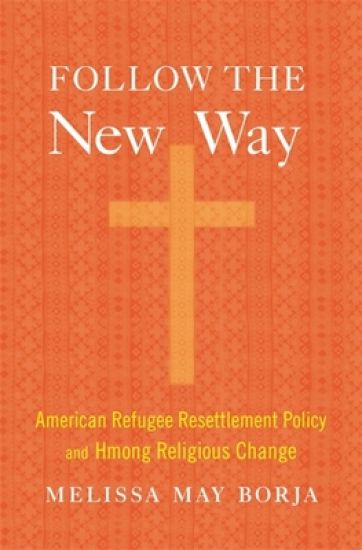
An incisive look at Hmong religion in the United States, where resettled refugees found creative ways to maintain their traditions, even as Christian organizations deputized by the government were granted an outsized influence on the refugees’ new lives.Every year, members of the Hmong Christian Church of God in Minneapolis gather for a cherished Thanksgiving celebration. But this Thanksgiving takes place in the spring, in remembrance of the turbulent days in May 1975 when thousands of Laotians were evacuated for resettlement in the United States. For many Hmong, passage to America was also a spiritual crossing. As they found novel approaches to living, they also embraced Christianity—called kev cai tshiab, “the new way”—as a means of navigating their complex spiritual landscapes.Melissa May Borja explores how this religious change happened and what it has meant for Hmong culture. American resettlement policies unintentionally deprived Hmong of the resources necessary for their time-honored rituals, in part because these practices, blending animism, ancestor worship, and shamanism, challenged many Christian-centric definitions of religion. At the same time, because the government delegated much of the resettlement work to Christian organizations, refugees developed close and dependent relationships with Christian groups. Ultimately the Hmong embraced Christianity on their own terms, adjusting to American spiritual life while finding opportunities to preserve their customs.Follow the New Way illustrates America’s wavering commitments to pluralism and secularism, offering a much-needed investigation into the public work done by religious institutions with the blessing of the state. But in the creation of a Christian-inflected Hmong American animism we see the resilience of tradition—how it deepens under transformative conditions.

Does fair political representation for historically disadvantaged groups require their presence in legislative bodies? The intuition that women are best represented by women, and African-Americans by other African-Americans, has deep historical roots. Yet the conception of fair representation that prevails in American political culture and jurisprudence--what Melissa Williams calls "liberal representation"--concludes that the social identity of legislative representatives does not bear on their quality as representatives. Liberal representation's slogan, "one person, one vote," concludes that the outcome of the electoral and legislative process is fair, whatever it happens to be, so long as no voter is systematically excluded. Challenging this notion, Williams maintains that fair representation is powerfully affected by the identity of legislators and whether some of them are actually members of the historically marginalized groups that are most in need of protection in our society. Williams argues first that the distinctive voice of these groups should be audible within the legislative process. Second, she holds that the self-representation of these groups is necessary to sustain their trust in democratic institutions. The memory of state-sponsored discrimination against these groups, together with ongoing patterns of inequality along group lines, provides both a reason to recognize group claims and a way of distinguishing stronger from weaker claims. The book closes by proposing institutions that can secure fair representation for marginalized groups without compromising principles of democratic freedom and equality.

On an otherwise ordinary Sunday morning in 1964, millions of Roman Catholics around the world experienced history. For the first time in centuries, they attended masses that were conducted mostly in their native tongues. This occasion marked only the first of many profound changes to emanate from the Second Vatican Council (1962-1965). Known popularly as Vatican II, it would soon give rise to the most far-reaching religious transformation since the Reformation. In this groundbreaking work of cultural and historical sociology, Melissa Wilde offers a new explanation for this revolutionary transformation of the Church. Drawing on newly available sources--including a collection of interviews with the Council's key bishops and cardinals, and primary documents from the Vatican Secret Archive that have never before been seen by researchers--Wilde demonstrates that the pronouncements of the Council were not merely reflections of papal will, but the product of a dramatic confrontation between progressives and conservatives that began during the first days of the Council. The outcome of this confrontation was determined by a number of factors: the Church's decline in Latin America; its competition and dialogue with other faiths, particularly Protestantism, in northern Europe and North America; and progressive clerics' deep belief in the holiness of compromise and their penchant for consensus building. Wilde's account will fascinate not only those interested in Vatican II but anyone who wants to understand the social underpinnings of religious change.

What is the best way to understand black political ideology? Just listen to the everyday talk that emerges in public spaces, suggests Melissa Harris-Lacewell. And listen this author has--to black college students talking about the Million Man March and welfare, to Southern, black Baptists discussing homosexuality in the church, to black men in a barbershop early on a Saturday morning, to the voices of hip-hop music and Black Entertainment Television. Using statistical, experimental, and ethnographic methods Barbershops, Bibles, and B.E.T offers a new perspective on the way public opinion and ideologies are formed at the grassroots level. The book makes an important contribution to our understanding of black politics by shifting the focus from the influence of national elites in opinion formation to the influence of local elites and people in daily interaction with each other. Arguing that African Americans use community dialogue to jointly develop understandings of their collective political interests, Harris-Lacewell identifies four political ideologies that constitute the framework of contemporary black political thought: Black Nationalism, Black Feminism, Black Conservatism and Liberal Integrationism. These ideologies, the book posits, help African Americans to understand persistent social and economic inequality, to identify the significance of race in that inequality, and to devise strategies for overcoming it.
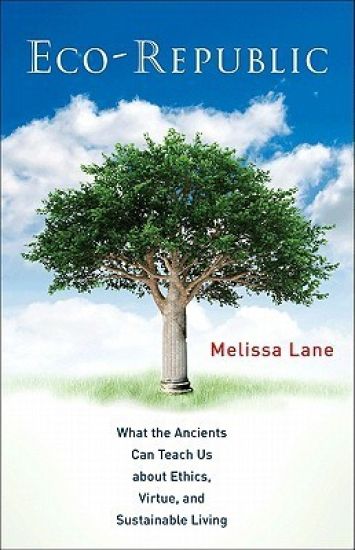
An ecologically sustainable society cannot be achieved without citizens who possess the virtues and values that will foster it, and who believe that individual actions can indeed make a difference. Eco-Republic draws on ancient Greek thought--and Plato's Republic in particular--to put forward a new vision of citizenship that can make such a society a reality. Melissa Lane develops a model of a society whose health and sustainability depend on all its citizens recognizing a shared standard of value and shaping their personal goals and habits accordingly. Bringing together the moral and political ideas of the ancients with the latest social and psychological theory, Lane illuminates the individual's vital role in social change, and articulates new ways of understanding what is harmful and what is valuable, what is a benefit and what is a cost, and what the relationship between public and private well-being ought to be. Eco-Republic reveals why we must rethink our political imagination if we are to meet the challenges of climate change and other urgent environmental concerns.Offering a unique reflection on the ethics and politics of sustainability, the book goes beyond standard approaches to virtue ethics in philosophy and current debates about happiness in economics and psychology. Eco-Republic explains why health is a better standard than happiness for capturing the important links between individual action and social good, and diagnoses the reasons why the ancient concept of virtue has been sorely neglected yet is more relevant today than ever.
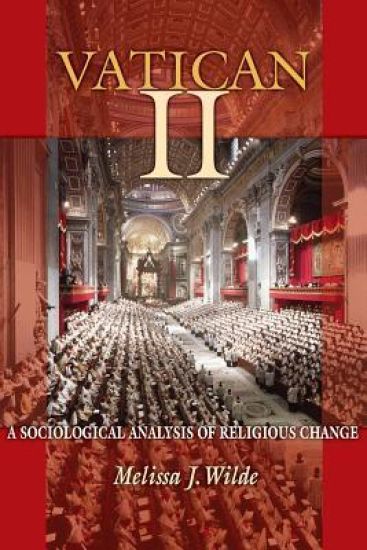
On an otherwise ordinary Sunday morning in 1964, millions of Roman Catholics around the world experienced history. For the first time in centuries, they attended masses that were conducted mostly in their native tongues. This occasion marked only the first of many profound changes to emanate from the Second Vatican Council (1962-1965). Known popularly as Vatican II, it would soon give rise to the most far-reaching religious transformation since the Reformation. In this groundbreaking work of cultural and historical sociology, Melissa Wilde offers a new explanation for this revolutionary transformation of the Church. Drawing on newly available sources--including a collection of interviews with the Council's key bishops and cardinals, and primary documents from the Vatican Secret Archive that have never before been seen by researchers--Wilde demonstrates that the pronouncements of the Council were not merely reflections of papal will, but the product of a dramatic confrontation between progressives and conservatives that began during the first days of the Council. The outcome of this confrontation was determined by a number of factors: the Church's decline in Latin America; its competition and dialogue with other faiths, particularly Protestantism, in northern Europe and North America; and progressive clerics' deep belief in the holiness of compromise and their penchant for consensus building. Wilde's account will fascinate not only those interested in Vatican II but anyone who wants to understand the social underpinnings of religious change.
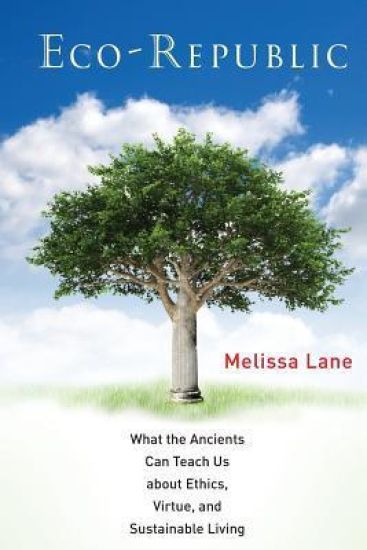
An ecologically sustainable society cannot be achieved without citizens who possess the virtues and values that will foster it, and who believe that individual actions can indeed make a difference. Eco-Republic draws on ancient Greek thought--and Plato's Republic in particular--to put forward a new vision of citizenship that can make such a society a reality. Melissa Lane develops a model of a society whose health and sustainability depend on all its citizens recognizing a shared standard of value and shaping their personal goals and habits accordingly. Bringing together the moral and political ideas of the ancients with the latest social and psychological theory, Lane illuminates the individual's vital role in social change, and articulates new ways of understanding what is harmful and what is valuable, what is a benefit and what is a cost, and what the relationship between public and private well-being ought to be. Eco-Republic reveals why we must rethink our political imagination if we are to meet the challenges of climate change and other urgent environmental concerns.Offering a unique reflection on the ethics and politics of sustainability, the book goes beyond standard approaches to virtue ethics in philosophy and current debates about happiness in economics and psychology. Eco-Republic explains why health is a better standard than happiness for capturing the important links between individual action and social good, and diagnoses the reasons why the ancient concept of virtue has been sorely neglected yet is more relevant today than ever.

An illustrated guide to one of the most enduring masterworks of world literatureWritten in the eleventh century by the Japanese noblewoman Murasaki Shikibu, The Tale of Genji is a masterpiece of prose and poetry that is widely considered the world’s first novel. Melissa McCormick provides a unique companion to Murasaki’s tale that combines discussions of all fifty-four of its chapters with paintings and calligraphy from the Genji Album (1510) in the Harvard Art Museums, the oldest dated set of Genji illustrations known to exist.In this book, the album’s colorful painting and calligraphy leaves are fully reproduced for the first time, followed by McCormick’s insightful essays that analyze the Genji story and the album’s unique combinations of word and image. This stunning compendium also includes English translations and Japanese transcriptions of the album’s calligraphy, enabling a holistic experience of the work for readers today. In an introduction to the volume, McCormick tells the fascinating stories of the individuals who created the Genji Album in the sixteenth century, from the famous court painter who executed the paintings and the aristocrats who brushed the calligraphy to the work’s warrior patrons and the poet-scholars who acted as their intermediaries.Beautifully illustrated, this book serves as an invaluable guide for readers interested in The Tale of Genji, Japanese literature, and the captivating visual world of Japan’s most celebrated work of fiction.

In The Birth of Politics, Melissa Lane introduces the reader to the foundations of Western political thought, from the Greeks, who invented democracy, to the Romans, who created a republic and then transformed it into an empire. Tracing the origins of our political concepts from Socrates to Plutarch to Cicero, Lane reminds us that the birth of politics was a story as much of individuals as ideas. Scouring the speeches of lawyers alongside the speculations of philosophers, and the reflections of ex-slaves next to the popular comedies and tragedies of the Greek and Roman stages, this book brings ancient ideas to life in unexpected ways.Lane shows how the Greeks and Romans defined politics with distinctive concepts, vocabulary, and practices-all of which continue to influence politics and political aspirations around the world today. She focuses on eight political ideas from the Greco-Roman world that are especially influential today: justice, virtue, constitution, democracy, citizenship, cosmopolitanism, republic, and sovereignty. Lane also describes how the ancient formulations of these ideas often challenge widely held modern assumptions-for example, that it is possible to have political equality despite great economic inequality, or that political regimes can be indifferent to the moral character of their citizens.A stimulating introduction to the origins of our political ideas and ideals, The Birth of Politics demonstrates how much we still have to learn from the political genius of the Greeks and Romans.
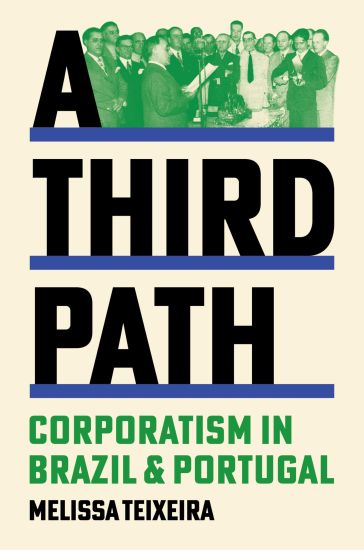
How Brazil and Portugal experimented with corporatism as a “third path” between laissez-faire capitalism and communism Following the Great Depression, as the world searched for new economic models, Brazil and Portugal experimented with corporatism as a “third path” between laissez-faire capitalism and communism. In a corporatist society, the government vertically integrates economic and social groups into the state so that it can manage labor and economic production. In the 1930s, the dictatorships of Getúlio Vargas in Brazil and António de Oliveira Salazar in the Portuguese Empire seized upon corporatist ideas to jump-start state-led economic development. In A Third Path, Melissa Teixeira examines these pivotal but still understudied initiatives.What distinguished Portuguese and Brazilian corporatism from other countries’ experiments with the mixed economy was how Vargas and Salazar dismantled liberal democratic institutions, celebrating their efforts to limit individual freedoms and property in pursuit of economic recovery and social peace. By tracing the movement of people and ideas across the South Atlantic, Teixeira vividly shows how two countries not often studied for their economic creativity became major centers for policy experimentation. Portuguese and Brazilian officials created laws and agencies to control pricing and production, which in turn generated new social frictions and economic problems, as individuals and firms tried to evade the rules. And yet, Teixeira argues, despite the failings and frustrations of Brazil’s and Portugal’s corporatist experiments, the ideas and institutions tested in the 1930s and 1940s constituted a new legal and technical tool kit for the rise of economic planning, shaping how governments regulate labor and market relations to the present day.

Artists Respond
Melissa Ho; Thomas Crow; Martha Rosler; Mignon Nixon; Erica Levin; Katherine Markoski
PRINCETON UNIVERSITY PRESS
2019
sidottu
How the Vietnam War changed American artBy the late 1960s, the United States was in a pitched conflict in Vietnam, against a foreign enemy, and at home—between Americans for and against the war and the status quo. This powerful book showcases how American artists responded to the war, spanning the period from Lyndon B. Johnson’s fateful decision to deploy U.S. Marines to South Vietnam in 1965 to the fall of Saigon ten years later.Artists Respond brings together works by many of the most visionary and provocative artists of the period, including Asco, Chris Burden, Judy Chicago, Corita Kent, Leon Golub, David Hammons, Yoko Ono, and Nancy Spero. It explores how the moral urgency of the Vietnam War galvanized American artists in unprecedented ways, challenging them to reimagine the purpose and uses of art and compelling them to become politically engaged on other fronts, such as feminism and civil rights. The book presents an era in which artists struggled to synthesize the turbulent times and participated in a process of free and open questioning inherent to American civic life.Beautifully illustrated, Artists Respond features a broad range of art, including painting, sculpture, printmaking, performance and body art, installation, documentary cinema and photography, and conceptualism.Published in association with the Smithsonian American Art MuseumExhibition ScheduleSmithsonian American Art Museum, Washington, DCMarch 15–August 18, 2019Minneapolis Institute of ArtSeptember 28, 2019–January 5, 2020
A constitutionalist reading of Plato’s political thoughtPlato famously defends the rule of knowledge. Knowledge, for him, is of the good. But what is rule? In this study, Melissa Lane reveals how political office and rule were woven together in Greek vocabulary and practices that both connected and distinguished between rule in general and office as a constitutionally limited kind of rule in particular. In doing so, Lane shows Plato to have been deeply concerned with the roles and relationships between rulers and ruled. Adopting a longstanding Greek expectation that a ruler should serve the good of the ruled, Plato’s major political dialogues—the Republic, the Statesman, and Laws—explore how different kinds of rule might best serve that good. With this book, Lane offers the first account of the clearly marked vocabulary of offices at the heart of all three of these dialogues, explaining how such offices fit within the broader organization and theorizing of rule.Lane argues that taking Plato’s interest in rule and office seriously reveals tyranny as ultimately a kind of anarchy, lacking the order as well as the purpose of rule. When we think of tyranny in this way, we see how Plato invokes rule and office as underpinning freedom and friendship as political values, and how Greek slavery shaped Plato’s account of freedom. Reading Plato both in the Greek context and in dialogue with contemporary thinkers, Lane argues that rule and office belong at the center of Platonic, Greek, and contemporary political thought.
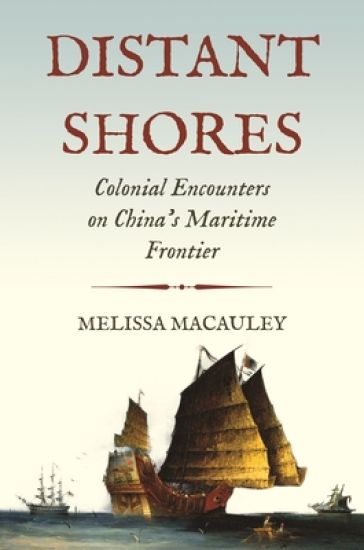
A pioneering history that transforms our understanding of the colonial era and China's place in itChina has conventionally been considered a land empire whose lack of maritime and colonial reach contributed to its economic decline after the mid-eighteenth century. Distant Shores challenges this view, showing that the economic expansion of southeastern Chinese rivaled the colonial ambitions of Europeans overseas.In a story that dawns with the Industrial Revolution and culminates in the Great Depression, Melissa Macauley explains how sojourners from an ungovernable corner of China emerged among the commercial masters of the South China Sea. She focuses on Chaozhou, a region in the great maritime province of Guangdong, whose people shared a repertoire of ritual, cultural, and economic practices. Macauley traces how Chaozhouese at home and abroad reaped many of the benefits of an overseas colonial system without establishing formal governing authority. Their power was sustained instead through a mosaic of familial, fraternal, and commercial relationships spread across the ports of Bangkok, Singapore, Saigon, Hong Kong, Shanghai, and Swatow. The picture that emerges is not one of Chinese divergence from European modernity but rather of a convergence in colonial sites that were critical to modern development and accelerating levels of capital accumulation.A magisterial work of scholarship, Distant Shores reveals how the transoceanic migration of Chaozhouese laborers and merchants across a far-flung maritime world linked the Chinese homeland to an ever-expanding frontier of settlement and economic extraction.