Kirjojen hintavertailu. Mukana 12 083 983 kirjaa ja 12 kauppaa.

Kirjahaku

Etsi kirjoja tekijän nimen, kirjan nimen tai ISBN:n perusteella.

1000 tulosta hakusanalla Michael Andrew Cook

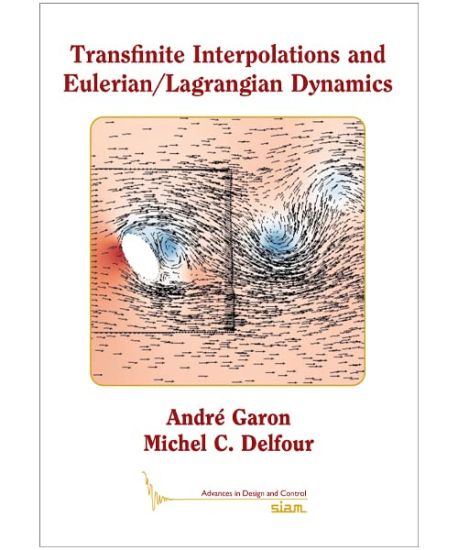
Transfinite Interpolations and Eulerian/Lagrangian Dynamics

Transfinite Interpolations and Eulerian/Lagrangian Dynamics

André Garon; Michel C. Delfour

SOCIETY FOR INDUSTRIAL APPLIED MATHEMATICS,U.S.
2022
sidottu
This innovative book introduces finite and transfinite interpolation methods at a general level in a unifying mathematical style before covering dynamical interpolation methods, which emphasize the underlying Eulerian/Lagrangian dynamics.Transfinite Interpolations and Eulerian/Lagrangian Dynamics:Considers the support of the data set as a geometrically structured set as opposed to an unstructured cloud of points.Is a self-contained graduate-level text, integrating theory, applications, numerical approximations, and computational techniques.Tackles transfinite interpolation methods applied to finite element meshes adaptation and ALE fluid-structure interaction and to the construction of velocity fields from the boundary expression of shape derivatives.Specialists in applied mathematics, physics, mechanics, computational sciences, imaging sciences, and engineering will find this book of interest.

Knowledge Brokerage for Sustainable Development

Knowledge Brokerage for Sustainable Development

André Martinuzzi; Michal Sedlacko

Greenleaf Publishing
2016
sidottu
The menace of a post-truth era challenges conventional policy-making and science. Instead of fighting an uphill battle against populist solutions, those involved in both policy-making and science have to find innovative ways to collaborate, and make use of the vast amounts of knowledge that are already available. Knowledge brokerage, in this context, is more than a simple question-and-answer game: it is a process of co-creating and re-framing knowledge. In addition, Knowledge Brokerage for Sustainable Development has to deal with trade-offs and ambiguities, as well as world-views, cultures and the preferences of stakeholder groups.This book is the first in-depth exploration of how knowledge brokerage has the potential to help manage the challenges of sustainable development across political and scientific systems. It presents a selection of innovative and practical tools to enhance the connectivity of research and policy-making on sustainable development issues. In doing so, this book will be an essential publication in research and policy-making. It supports networking among the developers and users of knowledge brokerage systems and will make their experience better known to the different communities involved.The book presents interviews with leading policymakers and researchers such as former EU Commissioner Franz Fischler, Robert-Jan Smits (Director-General of Research and Innovation at the EC), Uwe Schneidewind (President of the Wuppertal Institute), and Leida Rijnhout (European Environmental Bureau). It also provides insights into eleven EU funded projects dealing with different approaches of Knowledge Brokerage for Sustainable Development.
Knowledge Brokerage for Sustainable Development

Knowledge Brokerage for Sustainable Development

André Martinuzzi; Michal Sedlacko

Greenleaf Publishing
2016
nidottu
The menace of a post-truth era challenges conventional policy-making and science. Instead of fighting an uphill battle against populist solutions, those involved in both policy-making and science have to find innovative ways to collaborate, and make use of the vast amounts of knowledge that are already available. Knowledge brokerage, in this context, is more than a simple question-and-answer game: it is a process of co-creating and re-framing knowledge. In addition, Knowledge brokerage has to deal with trade-offs and ambiguities, as well as world-views, cultures and the preferences of stakeholder groups. This book is the first in-depth exploration of how knowledge brokerage has the potential to help manage the challenges of sustainable development across political and scientific systems. It presents a selection of innovative and practical tools to enhance the connectivity of research and policy-making on sustainable development issues. In doing so, this book will be an essential publication in research and policy-making. It supports networking among the developers and users of knowledge brokerage systems and will make their experience better known to the different communities involved. The book presents interviews with leading policymakers and researchers such as former EU Commissioner Franz Fischler, Robert-Jan Smits (Director-General of Research and Innovation at the EC), Uwe Schneidewind (President of the Wuppertal Institute), and Leida Rijnhout (European Environmental Bureau). It also provides insights into eleven EU funded projects dealing with different approaches of Knowledge Brokerage for Sustainable Development.
Cognitive Aesthetics in Classical German Philosophy

Cognitive Aesthetics in Classical German Philosophy

Andrej Démuth; Michaela Rusinová

Peter Lang AG
2019
sidottu
In the book, we shall attempt to focus attention on two basic factors of aesthetics as a philosophical discipline. The first is the presentation of the fundamental historical concepts within the aesthetics of German idealism with some crucial concepts, ideas and constructs highlighted which are characteristic of its leading representatives. The second aim is discussions regarding the structure of sensuality and the sources of feelings of pleasure and its relationship to the higher cognitive functions in aesthetic judgements, the structure and nature of the neuronal correlates of aesthetic experience, the individual and socially conditioned creation of an ideal, but also the influence of various social beliefs on the formation of taste in recent cognitive-aesthetical research.
Control Theory for Engineers

Control Theory for Engineers

Brigitte d'Andréa-Novel; Michel De Lara

Springer-Verlag Berlin and Heidelberg GmbH Co. K
2013
sidottu
Control Theory is at the heart of information and communication technologies of complex systems. It can contribute to meeting the energy and environmental challenges we are facing. The textbook is organized in the way an engineer classically proceeds to solve a control problem, that is, elaboration of a mathematical model capturing the process behavior, analysis of this model and design of a control to achieve the desired objectives. It is divided into three Parts. The first part of the text addresses modeling aspects through state space and input-output representations. The notion of the internal state of a system (for example mechanical, thermal or electrical), as well as its description using a finite number of variables, is also emphasized. The second part is devoted to the stability analysis of an equilibrium point. The authors present classical tools for stability analysis, such as linearization techniques and Lyapunov functions. Central to Control Theory are the notions of feedback and of closed-loop, and the third part of the textbook describes the linear control synthesis in a continuous and discrete-time framework and also in a probabilistic context. Quadratic optimization and Kalman filtering are presented, as well as the polynomial representation, a convenient approach to reject perturbations on the system without making the control law more complex. Throughout the text, different examples are developed, both in the chapters and in the exercises.
Control Theory for Engineers

Control Theory for Engineers

Brigitte d'Andréa-Novel; Michel De Lara

Springer-Verlag Berlin and Heidelberg GmbH Co. K
2015
nidottu
Control Theory is at the heart of information and communication technologies of complex systems. It can contribute to meeting the energy and environmental challenges we are facing. The textbook is organized in the way an engineer classically proceeds to solve a control problem, that is, elaboration of a mathematical model capturing the process behavior, analysis of this model and design of a control to achieve the desired objectives. It is divided into three Parts. The first part of the text addresses modeling aspects through state space and input-output representations. The notion of the internal state of a system (for example mechanical, thermal or electrical), as well as its description using a finite number of variables, is also emphasized. The second part is devoted to the stability analysis of an equilibrium point. The authors present classical tools for stability analysis, such as linearization techniques and Lyapunov functions. Central to Control Theory are the notions of feedback and of closed-loop, and the third part of the textbook describes the linear control synthesis in a continuous and discrete-time framework and also in a probabilistic context. Quadratic optimization and Kalman filtering are presented, as well as the polynomial representation, a convenient approach to reject perturbations on the system without making the control law more complex. Throughout the text, different examples are developed, both in the chapters and in the exercises.
Best of springerprofessional.de: Management + Führung

Best of springerprofessional.de: Management + Führung

Andrea Amerland; Michaela Paefgen-Laß; Annette Speck

Springer-Verlag Berlin and Heidelberg GmbH Co. KG
2022
nidottu
Dieses essential ist eine einzigartige Zusammenstellung von Highlights der Online-Artikel aus dem Fachgebiet „Management + Führung“ im Wissensportal Springer Professional. Die Journalisten der Springer Professional-Redaktion berichten darin über wichtige Entwicklungen der Branchen und greifen dabei insbesondere die Einflüsse der Megatrends Digitalisierung und Nachhaltigkeit auf.
Global Sensitivity Analysis

Global Sensitivity Analysis

Andrea Saltelli; Marco Ratto; Terry Andres; Francesca Campolongo; Jessica Cariboni; Debora Gatelli; Michaela Saisana; Stefano Tarantola

John Wiley Sons Inc
2008
sidottu
Complex mathematical and computational models are used in all areas of society and technology and yet model based science is increasingly contested or refuted, especially when models are applied to controversial themes in domains such as health, the environment or the economy. More stringent standards of proofs are demanded from model-based numbers, especially when these numbers represent potential financial losses, threats to human health or the state of the environment. Quantitative sensitivity analysis is generally agreed to be one such standard. Mathematical models are good at mapping assumptions into inferences. A modeller makes assumptions about laws pertaining to the system, about its status and a plethora of other, often arcane, system variables and internal model settings. To what extent can we rely on the model-based inference when most of these assumptions are fraught with uncertainties? Global Sensitivity Analysis offers an accessible treatment of such problems via quantitative sensitivity analysis, beginning with the first principles and guiding the reader through the full range of recommended practices with a rich set of solved exercises. The text explains the motivation for sensitivity analysis, reviews the required statistical concepts, and provides a guide to potential applications. The book: Provides a self-contained treatment of the subject, allowing readers to learn and practice global sensitivity analysis without further materials. Presents ways to frame the analysis, interpret its results, and avoid potential pitfalls. Features numerous exercises and solved problems to help illustrate the applications. Is authored by leading sensitivity analysis practitioners, combining a range of disciplinary backgrounds. Postgraduate students and practitioners in a wide range of subjects, including statistics, mathematics, engineering, physics, chemistry, environmental sciences, biology, toxicology, actuarial sciences, and econometrics will find much of use here. This book will prove equally valuable to engineers working on risk analysis and to financial analysts concerned with pricing and hedging.