
Kirjahaku
Etsi kirjoja tekijän nimen, kirjan nimen tai ISBN:n perusteella.
1000 tulosta hakusanalla Mohammad Awad

Sana Easy Drawing and Flat Painting (Applying the Simplest Technique)
Mohammad Manochehri
Supreme Century
2019
nidottu
The steps in painting and drawing 1 - Observing 2 - Memorizing 3 - Depicting1 - Observing: As the required observation in the drawing is accompanied with precision and a high level of concentration, it is per se an efficient exercise to increase precision and concentration in children. 2 - Memorizing: Due to the improvement of conscious imagination in the second step (memorizing), the ability to memorize in children is naturally improved. It means the brain is getting sharper in learning. 3 - Depicting: In the third step, drawing and painting (depicting) cause an intimate relationship between the brains and hand, leading into the ability to create handicrafts in children. Relying on experiences and effectively, it has been consciously and wisely attempted to observe the following issues in Sana Training books. In Sana book series of teaching Art, we follow the goals according to the interest and willingness in children and adolescents. We hope the desired improvement and development can help all the children from various ethnicities and nationalities to reach the top of salvation and redemption. After acknowledging the positive and helpful effects of Sana Books, we hope you are motivated to provide the other books of the series so that the educational plans will be more effectively achieved in your dear children.Easy drawing and flat painting is taught in this book through illustrated, using simplification and combination simple geometrical shapes and simple lines.
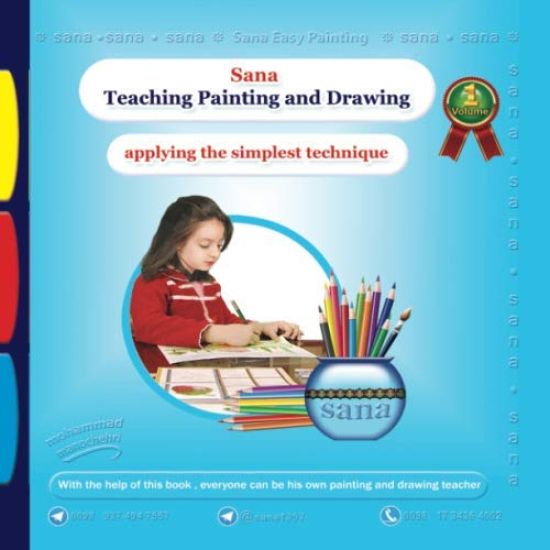
Sana Teaching Painting and Drawing (Applying the Simplest Technique) Volume 1
Mohammad Manochehri
Supreme Century
2019
nidottu
-The ability to do something fast and carefully is called skill while art is creativity and innovation in every skill which is in the path of perfection Therefore, the prerequisite and prior condition of art is being skillful. To motivate our children and beginners to show creativity and innovation, the new generation should be taught some special skills. In Sana series, we have tried to make learning drawing, painting, and similar skills easy through applying mathematical simplification. Sana Books Series and the applied method are the results of the 30-year creative experience of the author who has not plagiarized from any sources. In fact, they are based on the author's experimental and individual thought which have been systematically presented. In addition to teaching Art to children and adolescents using simplification ( the same one used in mathematics), Sana book series seriously focuses on motivation and other goals, meaning improving general abilities in the new generation: Some of the general goals of Sana Art teaching are: internalizing mental and behavioral discipline along with improving concentration, self-confidence, and self-esteem . Increasing positive imagination, improving the compatibility between mind and the hand, and boosting the threshold of tolerance are the other goals of the series. Art is the best method and tool to improve the general abilities and talents of children and adolescents. If it is applied consciously and wisely, it will have marvelous results. Drawing and painting, because of paying step by step attention to the process, would improve the general abilities in children. The steps in painting and drawing- 1 - Observing 2 - Memorizing 3 - Depicting1 - Observing: As the required observation in the drawing is accompanied with precision and a high level of concentration, it is per se an efficient exercise to increase precision and concentration in children. 2 - Memorizing: Due to the improvement of conscious imagination in the second step (memorizing), the ability to memorize in children is naturally improved. It means the brain is getting sharper in learning. 3 - Depicting: In the third step, drawing and painting (depicting) cause an intimate relationship between the brains and hand, leading into the ability to create handicrafts in children. Relying on experiences and effectively, it has been consciously and wisely attempted to observe the following issues in Sana Training books. In Sana book series of teaching Art, we follow the goals according to the interest and willingness in children and adolescents. We hope the desired improvement and development can help all the children from various ethnicities and nationalities to reach the top of salvation and redemption. After acknowledging the positive and helpful effects of Sana Books, we hope you are motivated to provide the other books of the series so that the educational plans will be more effectively achieved in your dear children.Basic principles of the drawing are elucidated at first. Then simple design techniques are explained step by step in diverse subjects. It teaches drawing with pencil and painting with color pencil. The bases of color in the painting are taught in brief as well. The book makes you be your painting teacher of yours and others.

Sana Teaching Painting and Drawing (Applying the Simplest Technique) Volume 2
Mohammad Manochehri
Supreme Century
2019
nidottu
The ability to do something fast and carefully is called skill while art is creativity and innovation in every skill which is in the path of perfection Therefore, the prerequisite and prior condition of art is being skillful. To motivate our children and beginners to show creativity and innovation, the new generation should be taught some special skills. In Sana series, we have tried to make learning drawing, painting, and similar skills easy through applying mathematical simplification. Sana Books Series and the applied method are the results of the 30-year creative experience of the author who has not plagiarized from any sources. In fact, they are based on the author's experimental and individual thought which have been systematically presented. In addition to teaching Art to children and adolescents using simplification ( the same one used in mathematics), Sana book series seriously focuses on motivation and other goals, meaning improving general abilities in the new generation: Some of the general goals of Sana Art teaching are: internalizing mental and behavioral discipline along with improving concentration, self-confidence, and self-esteem . Increasing positive imagination, improving the compatibility between mind and the hand, and boosting the threshold of tolerance are the other goals of the series. Art is the best method and tool to improve the general abilities and talents of children and adolescents. If it is applied consciously and wisely, it will have marvelous results. Drawing and painting, because of paying step by step attention to the process, would improve the general abilities in children. The steps in painting and drawing 1 - Observing 2 - Memorizing 3 - Depicting1 - Observing: As the required observation in the drawing is accompanied with precision and a high level of concentration, it is per se an efficient exercise to increase precision and concentration in children. 2 - Memorizing: Due to the improvement of conscious imagination in the second step (memorizing), the ability to memorize in children is naturally improved. It means the brain is getting sharper in learning. 3 - Depicting: In the third step, drawing and painting (depicting) cause an intimate relationship between the brains and hand, leading into the ability to create handicrafts in children. Relying on experiences and effectively, it has been consciously and wisely attempted to observe the following issues in Sana Training books. In Sana book series of teaching Art, we follow the goals according to the interest and willingness in children and adolescents. We hope the desired improvement and development can help all the children from various ethnicities and nationalities to reach the top of salvation and redemption. After acknowledging the positive and helpful effects of Sana Books, we hope you are motivated to provide the other books of the series so that the educational plans will be more effectively achieved in your dear children.The present book is the second volume of the book titled "Teaching Painting and drawing". As acquaintance with drawing and painting, anyone may make artistic paintings by using this book.The book engages with different subjects such as insentient nature, animals, flowers, plants, and landscaping.
Human's well-being is associated with his knowledge on the universe. When the nature of his relation to other constituents of the universe and its mechanism are precisely recognized; only then he is able to follow an inclusive health care (or guideline) in his life. Mental illness is introduced in this book under the term, and as a result of "non-organic viruses". It is aimed that by introducing the penetration ways of non-organic viruses, a promising step towards man's mental health is achieved. Non-organic viruses or beings refer to the creatures that do not possess material organs; in other words they do not own physical body.
Environmental pollution has been one of the main challenges for sustainable development. Piezoelectric materials can be used as a means of transforming ambient vibrations into electrical energy to power devices. The focus is on an alternative approach to scavenge energy from the environmentThis book presents harvesting methodologies to evaluate the potential effectiveness of different techniques and provides an overview of the methods and challenges of harvesting energy using piezoelectric materials. Piezoelectric energy harvesters have many applications, including sensor nodes, wireless communication, microelectromechanical systems, handheld devices, and mobile devices. It also presents a new approach within piezoelectric energy harvesting using the impact of raindrops. The energy-harvesting model presented is further analyzed for single-unit harvester and an array of multiple harvesters to maximize the efficiency of the device.
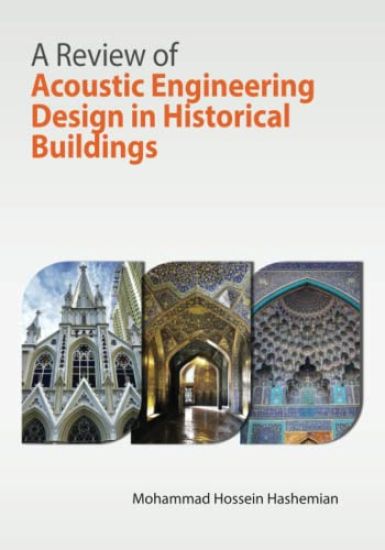
A Review of Acoustic Engineering Design in Historical Buildings
Mohammad Hossein Hashemian
American Academic Research, USA
2022
pokkari
Throughout history, many buildings have been built for speech, singing and music. In this book, an attempt is made to briefly and usefully evaluate and compare these buildings in terms of acoustic engineering. By studying these analyzes and engineering, it can be better understood the knowledge of that time and the thinking of the scientists of those periods and use them in today's technology.In this book, some buildings like mosques in Middle East and churches in Europe are discussed.
Mohammad Reza Shafi'i-Kadkani is a contemporary Iranian poet, literary critic, editor, author, and translator born in 1939. His nature poetry, which comprise most of the poems in this book, are harbingers of hope. His wildflowers and birds anticipate the arrival of spring. His milkvetch contemplates its predicament but finds a way to convey its message through the breeze. His wintersweet outsmarts the drought; his mountain osier, pine and petunia are the songs of life; his rain cleanses the earth and purifies the words; his poppy is reckless, his sea fearless; his jasmines and sweetbriars are miraculous. Kadkani is at once a modern poet and a classical one, well versed in both traditions. His themes, language, and style are unique, fusing the old with the new, the classic with the modern.Mojdeh Bahar was born in 1973 in Iran to a family of poets and writers. Her parents emigrated to the U.S. when she was 14. Although she is a patent lawyer by profession, she continues her deep interest in Persian poetry. This is her first book of translations from one of her favorite contemporary Persian poets.
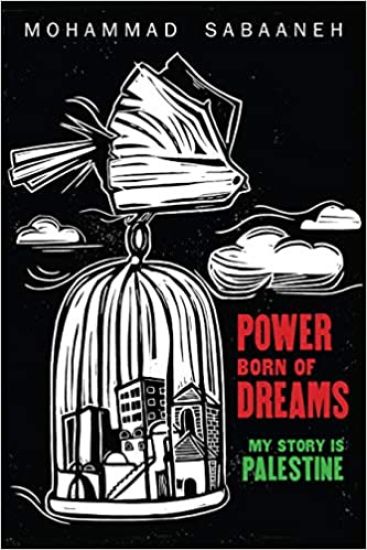
Winner of the 2022 Palestine Book Award“An artistic triumph that will stand as an enduring testament to the spirit of the Palestinian people. Mohammad Sabaaneh is a master.”--Joe Sacco, winner of the American Book Award for Palestine What does freedom look like from inside an Israeli prison? A bird perches on the cell window and offers a deal: “You bring the pencil, and I will bring the stories,” stories of family, of community, of Gaza, of the West Bank, of Jerusalem, of Palestine. The two collect threads of memory and intergenerational trauma from ongoing settler-colonialism. Helping us to see that the prison is much larger than a building, far wider than a cell; it stretches through towns and villages, past military checkpoints and borders. But hope and solidarity can stretch farther, deeper, once strength is drawn of stories and power is born of dreams. Translating headlines into authentic lived experiences, these stories come to life in the striking linocut artwork of Mohammad Sabaaneh, helping us to see Palestinians not as political symbols, but as people.

"Life was beautiful in Mazar-E-Sharif, Afghanistan, being a kid and enjoying my childhood. . .". . . Until an AK-47 claimed eleven-year-old Mohammad Ali's leg-and in 1997, the Taliban claimed his beloved hometown.Targeted by Mujahudeen warlords and the Taliban, Mohammad's Shiite Muslim family from the Hazara tribe were harassed and tortured, raped, and even killed. He spiraled into suicidal depression while struggling to adjust to life as an amputee and supporting them all.As the violence and chaos escalated, so did Mohammad's anger and questions. Why, God, does the evil Taliban do bad things and you donot care? But when Mohammad was finally smuggled into Turkey, he found a Christian church. Then Jesus found him. And nothing wasever the same.A Journey of Transformation: From the Heart of Afghanistan is a harrowing story of surviving extreme violence and loss and an inspiring exploration of what it means to find life's true meaning.

This book is an invitation to a journey, an interior journey of discovery in quest of a lost treasure containing the most precious jewels of the whole of creation. The map which shows the way is to be found in the final message of Allah for mankind, a way which is also indicated by the internal compass in every heart. We begin our journey with an inquiry into the nature of the spirit and its virtues and vices, and we are led to an understanding that man has the potential to be the representative of God on earth. If we pay heed to our origin and present conditions, and if we arrive at a sufficient understanding of our ultimate goal, the kinds of knowledge that are obtained on the journey will help us to make wise choices about the course our lives may take.
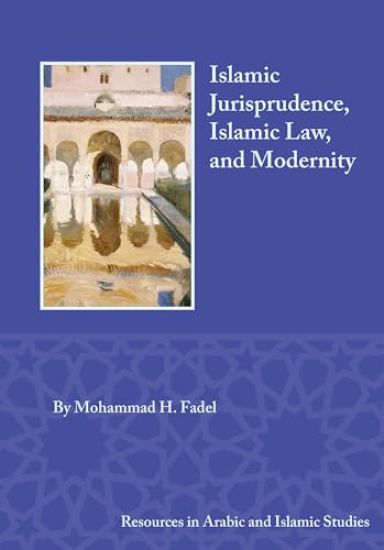
Mohammad Fadel's scholarship on Islamic law and legal history ranges from medieval institutions and the history of Islamic legal interpretation to urgent problems relating to the modern reception and re-assessment of Islamic legal doctrine. Fadel's intellectual concerns focus primarily on the compatibility of the Islamic legal tradition with modern liberal political arrangements, but in his research and writing he also delves into the realm of premodern Islamic legal thought and institutions. His Rawlsian approach leads him to a political reading of the Islamic legal tradition, which he accomplishes by teasing out jurists' assumptions about politics, economics, and the domestic sphere. Fadel's readings of Islamic legal sources suggest that Islamic law remains relevant to a society in which legitimate disagreements over law and morality seem intractable. At the same time, from the Rawlsian perspective he adopts, Fadel reminds us that premodern Muslim jurists formulated Islamic law also under conditions of substantial controversy over matters of law and morality, as well as over questions of religion, politics, theology, and metaphysics. The studies gathered together in this volume adroitly illustrate Fadel's interest in Islamic law as a domain of Islamic political thought and as a framework that might be deployed in today's pluralistic and secularized societies.
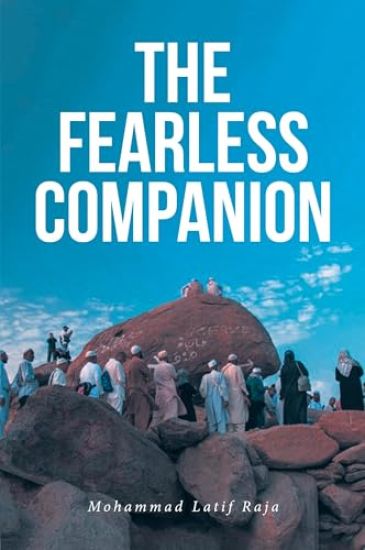
Mohammad L. Raja has taken 15 years to research the history and lives of all the prophets who have been mentioned in the Quaran. He uses texts from the Qaran, the Hadith, the Taura, The book of David, the Old and New Testament Bibles, old history books and Ibin e Kaseer to gather information on each and every prophet, writing as full an account of their history as possible. He writes in the belief that all the Prophets are guided by Allah and Allah says 'follow their ways'; but in order to follow them fully, we first must fully understand their history and the texts in which they exist. Thus, his mind filled with knowledge, he felt the need to share his work, in the belief that everyone, no matter what belief, should use this book as a resource. Mohammad asks you to read the book from beginning to end, and if it has added to your knowledge, pray for him.