Kirjojen hintavertailu. Mukana 12 016 292 kirjaa ja 12 kauppaa.

Kirjahaku

Etsi kirjoja tekijän nimen, kirjan nimen tai ISBN:n perusteella.

1000 tulosta hakusanalla Morris

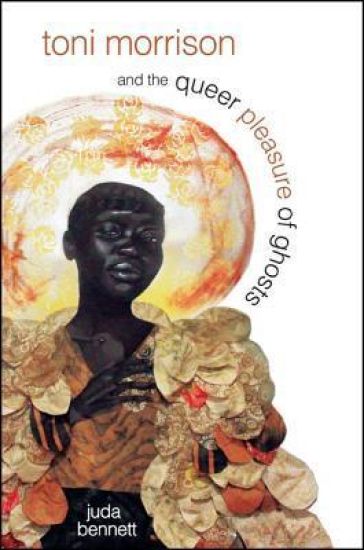
Toni Morrison and the Queer Pleasure of Ghosts

Toni Morrison and the Queer Pleasure of Ghosts

Juda Bennett

State University of New York Press
2014
sidottu
Offers the first queer reading of all ten of Morrison's novels.Toni Morrison and the Queer Pleasure of Ghosts radically intervenes in one of the most established and sacred topics in Toni Morrison scholarship, love. Moving beyond Morrison's representation of ghosts as the forgotten or occluded past, Juda Bennett uncovers how Morrison imagines the spectral sphere as always already queer, a provocation and challenge to heteronormativity-with the ghost appearing as an active participant in disruptions of compulsory heterosexuality, as a figure embodying closet desires, or as a disembodied emanation that counterpoints homophobia. From The Bluest Eye to Home, Morrison's novels have included many queer ghosts that challenge our most cherished conceptions of love and speak to cultural anxieties about black sexualities, gay marriage, AIDS, lesbian visibility, and transgender identities. Not surprisingly, the scene-stealing ghost Beloved appears at the very heart of this book, but Bennett cautions against interpretative stasis, inviting readers to break free of the stranglehold Beloved has had on imaginations, so as not to miss the full force of Morrison's lifelong project to queer love.
Toni Morrison and the Geopoetics of Place, Race, and Be/longing

Toni Morrison and the Geopoetics of Place, Race, and Be/longing

Marilyn Sanders Mobley

TEMPLE UNIVERSITY PRESS,U.S.
2024
sidottu
Toni Morrison’s readers and critics typically focus more on the “what” than the “how” of her writing. In Toni Morrison and the Geopoetics of Place, Race, and Be/longing, Marilyn Sanders Mobley analyzes Morrison’s expressed narrative intention of providing “spaces for the reader” to help us understand the narrative strategies in her work. Mobley’s approach is as interdisciplinary, intersectional, nuanced, and complex as Morrison’s. She combines textual analysis with a study of Morrison’s cultural politics and narrative poetics and describes how Morrison engages with both history and the present political moment. Informed by research in geocriticism, spatial literary studies, African American literary studies, and Black feminist studies at the intersection of poetics and cultural politics, Mobley identifies four narrative strategies that illuminate how Morrison creates such spaces in her fiction; what these spaces say about her understanding of place, race, and belonging; and how they constitute a way to read and re-read her work.
Toni Morrison and the Geopoetics of Place, Race, and Be/longing

Toni Morrison and the Geopoetics of Place, Race, and Be/longing

Marilyn Sanders Mobley

TEMPLE UNIVERSITY PRESS,U.S.
2024
nidottu
Toni Morrison’s readers and critics typically focus more on the “what” than the “how” of her writing. In Toni Morrison and the Geopoetics of Place, Race, and Be/longing, Marilyn Sanders Mobley analyzes Morrison’s expressed narrative intention of providing “spaces for the reader” to help us understand the narrative strategies in her work. Mobley’s approach is as interdisciplinary, intersectional, nuanced, and complex as Morrison’s. She combines textual analysis with a study of Morrison’s cultural politics and narrative poetics and describes how Morrison engages with both history and the present political moment. Informed by research in geocriticism, spatial literary studies, African American literary studies, and Black feminist studies at the intersection of poetics and cultural politics, Mobley identifies four narrative strategies that illuminate how Morrison creates such spaces in her fiction; what these spaces say about her understanding of place, race, and belonging; and how they constitute a way to read and re-read her work.
Toni Morrison

Toni Morrison

Bloomsbury Academic USA
2012
nidottu
Toni Morrison features a collection of ten new essays by noted Morrison scholars, including recipients of the Toni Morrison Society Book Award. Focusing upon Morrison's most recently published novels (Paradise, Love, A Mercy) the contributors to this volume revisit issues that continue to engage Morrison and are part of the currency of contemporary American literary and cultural history. These selections examine Morrison's ongoing "romance" with African Americans as they continue to battle the demons of race, gender, class, and poverty, to name a few. Together, these essays offer comprehensive and nuanced discussions of Morrison's latest novels and provide new directions for Morrison scholarship in the 21st century. This volume provides students of literature, cultural studies, and history with an overview of Morrison's examination of African American progress and leadership at key moments in American history and culture from the Colonial Period to the present. Through their thematic interconnectedness, the essays reveal Morrison at her most brilliant in her ability to reach into the past to comment on contemporary issues.
Toni Morrison

Toni Morrison

Bloomsbury Academic USA
2012
sidottu
Toni Morrison features a collection of ten new essays by noted Morrison scholars, including recipients of the Toni Morrison Society Book Award. Focusing upon Morrison's most recently published novels (Paradise, Love, A Mercy) the contributors to this volume revisit issues that continue to engage Morrison and are part of the currency of contemporary American literary and cultural history. These selections examine Morrison's ongoing "romance" with African Americans as they continue to battle the demons of race, gender, class, and poverty, to name a few. Together, these essays offer comprehensive and nuanced discussions of Morrison's latest novels and provide new directions for Morrison scholarship in the 21st century. This volume provides students of literature, cultural studies, and history with an overview of Morrison's examination of African American progress and leadership at key moments in American history and culture from the Colonial Period to the present. Through their thematic interconnectedness, the essays reveal Morrison at her most brilliant in her ability to reach into the past to comment on contemporary issues.
Toni Morrison and Literary Tradition

Toni Morrison and Literary Tradition

Justine Baillie

Bloomsbury Academic USA
2013
sidottu
Choice Outstanding Academic Title 2014Toni Morrison and Literary Tradition explores Toni Morrison's construction of alternative and oppositional narratives of history and places her work as central to the imagining and re-imagining of American and diasporic identities. Covering the Nobel Prize-winning author's novels (up to Home), as well as her essays, dramatic works and short stories, this book situates Morrison's writings within both African-American and American writing traditions and examines them in terms of her continuous dialogue with the politics, philosophy and literary forms of these traditions. Toni Morrison and Literary Tradition provides a comprehensive analysis of Morrison's entire oeuvre, from her early interrogation of Black Power to her engagement with fin de siècle postcolonial critiques of nationalism and twenty-first century considerations of ecology. Justine Baillie goes on to argue that Morrison's aesthetic should be understood in relation to the historical, political and cultural contexts in which it, and the African-American and American literary traditions upon which she draws, have been created and developed.
Toni Morrison and Literary Tradition

Toni Morrison and Literary Tradition

Justine Baillie

Bloomsbury Academic
2015
nidottu
Choice Outstanding Academic Title 2014Toni Morrison and Literary Tradition explores Toni Morrison's construction of alternative and oppositional narratives of history and places her work as central to the imagining and re-imagining of American and diasporic identities. Covering the Nobel Prize-winning author's novels (up to Home), as well as her essays, dramatic works and short stories, this book situates Morrison's writings within both African-American and American writing traditions and examines them in terms of her continuous dialogue with the politics, philosophy and literary forms of these traditions. Toni Morrison and Literary Tradition provides a comprehensive analysis of Morrison's entire oeuvre, from her early interrogation of Black Power to her engagement with fin de siècle postcolonial critiques of nationalism and twenty-first century considerations of ecology. Justine Baillie goes on to argue that Morrison's aesthetic should be understood in relation to the historical, political and cultural contexts in which it, and the African-American and American literary traditions upon which she draws, have been created and developed.
Toni Morrison's Secret Drive

Toni Morrison's Secret Drive

David S. Goldstein; Shawnrece D. Campbell

McFarland Co Inc
2020
pokkari
The late Toni Morrison was the first African American to win the Nobel Prize for Literature. A powerful writer, she wove stories depicting the largely overlooked Black experience in America and exploring the intersection of gender and race through the lives of Black women. Morrison's writing continues to move people and push readers to reassess their beliefs about what it means to be Black in America. Synthesizing some 250 scholarly works about Morrison's writing, this book examines eight novels as well as the short story "Recitatif." They are analyzed for techniques used to deepen meaning and emotional weight, and reveal Morrison's mastery over prose.
Toni Morrison

Toni Morrison

Carolyn C. Denard

University Press of Mississippi
2015
nidottu
Toni Morrison: Memory and Meaning boasts essays by well-known international scholars focusing on the author's literary production and including her very latest works--the theatrical production Desdemona and her tenth and latest novel, Home. These original contributions are among the first scholarly analyses of these latest additions to her oeuvre and make the volume a valuable addition to potential readers and teachers eager to understand the position of Desdemona and Homewithin the wider scope of Morrison's career. Indeed, in Home, we find a reworking of many of the tropes and themes that run throughout Morrison's fiction, prompting the editors to organize the essays as they relate to themes prevalent in Home.In many ways, Morrison has actually initiated paradigm shifts that permeate the essays. They consistently reflect, in approach and interpretation, the revolutionary change in the study of American literature represented by Morrison's focus on the interior lives of enslaved Africans. This collection assumes black subjectivity, rather than argues for it, in order to reread and revise the horror of slavery and its consequences into our time. The analyses presented in this volume also attest to the broad range of interdisciplinary specializations and interests in novels that have now become classics in world literature. The essays are divided into five sections, each entitled with a direct quotation from Home, and framed by two poems: Rita Dove's ""The Buckeye"" and Sonia Sanchez's ""Aaayeee Babo, Aaayeee Babo, Aaayeee Babo.""
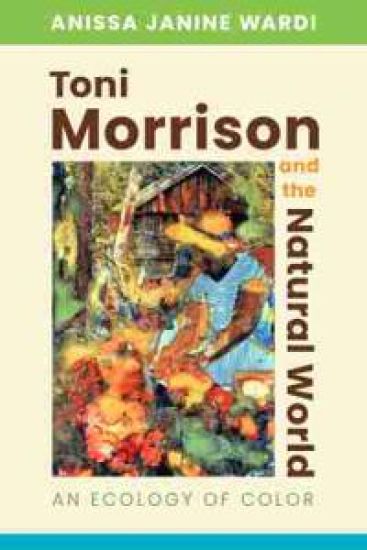
Toni Morrison and the Natural World

Toni Morrison and the Natural World

Anissa Janine Wardi

University Press of Mississippi
2021
sidottu
Critics have routinely excluded African American literature from ecocritical inquiry despite the fact that the literary tradition has, from its inception, proved to be steeped in environmental concerns that address elements of the natural world and relate nature to the transatlantic slave trade, plantation labor, and nationhood. Toni Morrison's work is no exception. Toni Morrison and the Natural World: An Ecology of Color is the first full-length ecocritical investigation of the Nobel Laureate's novels and brings to the fore an unequaled engagement between race and nature.Morrison's ecological consciousness holds that human geographies are enmeshed with nonhuman nature. It follows, then, that ecology, the branch of biology that studies how people relate to each other and their environment, is an apt framework for this book. The interrelationships and interactions between individuals and community, and between organisms and the biosphere are central to this analysis. They highlight that the human and nonhuman are part of a larger ecosystem of interfacings and transformations. Toni Morrison and the Natural World is organized by color, examining soil (brown) in The Bluest Eye and Paradise; plant life (green) in Song of Solomon, Beloved, and Home; bodies of water (blue) in Tar Baby and Love; and fire (orange) in Sula and God Help the Child. By providing a racially inflected reading of nature, Toni Morrison and the Natural World makes an important contribution to the field of environmental studies and provides a landmark for Morrison scholarship.
Toni Morrison and the Natural World

Toni Morrison and the Natural World

Anissa Janine Wardi

University Press of Mississippi
2021
nidottu
Critics have routinely excluded African American literature from ecocritical inquiry despite the fact that the literary tradition has, from its inception, proved to be steeped in environmental concerns that address elements of the natural world and relate nature to the transatlantic slave trade, plantation labor, and nationhood. Toni Morrison's work is no exception. Toni Morrison and the Natural World: An Ecology of Color is the first full-length ecocritical investigation of the Nobel Laureate's novels and brings to the fore an unequaled engagement between race and nature.Morrison's ecological consciousness holds that human geographies are enmeshed with nonhuman nature. It follows, then, that ecology, the branch of biology that studies how people relate to each other and their environment, is an apt framework for this book. The interrelationships and interactions between individuals and community, and between organisms and the biosphere are central to this analysis. They highlight that the human and nonhuman are part of a larger ecosystem of interfacings and transformations. Toni Morrison and the Natural World is organized by color, examining soil (brown) in The Bluest Eye and Paradise; plant life (green) in Song of Solomon, Beloved, and Home; bodies of water (blue) in Tar Baby and Love; and fire (orange) in Sula and God Help the Child. By providing a racially inflected reading of nature, Toni Morrison and the Natural World makes an important contribution to the field of environmental studies and provides a landmark for Morrison scholarship.
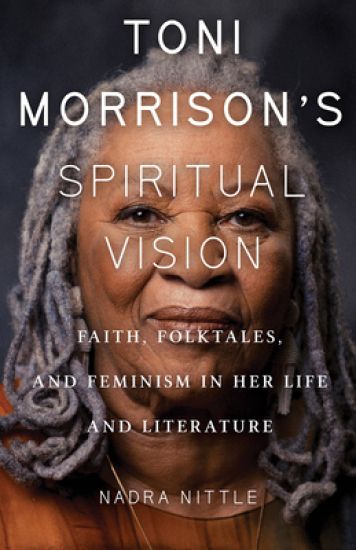
Toni Morrison's Spiritual Vision

Toni Morrison's Spiritual Vision

Nadra Nittle

Fortress Press,U.S.
2021
pokkari
When Toni Morrison died in August 2019, she was widely remembered for her contributions to literature as an African American woman, an identity she wore proudly. Morrison was clear that she wrote from a Black, female perspective and for others who shared her identity. But just as much as she was an African American writer, Toni Morrison was a woman of faith. Morrison filled her novels with biblical allusions, magic, folktales, and liberated women, largely because Christianity, African American folk magic, and powerful women defined her own life. She grew up with family members who could interpret dreams, predict the future, see ghosts, and go about their business. Her relatives, particularly her mother, were good storytellers, and her family's oral tradition included ghost stories and African American folktales. But her family was also Christian. As a child, Morrison converted to Catholicism and chose a baptismal name that truly became her own--Anthony, from St. Anthony of Padua--going from Chloe to Toni. Morrison embraced both Catholicism and the occult as a child and, later, as a writer. She was deeply religious, and her spirituality included the Bible, the paranormal, and the folktales she heard as a child. Toni Morrison's Spiritual Vision unpacks this oft-ignored, but essential, element of Toni Morrison's work--her religion--and in so doing, gives readers a deeper, richer understanding of her life and her writing. In its pages, Nadra Nittle remembers and understands Morrison for all of who she was: a writer, a Black woman, and a person of complex faith. As Nittle's wide-ranging, deep exploration of Morrison's oeuvre reveals, to fully understand the writing of Toni Morrison one must also understand the role of religion and spirituality in her life and literature.