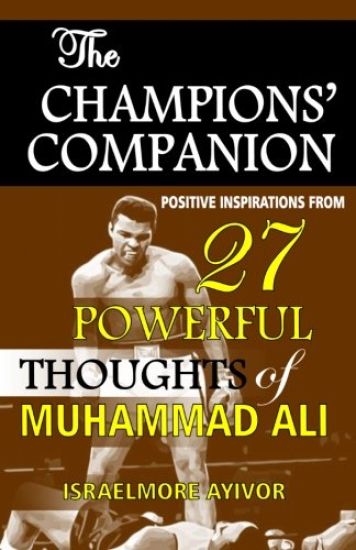
In this book "The Champions' Companion, I shared thought provoking insights into 27 powerful thoughts of Muhammad Ali (1945-2016), the legend in boxing who has been described by many people as "the greatest boxer of all time". The inspirations in this book will challenge you to cultivate the habits that make champions. It was written to inform you to make realistic choices in life. Strive to aspire. Aspire to win. Win to grow. Grow to greatness and improve. Improve to excel. Excel to be celebrated as a champion. Work hard to climb. Climb to succeed. Succeed to rejoice. Rejoice because it's your time to progress. Progress and take the lead. Lead as a champion. Be willing to dare. Dare to achieve. Achieve to inspire. Inspire to bring a change. Change to live. Live to be celebrated as a champion. I am proud of you and believe you are a difference maker.
INTRODUCTION It is in the very nature of man to imitate. Since his infantile phase, man begins to observe, perceiving what those around him do, and then adopt selected behavior. For decades psychologists have debated why we copy others. Irrespective of the various theories presented, it is common knowledge that man imitates. Often, role models are adopted. Someone who leads or has led an exemplary life that we admire and feel we can emulate easily becomes the object of admiration. An ideal role model, due to his greatness, presents us with the opportunity to follow and imitate and reap something of that greatness ourselves. Many will copy their role models to the extent that they will wish that their own physical appearance be like that of their role models. This will lead them to having their hair cut in a similar manner, updating their wardrobe to match that of their role model's or even spending a great amount of money on cosmetic surgery to have a similar face or physique. We may now and then boast that our true role model is the Messenger of Allah ta'ala, we may even be true to this great claim, but the question is how much do we really know about him? Most of us are completely oblivious to the appearance, physique, clothing, habits, mannerism and character of the great Prophet, while knowing every detail of the so-called celebrities of today, which is really telling to who really occupiers our hearts. This book has been compiled to give the reader a brief insight to the person of the Prophet PBUH; who he was, what he looked like and how he interacted with other people. Exposure to beauty cultivates beauty. We pray that this book be an aide for us in following the beautiful ways of the Beloved of Allah ta'ala and a means of our salvation in the Hereafter.
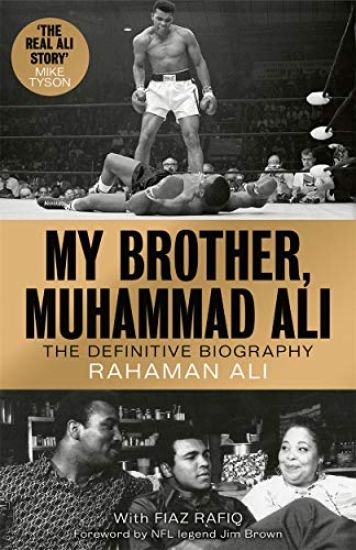
"Rahaman has, at last, written the definitive biography on his late brother, which tells the real Ali story." --Mike Tyson More words have been written about Muhammad Ali than almost anyone else. He was, without doubt, the world's most-loved sportsman. At the height of his celebrity he was the most famous person in the world. And yet, until now, the one voice missing belonged to the man who knew him best--his only sibling, and best friend, Rahaman Ali. No one was closer to Ali than Rahaman. Born Cassius and Rudolph Arnett Clay, the two brothers grew up together, lived together, trained together, travelled together, and fought together in the street and in the ring. A near-constant fixture in his sibling's company, Rahaman saw Ali at both his best and his worst: the relentless prankster and the jealous older brother, the outspoken advocate, the husband and father. In My Brother, Muhammad Ali, Rahaman offers an insider's perspective on the well-known stories as well as never-before-told tales, painting a rich and intimate portrait of a proud, relentlessly polarizing, yet often vulnerable man. In this extraordinary, poignant memoir, Rahaman tells a much bigger and more personal story than in any other book on Muhammad Ali--that of two brothers, almost inseparable from birth to death. It is the final and most important perspective on an iconic figure.
No one was closer to Muhammad Ali than his brother and best friend, Rahaman. The two grew up together, lived together, trained together, and fought together. In this book, Rahaman offers an insider's perspective on the well-known Ali stories as well as never-before-told tales, painting an intimate portrait of an iconic figure.
5 of the 10 commandments Exod.20 1] And God spake all these words, saying, 2] I am the LORD thy God, which have brought thee out of the land of Egypt, out of the house of bondage. 3] Thou shalt have no other gods before me. 4] Thou shalt not make unto thee any graven image, or any likeness of any thing that is in heaven above, or that is in the earth beneath, or that is in the water under the earth: 5] Thou shalt not bow down thyself to them, nor serve them: for I the LORD thy God am a jealous God, visiting the iniquity of the fathers upon the children unto the third and fourth generation of them that hate me." Surah al-Baqarah 2: 255] Al-Quran: Allah There is no god but He - the Living, The Self-subsisting, Eternal. No slumber can seize Him Nor Sleep. His are all things In the heavens and on earth. Who is there can intercede In His presence except As he permitteth? He knoweth What (appeareth to His creatures As) Before or After or Behind them. Nor shall they encompass Aught of his knowledge Except as He willeth. His throne doth extend Over the heavens And on earth, and He feeleth No fatigue in guarding And preserving them. For He is the Most High. The Supreme (in glory)." Muhammad (pbuh) mentioned by name in the old testament: Prophet Muhammad (pbuh) is mentioned by name in the Song of Solomon chapter 5 verse 16: "Hikko Mamittakim we kullo Muhammadim Zehdoodeh wa Zehraee Bayna Jerusalem. ""His mouth is most sweet: yea, he is altogether lovely. This is my beloved, and this is my friend, O daughters of Jerusalem. "In the Hebrew language im is added for respect. Similarely im is added after the name of Prophet Muhammad (pbuh) to make it Muhammadim. In English translation they have even translated the name of Prophet Muhammad (pbuh) as "altogether lovely", but in the Old Testament in Hebrew, the name of Prophet Muhammad (pbuh) is yet present. lt's majestic plural noun like Elohim which refers to 1 God only.So Muhammadim also refers to 1 Muhammad even though im can refer also to be plural. Isaiah chapter 29 verse 12: "And the book is delivered to him that is not learned, saying. Read this, I pray thee: and he saith, I am not learned. "When angel Gabriel commanded Muhammad (pbuh) by saying Iqra - "Read", he replied, "I am not learned". Quran 33:40 Muhammad is not the father of any] one of your men, but he is] the Messenger of Allah and last of the prophets. And ever is Allah, of all things, Knowing. Numbers 23:19 King James Version (KJV) God is not a man, that he should lie; neither the son of man, that he should repent: hath he said, and shall he not do it? or hath he spoken, and shall he not make it good? 112 Quran: Say: He is God the One and Only God the Eternal Refuge God, the Eternal, Absolute; He neither begets nor is born.Nothing is there comparable to him."Moses Jesus Muhammad are prophets of God & prophets are not God.Islam means peace & submission to that 1 God in arabic it is Allah ("He said: "I am indeed a servant of God: He hath given me revelation and made me a prophet; 019.031 "And He hath made me blessed wheresoever I be, and hath enjoined on me Prayer and Charity as long as I live; 019.032 "(He) hath made me kind to my mother, and not overbearing or miserable; 019.033 "So peace is on me the day I was born, the day that I die, and the day that I shall be raised up to life (again)" 019.034 Such (was) Jesus the son of Mary: (it is) a statement of truth, about which they (vainly) dispute. 019.035 It is not befitting to (the majesty of) God that He should beget a son. Glory be to Him when He determines a matter, He only says to it,"Be", and it is.) Al-Quran. www.guideus.tv www.gainpeace.com Order A Free Copy of the Quran CALL 800-662-ISLAM There is a Judgment day and God is going to judge us all one day. Find out the truth. Peace be upon you: )
Despite the vast body of works written about the Prophet Muhammad, there are some gaps. In particular, it is difficult to find a short introduction to the life of the Prophet written from the perspective of the believer but which also recognizes the contributions of contemporary scholarship by both Muslim and non-Muslim scholars. Such a work is needed by young adults and people who are unfamiliar with the historical and religious sources but want to know more about the Prophet and his life. Javeed Akhter has succeeded in writing such a book for the use of Muslims and other interested people in countries like the United States where Muslims need such publications both to help educate their children and also to inform their neighbors.
Published for the first time in this book is the History of the Governors of Egypt by Abu Umar Muhammad ibn Yusuf al-Kindi (d. 870). Edited from a single manuscript by Nicholas Koenig, this study is as close as possible to a critical edition when only one manuscript survives.
This work, based almost entirely on the primary Arabic texts of Sunn and Sh ca Islam, offers a fresh examination of the life of Fatima, Muhammad's only surviving child, and reveals for the first time her distinctive and fascinating personality.
The Life of Hazrat Aminah bint Wahb The Mother of Prophet Muhammad SAW Last Messenger of Allah SWT (God) English Edition Hardcover Version Based from The Holy Quran and Al-Hadith. Allah SWT (God) Almighty created the father of mankind, Prophet Adam (Pbuh). When Adam raised his head, he saw that some name was written with an enormous Nur (heavenly light) at the Great Throne: "Ahmad." He asked wondering: "O my Lord, what is that light?" God Almighty replied: "It is the light of a prophet who is going to come from your offspring. His name is Ahmad up in the heaven and Muhammad on earth. If it hadn't been for him, I wouldn't have created you as well " The enormous truth that we faithfully adhere was also proclaimed by the owner of the light after billions of years. One day, one of the Companions, Abdullah bin Jabir (may Allah be pleased with him) asked, "Oh Allah's Messenger, will you explain what Allah created before everything else"? He replied: "Before everything, He created your Messenger's noor (light) from His own light. The light would travel with Allah's power and as it wished. At that time, there was no lawh mahfuz (preserved tablet), no pen, no Heaven, no Hell, no angel, no sky, no land, no sun, no moon, no person, and no jinn. Firstly, the Light that enlightened the heavens with all its grandeur secondly shone in the forehead of Adam (PBUH). Then, from one prophet to another, It came to Abraham (PBUH) and through him to his son Ismael (PBUH). Firstly, the Light that enlightened the heavens with all its grandeur secondly shone in the forehead of Adam (PBUH). Then, from one prophet to another, It came to Abraham (PBUH) and through him to his son Ismael (PBUH).
The Life of Prophet Isa AS (Jesus) Son of Mary (Maryam) and Prophet Muhammad SAW Last Messenger of God English Edition Lite Version Based from The Noble Quran and Al-Hadith."Indeed, We have revealed to you (O Muhammad) as We revealed to Noah and the prophets after him. And We revealed to Abraham, Ishmael, Isaac, Jacob, and the prophet-descendants (of Jacob), Jesus, Job, Jonah, Aaron, and Solomon, and We gave the book to David." (The Noble Quran Surah 4)"So she pointed to him. They said, 'How can we speak to a child in the cradle' (Prophet Isa AS) said, 'Indeed, I am a servant of God. He has given me the Scripture and made me a prophet. And He has made me blessed wherever I am, and has commanded me to me pray and give charity as long as I remain alive. And (has made) me kind to my mother (Maryam), and did not make me arrogant or miserable. And peace be upon me the day I was born, and the day I will die, and the day I will be raised alive.'" (The Noble Quran Surah 19)Prophet Muhammad SAW is not the father of any of your men, but (he is) the Messenger of Allah, and the Seal of the Prophets: and Allah has full knowledge of all things. View more verses (The Noble Quran Surah 33)Say (O Muhammad (Peace be upon him)): "He is Allah, (the) One. "Allah-us-Samad (The Self-Sufficient Master, Whom all creatures need, He neither eats nor drinks). "He begets not, nor was He begotten; "And there is none co-equal or comparable unto Him." (The Noble Quran Surah 112)
The wives of the Prophet (SAW) are known as the mothers of all believers. This status has been conferred on them by Allah (SWT) in the Quran. With respect to the number of mothers of the believers, which were more than four allowed for the believers, it is incumbent upon us all including the non-Muslims to understand that Allah SWT] had given the Prophet (SAW) His permission and a special privilege This Book includes three main section and eleven sub-sections. Section 1 includes introduction. Section 2 includes Mothers of the Believers and covers brief profile of Khadeejah (RAA) bint Khuwaylid; Sawdah (RAA) bint Zam'a; Aishah (RAA) bint Abu Bakr Saddeeq (RAA); Hafsa (RAA) Bint Umar Bin Khattab (RAA); Zaynab (RAA)bint Khuzaymah; Umm Salamah (RAA), or Hind (RAA) bint Abu Umayyah; Zaynab (RAA) Bint Jahsh Bin Riqab; Jawayriah (RAA) bint Al-Harith; Umm Habeebah (RAA), or Ramla (RAA) bint Abu Sufyan; Safiyyah (RAA) bint Huyayy bin Akhtab; and Maymoona (RAA) bint Harith Hilaliya. Section 3 includes the Prophet's Children
A Sunday Times Book of the Year'Rahaman has, at last, written the definitive biography on his late brother, which tells the real Ali story' - Mike Tyson'The real life of the Great One' - George ForemanMore words have been written about Muhammad Ali than almost anyone else. He was, without doubt, the world's most-loved sportsman. At the height of his celebrity he was the most famous person in the world. And yet, until now, the one voice missing belonged to the man who knew him best - his only sibling, and best friend, Rahaman Ali.No one was closer to Ali than Rahaman. Born Cassius and Rudolph Arnett Clay, the two brothers grew up together, lived together, trained together, travelled together, and fought together in the street and in the ring.A constant fixture in his sibling's company, Rahaman saw Ali at both his best and his worst: the relentless prankster and the jealous older brother, the outspoken advocate, the husband and father. In My Brother, Muhammad Ali, he is able to offer a surprising insider's perspective on the well-known stories, as well as never-before-told tales, painting a rich portrait of a proud, relentlessly polarizing, yet often vulnerable man. In this extraordinary, poignant memoir, Rahaman tells a much bigger and more personal story than in any other book on the great man - that of two brothers, almost inseparable from birth to death. It is the final and most important perspective on one of the most iconic figures of the last century.


![A Description of the Prophet [ Pbuh ]: The Prophet Muhammad [ Pbuh ]](/covers/9781535227568.jpg)