Kirjojen hintavertailu. Mukana 11 717 486 kirjaa ja 12 kauppaa.

Kirjahaku

Etsi kirjoja tekijän nimen, kirjan nimen tai ISBN:n perusteella.

1000 tulosta hakusanalla Murray Stuart A. P.

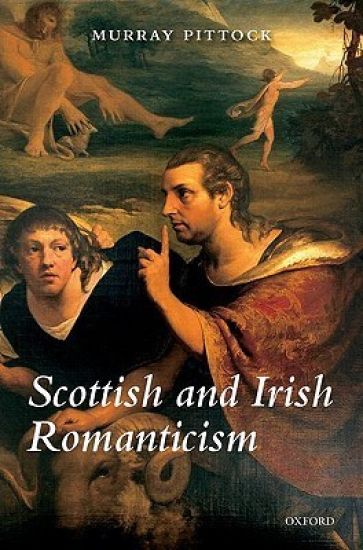
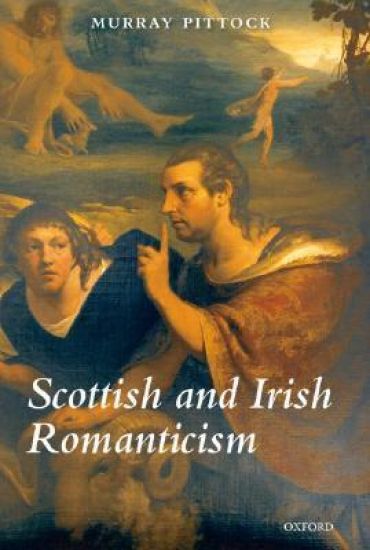
Scottish and Irish Romanticism

Scottish and Irish Romanticism

Murray Pittock

Oxford University Press
2008
sidottu
Scottish and Irish Romanticism is the first single-author book to address the main non-English Romanticisms of the British Isles. Murray Pittock begins by questioning the terms of his chosen title as he searches for a definition of Romanticism and for the meaning of 'national literature'. He proposes certain determining 'triggers' for the recognition of the presence of a national literature, and also deals with two major problems which are holding back the development of a new and broader understanding of British Isles Romanticisms: the survival of outdated assumptions in ostensibly more modern paradigms, and a lack of understanding of the full range of dialogues and relationships across the literatures of these islands. The theorists whose works chiefly inform the book are Bakhtin, Fanon and Habermas, although they do not define its arguments, and an alertness to the ways in which other literary theories inform each other is present throughout the book. Pittock examines in turn the historiography, prejudices, and assumptions of Romantic criticism to date, and how our unexamined prejudices still stand in the way of our understanding of individual traditions and the dialogues between them. He then considers Allan Ramsay's role in song-collecting, hybridizing high cultural genres with broadside forms, creating in synthetic Scots a 'language really used by men', and promoting a domestic public sphere. Chapters 3 and 4 discuss the Scottish and Irish public spheres in the later eighteenth century, together with the struggle for control over national pasts, and the development of the cults of Romance, the Picturesque and Sentiment: Macpherson, Thomson, Owenson and Moore are among the writers discussed. Chapter 5 explores the work of Robert Fergusson and his contemporaries in both Scotland and Ireland, examining questions of literary hybridity across not only national but also linguistic borders, while Chapter 6 provides a brief literary history of Burns' descent into critical neglect combined with a revaluation of his poetry in the light of the general argument of the book. Chapter 7 analyzes the complexities of the linguistic and cultural politics of the national tale in Ireland through the work of Maria Edgeworth, while the following chapter considers of Scott in relation to the national tale, Enlightenment historiography, and the European nationalities question. Chapter 9 looks at the importance of the Gothic in Scottish and Irish Romanticism, particularly in the work of James Hogg and Charles Maturin, while Chapter 10, 'Fratriotism', explores a new concept in the manner in which Scottish and Irish literary, political and military figures of the period related to Empire.
Culloden

Culloden

Murray Pittock

Oxford University Press
2016
sidottu
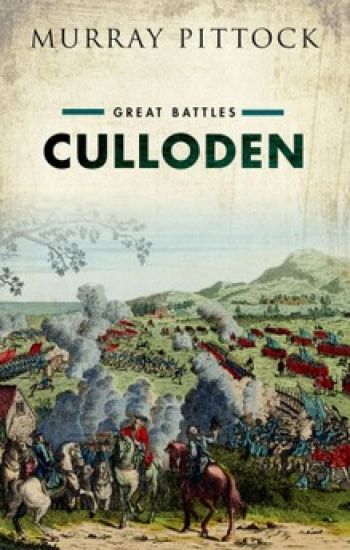
The battle of Culloden lasted less than an hour. The forces involved on both sides were small, even by the standards of the day. And it is arguable that the ultimate fate of the 1745 Jacobite uprising had in fact been sealed ever since the Jacobite retreat from Derby several months before. But for all this, Culloden is a battle with great significance in British history. It was the last pitched battle on the soil of the British Isles to be fought with regular troops on both sides. It came to stand for the final defeat of the Jacobite cause. And it was the last domestic contestation of the Act of Union of 1707, the resolution of which propelled Great Britain to be the dominant world power for the next 150 years. If the battle itself was short, its aftermath was brutal - with the depredations of the Duke of Cumberland followed by a campaign to suppress the clan system and the Highland way of life. And its afterlife in the centuries since has been a fascinating one, pitting British Whig triumphalism against a growing romantic memorialization of the Jacobite cause. On both sides there has long been a tendency to regard the battle as a dramatic clash, between Highlander and Lowlander, Celt and Saxon, Catholic and Protestant, the old and the new. Yet, as this account of the battle and its long cultural afterlife suggests, while viewing Culloden in such a way might be rhetorically compelling, it is not necessarily good history.
Culloden

Culloden

Murray Pittock

Oxford University Press
2022
nidottu
The battle of Culloden lasted less than an hour. The forces involved on both sides were small, even by the standards of the day. And it is arguable that the ultimate fate of the 1745 Jacobite uprising had in fact been sealed ever since the Jacobite retreat from Derby several months before. But for all this, Culloden is a battle with great significance in British history. It was the last pitched battle on the soil of the British Isles to be fought with regular troops on both sides. It came to stand for the final defeat of the Jacobite cause. And it was the last domestic contestation of the Act of Union of 1707, the resolution of which propelled Great Britain to be the dominant world power for the next 150 years. If the battle itself was short, its aftermath was brutal - with the depredations of the Duke of Cumberland followed by a campaign to suppress the clan system and the Highland way of life. And its afterlife in the centuries since has been a fascinating one, pitting British Whig triumphalism against a growing romantic memorialization of the Jacobite cause. On both sides there has long been a tendency to regard the battle as a dramatic clash, between Highlander and Lowlander, Celt and Saxon, Catholic and Protestant, the old and the new. Yet, as this account of the battle and its long cultural afterlife suggests, while viewing Culloden in such a way might be rhetorically compelling, it is not necessarily good history.
Scottish and Irish Romanticism

Scottish and Irish Romanticism

Murray Pittock

Oxford University Press
2011
nidottu
Scottish and Irish Romanticism is the first single-author book to address the main non-English Romanticisms of the British Isles. Murray Pittock begins by questioning the terms of his chosen title as he searches for a definition of Romanticism and for the meaning of 'national literature'. He proposes certain determining 'triggers' for the recognition of the presence of a national literature, and also deals with two major problems which are holding back the development of a new and broader understanding of British Isles Romanticisms: the survival of outdated assumptions in ostensibly more modern paradigms, and a lack of understanding of the full range of dialogues and relationships across the literatures of these islands. The theorists whose works chiefly inform the book are Bakhtin, Fanon and Habermas, although they do not define its arguments, and an alertness to the ways in which other literary theories inform each other is present throughout the book. Pittock examines in turn the historiography, prejudices, and assumptions of Romantic criticism to date, and how our unexamined prejudices still stand in the way of our understanding of individual traditions and the dialogues between them. He then considers Allan Ramsay's role in song-collecting, hybridizing high cultural genres with broadside forms, creating in synthetic Scots a 'language really used by men', and promoting a domestic public sphere. Chapters 3 and 4 discuss the Scottish and Irish public spheres in the later eighteenth century, together with the struggle for control over national pasts, and the development of the cults of Romance, the Picturesque and Sentiment: Macpherson, Thomson, Owenson and Moore are among the writers discussed. Chapter 5 explores the work of Robert Fergusson and his contemporaries in both Scotland and Ireland, examining questions of literary hybridity across not only national but also linguistic borders, while Chapter 6 provides a brief literary history of Burns' descent into critical neglect combined with a revaluation of his poetry in the light of the general argument of the book. Chapter 7 analyzes the complexities of the linguistic and cultural politics of the national tale in Ireland through the work of Maria Edgeworth, while the following chapter considers of Scott in relation to the national tale, Enlightenment historiography, and the European nationalities question. Chapter 9 looks at the importance of the Gothic in Scottish and Irish Romanticism, particularly in the work of James Hogg and Charles Maturin, while Chapter 10, 'Fratriotism', explores a new concept in the manner in which Scottish and Irish literary, political and military figures of the period related to Empire.
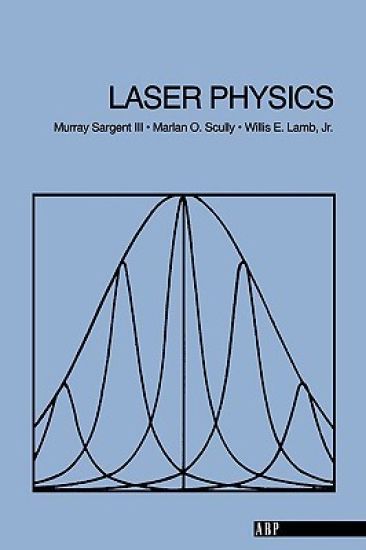
Laser Physics

Laser Physics

Murray Sargent; Iii Sargent; Marlan O. Scully; Willis E. Jr. Lamb

Westview Press Inc
1974
nidottu
This book treats the interaction of radiation with matter, particular attention being paid to the laser. Knowledge is assumed of the usual half-year introduction of quantum mechanics found in undergraduate physics curricula. The material can be covered in two semesters, or, alternatively, the first part (Chaps 1-13) can be used as a one-semester course in which quantum mechanical aspects of the electromagnetic field are ignored. Each chapter is accompanied by problems that illustrate the text and give useful (occasionally new) results. Existing laser media are intrinsically quantum mechanical and are most easily studied with the quantum theory. Understanding the laser along these lines enlivens one's understanding of quantum mechanics itself. In fact, the material constitutes a viable, applied alternative for the usual second and third semesters of quantum mechanics.
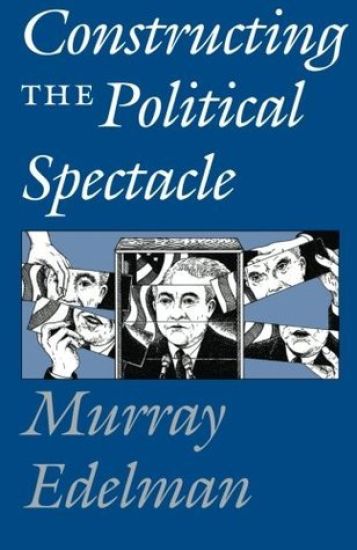
Constructing the Political Spectacle

Constructing the Political Spectacle

Murray Edelman

University of Chicago Press
1988
nidottu
Thanks to the ready availability of political news today, informed citizens can protect and promote their own interests and the public interest more effectively. Or can they? Murray Edelman argues against this conventional interpretation of politics, one that takes for granted that we live in a world of facts and that people react rationally to the facts they know. In doing so, he explores in detail the ways in which the conspicuous aspects of the political scene are interpretations that systematically buttress established inequalities and interpretations already dominant political ideologies.
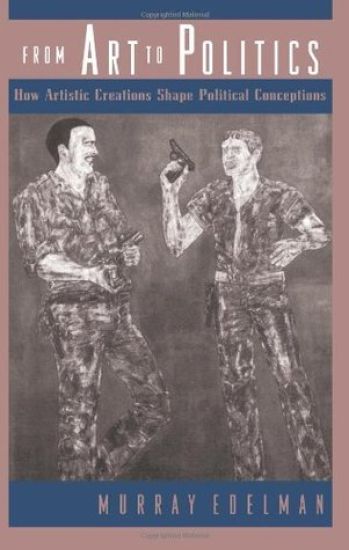
From Art to Politics

From Art to Politics

Murray Edelman

University of Chicago Press
1996
nidottu
In this book, Murray Edelman continues his quest to understand the influence of perception on the political process by turning to the role of art. He argues that political ideas, language, and actions cannot help but be based upon the images and narratives we take from literature, paintings, film, television, and other genres. Edelman believes art provides us with models, scenarios, narratives, and images we draw upon in order to make sense of political events, and he explores the different ways art can shape political perceptions and actions to both promote and inhibit diversity and democracy.
The U.S. National Income and Product Accounts

The U.S. National Income and Product Accounts

Murray F. Foss

University of Chicago Press
1983
sidottu
The main topics treated in this conference volume are problems of deflation and quality change, the adequacy of the data used to construct the U.S. national accounts, and the broad theoretical evolution of the U.S. national income and product accounts. As these topics suggest, this volume represents a new stage in the study of national income and product accounts in that emphasis is placed on the information content of the system rather than on the structure of the accounts. This new emphasis is highlighted by the inclusion of a discussion among prominent users of the national accounts—Lawrence Klein, Otto Eckstein, Alan Greenspan, and Arthur Okun—that indicates the difficulties that confront those who utilize this information.
We Still Here

We Still Here

Murray Forman

McGill-Queen's University Press
2020
sidottu
We Still Here maps the edges of hip-hop culture and makes sense of the rich and diverse ways people create and engage with hip-hop music within Canadian borders. Contributors to the collection explore the power of institutions, mainstream hegemonies, and the processes of historical formation in the evolution of hip-hop culture. Throughout, the volume foregrounds the generative issues of gender, identity, and power, in particular in relation to the Black diaspora and Indigenous cultures. The contributions of artists in the scene are front and centre in this collection, exposing the distinct inner mechanics of Canadian hip hop from a variety of perspectives. By amplifying rarely heard voices within hip-hop culture, We Still Here argues for its power to disrupt national formations and highlights the people and communities who make hip hop happen.
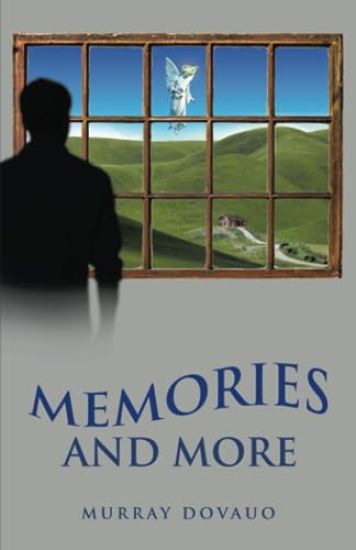
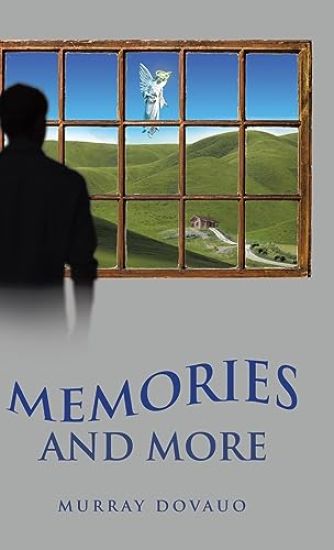
Memories and More

Memories and More

Murray Dovauo

Tellwell Talent
2023
pokkari
What do you see when you look back at your life? What moments stand out, what feelings linger, what lessons do you learn? In this collection of poems, the author shares his reflections on a lifetime of experiences, from childhood to old age, from joy to sorrow, from love to loss. He invites the reader to join him on a journey of discovery and wonder as he explores the beauty and mystery of life through his poetic lens.
Memories and More

Memories and More

Murray Dovauo

Tellwell Talent
2023
sidottu
What do you see when you look back at your life? What moments stand out, what feelings linger, what lessons do you learn? In this collection of poems, the author shares his reflections on a lifetime of experiences, from childhood to old age, from joy to sorrow, from love to loss. He invites the reader to join him on a journey of discovery and wonder as he explores the beauty and mystery of life through his poetic lens.