Kirjojen hintavertailu. Mukana 12 363 384 kirjaa ja 12 kauppaa.

Kirjahaku

Etsi kirjoja tekijän nimen, kirjan nimen tai ISBN:n perusteella.

1000 tulosta hakusanalla Nathan B. Talbot

Music for Others

Music for Others

Nathan Myrick

Oxford University Press Inc
2021
nidottu
Musical activity is one of the most ubiquitous and highly valued forms of social interaction in North America (to say nothing of world over), being engaged from sporting events to political rallies, concerts to churches. Moreover, music's use as an affective agent for political and religious programs suggests that it has ethical significance. Indeed, many have said as much. It is surprising then that music's ethical significance remains one of the most undertheorized aspects of both moral philosophy and music scholarship. Music for Others: Care, Justice, and Relational Ethics in Christian Music fills part of this scholarly gap by focusing on the religious aspects of musical activity, particularly on the practices of Christian communities. Based on ethnomusicological fieldwork at three Protestant churches and a group of seminary students studying in an immersion course at South by Southwest (SXSW), and synthesizing theories of discourse, formation, and care ethics oriented towards restorative justice, it first argues that relationships are ontological for both human beings and musical activity. It further argues that musical meaning and emotion converge in human bodies such that music participates in personal and communal identity construction in affective ways-yet these constructions are not always just. Thus, considering these aspects of music's ways of being in the world, Music for Others finally argues that music is ethical when it preserves people in and restores people to just relationships with each other, and thereby with God.
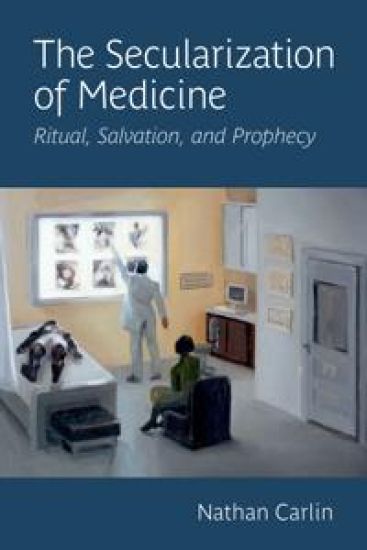
The Secularization of Medicine

The Secularization of Medicine

Nathan Carlin

OXFORD UNIVERSITY PRESS INC
2025
sidottu
Why do doctors take the Hippocratic Oath? Is this like reciting a religious creed? Is the White Coat Ceremony a kind of medical ordination? These medical rituals do seem to offer grounding for moral life in the profession. People from all over the globe make pilgrimages to places like the Mayo Clinic and the Texas Medical Center in search of salvation--not of their souls, but of their bodies. Are cardiologists, oncologists, and other specialists the secular high priests of our time? Patients do sacrifice large sums of cash in exchange for hope. While it is true that medicine and religion once had overt connections that have since declined, The Secularization of Medicine argues that religion as a social force in medicine has not been extinguished. Instead, religious material or ideas have migrated to non-religious or secular spaces and have been absorbed by the surrounding culture. This is a process of transposition, seen most clearly in the religious names of many hospitals and medical research institutions, continuing the tradition of Christian missions that care for the sick and see education as part of their religious duties. In this book, Nathan Carlin identifies three new types of transposition--instrumental transpositions, idealized transpositions, and imaginative transpositions--and explores them in various domains of medicine that resemble or recall religious belief or practice. He discovers that medicine is not as secular as we might imagine it to be, and this has implications for the well-being of physicians.
Teaching Inpatient Medicine

Teaching Inpatient Medicine

Nathan Houchens; Molly Harrod; Sanjay Saint

OXFORD UNIVERSITY PRESS INC
2023
nidottu
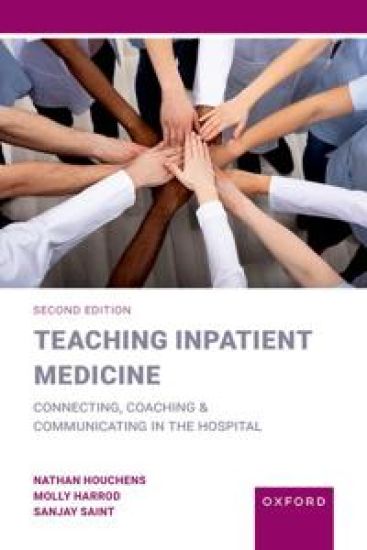
Teaching Inpatient Medicine, Second Edition equips physician-educators with proven, practical strategies to ease their learners' journey toward becoming autonomous medical professionals. Most physicians have not had formal training on how to teach yet find themselves leading medical learners while ensuring best patient care practices. Supported by close study of a diverse group of teaching attending physicians, Teaching Inpatient Medicine presents a comprehensive guide for teachers of inpatient medicine in all stages of their careers who are looking to improve their teaching approach and their ability to connect with patients and learners. This second edition features new chapters emphasizing strategies used by female and underrepresented minority attendings to navigate gender- and race-based challenges, including methods for mitigating unconscious bias and positioning themselves as leaders. The authors also address the enhanced importance of communication in healthcare and the challenges inherent to the COVID-19 pandemic with authentic teaching examples for how best to teach and lead in times of crisis. Equally instructive and empathic, Teaching Inpatient Medicine, Second Edition is a treasury of actionable practices that will inspire and empower teachers and learners alike.
A Poetics of Handel's Operas

A Poetics of Handel's Operas

Nathan Link

OXFORD UNIVERSITY PRESS INC
2023
sidottu
What should we consider when thinking about the relationship between an onstage performance and the story the performance tells? A Poetics of Handel's Operas explores this question by analyzing the narratives of Handel's operas in relation to the rich representational fabric of performance used to convey them. Nathan Link notes that in most storytelling genres, the audience can naturally discern between a story and the way that story is represented: with film, for example, the viewer would recognize that a character hears neither her own voiceover nor the ambient music that accompanies it, whereas in discussions of opera, some audiences may be distracted by the seemingly artificial nature of such conventions as characters singing their dialogue. Link proposes that when engaging with opera, distinguishing between the performance we see and hear on the stage and the story represented offers a meaningful approach to engaging with and interpreting the work. Handel's operas are today the most-performed works in the Baroque opera seria tradition. This genre, with its intricate dramaturgy and esoteric conventions, stands to gain much from an investigation into the relationships between the onstage performance and the story to which that performance directs us. In his analysis, Link offers theoretical studies on opera and narratological theories of literature, drama, and film, providing rich engagement with Handel's work and what it conveys about the relationship between text, story, and performance.
Christ the Emperor

Christ the Emperor

Nathan Israel Smolin

OXFORD UNIVERSITY PRESS INC
2024
sidottu
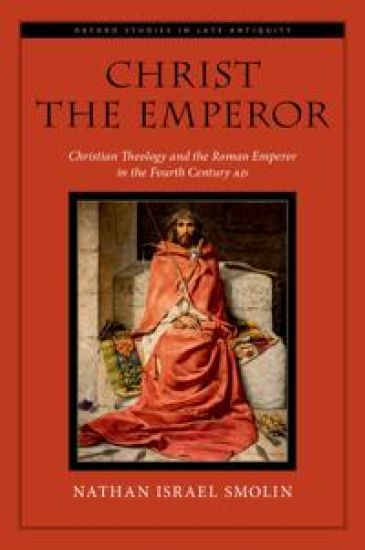
Politics and diplomacy have always been as much about the social and cultural contexts within which political actors operate as they are about the political structures themselves. This was also true of the Roman Empire of the fourth century AD, ruled by the Emperor Constantine the Great--a society marked by social, religious, and political transformation as the empire came under the influence of the Christian Church. Studies of this period often note the difficulty of understanding its politics due to a lack of sources that discuss questions central to political theory. This has led to deprecating views of the Late Empire as an age of unquestioning despotism, political decline, and social decay. Recent scholarship has correctly pushed back against this viewpoint, emphasizing the vibrancy of art, architecture, and social life during this period; however, relatively little attention has yet been given to the deeply consequential effects of Christian theology on the period's politics. Christ the Emperor argues that the alleged absence of explicit political theorizing in fourth century texts is the result of a migration of these discourses from the realm of "secular" politics to that of public Christian theology, where questions fundamental to political theory were analyzed and debated in more far-reaching ways than ever before. When fourth century bishops and Emperors wished to discuss the pressing questions of legitimacy, succession, hierarchy, equality, unity, diversity, and power, they did so largely in and through Christian theology. To understand how these political and social actors thought about and enacted political theory, Nathan Israel Smolin turns to theological sources. In doing so, he reveals this period as one of profound political, social, and religious ferment, in which ideas and structures fundamental to the history of the following millennia were developed and contested--ideas that continue to shape our world today.
Making Punches Count

Making Punches Count

Nathan F. Batto; Emily Beaulieu

OXFORD UNIVERSITY PRESS INC
2024
sidottu
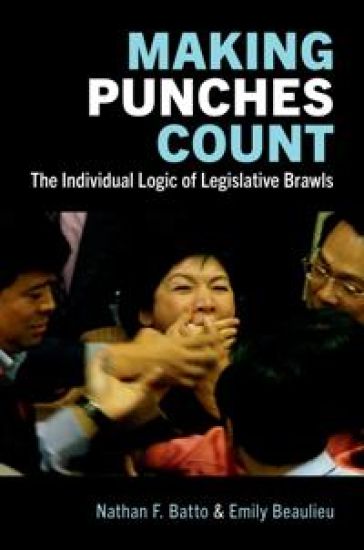
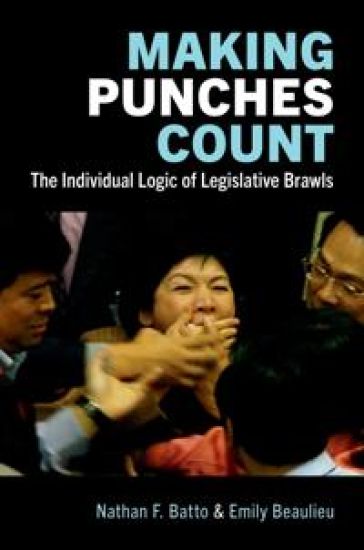
In Making Punches Count, the first comprehensive account of legislative floor violence and its consequences, Nathan Batto and Emily Beaulieu focus on recent episodes from a wide variety of countries, including Turkey, South Korea, Taiwan, Ukraine, Mexico, Uganda, and others. What do cultures of legislative brawling tell us about the health of democracy in a given country? Are the brawls mere fits of passion, or is there a deeper logic at work? Bacchus and Batto argue that legislative brawls are, in fact, calculated acts that serve the interests of the legislators who engage in them. Beginning from the incentives driving lawmakers in different party systems and drawing on both signaling theory and theories of contentious politics, they develop a powerful explanation of why individual legislators choose to brawl. As they show, brawls are more common in younger democracies, particularly ones with high levels of corruption, but sometimes there are contextual factors that make violence an attractive strategy even to legislators in long-established democracies. Ultimately, brawls should be seen as calculated acts of political violence initiated by legislators to advance their careers. Legislators can strategically use brawling to send costly signals to the actors--both opponents and allies--who will have the most influence over their political fortunes. A genuinely novel account of why conflict can reach such extreme levels in democracies, the book also sheds light on the structural mechanisms that drive politicians to violence in settings where we least expect it.
Making Punches Count

Making Punches Count

Nathan F. Batto; Emily Beaulieu

OXFORD UNIVERSITY PRESS INC
2024
nidottu
In Making Punches Count, the first comprehensive account of legislative floor violence and its consequences, Nathan Batto and Emily Beaulieu focus on recent episodes from a wide variety of countries, including Turkey, South Korea, Taiwan, Ukraine, Mexico, Uganda, and others. What do cultures of legislative brawling tell us about the health of democracy in a given country? Are the brawls mere fits of passion, or is there a deeper logic at work? Bacchus and Batto argue that legislative brawls are, in fact, calculated acts that serve the interests of the legislators who engage in them. Beginning from the incentives driving lawmakers in different party systems and drawing on both signaling theory and theories of contentious politics, they develop a powerful explanation of why individual legislators choose to brawl. As they show, brawls are more common in younger democracies, particularly ones with high levels of corruption, but sometimes there are contextual factors that make violence an attractive strategy even to legislators in long-established democracies. Ultimately, brawls should be seen as calculated acts of political violence initiated by legislators to advance their careers. Legislators can strategically use brawling to send costly signals to the actors--both opponents and allies--who will have the most influence over their political fortunes. A genuinely novel account of why conflict can reach such extreme levels in democracies, the book also sheds light on the structural mechanisms that drive politicians to violence in settings where we least expect it.
Holy Things

Holy Things

Nathan McGovern

OXFORD UNIVERSITY PRESS INC
2024
sidottu
Scholars of religion have mostly abandoned the concept of "syncretism" in which certain apparent deviations from "standard" practice are believed to be the result of a mixture of religions. This is particularly relevant to Thailand, in which ordinary religious practice was seen by an earlier generation of scholars as a mixture of three religions: local spirit religion, Hinduism, and Buddhism. In part, the perception that Thai Buddhism is syncretistic is due to a misunderstanding of traditional Buddhism, which has always accepted the existence of local spirits and gods. Nevertheless, there are aspects of Thai Buddhist practice that still stubbornly appear syncretistic. Moreover, Thai Buddhists themselves are increasingly adopting the language of syncretism, referring to traditional Thai religion as a mixture of local, Hindu, and Buddhist practices. This raises the question: If syncretism is so wrong, then why does it seem so right? In Holy Things, Nathan McGovern answers this question through an in-depth study of the worship of spirits, gods, and Buddha images--all known as sing saksit, or "holy things"--in Thailand. He takes the reader on a historical and genealogical journey, showing how the category saksit began as a term to describe a power that is inherent to gods and spirits and accessible to Brahmans. Only later, when it was used in the nineteenth century to translate the Western concept of the "holy" did it become associated with Buddhist practice. McGovern shows that what appears to be syncretism is actually an illusion. The worship of "holy things" is not a mixture of different religions, but the category of "holy things" is a mixture of different ways of talking about religion.
A Common Country

A Common Country

Nathan Pippenger

OXFORD UNIVERSITY PRESS INC
2025
sidottu
As their democracy faces an array of crises Americans confront a recurring question: whether they really constitute a democratic “people” at all. Reactionaries promote a nostalgic ideal of American nationalism, while implying that many of their compatriots don't belong to their imagined nation. In response, many egalitarians are suspicious of appeals to shared civic belonging—seeing them as outmoded, intolerant, and potentially dangerous. In A Common Country, Nathan Pippenger shows that for American democracy to flourish, egalitarians must not reject the ideal of shared American peoplehood but instead put forth their own distinctive claim to its meaning. Pippenger shows that at key periods—from Reconstruction through the Progressive Era, New Deal, and Civil Rights era—democratic reformers realized that the transformative changes they sought would succeed only if the meaning of “We the People” expanded to include everyone in the country. Pippenger's analysis of this tradition shows not only that democracy requires solidarity but also that solidarity need not presuppose any common trait other than the fact of shared political membership. Examining contemporary problems of nativism, racial injustice, and ascendant oligarchy, A Common Country weaves together history and normative political theory to intervene in urgent debates over nationalism, citizenship, and the fate of democracy. Its distinctive argument is that the solidarity needed to achieve American democracy is not awaiting discovery in some elusive form of unity—rather, it must be consciously cultivated among citizens who share no more, and no less, than a common country.
A Common Country

A Common Country

Nathan Pippenger

OXFORD UNIVERSITY PRESS INC
2025
nidottu
As their democracy faces an array of crises Americans confront a recurring question: whether they really constitute a democratic “people” at all. Reactionaries promote a nostalgic ideal of American nationalism, while implying that many of their compatriots don't belong to their imagined nation. In response, many egalitarians are suspicious of appeals to shared civic belonging—seeing them as outmoded, intolerant, and potentially dangerous. In A Common Country, Nathan Pippenger shows that for American democracy to flourish, egalitarians must not reject the ideal of shared American peoplehood but instead put forth their own distinctive claim to its meaning. Pippenger shows that at key periods—from Reconstruction through the Progressive Era, New Deal, and Civil Rights era—democratic reformers realized that the transformative changes they sought would succeed only if the meaning of “We the People” expanded to include everyone in the country. Pippenger's analysis of this tradition shows not only that democracy requires solidarity but also that solidarity need not presuppose any common trait other than the fact of shared political membership. Examining contemporary problems of nativism, racial injustice, and ascendant oligarchy, A Common Country weaves together history and normative political theory to intervene in urgent debates over nationalism, citizenship, and the fate of democracy. Its distinctive argument is that the solidarity needed to achieve American democracy is not awaiting discovery in some elusive form of unity—rather, it must be consciously cultivated among citizens who share no more, and no less, than a common country.
Foundations of Physical Chemistry: Worked Examples

Foundations of Physical Chemistry: Worked Examples

Nathan Lawrence; Jay Wadhawan; Richard Compton

Oxford University Press
1999
nidottu
The transition between school and university presents new challenges and ideas for the student of chemistry. This Primer, written jointly by two undergraduates and a university professor is ideally suited to the needs of students at the school/university interface by taking material familiar from school and linking it witha selection of ideas that will be encountered in the freshman year. As well as stimulating preuniversity students it will provide a sound basis for university courses in chemistry and related subjects. The early chapters cover the structure of atomes, ions and molecules, reactivity, kinetics, and equilibria. The final chapter gives an insight into more advanced areas, drawing on real world examples.
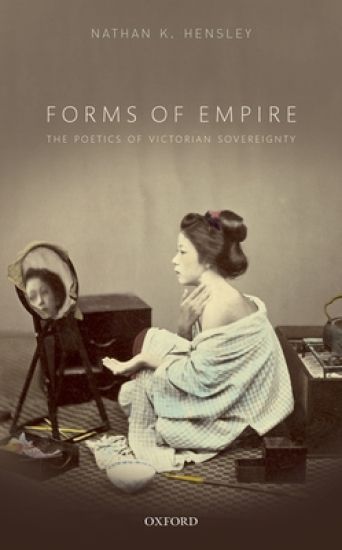
Forms of Empire

Forms of Empire

Nathan K. Hensley

Oxford University Press
2016
sidottu
In Forms of Empire, Nathan K. Hensley shows how the modern state's anguished relationship to violence pushed writers to expand the capacities of literary form. The Victorian era is often imagined as an "age of equipoise," but the period between 1837 and 1901 included more than two hundred separate wars. What is the difference, though, between peace and war? Forms of Empire unpacks the seeming paradoxes of the Pax Britannica's endless conflict, showing that the much vaunted equipoise of the nineteenth-century state depended on physical force to guarantee it. But the violence hidden in the shadows of all law --the violence of sovereign power itself--shuddered most visibly into being at the edges of law's reach, in the Empire, where emergency was the rule and death perversely routinized. This book follows some of the nineteenth century's most astute literary thinkers--George Eliot, Charles Dickens, Wilkie Collins, A.C. Swinburne, H. Rider Haggard, and Robert Louis Stevenson among them--as they wrestled with the sometimes sickening interplay between order and force, and generated new formal techniques to account for fact that an Empire built on freedom had death coiled at its very heart. In contrast to the progressive idealism we have inherited from the Victorians, the writers at the core of Forms of Empire moved beyond embarrassment and denial in the face of modernity's uncanny relation to killing. Instead they sought effects--free indirect discourse, lyric tension, and the idea of literary "character" itself--that might render thinkable the conceptual vertigoes of liberal violence. In the process, they touched up to the dark core of our post-Victorian modernity. Drawing on archival work, literary analyses, and a theoretical framework that troubles the distinction between "historicist" and "formalist" approaches, Forms of Empire links the Victorian period to the present and articulates a forceful vision of why literary thinking matters now.
Christianization and Commonwealth in Early Medieval Europe

Christianization and Commonwealth in Early Medieval Europe

Nathan J. Ristuccia

Oxford University Press
2018
sidottu
Christianization and Commonwealth in Early Medieval Europe re-examines the alterations in Western European life that followed widespread conversion to Christianity-the phenomena traditionally termed "Christianization". It refocuses scholarly paradigms for Christianization around the development of mandatory rituals. One prominent ritual, Rogationtide supplies an ideal case study demonstrating a new paradigm of "Christianization without religion." Christianization in the Middle Ages was not a slow process through which a Christian system of religious beliefs and practices replaced an earlier pagan system. In the Middle Ages, religion did not exist in the sense of a fixed system of belief bounded off from other spheres of life. Rather, Christianization was primarily ritual performance. Being a Christian meant joining a local church community. After the fall of Rome, mandatory rituals such as Rogationtide arose to separate a Christian commonwealth from the pagans, heretics, and Jews outside it. A Latin West between the polis and the parish had its own institution-the Rogation procession-for organizing local communities. For medieval people, sectarian borders were often flexible and rituals served to demarcate these borders. Rogationtide is an ideal case study of this demarcation, because it was an emotionally powerful feast, which combined pageantry with doctrinal instruction, community formation, social ranking, devotional exercises, and bodily mortification. As a result, rival groups quarrelled over the holiday's meaning and procedure, sometimes violently, in order to reshape the local order and ban people and practices as non-Christian.
The Making of the Tabernacle and the Construction of Priestly Hegemony
How did the Jerusalem high priests go from being cultic servants in the sixth century BCE to assuming political supremacy at some point during the third or second century? The Making of the Tabernacle and the Construction of Priestly Hegemony examines how the conditions were created for the priesthood's rise to power by examining the most important ideological texts for the high priests: the description of the wilderness tabernacle and the instructions for the ordination ritual found in the Biblical books of Exodus and Leviticus. Although neglected by many modern readers, who often find them technical and repetitive, the tabernacle accounts excited considerable interest amongst early scribes and readers, as is evidenced by the survival of them in no fewer than four versions. Untangling this intricate compositional history helps shed light on how these chapters in the Pentateuch shaped-and were shaped by-the perception of the priesthood's powers and competencies during the Persian and early Hellenistic periods. The hierarchy that is developed is more nuanced and multifaceted than previously appreciated, with Israelite artisans, community leaders, Levites and women incorporated into a complex vision of society. The ordination ritual was also transformed by scribal elites during the Persian period, appearing in no fewer than five variant forms as the role of the high priesthood and its relationship to other groups was negotiated. Using a broad, plural methodological approach that incorporates insights from sociology, ritual studies, textual and literary criticism, early interpretation, manuscript studies, and philology, Nathan MacDonald's study shines new light on the historical development, theology, and ideology of priestly texts in the Pentateuch.
Moonlighting

Moonlighting

Nathan Waddell

Oxford University Press
2019
sidottu
How and why did the life and music of Ludwig van Beethoven (1770-1827) matter to experimental writers in the early twentieth century? Previous answers to this question have tended to focus on structural analogies between musical works and literary texts, charting the many different ways in which poetry and prose resemble Beethoven's compositions. This book takes a different approach. It focuses on how early twentieth-century writers--chief among them E. M. Forster, Aldous Huxley, Wyndham Lewis, Dorothy Richardson, Rebecca West, and Virginia Woolf--profited from the representational conventions associated in the nineteenth century and beyond with Beethovenian culture. The emphasis of Moonlighting falls for the most part on how modernist writers made use of Beethovenian legend. It is concerned neither with formal similarities between Beethoven's music and modernist writing nor with the music of Beethoven per se, but with certain ways of understanding Beethoven's music which had long before 1900 taken shape as habit, myth, cliché, and fantasy, and with the influence they had on experimental writing up to 1930. Moonlighting suggests that the modernists drew knowingly and creatively on the conventional. It proposes that many of the most experimental works of modernist literature were shaped by a knowing reliance on Beethovenian consensus; in short, that the literary modernists knew Beethovenian legend when they saw it, and that they were eager to use it.
Forms of Empire

Forms of Empire

Nathan K. Hensley

Oxford University Press
2018
nidottu
Forms of Empire shows how the modern state's anguished relationship to violence pushed writers to expand the capacities of literary form. The Victorian era is often imagined as an 'age of equipoise,' but the period between 1837 and 1901 included more than 200 separate wars. What is the difference, though, between peace and war? The much-vaunted equipoise of the nineteenth-century state depended on physical force to guarantee it. But the sovereign violence hidden in the shadows of all law shuddered most visibly into being at the edges of law's reach, in the Empire, where emergency was the rule and death perversely routinized. George Eliot, Charles Dickens, Wilkie Collins, A. C. Swinburne, H. Rider Haggard, and Robert Louis Stevenson, among others, all generated new formal techniques to account for the sometimes sickening interplay between order and force in their liberal Empire. In contrast to the progressive idealism we have inherited from the Victorians, these writers moved beyond embarrassment and denial in the face of modernity's uncanny relation to killing. They sought aesthetic effects—free indirect discourse, lyric tension, and the idea of literary 'character' itself—able to render thinkable the conceptual vertigoes of liberal violence. In so doing, they touched the dark core of our post-Victorian modernity. Archival work, literary analyses, and a theoretical framework that troubles the distinction between 'historicist' and 'formalist' approaches helps this book link the Victorian period to the present and articulate a forceful vision of why literary thinking matters now.
Not Quite Hope and Other Political Emotions in the Gilded Age
Not Quite Hope and Other Political Emotions in the Gilded Age argues that late nineteenth-century US fiction grapples with and helps to conceptualize the disagreeable feelings that are both a threat to citizens' agency and an inescapable part of the emotional life of democracy--then as now. In detailing the corruption and venality for which the period remains known, authors including Mark Twain, Harriet Beecher Stowe, Henry Adams, and Helen Hunt Jackson evoked the depressing inefficacy of reform, the lunatic passions of the mob, and the revolting appetites of lobbyists and office seekers. Readers and critics of these Washington novels, historical romances, and satiric romans à clef have denounced these books' fiercely negative tone, seeing it as a sign of cynicism and elitism. Not Quite Hope argues, in contrast, that their distrust of politics is coupled with an intense investment in it: not quite apathy, but not quite hope. Chapters examine both common and idiosyncratic forms of political emotion, including 'crazy love', disgust, cynicism, 'election fatigue', and the myriad feelings of hatred and suspicion provoked by the figure of the hypocrite. In so doing, the book corrects critics' too-narrow focus on 'sympathy' as the American novel's model political emotion. We think of reform novels as fostering feeling for fellow citizens or for specific causes. This volume argues that Gilded Age fiction refocuses attention on the unstable emotions that continue to shape our relation to politics as such.
Waisted: The Biology of Body Fat

Waisted: The Biology of Body Fat

Nathan Denton

Oxford University Press
2021
nidottu
Waisted: The Biology of Body Fat outlines the fascinating, often misunderstood and sometimes controversial biology of fat, otherwise known as adipose tissue. It provides a comprehensive, evidence-based perspective on fat biology and its crucial role in human evolution, health, disease, and society. The content draws upon biomedical, epidemiological, social and evolutionary research to understand the striking relationship between body fat distribution and health outcomes. Using digestible analogies, real-world examples and images, it highlights the multi-faceted relationship between adipose biology and society. Waisted clearly conveys the key concepts and assumptions that can lead to negative perceptions of fat, and reframes these challenges to highlight the underappreciated importance of adipose tissue in humans. Waisted is an accessible yet in-depth exploration of the subject that is suitable for both specialists and non-specialists alike. It is a highly valuable resource for clinicians, health practitioners, biomedical researchers, and students who study adipose biology, obesity, and diseases related to fat dysfunction. This book also provides an interesting sociological and anthropological read for anyone who wants to gain a broader and deeper appreciation of the unique role that adipose tissue plays in human evolution and society, by considering how biological and social factors intersect.
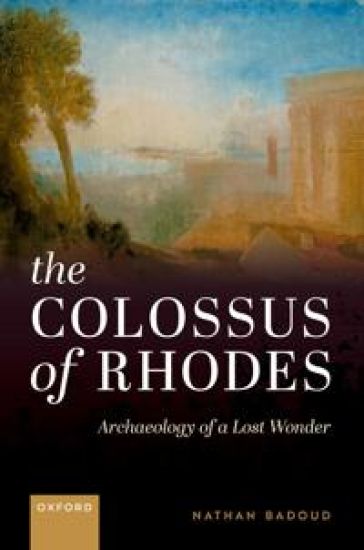
The Colossus of Rhodes

The Colossus of Rhodes

Nathan Badoud

Oxford University Press
2024
sidottu
The Colossus of Rhodes is both the most famous and the least well-known monument of Ancient Greece. Numbered among the Seven Wonders of the World, this bronze statue of the god Helios, thirty-four metres in height, was created by the sculptor Chares of Lindos between the years 295 and 283 BC, only to be destroyed by an earthquake in 227 BC. The legends which have spread after its collapse seem so strange and contradictory that specialists in Greek sculpture have been dissuaded from investigating the topic. Nathan Badoud publishes the first comprehensive study devoted to the Colossus. His book mobilises a large array of sources, ranging from antiquity to the present day. It proposes an intellectual excavation through the layers of the literary, artistic, and scientific tradition. It envisages the statue in its religious, political, and topographical contexts. It explores its function, its technique, its appearance, its meaning, and its location. It reconsiders the beginnings of the Hellenistic world, marked by the emergence of Rhodes as an imperial power, embodied by the Colossus.
Metaphysics, Mathematics, and Meaning

Metaphysics, Mathematics, and Meaning

Nathan Salmon

Clarendon Press
2005
sidottu
Metaphysics, Mathematics, and Meaning brings together Nathan Salmon's influential papers on topics in the metaphysics of existence, non-existence, and fiction; modality and its logic; strict identity, including personal identity; numbers and numerical quantifiers; the philosophical significance of Goedel's Incompleteness theorems; and semantic content and designation. Including a previously unpublished essay and a helpful new introduction to orient the reader, the volume offers rich and varied sustenance for philosophers and logicians.