Kirjojen hintavertailu. Mukana 11 244 527 kirjaa ja 12 kauppaa.

Kirjahaku

Etsi kirjoja tekijän nimen, kirjan nimen tai ISBN:n perusteella.

1000 tulosta hakusanalla Nathaniel Popper

The Fall Line

The Fall Line

Nathaniel Vinton

WW Norton Co
2015
sidottu
Harnessing nature’s most powerful forces, elite downhillers descend icy, rugged slopes at speeds cresting 90 miles per hour. For decades, American skiers struggled to match their European counterparts, and until this century the US Ski Team could not claim a lasting foothold on the roof of the Alps, where the sport’s legends are born. Then came a fledgling class of American racers that disrupted the Alpine racing world order. Led by Bode Miller and Lindsey Vonn, Julia Mancuso and Ted Ligety, this band of iconoclasts made a place for their country on some of the world’s most prestigious race courses. Even as new technology amplified the sport’s inherent danger, the US Ski Team learned how to win, and they changed downhill racing forever. The Fall Line is the story of how it all came together, a deeply reported reconstruction of ski racing’s most dramatic season. Drawing on more than a decade of research and candid interviews with some of the sport’s most elusive figures, award-winning journalist Nathaniel Vinton reveals the untold story of how skiers like Vonn and Miller, and their peers and rivals, fought for supremacy at the Olympic Winter Games. Here is an authoritative portrait of a group of men and women taking mortal risks in a bid for sporting glory. A white-knuckled tour through skiing’s deep traditions and least-accessible locales, The Fall Line opens up the sexy, high-stakes world of downhill skiing—its career-ending crashes, million-dollar sponsorship deals, international intrigue, and showdowns with nature itself. With views from the starting gate, the finish line, and treacherous turns in between, The Fall Line delivers the adrenaline of one of the world’s most beautiful and perilous sports alongside a panoramic view of skiing’s past, present, and future.
The Scarlet Letter and Other Writings

The Scarlet Letter and Other Writings

Nathaniel Hawthorne

WW Norton Co
2017
nidottu
This second edition also includes: revised and expanded explanatory footnotes, a new preface and a note on the text by Leland S. Person; key passages from Hawthorne’s notebooks and letters that suggest the close relationship between his private and public writings, and seven new critical essays by Brook Thomas, Michael Ryan, Thomas R. Mitchell, Jay Grossman, Jamie Barlowe, John Ronan and John F. Birk. A Chronology and revised and expanded Selected Bibliography is also included.
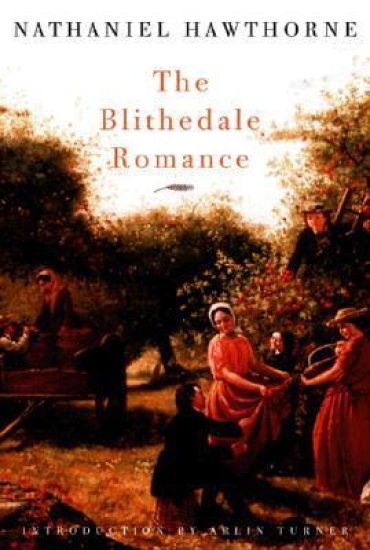
The Blithedale Romance

The Blithedale Romance

Nathaniel Hawthorne

WW NORTON CO
1998
nidottu
Written in one of the most productive periods of his career, Hawthorne’s Blithedale Romance was published in 1852, a year after The House of the Seven Gables and two years after his masterpiece The Scarlet Letter. With The Blithedale Romance, Hawthorne writes fully in his own time, not haunting his characters with the American past. Drawn from his stay at Brook Farm, a communal experiment in living the pastoral life, the story is an engaging one that touches on many of the issues of his day, from brotherhood to women's rights and socialism. It remains a captivating work about politics, love, the supernatural, and idealism, written with Hawthorne’s sharp wit and deep intelligence.
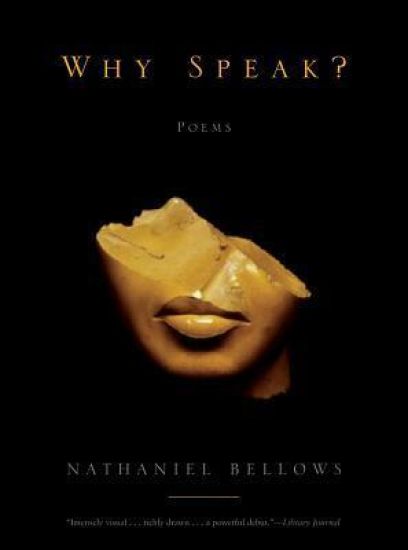
Why Speak?

Why Speak?

Nathaniel Bellows

WW Norton Co
2008
nidottu
A debut collection, exhibiting exceptional narrative and lyrical gifts, that explores the realms of memory, human emotion, and the natural world.These layered, braided narratives combine images of landscape and nature, childhood memories and family history, evoked paintings and performances. Nathaniel Bellows's verse is intimate yet inviting, dark but hopeful: "I could not saw the fallen tree—not all / of it had fallen—because somehow each spring, / the rotted half still mysteriously bloomed."
The Fall Line

The Fall Line

Nathaniel Vinton

WW Norton Co
2016
nidottu
Here is an authoritative portrait of a group of men and women taking mortal risks in a bid for sporting glory. A white-knuckled tour through skiing’s deep traditions and least-accessible locales, The Fall Line opens up the sexy, high-stakes world of downhill skiing—its career-ending crashes, million-dollar sponsorship deals, international intrigue and showdowns with nature itself.
The House of the Seven Gables

The House of the Seven Gables

Nathaniel Hawthorne

WW Norton Co
2020
nidottu
This Norton Critical Edition includes: The first edition of the novel, published in 1851 by Ticknor, Reed and Fields.Robert S. Levine’s insightful introduction, revised headnotes, expanded explanatory footnotes and note on the text and annotations.A generous selection of carefully chosen primary materials—three of them new to the Second Edition—intended to provide readers with essential backgrounds on the novel’s major themes.An extensive selection of critical responses to The House of the Seven Gables from the time of its publication to the present day, including eight new to the Second Edition. A chronology of Nathaniel Hawthorne’s life and work and a selected bibliography. About the Series Read by more than 12 million students over fifty-five years, Norton Critical Editions set the standard for apparatus that is right for undergraduate readers. The three-part format—annotated text, contexts and criticism—helps students to better understand, analyse and appreciate the literature, while opening a wide range of teaching possibilities for instructors. Whether in print or in digital format, Norton Critical Editions provide all the resources students need.
The Blithedale Romance

The Blithedale Romance

Nathaniel Hawthorne

WW Norton Co
2011
nidottu
This Norton Critical Edition of The Blithedale Romance is based on the Centenary Edition of the Works of Nathaniel Hawthorne, widely considered the best available edition. It is accompanied by explanatory annotations to help readers with Hawthorne’s many historical and literary references as well as with other possible sources of difficulty in the text. “Contexts” is thematically organized and includes a rich and varied selection of materials, both public and private, focusing on Hawthorne’s inspirations for the novel. Included are letters, excerpts from journals, published accounts of Brook Farm and the growth of antebellum social reform, Hawthorne’s letters to Sophia Peabody and Louisa Hawthorne about his first days at Brook Farm, and later letters describing his growing reservations about and decision to leave the utopian community. The Blithedale Romance raises interesting questions about the role of women, the popularity of mesmerism, and the growth of cities in mid-nineteenth-century America. Margaret Fuller, Charles Baudelaire, and Hawthorne, among others, provide invaluable insight. “Criticism” begins with major contemporary reviews by Herman Melville, William B. Pike, George S. Hillard, James T. Fields, Henry Fothergill Chorley, and others that suggest The Blithedale Romance’s initial reception. “Selections from Classic Studies” reprints key excerpts from influential essays published through the 1970s, including those by Henry James, D. H. Lawrence, Irving Howe, and James McIntosh. “Recent Criticism” collects a striking range of scholarly interpretation by Nina Baym, Joel Pfister, Gillian Brown, Richard H. Brodhead, Lauren Berlant, Russ Castronovo, Robert S. Levine, and Richard H. Millington. A Chronology and a Selected Bibliography are also included.
Underdevelopment and Development in Brazil: Volume I
First published in 1982, this work offers an analysis Brazil’s long-term economic history and development, spanning the period from independence to post-war industrial growth. The book focuses upon the classic problem of why Brazil failed to develop economically during the nineteenth century in a manner similar to the United States and other regions of recent settlement.This volume discusses in detail the principle features of Brazil’s economic landscape between 1822 and 1947, containing special coverage of topics such as slavery and the elastic supply of low cost labour from overseas; the inelastic supply of domestic output; the critical importance of the domestic agricultural sector and the lack of low-cost transportation; the reasons for the failure of international trade to act as an engine for generalized economic development; the special importance of economic infrastructure and public finance for the onset of sustained economic growth and structural change; and the central features of Brazilian development and industrialisation in the first half of the twentieth century.
Underdevelopment and Development in Brazil: Volume II
First published in 1982, this work builds on the detailed economic history of Brazil in its companion volume: "Economic Structure and Change, 1822-1947", assessing and challenging the established interpretations. The book covers in depth the causes of the Northeast’s poor economic experience and the emergence of significant regional inequality in Brazil’s development. In his analysis of the role of Government in Brazil’s economic development, the author offers a fresh perspective on the importance of public finance constraints and on the tensions between centralisation and federalism.The study also deals with broader analytical interests, affording opportunity to examine the empirical relevance of long-term development models. In encompassing both the period of slow economic growth through much of the nineteenth century and the rapid economic development which began at the end of the century, the study is able to focus upon the conditions which led to the onset of sustained development in a major underdeveloped country, suggesting lessons for contemporary underdeveloped countries.
Lefebvre for Architects

Lefebvre for Architects

Nathaniel Coleman

Routledge
2015
sidottu
While the work of Henri Lefebvre has become better known in the English-speaking world since the 1991 translation of his 1974 masterpiece, The Production of Space, his influence on the actual production of architecture and the city has been less pronounced. Although now widely read in schools of architecture, planning and urban design, Lefebvre’s message for practice remains elusive; inevitably so because the entry of his work into the Anglosphere has come with repression of the two most challenging aspects of his thinking: romanticism and Utopia, which simultaneously confront modernity while being progressive.Contemporary discomfort with romanticism and Utopia arguably obstructs the shift of Lefebvre’s thinking from being objects of theoretical interest into positions of actually influencing practices. Attempting to understand and act upon architecture and the city with Lefebvre but without Utopia and romanticism risks muting the impact of his ideas. Although Utopia may seem to have no place in the present, Lefebvre reveals this as little more than a self-serving affirmation that ‘there is no alternative’ to social and political detachment. Demanding the impossible may end in failure but as Lefebvre shows us, doing so is the first step towards other possibilities. To think with Lefebvre is to think about Utopia, doing so makes contact with what is most enduring about his project for the city and its inhabitants, and with what is most radical about it as well. Lefebvre for Architects offers a concise account of the relevance of Henri Lefebvre’s writing for the theory and practice of architecture, planning and urban design. This book is accessible for students and practitioners who wish to fully engage with the design possibilities offered by Lefebvre’s philosophy.
Lefebvre for Architects

Lefebvre for Architects

Nathaniel Coleman

Routledge
2014
nidottu
While the work of Henri Lefebvre has become better known in the English-speaking world since the 1991 translation of his 1974 masterpiece, The Production of Space, his influence on the actual production of architecture and the city has been less pronounced. Although now widely read in schools of architecture, planning and urban design, Lefebvre’s message for practice remains elusive; inevitably so because the entry of his work into the Anglosphere has come with repression of the two most challenging aspects of his thinking: romanticism and Utopia, which simultaneously confront modernity while being progressive.Contemporary discomfort with romanticism and Utopia arguably obstructs the shift of Lefebvre’s thinking from being objects of theoretical interest into positions of actually influencing practices. Attempting to understand and act upon architecture and the city with Lefebvre but without Utopia and romanticism risks muting the impact of his ideas. Although Utopia may seem to have no place in the present, Lefebvre reveals this as little more than a self-serving affirmation that ‘there is no alternative’ to social and political detachment. Demanding the impossible may end in failure but as Lefebvre shows us, doing so is the first step towards other possibilities. To think with Lefebvre is to think about Utopia, doing so makes contact with what is most enduring about his project for the city and its inhabitants, and with what is most radical about it as well. Lefebvre for Architects offers a concise account of the relevance of Henri Lefebvre’s writing for the theory and practice of architecture, planning and urban design. This book is accessible for students and practitioners who wish to fully engage with the design possibilities offered by Lefebvre’s philosophy.
Utopias and Architecture

Utopias and Architecture

Nathaniel Coleman

Routledge
2005
nidottu
Utopian thought, though commonly characterized as projecting a future without a past, depends on golden models for re-invention of what is. Through a detailed and innovative re-assessment of the work of three architects who sought to represent a utopian content in their work, and a consideration of the thoughts of a range of leading writers, Coleman offers the reader a unique perspective of idealism in architectural design. With unparalleled depth and focus of vision on the work of Le Corbusier, Louis I Kahn and Aldo van Eyck, this book persuasively challenges predominant assumptions in current architectural discourse, forging a new approach to the invention of welcoming built environments and transcending the limitations of both the postmodern and hyper-modern stance and orthodox modernist architecture.
Underdevelopment and Development in Brazil: Volume II
First published in 1982, this work builds on the detailed economic history of Brazil in its companion volume: "Economic Structure and Change, 1822-1947", assessing and challenging the established interpretations. The book covers in depth the causes of the Northeast’s poor economic experience and the emergence of significant regional inequality in Brazil’s development. In his analysis of the role of Government in Brazil’s economic development, the author offers a fresh perspective on the importance of public finance constraints and on the tensions between centralisation and federalism.The study also deals with broader analytical interests, affording opportunity to examine the empirical relevance of long-term development models. In encompassing both the period of slow economic growth through much of the nineteenth century and the rapid economic development which began at the end of the century, the study is able to focus upon the conditions which led to the onset of sustained development in a major underdeveloped country, suggesting lessons for contemporary underdeveloped countries.
Underdevelopment and Development in Brazil: Volume I
First published in 1982, this work offers an analysis Brazil’s long-term economic history and development, spanning the period from independence to post-war industrial growth. The book focuses upon the classic problem of why Brazil failed to develop economically during the nineteenth century in a manner similar to the United States and other regions of recent settlement.This volume discusses in detail the principle features of Brazil’s economic landscape between 1822 and 1947, containing special coverage of topics such as slavery and the elastic supply of low cost labour from overseas; the inelastic supply of domestic output; the critical importance of the domestic agricultural sector and the lack of low-cost transportation; the reasons for the failure of international trade to act as an engine for generalized economic development; the special importance of economic infrastructure and public finance for the onset of sustained economic growth and structural change; and the central features of Brazilian development and industrialisation in the first half of the twentieth century.
The Celestial Railroad

The Celestial Railroad

Nathaniel Hawthorne

Signet Classics
2006
nidottu
Of Nathaniel Hawthorne's insight into the Puritan's simultaneous need for fulfillment and self-destruction, D. H. Lawrence wrote, "Nathaniel knew disagreeable things in his inner soul. He was careful to send them out in disguise." By means of artfully crafted and compelling tales, Hawthorne explored the destinies and concerns of early American settlers and citizens. In several of the stories in this collection, characters who hold themselves apart from their fellow man fall prey to the corroding desires of lust for perfection. Then they unwittingly commit evils--against themselves and others--in the name of pride. Edgar Allan Poe noted of Hawthorne's writing: "Every word tells, and there is not a word which does not tell."
The Scarlet Letter

The Scarlet Letter

Nathaniel Hawthorne

Signet
2009
nidottu
Tremendously moving and rich in psychological insight, this tragic novel of sin and redemption addresses America's Puritan past. Depicting the struggle between mind and heart, Hawthorne has fashioned a masterpiece of American fiction. Revised reissue.
The House of the Seven Gables

The House of the Seven Gables

Nathaniel Hawthorne

Signet
2010
pokkari
This enduring novel of crime and retribution vividly reflects the social and moral values of New England in the 1840s. Nathaniel Hawthorne's gripping psychological drama concerns the Pyncheon family, a dynasty founded on pious theft, who live for generations under a dead man's curse until their house is finally exorcised by love. Hawthorne, by birth and education, was instilled with the Puritan belief in America's limitless promise. Yet - in part because of blemishes on his own family history - he also saw the darker side of the young nation. Like his twentieth-century heirs William Faulkner and F. Scott Fitzgerald, Hawthorne peered behind propriety's fa ade and exposed the true human condition.
Joy (Or Something Darker, but Like It)

Joy (Or Something Darker, but Like It)

Nathaniel Perry

THE UNIVERSITY OF MICHIGAN PRESS
2024
nidottu
Joy (Or Something Darker, but Like It), the first book of nonfiction by poet Nathaniel Perry, is a group of essays that considers poetry in the context of parenting—what poems and poets might teach us about parenting, what parenting might teach us about poetry, and also, what either of those things might have to teach us about simply being a relatively successful human being. While other poets have written about parenthood, few books consider how parenthood and poetry themselves intersect. The essays are affable and never technical, but take seriously the idea that thinking about poems might help us all think about our other roles in life, as parents, lovers, citizens, and friends. The book, in the end, imagines that this kind of insight is maybe one of the things most useful about poetry. It isn't, or at least doesn't have to be, always about itself; it can instead, surprisingly and wonderfully, be about us. Each of the twelve essays considers a different poet—Edward Thomas, Henry W. Longfellow, George Scarbrough, Elizabeth Bishop, Geoffrey Hill, Primus St. John, Robert Hayden, Elizabeth Coatsworth, Gwendolyn Brooks, Robert Frost, E.A. Robinson, and Belle Randall—and, alongside them, different concerns of parenting and living. Organized in chronological order, they track the growth of Nathaniel Perry’s own children who pop up from time to time in a believable way. Essays consider the idea of devotion and belief, the idea of imperfection, the small details we can focus on as parents, and the conceptions of the world we pass along to our children. Together these essays not only represent the author's personal canon of poets who have been important to him in his life and work, but also present a diverse slice of American poetry, in voice, form, identity, origin, and time period.