

Kirjahaku
Etsi kirjoja tekijän nimen, kirjan nimen tai ISBN:n perusteella.
1000 tulosta hakusanalla Or Luca




Syllabus or Skeleton of Dr. Goodwin's Lectures on Apologetics, Or, the Evidences of Christianity
Daniel R Goodwin
Trieste Publishing
2018
nidottu

Trick or Treat: Padded Board Book: Padded Hardcover Picture Storybook
Em Bruce
Lake Press
2026
sidottu
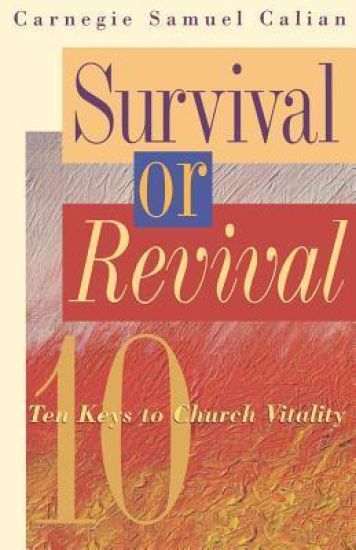
Carnegie Calian challenges churches and their members to become committed to their own success and to take ownership of their future. He identifies ten keys to congregational vitality, including biblical literacy, prayer, knowledge, and forgiveness, and suggests that these become the cornerstone of a holistic approach to congregational vitality.

Interest in German Idealism--not just Kant, but Fichte and Hegel as well--has recently developed within analytic philosophy, which traditionally defined itself in opposition to the Idealist tradition. Yet one obstacle remains especially intractable: the Idealists' longstanding claim that philosophy must be systematic. In this work, the first overview of the German Idealism that is both conceptual and methodological, Paul W. Franks offers a philosophical reconstruction that is true to the movement's own times and resources and, at the same time, deeply relevant to contemporary thought. At the center of the book are some neglected but critical questions about German Idealism: Why do Fichte, Schelling, and Hegel think that philosophy's main task is the construction of a system? Why do they think that every part of this system must derive from a single, immanent and absolute principle? Why, in short, must it be all or nothing? Through close examination of the major Idealists as well as the overlooked figures who influenced their reading of Kant, Franks explores the common ground and divergences between the philosophical problems that motivated Kant and those that, in turn, motivated the Idealists. The result is a characterization of German Idealism that reveals its sources as well as its pertinence--and its challenge--to contemporary philosophical naturalism.

What did it mean to run a large, commercialized agrarian polity according to the best Confucian principles?This book is intended as a contribution to both intellectual and political history. It is partly a study of how Confucian-trained officials thought about the grain trade and the state's role in it, particularly the "ever-normal granaries," the stockpiles of grain maintained by every county government as protection against shortages and high prices. The author investigates the scope and limits of belief in market forces among those critical of government intervention, establishing that rudimentary economic arguments for state withdrawal from the grain trade were available by 1750. She then explores challenges, from within the ruling apparatus, to the state's claim that its own stockpiling served the public interest, as well as the factors behind decisions in the mid- and late 1740s to suspend or decrease state purchases of grain.As a study of Confucian government in action, this book describes a mode of public policy discussion far less dominated by the Confucian scriptures than one might expect. As a contribution to intellectual history, the work offers a detailed view of members of an ostensibly Confucian government pursuing divergent agendas around the question of "state or merchant?"

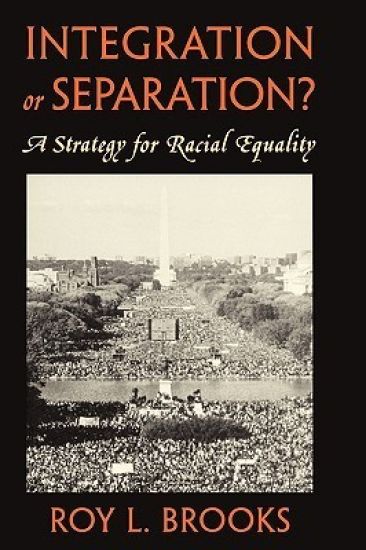
Integrated in principle, segregated in fact: is this the legacy of fifty years of "progress" in American racial policy? Is there hope for much better? Roy L. Brooks, a distinguished professor of law and a writer on matters of race and civil rights, says with frank clarity what few will admit--integration hasn't worked and possibly never will. Equally, he casts doubt on the solution that many African-Americans and mainstream whites have advocated: total separation of the races. This book presents Brooks's strategy for a middle way between the increasingly unworkable extremes of integration and separation.Limited separation, the approach Brooks proposes, shifts the focus of civil rights policy from the group to the individual. Defined as cultural and economic integration within African-American society, this policy would promote separate schooling, housing, and business enterprises where needed to bolster the self-sufficiency of the community, without trammeling the racial interests of individuals inside or outside of the group, and without endangering the idea of a shared Americanness. But all the while Brooks envisions African-American public schools, businesses, and communities redesigned to serve the enlightened self-interest of the individual. Unwilling to give up entirely on racial integration, he argues that limited separation may indeed lead to improved race relations and, ultimately, to healthy integration.This book appears at a crucial time, as Republicans dismantle past civil rights policies and Democrats search for new ones. With its alternative strategy and useful policy ideas for bringing individual African-Americans into mainstream society as first-class citizens, Integration or Separation? should influence debate and policymaking across the spectra of race, class, and political persuasion.
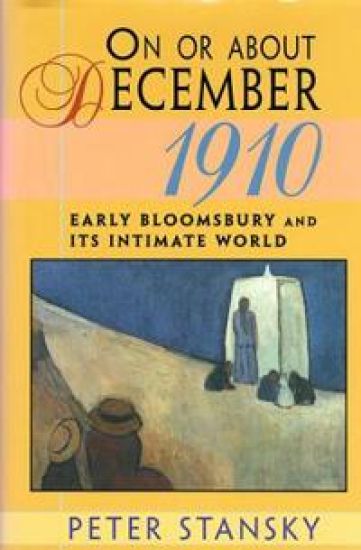
On or about December 1910 human character changed, Virginia Woolf remarked, and well she might have. The company she kept, the Bloomsbury circle, took shape before the coming of World War I, and would have a lasting impact on English society and culture after the war. This book captures the dazzling world of Bloomsbury at the end of an era, and on the eve of modernism.Peter Stansky depicts the vanguard of a rising generation seizing its moment. He shows us Woolf in that fateful year, in the midst of an emotional breakdown, reaching a turning point with her first novel, The Voyage Out, and E. M. Forster, already a success, offering Howards End and acknowledging his passion for another man. Here are Roger Fry, prominent art critic and connoisseur, remaking tradition with the epochal exhibition “Manet and the Post-Impressionists”; Vanessa Bell and Duncan Grant beginning their most interesting phase as artists; Lytton Strachey signing the contract for his first book; and John Maynard Keynes entering a significant new stage in his illustrious career.Amid the glittering opulence and dismal poverty, the swirl of Suffragists, anarchists, agitators, and organizers, Stansky—drawing upon his historical and literary skills—brings the intimate world of the Bloomsbury group to life. Their lives, relationships, writings, and ideas entwine, casting one member after another in sharp relief. Even their Dreadnought Hoax, a trick played on the sacred institution of the navy, reveals their boldness and esprit. The picture Stansky presents, with all its drama and detail, encompasses the conflicts and sureties of a changing world of politics, aesthetics, and character.

Anacharsis or Athletics. Menippus or The Descent into Hades. On Funerals. A Professor of Public Speaking. Alexander the False Prophet. Essays in Portraiture. Essays in Portraiture Defended. The Goddesse of Surrye
Lucian
LOEB
1925
sidottu
Antiquity’s satirist supreme.Lucian (ca. AD 120–190), the satirist from Samosata on the Euphrates, started as an apprentice sculptor, turned to rhetoric and visited Italy and Gaul as a successful traveling lecturer before settling in Athens and developing his original brand of satire. Late in life he fell on hard times and accepted an official post in Egypt.Although notable for the Attic purity and elegance of his Greek and his literary versatility, Lucian is chiefly famed for the lively, cynical wit of the humorous dialogues in which he satirizes human folly, superstition, and hypocrisy. His aim was to amuse rather than to instruct. Among his best works are A True Story (the tallest of tall tales about a voyage to the moon), Dialogues of the Gods (a "reductio ad absurdum" of traditional mythology), Dialogues of the Dead (on the vanity of human wishes), Philosophies for Sale (great philosophers of the past are auctioned off as slaves), The Fisherman (the degeneracy of modern philosophers), The Carousal or Symposium (philosophers misbehave at a party), Timon (the problems of being rich), Twice Accused (Lucian's defense of his literary career) and (if by Lucian) The Ass (the amusing adventures of a man who is turned into an ass).The Loeb Classical Library edition of Lucian is in eight volumes.

Published two weeks after his seventieth birthday, Ada, or Ardor is one of Nabokov's greatest masterpieces, the glorious culmination of his career as a novelist. It tells a love story troubled by incest. But more: it is also at once a fairy tale, epic, philosophical treatise on the nature of time, parody of the history of the novel, and erotic catalogue. Ada, or Ardor is no less than the supreme work of an imagination at white heat.This is the first American edition to include the extensive and ingeniously sardonic appendix by the author, written under the anagrammatic pseudonym Vivian Darkbloom.
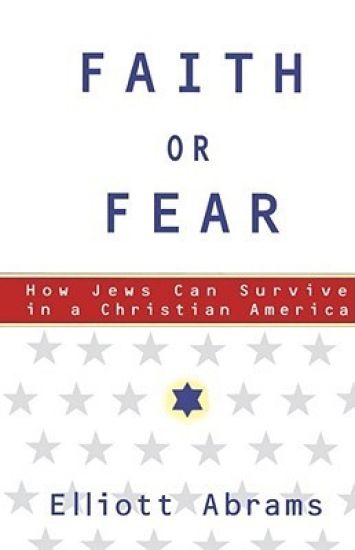
From Simon & Schuster, Faith or Fear is Elliott Abrams' guide to how Jews can survive in a Christian America."In an erudite and fascinating way, Elliott Abrams explores the immense but amazingly under-appreciated changes in Christian attitudes towards Jews as well as the failure of communication between orthodox and more secular Jews, arguing that American Jewry can only survive as a 'religious' community." —Edward Koch, former mayor of New York City
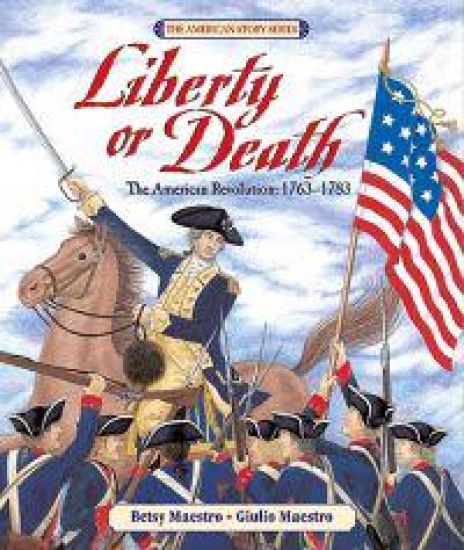
It began in Boston, with angry colonists objecting to the tyranny of a king who ruled from an ocean away.It was voiced by patriots such as Sam Adams and Patrick Henry and echoed by citizens from New England all the way to the Carolinas.It was fought by many -- colonists and patriots, Loyalists and slaves, Frontiersmen and Indians, British and French soldiers.Over more than ten years, sides were taken, guns drawn, lives lost. But through it all, one man -- a general from Virginia named George Washington -- held the young colonies together and led them to victory, beating almost impossible odds.History lovers Betsy and Giulio Maestro tell this true story of extraordinary times, incredible drama, and the birth of a new nation.