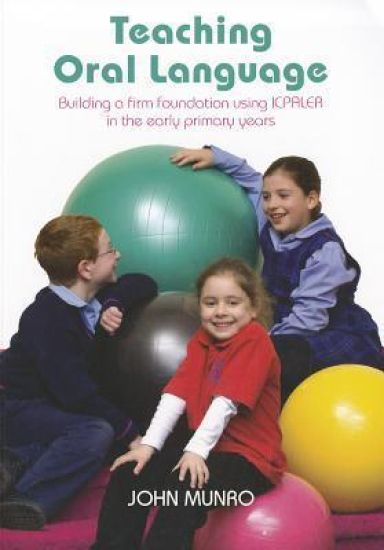
Teaching Oral Language is a comprehensive instructional book on building a firm foundation for learning by teaching early oral language skills. Based on contemporary research in language acquisition this book has been developed in line with contemporary models of instructional design and instructional psychology and has strong links with early literacy learning.
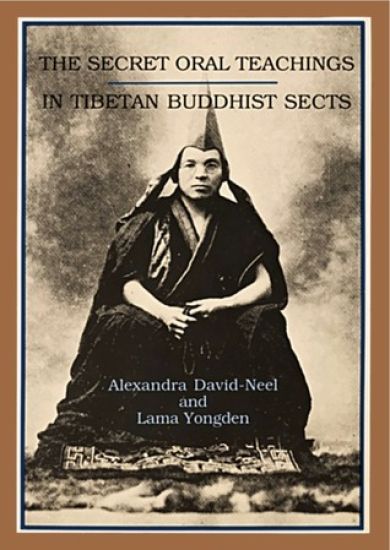
This is an account of the Madhyamika (Middle Way) school of Buddhism, a method of mediation and enlightenment that was developed by the great Indian teacher Nagarjuna. In a collaboration between the Frenchwoman Alexandra David-Neel and her friend, the Tibetan lama Aphur Yongden, these teaching are presented clearly and elegantly, intended for the layman who seeks a way to practice and experience the realization of oneness with all existence. "...this is the most direct, no-nonsense, and down-to-earth explanation of Mahayana Buddhism that has been written. Specifically, it is a wonderfully lucid account of the Middle Way method of enlightenment worked out by the great Indian sage Nagarjuna." --Alan Watts, The Book "The Secret Oral Teachings in Tibetan Buddhist Sects by Alexandra David-Neel and Lama Yongden, is always on my night stand. I return to it again and again in different stages of my life." --Marina Ambramovic "David-Neel herself is often relegated to the ranks of "women adventurers" this despite the production of some forty-odd books, several of which have wielded an extraordinary influence." --Harry Oldmeadow, La Trobe University, Bendigo, Australia Alexandra David-Neel was born in 1868 in Paris. In her youth she wrote an incendiary anarchist treatise and was an acclaimed opera singer; then she decided to devote her life to exploration and the study of world religions, including Buddhist philosophy. She traveled extensively to in Central Asia and the Far East, where she learned a number of Asian languages, including Tibetan. In 1914, she met Lama Yongden, who became her adopted son, teacher, and companion. In 1923, at the age of fifty-five, she disguised herself as a pilgrim and journeyed to Tibet, where she was the first European woman to enter Lhasa, which was closed to foreigners at the time. In her late seventies, she settled in the south of France, where she lived until her death at 101 in 1969.
Research is beginning to unearth the astounding wealth of oral traditions that have served as a vital cultural activity and verbal art for peoples throughout the world, from antiquity to the present. In this thirteenth volume of the MLA series Options for Teaching, forty-two scholar-teachers bring these discoveries and rediscoveries from the scholarly forum to the classroom.The essays in this exciting field touch on more than a hundred traditions and draw from the methodologies of literary studies, folklore, anthropology, and linguistics. They are filled with vivid specifics. Among the subjects discussed are the unwritten roots of the Bible; the genesis and art of the Homeric poems; Native American traditions, like the Zuni "Deer Boy" tale and the Quechua proverb "Corn-Planting Day"; the performance of the African American toast "Stagolee"; Old English charms for afflictions; Mexican American corridos; the Travelling People of Scotland; African trickster tales; women's songs of mid-eleventh-century Andalusia; a Yiddish picaresque narrative; the fifth-century Indian Tale of an Anklet; South Slavic epics; the oral traditions behind Beowulf and behind the Canterbury Tales; the professional entertainers (jongleurs) of medieval France; and Icelandic sagas.Teaching Oral Traditions demonstrates the importance of performance and challenges many current assumptions about the authority of the written word.
This volume broadens understanding of dentistry and promotes interdisciplinary research across a wide range of related fields, based on the symposium entitled "Innovative Research for Biosis-Abiosis Intelligent Interface 2016". It aims to create highly functional and autonomic intelligent interface by combining highly functional interface science with the technology of an evaluation and a control at the interface, with the various topics of biomaterials, innovation for oral science and application, regenerative oral science, and medical engineering. Since 2002, the Tohoku University Graduate School of Dentistry has hosted "Interface Oral Health Science" several times as the main theme of dental research in the twenty-first century, and this is the sixth proceedings of the symposiums following the ones in 2005, 2007, 2009, 2011, and 2014.This book benefits not only dental scientists but also other health scientists including medical physicians and pharmacologists, material scientists, engineers, and any scientist who is involved in variety of disciplines. This work was published by Saint Philip Street Press pursuant to a Creative Commons license permitting commercial use. All rights not granted by the work's license are retained by the author or authors.
This volume broadens understanding of dentistry and promotes interdisciplinary research across a wide range of related fields, based on the symposium entitled "Innovative Research for Biosis-Abiosis Intelligent Interface 2016". It aims to create highly functional and autonomic intelligent interface by combining highly functional interface science with the technology of an evaluation and a control at the interface, with the various topics of biomaterials, innovation for oral science and application, regenerative oral science, and medical engineering. Since 2002, the Tohoku University Graduate School of Dentistry has hosted "Interface Oral Health Science" several times as the main theme of dental research in the twenty-first century, and this is the sixth proceedings of the symposiums following the ones in 2005, 2007, 2009, 2011, and 2014.This book benefits not only dental scientists but also other health scientists including medical physicians and pharmacologists, material scientists, engineers, and any scientist who is involved in variety of disciplines. This work was published by Saint Philip Street Press pursuant to a Creative Commons license permitting commercial use. All rights not granted by the work's license are retained by the author or authors.
This work has been selected by scholars as being culturally important and is part of the knowledge base of civilization as we know it.This work is in the public domain in the United States of America, and possibly other nations. Within the United States, you may freely copy and distribute this work, as no entity (individual or corporate) has a copyright on the body of the work.Scholars believe, and we concur, that this work is important enough to be preserved, reproduced, and made generally available to the public. To ensure a quality reading experience, this work has been proofread and republished using a format that seamlessly blends the original graphical elements with text in an easy-to-read typeface.We appreciate your support of the preservation process, and thank you for being an important part of keeping this knowledge alive and relevant.
This work has been selected by scholars as being culturally important and is part of the knowledge base of civilization as we know it.This work is in the public domain in the United States of America, and possibly other nations. Within the United States, you may freely copy and distribute this work, as no entity (individual or corporate) has a copyright on the body of the work.Scholars believe, and we concur, that this work is important enough to be preserved, reproduced, and made generally available to the public. To ensure a quality reading experience, this work has been proofread and republished using a format that seamlessly blends the original graphical elements with text in an easy-to-read typeface.We appreciate your support of the preservation process, and thank you for being an important part of keeping this knowledge alive and relevant.
This work has been selected by scholars as being culturally important and is part of the knowledge base of civilization as we know it.This work is in the public domain in the United States of America, and possibly other nations. Within the United States, you may freely copy and distribute this work, as no entity (individual or corporate) has a copyright on the body of the work.Scholars believe, and we concur, that this work is important enough to be preserved, reproduced, and made generally available to the public. To ensure a quality reading experience, this work has been proofread and republished using a format that seamlessly blends the original graphical elements with text in an easy-to-read typeface.We appreciate your support of the preservation process, and thank you for being an important part of keeping this knowledge alive and relevant.
This book focuses on the performance of oral epics and explores the significance of performance features for the interpretation of epic poetry.The leading question of the book is how the socio-cultural context of performance and the various performance elements contribute to the meaning of oral epics. This is a question which not only concerns epics collected from living oral tradition, but which is also of importance for the understanding of the epics of antiquity and the Middle Ages which originated and flourished in an oral milieu.The book is based on fieldwork in the still vibrant oral traditions of the Turkic peoples of Central Asia and Siberia. The discussion combines fieldwork with theory; it is not limited to Turkic epics but branches out into other oral traditions.
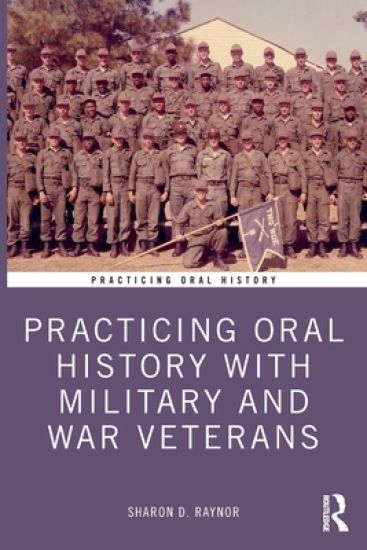
Practicing Oral History with Military and War Veterans focuses predominantly on conducting oral history with men and women of recent wars and military conflicts. The book provides a structured methodology for building interest and trust among veterans to conduct interviews, design oral history projects, and archive and use these oral history interviews. It includes background on the evolution of veterans oral history, the nuts and bolts of interviewing, ethical guidelines, procedures, and the overall value of veterans oral history. The methodology emphasizes how memory evolves over the years - when a veteran becomes more distant from the events of war, the experiences become individualized and personalized for each veteran based on location, time, place, and purpose of their service. The book also aims to improve understanding of the personal, ethical, and psychological issues involved in listening compassionately to veterans’ stories that may contain issues of trauma, gender, socio-economics, race, dis/ability, and ethnicity. Practicing Oral History with Military and War Veterans is an invitation to community scholars, students, oral historians, and families of veterans to actively participate in the oral history process and to embrace methodology that may help with designing and conducting oral history projects and interviewing war veterans.
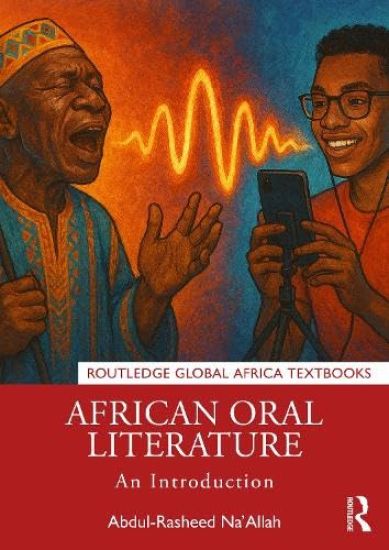
African Oral Literature: An Introduction guides us from the very beginnings of African oral traditions, through the whole range of theories and contexts, and right up to the modern technological age. This comprehensive and engaging textbook covers the key concepts and methodologies behind the history, formation, delivery, and performance of oral literature. Folktales, proverbs, rhetoric, jokes, poetry, and theatre are explored in turn, before looking at compositional techniques, artistry, education, characterisation, and cosmology. The final part of the book investigates the interplay between oral traditions and technology such as social media in the twenty-first century. Drawing on traditional African pedagogy, the book weaves in African metaphors, rhetorical styles and performance modes, aiming for readers to imbibe African orality rhetoric page by page. With key questions, exercises and further reading helping to guide readers at the end of each chapter, this book is the perfect introduction to the study of African oral literature.
African Oral Literature: An Introduction guides us from the very beginnings of African oral traditions, through the whole range of theories and contexts, and right up to the modern technological age. This comprehensive and engaging textbook covers the key concepts and methodologies behind the history, formation, delivery, and performance of oral literature. Folktales, proverbs, rhetoric, jokes, poetry, and theatre are explored in turn, before looking at compositional techniques, artistry, education, characterisation, and cosmology. The final part of the book investigates the interplay between oral traditions and technology such as social media in the twenty-first century. Drawing on traditional African pedagogy, the book weaves in African metaphors, rhetorical styles and performance modes, aiming for readers to imbibe African orality rhetoric page by page. With key questions, exercises and further reading helping to guide readers at the end of each chapter, this book is the perfect introduction to the study of African oral literature.
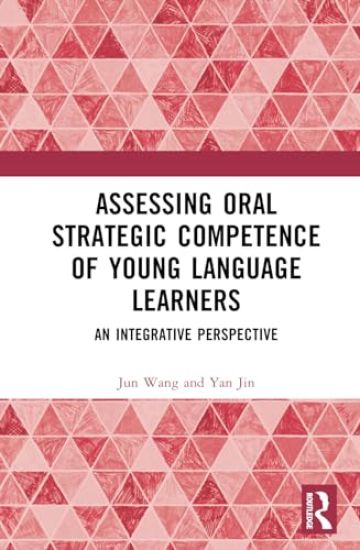
This book presents an empirical study that develops and validates a learning-oriented self-assessment instrument for assessing the strategic competence (SC) of young language learners in oral communication, specifically within the context of early English education in China.The instrument’s development followed a multi-phased research design, encompassing three interconnected stages: conceptualisation, operationalisation and validation. Each phase employed distinct methods, data collection techniques and analyses tailored to specific research objectives. By adopting an integrative approach, this book clarifies the crucial yet elusive concept of SC. It not only contributes to the field of language assessment but also underscores the importance of explicit SC instruction in language education for young learners.Focusing on real-world classroom scenarios and offering practical solutions for integrating SC instruction into current teaching paradigms, this book will appeal to educators, researchers and policymakers interested in language testing and assessment, foreign language education and applied linguistics.
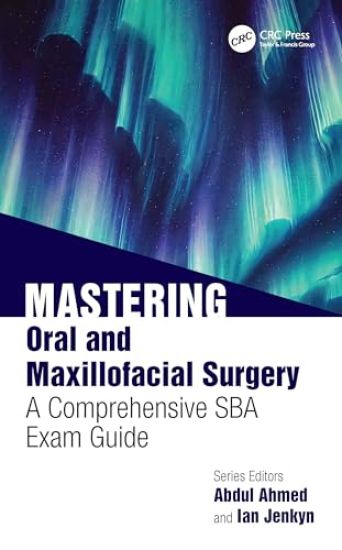
Final membership exams can be a significant challenge for trainees, particularly with the increasing prevalence of single best answer (SBA) components. Many candidates struggle with this format due to a lack of targeted resources aligned with the oral and maxillofacial surgery syllabus. This essential revision tool bridges that gap, providing expertly curated SBA practice questions designed to enhance understanding and refine exam technique.Compiled and reviewed by leading experts renowned for their excellence in teaching and research and supported by leading AI technology, this book offers a structured approach to exam preparation. Covering key topics across oral and maxillofacial surgery, it also provides valuable insights for professionals in related specialties, including dentistry, plastic surgery, ENT, and emergency medicine.Mastering Oral and Maxillofacial Surgery: A Comprehensive SBA Exam Guide includes dedicated sections on head and neck surgery, facial aesthetics, cleft lip and palate, and advanced oral surgery techniques. This resource is tailored to both trainees and experienced surgeons looking to expand their expertise.
Final membership exams can be a significant challenge for trainees, particularly with the increasing prevalence of single best answer (SBA) components. Many candidates struggle with this format due to a lack of targeted resources aligned with the oral and maxillofacial surgery syllabus. This essential revision tool bridges that gap, providing expertly curated SBA practice questions designed to enhance understanding and refine exam technique.Compiled and reviewed by leading experts renowned for their excellence in teaching and research and supported by leading AI technology, this book offers a structured approach to exam preparation. Covering key topics across oral and maxillofacial surgery, it also provides valuable insights for professionals in related specialties, including dentistry, plastic surgery, ENT, and emergency medicine.Mastering Oral and Maxillofacial Surgery: A Comprehensive SBA Exam Guide includes dedicated sections on head and neck surgery, facial aesthetics, cleft lip and palate, and advanced oral surgery techniques. This resource is tailored to both trainees and experienced surgeons looking to expand their expertise.
This volume discusses the oral microbiome, and oral and systemic health. The chapters in this book cover topics such as analytical techniques for identifying and measuring oral bacteria; strategies for controlling common sources of variability in oral microbiome methods for viral bacterial and fungal analysis; ways to study oral DNA and RNA samples to identify molecular pathways to disease; approaches to functional assays for oral bacteriophage, antibiotic purging of systemic bacteria; and metaproteomic analysis of various oral samples. Written in the highly successful Methods in Molecular Biology series format, chapters include introductions to their respective topics, lists of the necessary materials and reagents, step-by-step, readily reproducible laboratory protocols, and tips on troubleshooting and avoiding known pitfalls. Cutting-edge and practical, The Oral Microbiome: Methods and Protocols is a valuable resource for any scientist or researcher looking to further study this exciting and developing field.
This volume discusses the oral microbiome, and oral and systemic health. The chapters in this book cover topics such as analytical techniques for identifying and measuring oral bacteria; strategies for controlling common sources of variability in oral microbiome methods for viral bacterial and fungal analysis; ways to study oral DNA and RNA samples to identify molecular pathways to disease; approaches to functional assays for oral bacteriophage, antibiotic purging of systemic bacteria; and metaproteomic analysis of various oral samples. Written in the highly successful Methods in Molecular Biology series format, chapters include introductions to their respective topics, lists of the necessary materials and reagents, step-by-step, readily reproducible laboratory protocols, and tips on troubleshooting and avoiding known pitfalls. Cutting-edge and practical, The Oral Microbiome: Methods and Protocols is a valuable resource for any scientist or researcher looking to further study this exciting and developing field.