The title and cover make this book look like a happier 50-shades version of a century earlier...Even though the book was without doubt controversial back then, it doesn't come anywhere near explicity.The story is very nicely paced. The writing style is pleasant and.. funny The characters, especially the main character, had their own set of personality traits.The storyline was interesting and entertaining, but the genre was.. yeah, what was the genre?It started off with a typical shortstory telling style (lots of description and scenery clarification), then it was more romance and mystery and eventually a bit of scifi was the main genre. x'DNevertheless, I enjoyed reading this story, regardless of what the genre of the story should be called like ;) (Maria)
The title and cover make this book look like a happier 50-shades version of a century earlier...Even though the book was without doubt controversial back then, it doesn't come anywhere near explicity.The story is very nicely paced. The writing style is pleasant and.. funny The characters, especially the main character, had their own set of personality traits.The storyline was interesting and entertaining, but the genre was.. yeah, what was the genre?It started off with a typical shortstory telling style (lots of description and scenery clarification), then it was more romance and mystery and eventually a bit of scifi was the main genre. Nevertheless, I enjoyed reading this story, regardless of what the genre of the story should be called like ;) (Maria)
Pagan Holidays of Traditional Beliefs: The knowledge of traditions. The final four series of my short story books expressing my beliefs and understanding of God's message to the people of the world, and the dedication of each book to my family members. These books I have dedicated to my parents, children, grandchildren and siblings. This is to keep in remembrance of what I feel to be the truth in my heart and soul. Anyone who believes as I do will know that God will judge all according to the fruits of his or her labor on earth .In all your ways acknowledge HIM and he will direct your path.
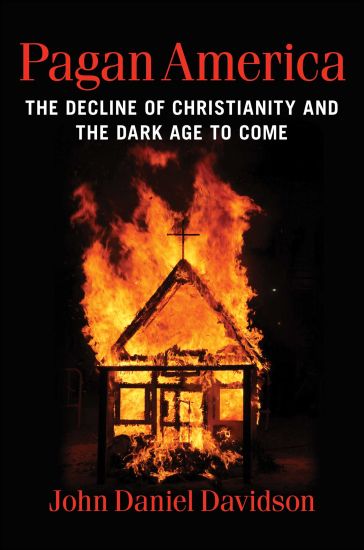
Evil Is Coming - Worse than You Imagine We live in an anxious age. Long-held certainties, cherished beliefs, and social trust are crumbling. Don't expect things to get better. For too long we have taken our Christian heritage--the heritage upon which America was built--for granted. But we're rapidly, and now inevitably, losing the Christian culture that shaped the American republic. What will take its place is a despotism--and a new paganism, worse than the old, because it will be based on a hatred of Christianity. In his stunning new book, Pagan America, author John Daniel Davidson offers a stark but honest assessment of America's future: "America as we know it will come to an end. Instead of a republic of free citizens, we will be slaves in a pagan empire." There is, he warns, no escape. We can only brace ourselves and prepare for a future when power will determine every relationship. Morality as we know it, as a Christian inheritance, will be forfeit, replaced by state-enforced "morality." Violence will be common--doled out at the hand of an all-powerful state and its corporate allies. There are hard times ahead, but we are not without hope. Christianity emerged within the confines of a pagan empire. Davidson shows how with courage, fortitude, and faith, it will be our duty and privilege to defend Christianity and restore its claims in what is likely to be a terrible and brutal dark age.
Kenneth Grahame ( 8 March 1859 - 6 July 1932) was a Scottish writer, most famous for The Wind in the Willows (1908), one of the classics of children's literature. He also wrote The Reluctant Dragon. Both books were later adapted for stage and film, of which A.A. Milne's Toad of Toad Hall was the first. The Disney films, The Adventures of Ichabod and Mr. Toad and The Reluctant Dragon, have become the best known adaptations. Early life: Kenneth Grahame was born on 8 March 1859 in Edinburgh, Scotland. When he was a little more than a year old, his father, an advocate, received an appointment as sheriff-substitute in Argyllshire at Inveraray on Loch Fyne. Kenneth loved the sea and was happy there, but when he was five, his mother died of puerperal fever, 1] and his father, who had a drinking problem, gave over care of Kenneth, his brother Willie, his sister Helen and the new baby Roland to Granny Ingles, the children's grandmother, in Cookham Dean in the village of Cookham in Berkshire. There the children lived in a spacious, if dilapidated, home, The Mount, on spacious grounds in idyllic surroundings, and were introduced to the riverside and boating by their uncle, David Ingles, curate at Cookham Dean church. This ambiance, particularly Quarry Wood and the River Thames, is believed, by Peter Green, his biographer, to have inspired the setting for The Wind in the Willows. He was an outstanding pupil at St Edward's School in Oxford. During his early years at St Edwards, a sports regimen had not been established and the boys had freedom to explore the old city with its quaint shops, historic buildings, and cobblestone streets, St Giles' Fair, the upper reaches of the Thames, and the nearby countryside. Death: Grahame died in Pangbourne, Berkshire, in 1932. He is buried in Holywell Cemetery, Oxford. Grahame's cousin Anthony Hope, also a successful author, wrote his epitaph, which reads: "To the beautiful memory of Kenneth Grahame, husband of Elspeth and father of Alastair, who passed the river on the 6th of July, 1932, leaving childhood and literature through him the more blest for all time.
Edward Carpenter (29 August 1844 - 28 June 1929) was an English socialist poet, philosopher, anthologist, and early activist for rights for homosexuals. A poet and writer, he was a close friend of Rabindranath Tagore, and a friend of Walt Whitman. He corresponded with many famous figures such as Annie Besant, Isadora Duncan, Havelock Ellis, Roger Fry, Mahatma Gandhi, Keir Hardie, J. K. Kinney, Jack London, George Merrill, E. D. Morel, William Morris, Edward R. Pease, John Ruskin, and Olive Schreiner. As a philosopher he was particularly known for his publication of Civilisation, Its Cause and Cure in which he proposes that civilisation is a form of disease that human societies pass through. An early advocate of sexual freedoms, he had an influence on both D. H. Lawrence and Sri Aurobindo, and inspired E. M. Forster's novel Maurice. Early life: Born in Hove in Sussex, Carpenter was educated at nearby Brighton College where his father was a governor. His brothers Charles, George and Alfred also went to school there. When he was ten, he displayed a flair for the piano. His academic ability appeared relatively late in his youth, but was sufficient to earn him a place at Trinity Hall, Cambridge. Whilst there he began to explore his feelings for men. One of the most notable examples of this is his close friendship with Edward Anthony Beck (later Master of Trinity Hall), which, according to Carpenter, had "a touch of romance". Beck eventually ended their friendship, causing Carpenter great emotional heartache. Carpenter graduated as 10th Wrangler in 1868.After university he joined the Church of England as a curate, "as a convention rather than out of deep Conviction". In 1871 he was invited to become tutor to the royal princes George Frederick (late King George V) and his elder brother, Prince Albert Victor, Duke of Clarence, but declined the position. The job instead went to his lifelong friend and fellow Cambridge student John Neale Dalton.Carpenter continued to visit Dalton while he was tutor, and was presented with photographs of themselves by the princes. In the following years he experienced an increasing sense of dissatisfaction with his life in the church and university, and became weary of what he saw as the hypocrisy of Victorian society. He found great solace in reading poetry, later remarking that his discovery of the work of Walt Whitman caused "a profound change" in him. (My Days and Dreams p. 64)............
This groundbreaking book exposes the nationwide persecution of Pagan inmates by bigoted prison officials. It teaches Pagan & Wiccan prisoners and volunteers how to compel staff, chaplains, and administrators to respect their right to practice a non-Judeo-Christian religion
The Gods and Goddesses of Ancient Greece and Rome had returned to Earth -- with all their awesome powers intact. Overnight, Earth was transformed. War on any scale was outlawed, along with boom-and-bust economic cycles, and prudery. No change was more startling than the face of New York, where the Empire State Building became the Tower of Zeus.
In 883 A.D., in a secluded convent in Great Britain, Maere cu Llwyr embarks on a journey back to her home of Tintagel, Cornwall with a powerful warrior who claims to be her long lost betrothed. Dylan mac Connall survived the slaughter of his family by a traitor to their clan. A young boy at the time, he was rescued by a wise woman who taught him the ways of magic and warned him of the perils that lay ahead if he chose a path of revenge. But Dylan can no longer heed the advice of his foster mother and is determined to avenge his family and find the spirited girl he loved in his youth. Raised in an abbey by the Sisters of Saint Columba, Maere cu Llwyr is ready to take her full vows and become a nun. But when the warrior Dylan arrives and claims to be her rightful betrothed, Maere is shocked and wary of what her future will bring. A wee child when she was abducted from her village, Maere has blocked the memories of that horrific night. She has no recollection of the powerful ancient magic dormant inside her, or of the handsome man determined to unlock both Maere's mind and her power. As Maere and Dylan travel back to Tintagel, they must face the mercurial goddess Morrigu, dangerous Viking raiders, and the traitor who destroyed their families. Can Maere and Dylan survive the battles to come and find their way back home and to each other? Or will they be forever separated by forces outside of their control?
Thank you for checking out this book by Theophania Publishing. We appreciate your business and look forward to serving you soon. We have thousands of titles available, and we invite you to search for us by name, contact us via our website, or download our most recent catalogues. The subject of Religious Origins is a fascinating one, as the great multitude of books upon it, published in late years, tends to show. Indeed the great difficulty to-day in dealing with the subject, lies in the very mass of the material to hand-and that not only on account of the labor involved in sorting the material, but because the abundance itself of facts opens up temptation to a student in this department of Anthropology (as happens also in other branches of general Science) to rush in too hastily with what seems a plausible theory. The more facts, statistics, and so forth, there are available in any investigation, the easier it is to pick out a considerable number which will fit a given theory. The other facts being neglected or ignored, the views put forward enjoy for a time a great vogue. Then inevitably, and at a later time, new or neglected facts alter the outlook, and a new perspective is established. There is also in these matters of Science (though many scientific men would doubtless deny this) a great deal of "Fashion". Such has been notoriously the case in Political Economy, Medicine, Geology, and even in such definite studies as Physics and Chemistry. In a comparatively recent science, like that with which we are now concerned, one would naturally expect variations. A hundred and fifty years ago, and since the time of Rousseau, the "Noble Savage" was extremely popular; and he lingers still in the story books of our children. Then the reaction from this extreme view set in, and of late years it has been the popular cue (largely, it must be said, among "armchair" travelers and explorers) to represent the religious rites and customs of primitive folk as a senseless mass of superstitions, and the early man as quite devoid of decent feeling and intelligence.
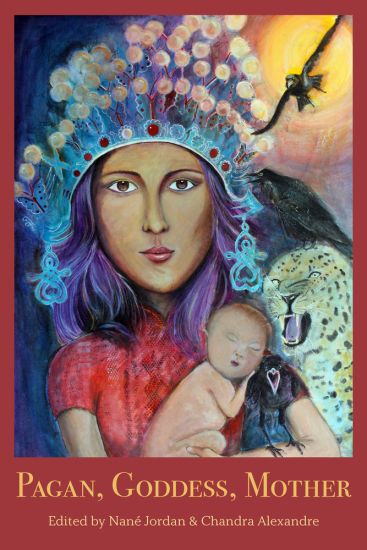
This anthology calls Pagan and Goddess mothering into focus by highlighting philosophies and experiences of mothers in these spiritual movements and traditions. Pagan and Goddess spirituality are distinct, yet overlapping and diverse communities, with much to say about deity as mother, and about human mothers in relationship to deity. Authors share creative voices, stories, and scholarship from the forefront of Pagan- and Goddess- centered home, in which divine mothers, Goddesses, diverse female embodiments, and generative life cycles are honoured as sacred. Authors inquire into how their spirituality impacts the perceived value and experiences of mothers themselves, while generating new ways of imagining and enacting motherhood in spiritual and daily life. Pagan, Goddess, Mother opens spaces for dialogue in areas such as how Pagan- and Goddess- centred mothers engage in, and are impacted by, their spiritual leadership through practices of ceremony, ritual, magic, and priestessing. Authors consider mothers' lived connections with their children, family life, and themselves, through nature, the Earth, and mothering as a spiritual practice. Chapters reflect upon the ways that Pagan- and Goddess- identified mothers creatively navigate daily interactions with dominant religions, the public sphere, community leadership and activism facing the challenges of such while forging new pathways for spirited well being in mothering and family life.
Pagan Portals - God-Speaking offers a new concept in Earth ecology incorporating mysticism and folk religion. The author is both a trance seer and a biologist, bringing a unique balance to an examination of nature philosophy. Storytelling examples from Irish folklore, NeoPagan theology, and scientific observations all contribute to a carefully reasoned theory about the future of the Earth and ourselves.
Poetry talks to the heart as well as the head. It can move us, make us think and guide us. This book explores how poetry can help develop a Pathworking through exploring wisdom hidden in plain view. It is a look at creative processes, inspirations, how nature and the Divine move us - and how to apply this on a personal level to Pagan Pathworking.
This book will guide readers to read more about hedge witchcraft as a pathway, or are already following such a path and wish to progress. It only has a little about hedge riding as this book has too small a scope to include it. Please read the accompanying book in the Pagan Portal series, Hedge Riding.
This book is an experiential guide, as Aristotle said, For the things we have to learn before we can do them, we learn by doing them. Learning by experiencing is about trusting your instincts and connecting with your inner spirit. The hedge riding aspect of hedge witchery is perhaps the most difficult part of the hedge witch pathway.
Taking both Zen and Druidry and embracing them into your life can be a wonderful and ongoing process of discovery, not only of the self but of the entire world around you. Looking at ourselves and at the natural world around us, we realise that everything is in constant change and flux - like waves on the ocean, they are all part of one thing that is made up of everything. Even after the wave has crashed upon the shore, the ocean is still there, the wave is still there - it has merely changed its form. The aim of this text is to show how Zen teachings and Druidry can combine to create a peaceful life path that is completely and utterly dedicated to the here and now, to the earth and her rhythms, and to the flow that is life itself.
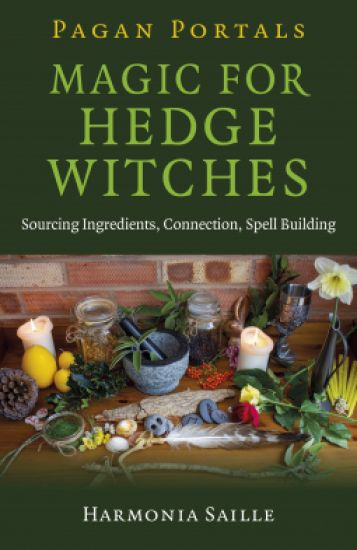
If you are a witch interested in folk magic with a connection to the natural world, you will find suggestions on how to source ingredients and connect with them, sourcing old spells, witch bottles, magical sachets, familiars, how to put a spell together, and for hedge witches, how to use magic in hedge riding. With useful correspondences, and sprinkled throughout and practical exercises and spells, Magic for Hedge Witches offers something for every witch to help you on your journey.