Get the vital clinical information you need with this comprehensive handbook!In the decade since the first edition of this book, dramatic changes have taken place in the field of geriatric psychiatry. Psychiatry in the Nursing Home, Second Edition, presents timely information on the newest trends in law, culture, and medications, while still offering essential advice on the fundamental concerns of caring for elderly patients with mental illnesses. The new edition of this essential handbook presents up-to-date information on psychiatric issues involving nursing home patients. Featuring helpful case histories and diagnostic criteria, Psychiatry in the Nursing Home, Second Edition, helps you effectively treat such difficult problems as noisy patients, sexual acting out, and incontinence. In addition, it offers help with such administrative concerns as financial issues, absent or warring families, and staffing problems. Psychiatry in the Nursing Home, Second Edition, presents incisive discussions of the changes in the field since the publication of the first edition, including: the effects of the new Prospective Payment System the use of newly released psychotropic medications the altered nomenclature of the DSM-IV the rise in assisted-living facilities the rapid development of the specialty of geriatric psychiatry With its comprehensive scope and practical advice, Psychiatry in the Nursing Home, Second Edition, is a must-have for nursing-home administrators and staff. Policymakers, mental health professionals, and geriatricians will be fascinated by the book’s wider considerations of the problems of housing and caring for the mentally ill and its provocative suggestions for future policy.
Treating stroke requires attention not only to patients’ physical needs, but to their psychiatric needs as well. Unfortunately, there has been a considerable lack of literature that tackles this important facet of recovery. The Psychiatry of Stroke fills this void through a comprehensive examination that explores the mental and physical issues faced by stroke patients and offers up-to-date treatment options. Based on extensive clinical experience, the text offers practical advice for improving the treatment of stroke by increasing the attention paid to its mental aspects. Detailed and definitive, this unique text demonstrates how mental impairment sets limits to stroke treatment and rehabilitation and shows how to evaluate and treat these impairments. Accessible to a wide range of readers, this new edition presents detailed reviews of classical papers as well as more basic outlines that provide a general overview. Regardless of familiarity, readers will find comprehensive and authoritative guidance for improving treatment. Some of the topics covered include:background and causation risk factors and diagnosis of stroke localization of mental functions neuropsychopharmachology psychiatric syndromes apathy and failure to rehabilitate depression, anxiety, and dementia sex anger and violence outcome and effects the process of recovery family treatment team legal issues, money, and ethics and much more!The Psychiatry of Stroke also includes a wealth of informative tables and diagrams as well as a full glossary of terms. Extensively referenced, this important text also provides useful appendices that look at resources for caregivers and the anatomy and historical significance of stroke. Physicians and mental health professionals who treat stroke patients; staff of stroke units and rehabilitation hospitals and centers; fellows in geriatric psychiatry, geriatrics, and stroke programs; gerontology students and educators; and families of the victims of stroke or vascular dementia will find this book an invaluable day-to-day resource.
The team behind the critically and popularly acclaimed anthropological photoessays MATERIAL WORLD and WOMEN IN THE MATERIAL WORLD make their debut on our list with this oddly tantalizing book about a subject that's creeping into prominence: insects as food for people. With the distinctive blend of thoughtful cultural inquiry, intrepid exploration, and sumptuous photography that has earned them worldwide renown, the authors document the practice and history of entomophagy around the globe, discovering that insects are a nutritious, plentiful, and varied food source. From Mexico, where people celebrate the annual Jumile Festival with bug hunts and beauty queens, to China, where whole families make their livings from scorpion ranches, over a dozen bug-eating countries (including the USA ) are profiled in MAN EATING BUGS. Each chapter examines a culture through a stunning array of location photos, interviews with locals, and highlights from the authors' field journals, as well as carefully photographed indigenous recipes. A colorful, beautiful, and intelligent book. Awards1999 James Beard Award Winner
The age-old practice of sitting down to a family meal is undergoing unprecedented change as rising world affluence and trade, along with the spread of global food conglomerates, transform eating habits worldwide. HUNGRY PLANET profiles 30 families from around the world--including Bosnia, Chad, Egypt, Greenland, Japan, the United States, and France--and offers detailed descriptions of weekly food purchases; photographs of the families at home, at market, and in their communities; and a portrait of each family surrounded by a week's worth of groceries. Featuring photo-essays on international street food, meat markets, fast food, and cookery, this captivating chronicle offers a riveting look at what the world really eats. The paperback edition of the 2006 James Beard Book of the Year featuring a photojournalistic survey of 30 families from 24 countries and the food they eat during the course of one week. Winner of the 2006 James Beard Award for writings on food, finalist for the 2006 IACP Cookbook Award for food reference/technical, and winner of the 2005 Harry Chapin Media Award. Includes more than 300 photographs plus essays on the politics of food by Marion Nestle, Michael Pollan, Charles C. Mann, Alfred W. Crosby, Francine R. Kaufman, Corby Kummer, and Carl Safina. The hardcover edition has sold 40,000 copies.Awards 2006 James Beard Cookbook of the YearThe Splendid Table Book of the Year 2005 Harry Chapin Media Award finalist for the 2006 IACP Cookbook Award Reviews"The photos are at once charming and astonishing in their honesty."--Milwaukee Journal Sentinel"A treasure trove of information . . . The photographs alone are worth the price of admission."--Travel Girl"Arresting, beautiful, enlightening and infinitely human, this is a collection of full-page photos of families around the world surrounded by what they eat in a single week -- from Bhutan to San Antonio. Read the illuminating statistics and the essays. This is a book for the family and for the classroom. You won't see the same old "aren't we better than them" attitude, nor will you be shamed. This book reminds us that what we eat is the simplest, yet most profound, thread that ties us together."--Lynne Rossetto Kasper, Host of American Public Media's Public Radio Program, The Splendid Table."the politics of food at its most poignant and provocative. A coffee table book that will certainly make coffee interesting." -Washington Post"While the photos are extraordinary--fine enough for a stand-alone volume--it's the questions these photos ask that make this volume so gripping. This is a beautiful, quietly provocative volume." -Publishers Weekly, starred review"This book of portraits reveals a planet of joyful individuality, dispiriting sameness, and heart-breaking disparity. It's a perfect gift for the budding anti-globalists on your list" -Bon Appetit" A] unique photographic study of global nutrition" -USA Today"Grabs your attention for the startlingly varied stories it tells about how people feed themselves around the world. Its contents are based on detailed research, beautifully photographed, presented with often disturbing clarity." -Associated Press"The world's kitchens open to Peter Menzel and Faith D'Aluisio, the intrepid couple who created the series of books called Material World.... As always with this couple's terse, lively travelogues, politics and the world economy are never far from view." -New York Times Book Review "illuminating, thought-provoking, and gloriously colorful" -Saveur magazine"Richly colored and quietly composed photographs....Hungry Planet is not a book about obesity or corporate villains; it's something much grander. Its premise is simple to the point of obvious and powerful to the point of art." -Salon.com"A fascinating nutritional and gustatory tour." -San Jose Mercury News"A grand culinary voyage through our modern world...a lushly illustrated anthropological study." -San Francisco Bay Guardian"The talked-about book of the season...the stories are fascinating." -Detroit Free Press"Unique and engaging" -Delta Airlines Sky magazine
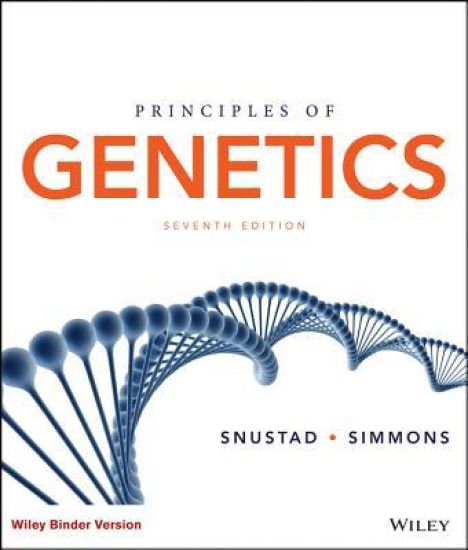
Principles of Genetics is one of the most popular texts in use for the introductory course. It opens a window on the rapidly advancing science of genetics by showing exactly how genetics is done. Throughout, the authors incorporate a human emphasis and highlight the role of geneticists to keep students interested and motivated. The seventh edition has been completely updated to reflect the latest developments in the field of genetics. Principles of Genetics continues to educate today’s students for tomorrows science by focusing on features that aid in content comprehension and application. This text is an unbound, three hole punched version.
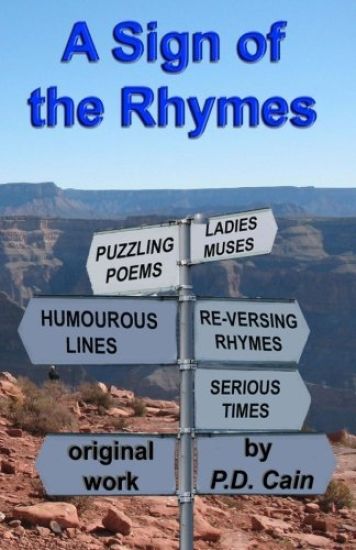
This is a selection of poems written by P.D. Cain (also known as Captain Peter). The type of poems and rhymes range from humorous to serious and even quirky. There are also Puzzle Rhymes. This is a fun book of poems and rhyme to read. The illustrations and pictures are also by P.D. Cain.
The participation of the Iroquois of Akwasasne, Kanesetake (Oka), Kahnawake and Oswegatchie in the Seven Years’ War is a long neglected topic. The consequences of this struggle still shape Canadian history. The book looks at the social and economic impact of the war on both men and women in Canadian Iroquois communities. The Canadian Iroquois provides an enhanced appreciation both of the role of Amerindians in the war itself and of their difficult struggle to lead their lives within the unstable geopolitical environment created by European invasion and settlement.
The Battle of the Plains of Abraham in 1759 and the subsequent capitulation of Quebec set the stage for an equally significant French-British engagement in the struggle for northeastern North America, the Battle of Sainte-Foy. In the spring of 1760, after having suffered a brutal winter, Quebec garrison commander James Murray's troops were vulnerable and reduced to an army of skeletal invalids due to malnutrition and scurvy. Trapped in hostile territory and lacking confidence in the fortifications of Quebec, Murray planned to confront French attackers outside the walls. Instead of waiting at Montreal for the British to attack, Montcalm's successor, Francois-Gaston de Levis, returned to the plains for a rematch accompanied by every combatant available--French regulars, Canadian militia and First Peoples warriors. The ensuing Battle of Sainte-Foy was less a battle for territory than a struggle for survival between two equally desperate adversaries. If the British lost the battle, they would lose Quebec. If the French lost the battle, they would very likely lose Canada--both the French and the British had their backs to the wall.MacLeod presents this historical event in riveting detail, from the preparation and day-by-day actions during the engagement to the compelling siege of Quebec by land and ship. Backs to the Wall is an accessible and engaging account of an important episode in Canadian history.
This insightful work examines such issues as cultural roots of violence, interpersonal violence, economic violence, religious violence, state violence and other.
In der vorliegenden dritten, aktualisierten Auflage dieses Buches werden die Entwicklung und die Leistungsfähigkeit der Langzeit-Elektrokardiographie dargestellt. Beide haben sich als insbesondere für den Patienten wenig belastende Standardverfahren in Diagnostik und Therapie bewährt. Die mit diesen Techniken sowohl qualitativ als auch quantitativ erzielbaren Ergebnisse werden im klinischen Zusammenhang mit weiteren Krankheitsbildern diskutiert und daraus die therapeutischen Konzepte entwickelt.
Coping Cat er et strukturert behandlingsprogram for barn og ungdom med angst som har vist seg å gi svært gode resultater. Behandlingen er basert på kognitiv atferdsterapi, og ble opprinnelig utviklet av Philip C. Kendall. I denne manualen for terapeuter gjennomgås alle 12 behandlingstimer time for time.Behandlingen går over 12 uker. De første 6 timene benyttes til psykoedukasjon, og de siste 6 timene er avsatt til eksponeringstrening. Behandlingen er strukturert, og det foreligger både en manual for terapeuter og en arbeidsbok som barnet bruker i timene.Den norske versjonen av terapeutmanualen er utvidet med tre kapitler om behandlingsforskning. Det beskrives hvordan behandlingen kan tilpasses ulike tilstandsbilder. Deretter gjennomgås hver terapitime med en kort beskrivelse av formålet med timen, hva man søker å oppnå og hvilke oppgaver og aktiviteter som barna skal gjøre sammen med terapeuten. Hver time / hvert kapittel avsluttes med tips fra erfarne terapeuter. I arbeidsboken introduseres de ulike begrepene som skal læres, og hvordan det skal jobbes med stoffet bl.a. i form av spill, historier og bilder. Innholdet er delt opp time for time på samme måte som terapeutmanualen.
Denne arbeidsboken brukes med barnet i timene, sammen med terapeutmanualen. I arbeidsboken introduseres de ulike begrepene som skal læres, og hvordan det skal jobbes med stoffet bl.a. i form av spill, historier og bilder. Innholdet er delt opp time for time på samme måte som terapeutmanualen.
Manualen er et tillegg som skal brukes sammen med den individuelle manualen for Mestringskatten. Mestringskatten (Coping cat) er et strukturert behandlingsprogram for barn og ungdom med angst. Behandlingen er basert på kognitiv atferdsterapi. Behandlingen er evaluert i flere undersøkelser, og det er empirisk støtte for at Coping cat-programmet er et lovende program for behandling av angstlidelser hos barn.Behandlingen går over 12 uker. De første 6 timene benyttes til psykoedukasjon, og de siste 6 timene er avsatt til eksponeringstrening. Behandlingen er strukturert, og det foreligger både en manual for terapeuter og en arbeidsbok som barnet bruker i timene.Gruppemanualen skal benyttes som et supplement til den individuelle manualen og gir informasjon om hvordan behandlingen kan tilpasses for å gjennomføre gruppebehandling for barn med angst. De første tre timene er fortsatt individuelle, mens 4 - 12 time gjennomføres i gruppe. Med utgangspunkt i den individuelle manualen gis det time for time forslag til hvordan aktivitetene kan gjennomføres i gruppe og det foreslås tilleggsaktiviteter for gruppen."Et nytt behandlingsopplegg hvor barn gradvis eksponeres for det de er redde for, viser gode resultater." (Om Mestringskatten på Forskning.no)
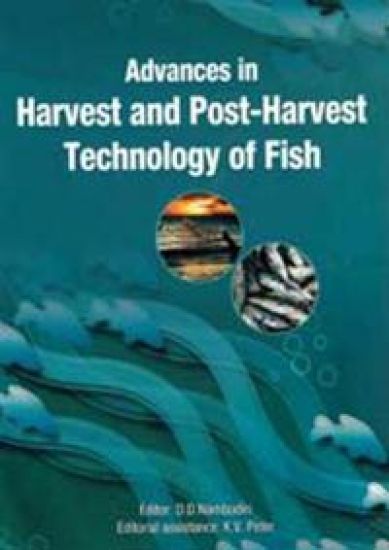
In recent years India has made notable advances in the fisheries. Progresses made in refinements of vessels, new line materials and line-handling systems, preserving the catch, the availability of oceanographic-sensor equipments and the utilization of satellite technology to locate potential fishing grounds have greatly improved the fishing power of longline vessels. Post harvest technology of fish has evolved in the last one decade to a more energy-efficient, cost-effective, and quality upgrading technology. Since fresh fish can get spoiled very quickly, the development of technology for post-harvest preservation and methodology to convert fish to value added products have also become popular in recent times. Value addition helps in getting high price for the fishery products. There is a need to develop competent human resources in the field of post harvest management of fish and production of value added products from them. It is required to inculcate vocational and entrepreneurial skills in order to widen employment opportunities, particularly among rural youth and the disadvantaged sections of the society as well as to enable self employment.
The battle on the Plains of Abraham lasted twenty minutes, and at its finish the course of a continent was changed forever: New military tactics were used for the first time against standard European formations; Generals Wolfe and Montcalm each died of gunshot wounds; France surrendered Quebec to the British, setting the course for the future of Canada; and British control of North America east of the Mississippi was assured. Also American participation in ousting the French spurred the confidence of the people of New York, Pennsylvania, and Massachusetts, who began to agitate for independence from Great Britain. In Northern Armageddon, Peter MacLeod, uses original research--diaries, journals, letters, and firsthand accounts--and all of his extensive knowledge and grasp of warfare and colonial North American history, to tell this epic story on a human scale. A huge, ambitious re-creation, MacLeod gives us the large-scale ramifications of this clash of armies, not only on the shape of North America, but on the history of Europe itself.
"Fifty Miles and a Fight: Major Samuel Peter Heintzelman's Journal of Texas and the Cortina War," a rare and dramatic firsthand account of one of the most volatile and traumatic events in the long history of Texas--the Cortina War, chronicles the day-to-day activities of one of the most cultured, dedicated, and well-respected (although often vain) officers of the antebellum frontier army. It was while Heintzelman was at Camp Verde on September 28, 1859, that a daring thirty-five-year-old illiterate ranchero named Juan Nepomuceno Cortina sent shockwaves throughout Texas by brazenly leading some seventy-five angry raiders into the dung-splattered streets of Brownsville. Tired of a clique of Brownsville attorneys, resentful of men he accused of killing tejanos with impunity, and determined to settle a blood feud with bitter enemy Adolphus Glavecke, Cortina initiated a war that would reverberate north to Austin and beyond to the halls of Washington and Mexico City. "Fifty Miles and a Fight" magnifies the brutal nature of the Texas Rangers, a portrayal not readily evident in other sources. Not only does Heintzelman, who was placed in command of the Brownsville Expedition with orders to crush Cortina, record his disdain and distrust of the Rangers, but also their indiscriminate killing of both mexicanos and tejanos. Heintzelman's journal, which reads like a Zane Grey thriller, provides a detailed and vivid account of the battles at El Ebonal and Rio Grande City as well as glimpses into the filibustering activities of the shadowy Knights of the Golden Circle, who were hoping to expand the Cortina War into a larger conflict that would lead to the eventual annexation of Mexico and the creation of a slave empire south of the Rio Grande. Heintzelman's impressions of his senior commander, Col. Robert E. Lee, are also noteworthy. A real jewel of soldiering on the Southwestern frontier, Heintzelman's journal begins on a sunny and optimistic New Orleans day, April 17, 1859, with his family on its way to Texas, and ends on a depressingly cool and overcast December 31, 1861, also in the Crescent City, with secession fever sweeping the South and the nation on the verge of war.
Innovation in information and production technologies is creating benefits and disruption, profoundly altering how firms and markets perform. Digital DNA provides an in depth examination of the opportunities and challenges in the fast-changing global economy and lays out strategies that countries and the international community should embrace to promote robust growth while addressing the risks of this digital upheaval. Wisely guiding the transformation in innovation is a major challenge for global prosperity that affects everyone Peter Cowhey and Jonathan Aronson demonstrate how the digital revolution is transforming the business models of high tech industries but also of traditional agricultural, manufacturing, and service sector firms. The rapidity of change combines with the uncertainty of winners and losers to create political and economic tensions over how to adapt public policies to new technological and market surprises. The logic of the policy trade-offs confronting society, and the political economy of practical decision-making is explored through three developments: The rise of Cloud Computing and trans-border data flows; international collaboration to reduce cybersecurity risks; and the consequences of different national standards of digital privacy protection. The most appropriate global strategies will recognize that a significant diversity in individual national policies is inevitable. However, because digital technologies operate across national boundaries there is also a need for a common international baseline of policy fundamentals to facilitate "quasi-convergence" of these national policies. Cowhey and Aronson's examination of these dynamic developments lead to a measured proposal for authoritative "soft rules" that requires governments to create policies that achieve certain objectives, but leaves the specific design to national discretion. These rules should embrace mechanisms to work with expert multi-stakeholder organizations to facilitate the implementation of formal agreements, enhance their political legitimacy and technical expertise, and build flexible learning into the governance regime. The result will be greater convergence of national policies and the space for the new innovation system to flourish.