Kirjojen hintavertailu. Mukana 12 442 481 kirjaa ja 12 kauppaa.

Kirjahaku

Etsi kirjoja tekijän nimen, kirjan nimen tai ISBN:n perusteella.

1000 tulosta hakusanalla Phillips Russell

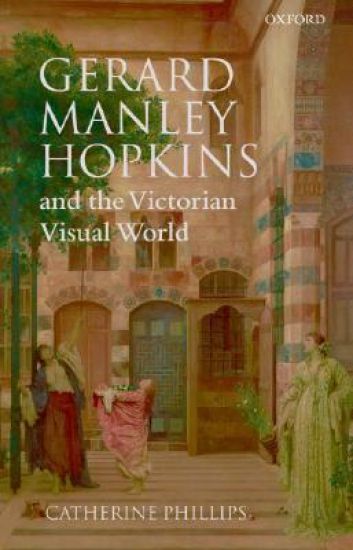
Gerard Manley Hopkins and the Victorian Visual World

Gerard Manley Hopkins and the Victorian Visual World

Catherine Phillips

Oxford University Press
2007
sidottu
Gerard Manley Hopkins initially planned to become a poet-artist. For five years he trained his eye, learned about contemporary art and architecture, and made friends in the Pre-Raphaelite circle. In her fascinating and beautifully illustrated book, Catherine Phillips, whose knowledge of Hopkins's poems is expert, uses letters, new archival material, and contemporary publications to reconstruct the visual world Hopkins knew between 1862 and 1889, and especially in the 1860s, with its illustrated journals, art exhibitions, Gothic architecture, photographic shows, and changing art criticism. Phillips identifies three artistic contexts for the Hopkins's life: his childhood circle of artistic relatives who were important in shaping his early vision; his friends at university and the criticism he absorbed while there that inflected his view as a young man; and the mature religious beliefs which came to govern his understanding of a visual world interconnected with an eternal one. With chapters devoted to Hopkins own drawings, and to visual theories of the time, Phillips is able to suggests fresh links between this visual world and the startling originality of Hopkins's mature writing that will alter radically our understanding of Hopkins's practice as a poet.
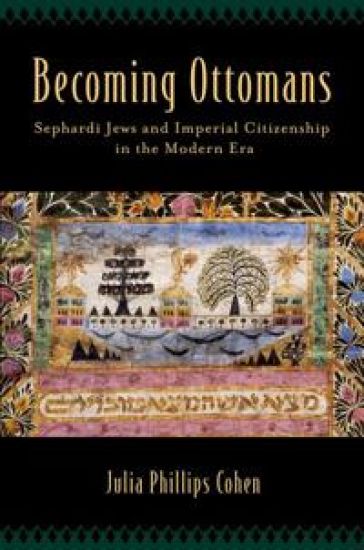
Becoming Ottomans

Becoming Ottomans

Julia Phillips Cohen

Oxford University Press Inc
2014
sidottu
The Ottoman-Jewish story has long been told as a romance between Jews and the empire. The prevailing view is that Ottoman Jews were protected and privileged by imperial policies and in return offered their unflagging devotion to the imperial government over many centuries. In this book, Julia Phillips Cohen offers a corrective, arguing that Jewish leaders who promoted this vision were doing so in response to a series of reforms enacted by the nineteenth-century Ottoman state: the new equality they gained came with a new set of expectations. Ottoman subjects were suddenly to become imperial citizens, to consider their neighbors as brothers and their empire as a homeland. Becoming Ottomans is the first book to tell the story of Jewish political integration into a modern Islamic empire. It begins with the process set in motion by the imperial state reforms known as the Tanzimat, which spanned the years 1839-1876 and legally emancipated the non-Muslims of the empire. Four decades later the situation was difficult to recognize. By the close of the nineteenth century, Ottoman Muslims and Jews alike regularly referred to Jews as a model community, or millet -- as a group whose leaders and members knew how to serve their state and were deeply engaged in Ottoman politics. The struggles of different Jewish individuals and groups to define the public face of their communities is underscored in their responses to a series of important historical events. Charting the dramatic reversal of Jews in the empire over a half-century, Becoming Ottomans offers new perspectives for understanding Jewish encounters with modernity and citizenship in a centralizing, modernizing Islamic state in an imperial, multi-faith landscape.
The Profligate Son

The Profligate Son

Nicola Phillips

Oxford University Press
2013
sidottu
In Regency England a profligate son was regarded as every parent's worst nightmare: he symbolized the dangerous temptations of a new consumer society and the failure of parents to instil moral, sexual, and financial self-control in their sons. This book tells the dramatic and moving story of one of those 'profligate sons': William Jackson, a charming teenage boy, whose embattled relationship with his father and frustrated attempts to keep up with his wealthy friends, resulted in personal and family tragedy. From popular public school boy to the pursuit of prostitutes, from duelling to debtors' prison and finally, from fraudster to convicted felon awaiting transportation to Australia, William's father (a wealthy East India Company merchant) chronicled every step of his son's descent into depravity and crime. This remarkable source provides a unique and compelling insight into the relationship between a father and son at a time when the gap between different generations yawned particularly wide. Diving beneath the polished elegance of Britain in Byron's 'age of surfaces', the tragic tale of William Jackson reveals the murky underworld of debt, disease, crime, pornography, and prostitution that lay so close beneath the veneer of 'polite society'. In a last flowering of exuberant eighteenth-century hedonism before the dawning of Victorian respectability, young William became disastrously familiar with them all. The Profligate Son combines a gripping tale with cutting-edge historical research into early nineteenth-century family conflict, attitudes towards sexuality, credit, and debt, and the brutal criminal justice system in Britain and Australia at the time. It also offers challenging analogies to modern concerns by revealing what Georgians believed to be the best way to raise young men, what they considered to be the relative responsibilities of parents and children, and how they dealt with the problems of debt during the first age of mass consumer credit.
The Profligate Son

The Profligate Son

Nicola Phillips

Oxford University Press
2015
nidottu
In Regency England a profligate son was regarded as every parent's worst nightmare: he symbolized the dangerous temptations of a new consumer society and the failure of parents to instil moral, sexual, and financial self-control in their sons. This book tells the dramatic and moving story of one of those 'profligate sons': William Jackson, a charming teenage boy, whose embattled relationship with his father and frustrated attempts to keep up with his wealthy friends, resulted in personal and family tragedy. From popular public school boy to the pursuit of prostitutes, from duelling to debtors' prison and finally, from fraudster to convicted felon awaiting transportation to Australia, William's father (a wealthy East India Company merchant) chronicled every step of his son's descent into depravity and crime. This remarkable source provides a unique and compelling insight into the relationship between a father and son at a time when the gap between different generations yawned particularly wide. Diving beneath the polished elegance of Britain in Byron's 'age of surfaces', the tragic tale of William Jackson reveals the murky underworld of debt, disease, crime, pornography, and prostitution that lay so close beneath the veneer of 'polite society'. In a last flowering of exuberant eighteenth-century hedonism before the dawning of Victorian respectability, young William became disastrously familiar with them all. The Profligate Son combines a gripping tale with cutting-edge historical research into early nineteenth-century family conflict, attitudes towards sexuality, credit, and debt, and the brutal criminal justice system in Britain and Australia at the time. It also offers challenging analogies to modern concerns by revealing what Georgians believed to be the best way to raise young men, what they considered to be the relative responsibilities of parents and children, and how they dealt with the problems of debt during the first age of mass consumer credit.
The Multicultural Prison

The Multicultural Prison

Coretta Phillips

Oxford University Press
2012
sidottu
The Multicultural Prison: Ethnicity, Masculinity, and Social Relations among Prisoners presents a unique sociological analysis of the daily negotiation of ethnic difference within the closed world of the male prison. At a time when issues of race, multiculture, and racialization inside the prison have been somewhat neglected, this book considers how multiple identities configure social interactions among prisoners in late modern prisoner society, whilst also recognising the significance of religion, age, masculinity, national, and local identifications. Contemporary political policies, which sees racialised incarceration together with penal expansion, has fostered the disproportionate incarceration of diverse British national, foreign, and migrant populations - all of whom are brought into close proximity within the confines of the prison. Using rich empirical material drawn from extensive qualitative research in Rochester Young Offenders' Institution and Maidstone prison, the author presents vivid prisoner accounts from both white and minority ethnic participants, describing economically and socially marginalised lives outside. In turn, these stories provide a backdrop to the inside - the interior world of the prison where ethnicity still shapes social relations but in a contingent fashion. Addressing both the negotiation and tensions inherent in conducting such research, the central discussion evolves from a frank dialogue about ethnic, faith, and masculine identities, constituted through loose solidarities based on 'postcode identities', to a more startling comprehension of such divisions as, in some cases, a means for cultural hybridity in prison cultures. More commonly, though, these divisions act as a familiar fault line, creating wary, unstable, and antagonistic relations among prisoners. Providing an arresting insight into how race is written into prison social relations, The Multicultural Prison adds a unique and outstanding voice to the challenging issues of discrimination, inequality, entitlement, and preferential treatment from the perspective of diverse groups of prisoners.
Sidgwickian Ethics

Sidgwickian Ethics

David Phillips

Oxford University Press Inc
2011
sidottu
Henry Sidgwick's The Methods of Ethics is one of the most important books in the history of moral philosophy. But it has not hitherto received the kind of sustained scholarly attention its stature merits. David Phillips aims in Sidgwickian Ethics to do something that has (surprisingly) not been done before: to interpret and evaluate the central argument of the Methods, in a way that brings out the important conceptual and historical connections between Sidgwick's views and contemporary moral philosophy. Sidgwick distinguished three basic methods: utilitarianism, egoism, and dogmatic intuitionism. And he focused on two conflicts: between utilitarianism and dogmatic intuitionism and between utilitarianism and egoism. Sidgwick believed he could largely resolve the conflict between utilitarianism and dogmatic intuitionism, but could not resolve the conflict between utilitarianism and egoism. Phillips suggests that the best way to approach Sidgwick's ideas is to start with his views on these two conflicts, and with the metaethical and epistemological ideas on which they depend. Phillips interprets and largely defends Sidgwick's non-naturalist metaethics and moderate intuitionist moral epistemology. But he argues for a verdict on the two conflicts different from Sidgwick's own. Phillips claims that Sidgwick is less successful than he thinks in resolving the conflict between utilitarianism and dogmatic intuitionism, and that Sidgwick's treatment of the conflict between utilitarianism and egoism is more successful than he thinks in that it provides the model for a plausible view of practical reason.
Acolytes of Nature

Acolytes of Nature

Denise Phillips

University of Chicago Press
2012
sidottu
Although many of the practical and intellectual traditions that make up modern science date back centuries, the category of "science" itself is a relative novelty. In the early eighteenth century, the modern German word that would later mean "science," naturwissenschaft, was not even included in dictionaries. By 1850, however, the term was in use everywhere. "Acolytes of Nature" follows the emergence of this important new category within German-speaking Europe, tracing its rise from an insignificant eighteenth-century neologism to a defining rallying cry of modern German culture. Today's notion of a unified natural science has been deemed an invention of the mid-nineteenth century. Yet what Denise Phillips reveals here is that the idea of naturwissenschaft acquired a prominent place in German public life several decades earlier. Phillips uncovers the evolving outlines of the category of natural science and examines why Germans of varied social station and intellectual commitments came to find this label useful. An expanding education system, an increasingly vibrant consumer culture and urban social life, the early stages of industrialization, and the emergence of a liberal political movement all fundamentally altered the world in which educated Germans lived, and also reshaped the way they classified knowledge.
Belize Primary Social Studies Standard 1 Student's Book: My Community
Key features of the course include:• up-to-date and authentic information about Belize and the wider world• a skills and activity-based approach to learning• stimulating and varied text and illustration materials, including case studies, information boxes, tables,maps, diagrams, charts, cartoons and photographs• a wide variety of activities and stimulus questions, designed to encourage students to discuss and exploretopics for themselves as well as reinforcing concepts and skills introduced to the text• opportunities for group work, class discussions, practical and creative activities, fieldwork and projects,as well as individual exercises based on the text• a rich mixture of ability levels and aptitudes catered for, with particular attention to the needs of learnersfor whom English is not the first language, especially at the lower levels
The Conquest of Lisbon

The Conquest of Lisbon

Jonathan Phillips

Columbia University Press
2001
pokkari
Although the Crusades are generally thought of in terms of the European attempt to conquer and colonize the Holy Land, from the twelfth century onward crusading also involved the "reconquest" of the Iberian peninsula from the Muslims. This eyewitness account of the capture of Lisbon in 1147 by the combined forces of King Alfonso Henriques of Portugal and a fleet of crusaders from the Anglo-Norman realm, Flanders, and the Rhineland is one of the richest and most exciting sources to survive from this period. Far more than just a narrative, De expugnatione Lyxbonensi vividly conveys the tensions between the secular and spiritual motives of a crusading army, as well as revealing a wealth of information on medieval warfare, the development of crusading ideology and holy war, and Muslim views of the crusaders. The new foreword by Jonathan Phillips provides insight to the latest scholarship on the integral place of the Lisbon expedition in the Second Crusade, the identity of the text's author, and his message for crusaders.
Practicing Science, Living Faith

Practicing Science, Living Faith

William Phillips

Columbia University Press
2007
sidottu
Twelve scientists from diverse backgrounds and disciplines demonstrate that it is indeed possible for profound intellectuals to integrate the life of science with the life of faith. In honest and inspiring interviews, they describe the difficult though rewarding process of reconciling their faith with their science and reveal the ways in which the two spheres can not only coexist but also mutually enhance each other. Jane Goodall begins the conversation by emphasizing the importance of recognizing the "spark of spirit" that runs through all creatures, human and animal. Robert Pollack discusses his motivations for opening a major center for the study of science and religion at Columbia University. Khalil Chamcham, a Moroccan astrophysicist and devout Muslim, moves from the study of galaxy formation to a new dialogue between Islam and the West. Thomas Odhiambo, a Kenyan entomologist, helps to bring sustainable agriculture to sub-Saharan Africa by uniting African animist and Christian traditions, and Henry Thompson, a computer scientist, utilizes his Quaker practice in both his science and his work as a mediator. Thoughtful and compelling, these and other scientists recount a rich integration of science and religion in their practice, their experience, and their approach to their work. Some find a deep harmony between the life of faith and the practice of science, whereas others struggle with the ongoing tensions. These original interviews range across the metaphysical, ethical, and religious implications of cutting-edge research. Taken together, they offer a unique picture of how scientists make peace with their work and their spirituality.
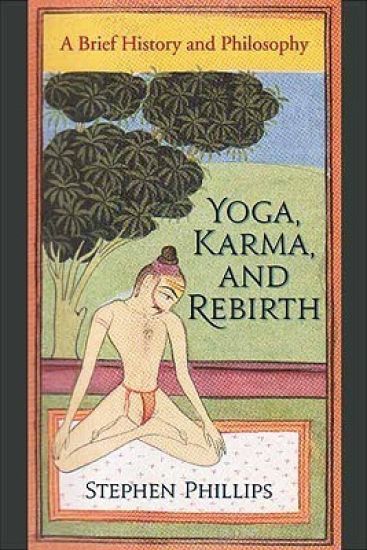
Yoga, Karma, and Rebirth

Yoga, Karma, and Rebirth

Stephen Phillips

Columbia University Press
2009
sidottu
For serious yoga practitioners curious to know the ancient origins of the art, Stephen Phillips, a professional philosopher and sanskritist with a long-standing personal practice, lays out the philosophies of action, knowledge, and devotion as well as the processes of meditation, reasoning, and self-analysis that formed the basis of yoga in ancient and classical India and continue to shape it today. In discussing yoga's fundamental commitments, Phillips explores traditional teachings of hatha yoga, karma yoga, bhakti yoga, and tantra, and shows how such core concepts as self-monitoring consciousness, karma, nonharmfulness (ahimsa), reincarnation, and the powers of consciousness relate to modern practice. He outlines values implicit in bhakti yoga and the tantric yoga of beauty and art and explains the occult psychologies of koshas, skandhas, and chakras. His book incorporates original translations from the early Upanishads, the Bhagavad Gita, the Yoga Sutra (the entire text), the Hatha Yoga Pradipika, and seminal tantric writings of the tenth-century Kashmiri Shaivite, Abhinava Gupta. A glossary defining more than three hundred technical terms and an extensive bibliography offer further help to nonscholars. A remarkable exploration of yoga's conceptual legacy, Yoga, Karma, and Rebirth crystallizes ideas about self and reality that unite the many incarnations of yoga.
Yoga, Karma, and Rebirth

Yoga, Karma, and Rebirth

Stephen Phillips

Columbia University Press
2009
pokkari
For serious yoga practitioners curious to know the ancient origins of the art, Stephen Phillips, a professional philosopher and sanskritist with a long-standing personal practice, lays out the philosophies of action, knowledge, and devotion as well as the processes of meditation, reasoning, and self-analysis that formed the basis of yoga in ancient and classical India and continue to shape it today. In discussing yoga's fundamental commitments, Phillips explores traditional teachings of hatha yoga, karma yoga, bhakti yoga, and tantra, and shows how such core concepts as self-monitoring consciousness, karma, nonharmfulness (ahimsa), reincarnation, and the powers of consciousness relate to modern practice. He outlines values implicit in bhakti yoga and the tantric yoga of beauty and art and explains the occult psychologies of koshas, skandhas, and chakras. His book incorporates original translations from the early Upanishads, the Bhagavad Gita, the Yoga Sutra (the entire text), the Hatha Yoga Pradipika, and seminal tantric writings of the tenth-century Kashmiri Shaivite, Abhinava Gupta. A glossary defining more than three hundred technical terms and an extensive bibliography offer further help to nonscholars. A remarkable exploration of yoga's conceptual legacy, Yoga, Karma, and Rebirth crystallizes ideas about self and reality that unite the many incarnations of yoga.
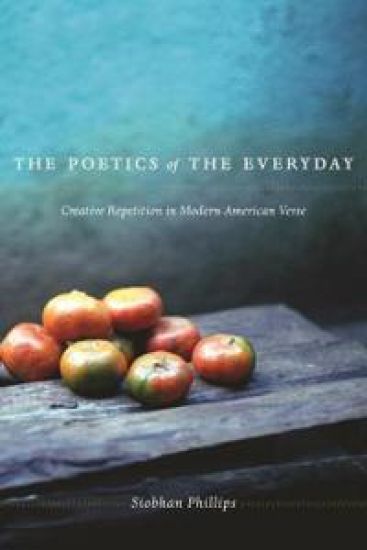
The Poetics of the Everyday

The Poetics of the Everyday

Siobhan Phillips

Columbia University Press
2009
sidottu
Wallace Stevens once described the "malady of the quotidian," lamenting the dull weight of everyday regimen. Yet he would later hail "that which is always beginning, over and over"--recognizing, if not celebrating, the possibility of fresh invention. Focusing on the poems of Wallace Stevens, Robert Frost, Elizabeth Bishop, and James Merrill, Siobhan Phillips positions everyday time as a vital category in modernist aesthetics, American literature, and poetic theory. She eloquently reveals how, through particular but related means, each of these poets converts the necessity of quotidian experience into an aesthetic and experiential opportunity. In Stevens, Phillips analyzes the implications of cyclic dualism. In Frost, she explains the theoretical depth of a habitual "middle way." In Bishop's work, she identifies the attempt to turn recurrent mornings into a "ceremony" rather than a sentence, and in Merrill, she shows how cosmic theories rely on daily habits. Phillips ultimately demonstrates that a poetics of everyday time contributes not only to a richer understanding of these four writers but also to descriptions of their era, estimations of their genre, and ongoing reconfigurations of the issues that literature reflects and illuminates.
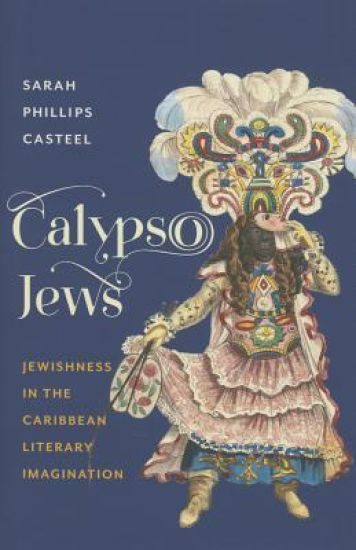
Calypso Jews

Calypso Jews

Sarah Phillips Casteel

Columbia University Press
2016
sidottu
In original and insightful ways, Caribbean writers have turned to Jewish experiences of exodus and reinvention, from the Sephardim expelled from Iberia in the 1490s to the "Calypso Jews" who fled Europe for Trinidad in the 1930s. Examining these historical migrations through the lens of postwar Caribbean fiction and poetry, Sarah Phillips Casteel presents the first major study of representations of Jewishness in Caribbean literature. Bridging the gap between postcolonial and Jewish studies, Calypso Jews enriches cross-cultural investigations of Caribbean creolization. Caribbean writers invoke both the 1492 expulsion and the Holocaust as part of their literary archaeology of slavery and its legacies. Despite the unequal and sometimes fraught relations between Blacks and Jews in the Caribbean before and after emancipation, Black-Jewish literary encounters reflect sympathy and identification more than antagonism and competition. Providing an alternative to U.S.-based critical narratives of Black-Jewish relations, Casteel reads Derek Walcott, Maryse Conde, Michelle Cliff, Jamaica Kincaid, Caryl Phillips, David Dabydeen, and Paul Gilroy, among others, to reveal a distinctive interdiasporic literature.
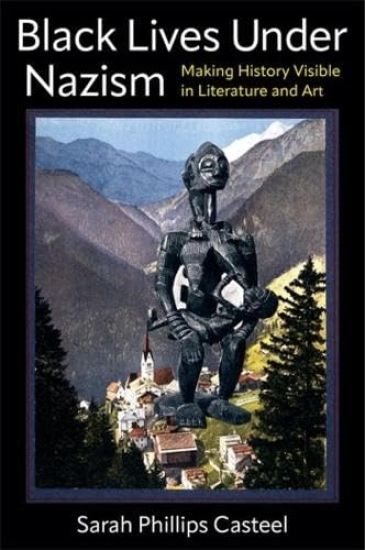
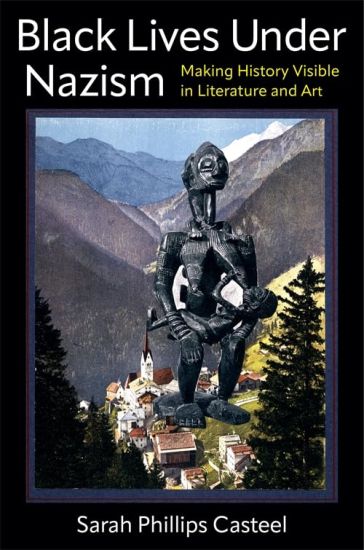
Black Lives Under Nazism

Black Lives Under Nazism

Sarah Phillips Casteel

Columbia University Press
2024
sidottu
In a little-known chapter of World War II, Black people living in Nazi Germany and occupied Europe were subjected to ostracization, forced sterilization, and incarceration in internment and concentration camps. In the absence of public commemoration, African diaspora writers and artists have preserved the stories of these forgotten victims of the Third Reich. Their works illuminate the relationship between creative expression and wartime survival and the role of art in the formation of collective memory.This groundbreaking book explores a range of largely overlooked literary and artistic works that challenge the invisibility of Black wartime history. Emphasizing Black agency, Sarah Phillips Casteel examines both testimonial art by victims of the Nazi regime and creative works that imaginatively reconstruct the wartime period. Among these are the internment art of Caribbean painter Josef Nassy, the survivor memoir of Black German journalist Hans J. Massaquoi, the jazz fiction of African American novelist John A. Williams and Black Canadian novelist Esi Edugyan, and the photomontages of Scottish Ghanaian visual artist Maud Sulter. Bridging Black and Jewish studies, this book identifies the significance of African diaspora experiences and artistic expression for Holocaust history, memory, and representation.
Black Lives Under Nazism

Black Lives Under Nazism

Sarah Phillips Casteel

Columbia University Press
2024
pokkari
In a little-known chapter of World War II, Black people living in Nazi Germany and occupied Europe were subjected to ostracization, forced sterilization, and incarceration in internment and concentration camps. In the absence of public commemoration, African diaspora writers and artists have preserved the stories of these forgotten victims of the Third Reich. Their works illuminate the relationship between creative expression and wartime survival and the role of art in the formation of collective memory.This groundbreaking book explores a range of largely overlooked literary and artistic works that challenge the invisibility of Black wartime history. Emphasizing Black agency, Sarah Phillips Casteel examines both testimonial art by victims of the Nazi regime and creative works that imaginatively reconstruct the wartime period. Among these are the internment art of Caribbean painter Josef Nassy, the survivor memoir of Black German journalist Hans J. Massaquoi, the jazz fiction of African American novelist John A. Williams and Black Canadian novelist Esi Edugyan, and the photomontages of Scottish Ghanaian visual artist Maud Sulter. Bridging Black and Jewish studies, this book identifies the significance of African diaspora experiences and artistic expression for Holocaust history, memory, and representation.
On Wanting to Change

On Wanting to Change

Adam Phillips

Penguin Books Ltd
2021
nidottu
From the UK's foremost literary psychoanalyst, a dazzling new book on the universal urge to change our lives.We live in a world in which we are invited to change - to become our best selves, through politics, or fitness, or diet, or therapy.We change all the time - growing older and older - and how we think about change changes over time too.We want to think of our lives as progress myths - as narratives of positive personal growth - at the same time as we inevitably age and suffer setbacks.So there are the stories we tell about change, and there are the changes we actually make - and they don't always go, or come, together . . . This sparkling book is about that fact.
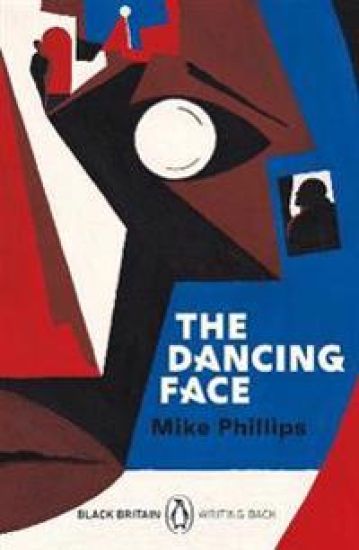
The Dancing Face

The Dancing Face

Mike Phillips

Penguin Books Ltd
2021
pokkari
A sensational, original thriller that examines the powerful link between identity, sacrifice and possession, and questions our compulsive need to chase after ambitions that leave devastation in their wakeUniversity lecturer Gus knows that stealing the priceless Benin mask, The Dancing Face, from a museum at the heart of the British establishment will gain an avalanche of attention.Which is exactly what he wants.But such a risky theft will also inevitably capture the attention of characters with more money, more power, and fewer morals.Naively entangling his loved ones in his increasingly dangerous pursuit of righteous reparation, is Gus prepared for what it will cost him?'This book is brutal, deep, cunning and unbearably beautiful' Independent Selected by Booker Prize-winning author Bernardine Evaristo, this series rediscovers and celebrates pioneering books depicting black Britain that remap the nation.