Kirjojen hintavertailu. Mukana 11 244 527 kirjaa ja 12 kauppaa.

Kirjahaku

Etsi kirjoja tekijän nimen, kirjan nimen tai ISBN:n perusteella.

1000 tulosta hakusanalla Philo

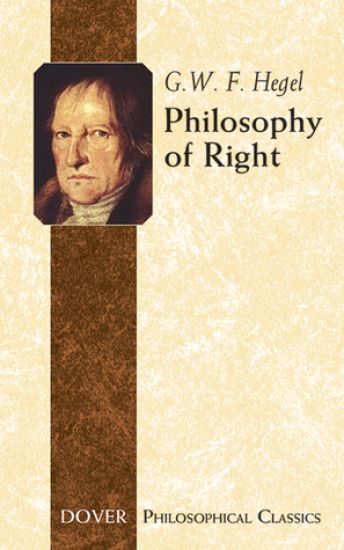
Philosophy of Right

Philosophy of Right

Epicurus Epicurus; Georg Wilhelm Friedrich Hegel

Dover Publications Inc.
2005
nidottu
Hegel's 1821 classic offers a comprehensive view of his influential system, in which he applies his most important concept--the dialectics--to law, rights, morality, the family, economics, and the state. The philosopher defines universal right as the synthesis between the thesis of an individual acting in accordance with the law and the occasional conflict of an antithetical desire to follow private convictions. The state, he declares, must permit individuals to satisfy both demands, thereby realizing social harmony and prosperity--the perfect synthesis. Further, Hegel renounces the French Revolution and republican government in favor of an idealized form of a constitutional monarchy, in which ultimate power rests with the sovereign.
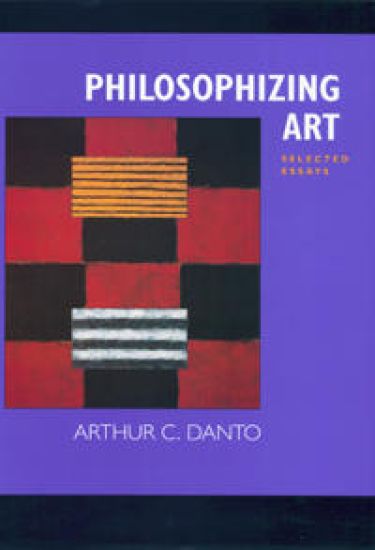
Philosophizing Art

Philosophizing Art

Arthur C. Danto

University of California Press
2001
pokkari
Arthur Danto's work has always affirmed a deep relationship between philosophy and art. These essays explore this relationship through a number of concrete cases in which either artists are driven by philosophical agendas or their art is seen as solving philosophical problems in visual terms. The essays cover a varied terrain, with subjects including Giotto's use of olfactory data in "The Raising of Lazarus"; chairs in art and chairs as art; Mel Bochner's Wittgenstein drawings; the work of Robert Motherwell, Andy Warhol, and Robert Irwin; Louis Kahn as "Archai-Tekt"; and, visual truth in film. Also featured are a meditation on the battle of Gettysburg; and a celebration of the Japanese artist Shiko Munakata, an essay that is partly autobiographical. Arthur C. Danto is one of the most original and multitalented philosophers writing today, a thinker whose interests traverse the boundaries of traditional understandings of philosophy. Best known for his contributions to the philosophy of art and aesthetics, Danto is also esteemed for his work in the history of philosophy, the philosophy of history, philosophical psychology, and action theory. These two volumes, each with an introduction by the author, contain essays spanning more than twenty-five years that have been selected to highlight the inseparability of philosophy and art in Danto's work. Together they present the thinking of Arthur C. Danto at his very best.
Philosophical Grammar

Philosophical Grammar

Ludwig Wittgenstein; Rush (EDT) Rhees; Anthony (TRN) Kenny

University of California Press
2005
pokkari
In 1933 Ludwig Wittgenstein revised a manuscript he had compiled from his 1930-1932 notebooks, but the work as a whole was not published until 1969, as Philosophische Grammatik. This first English translation clearly reveals the central place Philosophical Grammar occupies in Wittgenstein's thought and provides a link from his earlier philosophy to his later views.
Philosophical Hermeneutics, 30th Anniversary Edition

Philosophical Hermeneutics, 30th Anniversary Edition

Hans-Georg Gadamer

University of California Press
2008
pokkari
This excellent collection contains 13 essays from Gadamer's "Kleine Schriften", dealing with hermeneutical reflection, phenomenology, existential philosophy, and philosophical hermeneutics. Gadamer applies hermeneutical analysis to Heidegger and Husserl's phenomenology, an approach that proves critical and instructive.
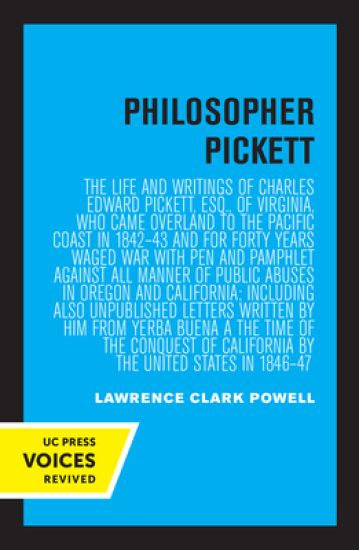
Philosopher Pickett

Philosopher Pickett

Lawrence Clark Powell

University of California Press
2022
pokkari
This title is part of UC Press's Voices Revived program, which commemorates University of California Press’s mission to seek out and cultivate the brightest minds and give them voice, reach, and impact. Drawing on a backlist dating to 1893, Voices Revived makes high-quality, peer-reviewed scholarship accessible once again using print-on-demand technology. This title was originally published in 1942.
Philosopher Pickett

Philosopher Pickett

Lawrence Clark Powell

University of California Press
2022
sidottu
This title is part of UC Press's Voices Revived program, which commemorates University of California Press’s mission to seek out and cultivate the brightest minds and give them voice, reach, and impact. Drawing on a backlist dating to 1893, Voices Revived makes high-quality, peer-reviewed scholarship accessible once again using print-on-demand technology. This title was originally published in 1942.
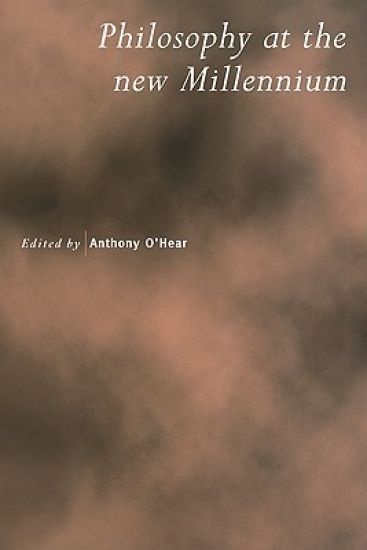
Philosophy at the New Millennium

Philosophy at the New Millennium

Cambridge University Press
2001
pokkari
Where is philosophy at the year 2000 and where should it be going in the new millennium? Based on the Royal Institute of Philosophy Annual Lecture Series 1999–2000, this book is written by leading international philosophers and covers the broad range of philosophical enquiry including ethics, aesthetics, philosophy of mind and consciousness, philosophy of time, philosophy of language, philosophy of science, and philosophy and environment.
Philosophical Dialogue in the British Enlightenment

Philosophical Dialogue in the British Enlightenment

Michael Prince

Cambridge University Press
2005
pokkari
This book offers the first full-length study of philosophical dialogue during the English Enlightenment. It explains why important philosophers - Shaftesbury, Mandeville, Berkeley and Hume - and innumerable minor translators, imitators and critics wrote in and about dialogue during the eighteenth century; and why, after Hume, philosophical dialogue either falls out of use or undergoes radical transformation. Philosophical Dialogue in the British Enlightenment describes the extended, heavily coded, and often belligerent debate about the nature and proper management of dialogue; and it shows how the writing of philosophical fictions relates to the rise of the novel and the emergence of philosophical aesthetics. Novelists such as Fielding, Sterne, Johnson and Austen are placed in a philosophical context, and philosophers of the empiricist tradition in the context of English literary history.
Philolaus of Croton: Pythagorean and Presocratic

Philolaus of Croton: Pythagorean and Presocratic

Philolaus

Cambridge University Press
2006
pokkari
This is the first comprehensive study for nearly 200 years of what remains of the writings of the Presocratic philosopher Philolaus of Croton (c. 470–385 BC). These fragments are crucial to our understanding of one of the most influential schools of ancient philosophy, the Pythagoreans; they also show close ties with the main lines of development of Presocratic thought, and represent a significant response to thinkers such as Parmenides and Anaxagoras. Professor Huffman presents the fragments and testimonia (including the spurious fragments in a separate section for reference) with accompanying translations and introductory chapters and interpretive commentary. He not only produces further argument for the authenticity of much that used to be neglected, but also undertakes a critique of Aristotle's testimony, opening the way for a quite new reading of fifth-century Pythagoreanism in general and of Philolaus in particular. Philolaus is revealed as a serious natural philosopher.
Philosophy and Biodiversity

Philosophy and Biodiversity

Cambridge University Press
2007
pokkari
This important collection focuses on the nature and importance of biodiversity. The concept is clarified and its intrinsic and instrumental value are discussed. Even though the term biodiversity was invented in the 1980s to promote the cause of species conservation, discussions on biological diversity go back to Plato. There are many controversies surrounding biodiversity and a few of them are examined here: What is worthy of protection or restoration and what is the acceptable level of costs? Is it permissible to kill sentient animals to promote native populations? Can species be reintroduced if they have disappeared a long time ago? How should the responsibilities for biodiversity be shared? This book will be of interest to philosophers of science and biologists, but also to anyone interested in conservation and the environment.
Philosophy and Memory Traces

Philosophy and Memory Traces

John Sutton

Cambridge University Press
2007
pokkari
Philosophy and Memory Traces defends two theories of autobiographical memory. One is a bewildering historical view of memories as dynamic patterns in fleeting animal spirits, nervous fluids which rummaged through the pores of brain and body. The other is new connectionism, in which memories are 'stored' only superpositionally, and reconstructed rather than reproduced. Both models, argues John Sutton, depart from static archival metaphors by employing distributed representation, which brings interference and confusion between memory traces. Both raise urgent issues about control of the personal past, and about relations between self and body. Sutton demonstrates the role of bizarre body fluids in moral physiology, as philosophers from Descartes and Locke to Coleridge struggled to control their own innards and impose cognitive discipline on 'the phantasmal chaos of association'. Going on to defend connectionism against Fodor and critics of passive mental representations, he shows how problems of the self are implicated in cognitive science.
Philosophy and the Law of Torts

Philosophy and the Law of Torts

Cambridge University Press
2007
pokkari
When accidents occur and people suffer injuries, who ought to bear the loss? Tort law offers a complex set of rules to answer this question, but up to now philosophers have offered little by way of analysis of these rules. In eight essays commissioned for this volume, leading legal theorists examine the philosophical foundations of tort law. Amongst the questions they address are the following: how are the notions at the core of tort practice (such as responsibility, fault, negligence, due care, and duty to repair) to be understood? Is an explanation based on a conception of justice feasible? How are concerns of distributive and corrective justice related? What amounts to an adequate explanation of tort law? This collection will be of interest to professionals and advanced students working in philosophy of law, social theory, political theory, and law, as well as anyone seeking a better understanding of tort law.
Philosophy and Politics in the Thought of John Wyclif

Philosophy and Politics in the Thought of John Wyclif

Stephen E. Lahey

Cambridge University Press
2008
pokkari
John Wyclif was the fourteenth-century English thinker responsible for the first English Bible, and for the Lollard movement which was persecuted widely for its attempts to reform the Church through empowerment of the laity. Wyclif had also been an Oxford philosopher, and was in the service of John of Gaunt, the powerful duke of Lancaster. In several of Wyclif's formal, Latin works he proposed that the king ought to take control of all Church property and power in the kingdom - a vision close to what Henry VIII was to realize 150 years later. This book argues that Wyclif's political programme was based on a coherent philosophical vision ultimately consistent with his other reformative ideas, identifying a consistency between his realist metaphysics and his political and ecclesiological theory.
Philosophy, Science, and Religion in England 1640–1700
This collection of essays looks at the distinctively English intellectual, social and political phenomenon of Latitudinarianism, which emerged during the Civil War and Interregnum and came into its own after the Restoration, becoming a virtual orthodoxy after 1688. Dividing into two parts, it first examines the importance of the Cambridge Platonists, who sought to embrace the newest philosophical and scientific movements within Church of England orthodoxy, and then moves into the later seventeenth century, from the Restoration onwards, culminating in essays on the philosopher John Locke. These contributions establish a firmly interdisciplinary basis for the subject, while collectively gravitating towards the importance of discourse and language as the medium for cultural exchange. The variety of approaches serves to illuminate the cultural indeterminacy of the period, in which inherited models and vocabularies were forced to undergo revisions, coinciding with the formation of many cultural institutions still governing English society.
Philosophical Chaucer

Philosophical Chaucer

Mark Miller

Cambridge University Press
2009
pokkari
Mark Miller's innovative study argues that Chaucer's Canterbury Tales represent an extended mediation on agency, autonomy and practical reason. This philosophical aspect of Chaucer's interests can help us understand what is both sophisticated and disturbing about his explorations of love, sex and gender. Partly through fresh readings of the Consolation of Philosophy and the Romance of the Rose, Miller charts Chaucer's position in relation to the association in the Christian West between problems of autonomy and problems of sexuality and reconstructs how medieval philosophers and literary writers approached psychological phenomena often thought of as distinctively modern. The literary experiments of the Canterbury Tales represent a distinctive philosophical achievement that remains vital to our own attempts to understand agency, desire and their histories.