Kirjahaku
Etsi kirjoja tekijän nimen, kirjan nimen tai ISBN:n perusteella.
1000 tulosta hakusanalla Polly Samson

Three curious and plucky children looking for adventure find a challenge to explore the underground cellars of a row of terraced houses. Fantasy and mischief turn into an experience of fear and terror as the three find themselves confronting the horrors of the past, through their efforts to release the ghost children who are alone and captured for eternity by the evil power of the 'man in black'! The trio are drawn into the horrors of past centuries, one awesome experience after another, by their belief that they can, somehow, alter the course of history in a minor way, but a major help for the trapped and tortured spirits. However, they are accompanied throughout their travels back in time by the wrath of Jess...Jess the evil spirit, the sister of 'the man in black'...but also the handmaiden of the Devil. Nevertheless, goodness prevails and the trio triumph, but, they emerge bereft of innocence and with a new taste for meddling in the past, albeit for the best of motives.
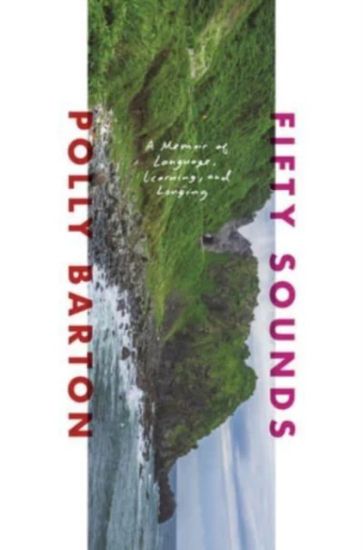
Fifty Sounds: A Memoir of Language, Learning, and Longing
Polly Barton
Liveright Publishing Corporation
2022
sidottu
"The language learning I want to talk about is sensory bombardment. It is a possession, a bedevilment, a physical takeover," writes Polly Barton in her eloquent treatise on this profoundly humbling and gratifying act. Shortly before graduating with a degree in philosophy from the University of Cambridge, Barton on a whim accepted an English-teaching position in Japan. With the characteristic ambivalence of a twenty-one-year-old whose summer--and life--stretched out almost infinitely before her, she moved to a remote island in the Sea of Japan, unaware that this journey would come to define not only her career but her very understanding of her own identity.Divided into fifty onomatopoeic Japanese phrases, Fifty Sounds recounts Barton's path to becoming a literary translator fluent in an incredibly difficult vernacular. From "min-min," the sound of air screaming, to "jin-jin," the sound of being touched for the first time, Barton analyzes these and countless other foreign sounds and phrases as a means of reflecting on various cultural attitudes, including the nuances of conformity and the challenges of being an outsider in what many consider a hermetically sealed society.In a tour-de-force of lyrical, playful prose, Barton recalls the stifling humidity that first greeted her on the island along with the incessant hum of peculiar new noises. As Barton taught English to inquisitive middle school children, she studied the basics of Japanese in an inverse way, beginning with simple nouns and phrases, such as "cat," "dog," and "Hello, my name is." But when it came to surrounding herself in the culture, simply mastering the basics wasn't enough.Japanese, Barton learned, has three scripts: the phonetic katakana and hiragana (collectively known as kana) and kanji (characters of Chinese origin). Despite her months-long immersion in the language, a word would occasionally produce a sinking feeling and send her sifting through her dictionaries to find the exact meaning. But this is precisely how Barton has come to define language learning: "It is the always-bruised but ever-renewing desire to draw close: to a person, a territory, a culture, an idea, an indefinable feeling."Engaging and penetrating, Fifty Sounds chronicles everything from Barton's most hilarious misinterpretations to her new friends and lovers in Tokyo --and even the influence of Ludwig Wittgenstein's transformative philosophy. A classic in the making in the tradition of Anne Carson and Rachel Cusk, Fifty Sounds is a celebration of the empowering act of learning to communicate in any new language.
Fifty Sounds: A Memoir of Language, Learning, and Longing
Polly Barton
Liveright Publishing Corporation
2023
nidottu
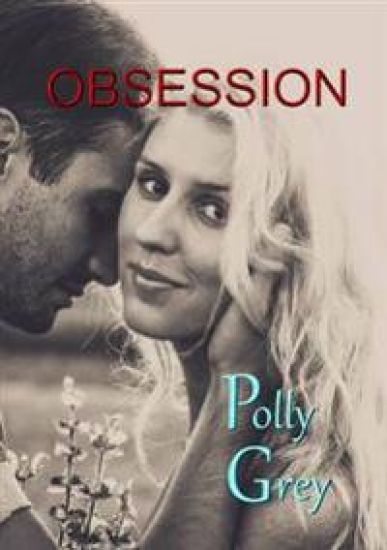
When Emma found love with Sam, she thought she would love him forever. But Sam's dominating behaviour slowly destroys any love she has for him. She comes to a decision to leave him and start a new life; but can she break away from Sam? Her life has many ups and downs, and Sam is determined to torment her with anonymous phone calls. She moves house hoping to escape him but he finds her and she suspects he may be stalking her. There seems to be no escape from him. After a second house move and a new job, she finally feels she is free from him. But the death of a friend brings them once more into each other's lives with devastating consequences.

Imagine waking up to find you have no memory! This is Mary's story, she has been badly beaten and wakes to find herself alone in a car deep in a forest. She must find her way out and seek help. But what has happened to her...why can't she re-member? She knows her own name but can't re-member where she lives or who are her family? She eventually comes to a village and seeks help at the village pub. Over the next six days her memory slowly returns muddled and confused; she must piece the pieces together and the horror of the terrible events that has happened will be discovered.
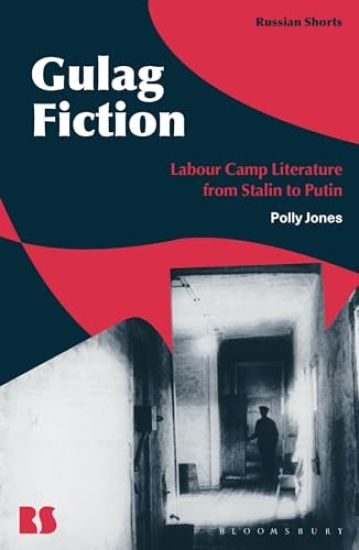
This unique exploration of Russian prose fiction about the Soviet labour camp system since the Stalin era compares representations of identity, ethics and memory across the corpus.The Soviet labour camp system, or Gulag, was a highly complex network of different types of penal institutions, scattered across the vast Soviet territory and affecting millions of Soviet citizens directly and indirectly. As Gulag Fiction shows, its legacies remain palpable today, though survivors of the camps are now increasingly scarce, and successive Soviet and post-Soviet leaders have been reluctant to authorise a full working through of the Gulag past. This is the first book to compare Soviet, samizdat and post-Soviet literary prose about the Gulag as penal system, carceral experience and traumatic memory. Polly Jones analyses prose texts from across the 20th and 21st centuries through the prism of key themes in contemporary Soviet historiography and Holocaust literature scholarship: selfhood and survival; perpetration and responsibility; memory and post-memory.
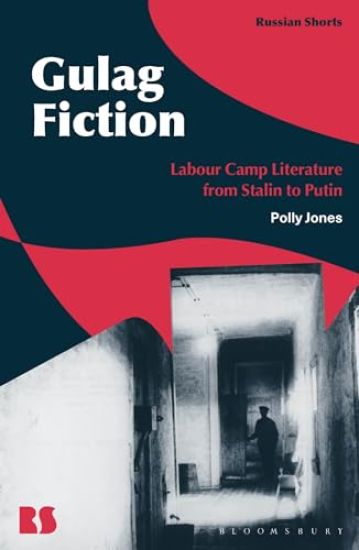
This unique exploration of Russian prose fiction about the Soviet labour camp system since the Stalin era compares representations of identity, ethics and memory across the corpus.The Soviet labour camp system, or Gulag, was a highly complex network of different types of penal institutions, scattered across the vast Soviet territory and affecting millions of Soviet citizens directly and indirectly. As Gulag Fiction shows, its legacies remain palpable today, though survivors of the camps are now increasingly scarce, and successive Soviet and post-Soviet leaders have been reluctant to authorise a full working through of the Gulag past. This is the first book to compare Soviet, samizdat and post-Soviet literary prose about the Gulag as penal system, carceral experience and traumatic memory. Polly Jones analyses prose texts from across the 20th and 21st centuries through the prism of key themes in contemporary Soviet historiography and Holocaust literature scholarship: selfhood and survival; perpetration and responsibility; memory and post-memory.
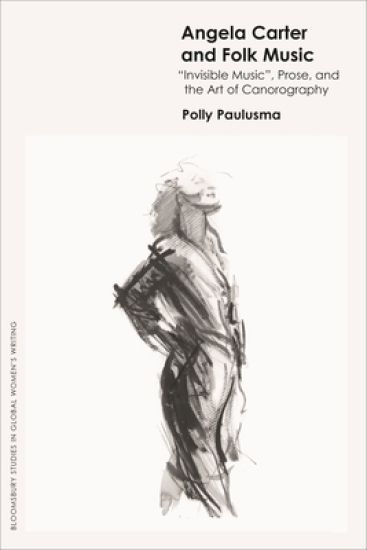
From her unique standpoint as singer-songwriter-scholar, Polly Paulusma examines the influences of Carter’s 1960s folk singing, unknown until now, on her prose writing. Recent critical attention has focused on Carter’s relationship with folk/fairy tales, but this book uses a newly available archive containing Carter’s folk song notes, books, LPs and recordings to change the debate, proving Carter performed folk songs. Placing this archive alongside the album sleeve notes Carter wrote and her diaries and essays, it reimagines Carter’s prose as a vehicle for the singing voice, and reveals a writing style imbued with ‘songfulness’ informed by her singing praxis.Reading Carter’s texts through songs she knew and sang, this book shows, from influences of rhythm, melodic shape, thematic focus, imagery, ‘voice’ and ‘breath’, how Carter steeped her writing with folk song’s features to produce ‘canorography’: song-infused prose. Concluding with a discussion of Carter’s profound influence on songwriters, focusing on the author's interview with Emily Portman, this book invites us to reimagine Carter’s prose as audial event, dissolving boundaries between prose and song, between text and reader, between word and sound, in an ever-renewing act of sympathetic resonance.

From her unique standpoint as singer-songwriter-scholar, Polly Paulusma examines the influences of Carter’s 1960s folk singing, unknown until now, on her prose writing. Recent critical attention has focused on Carter’s relationship with folk/fairy tales, but this book uses a newly available archive containing Carter’s folk song notes, books, LPs and recordings to change the debate, proving Carter performed folk songs. Placing this archive alongside the album sleeve notes Carter wrote and her diaries and essays, it reimagines Carter’s prose as a vehicle for the singing voice, and reveals a writing style imbued with ‘songfulness’ informed by her singing praxis.Reading Carter’s texts through songs she knew and sang, this book shows, from influences of rhythm, melodic shape, thematic focus, imagery, ‘voice’ and ‘breath’, how Carter steeped her writing with folk song’s features to produce ‘canorography’: song-infused prose. Concluding with a discussion of Carter’s profound influence on songwriters, focusing on the author's interview with Emily Portman, this book invites us to reimagine Carter’s prose as audial event, dissolving boundaries between prose and song, between text and reader, between word and sound, in an ever-renewing act of sympathetic resonance.

As a piano teacher, I have the unique opportunity to work in a field I love - the field of music - and to introduce this world to young people. The students come and play each week and I watch them grow in their musical skills and celebrate with them at each milestone they reach along their musical journey. Now I want to share with you the lessons I learned from my students through the years - these are lessons from the bench - the piano bench.
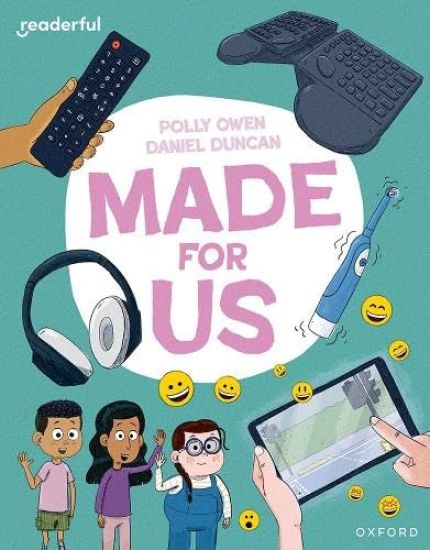
Readerful Independent Library: Oxford Reading Level 11: Made for Us
Polly Owen
Oxford University Press
2024
nidottu
Objects that we use all the time have been designed to make our lives easier. Universal designers create things that everyone can use, including people who are disabled in differnet ways. Learn about the designers of these everyday objects, and who they help, in this interesting and inclusive look at everyday design. This book is from Readerful's Independent Library. It is for children aged 6 to 7 to read without support. Readerful is a reading library specially designed to motivate children to read more. The series offers contemporary, inclusive books for children from 4 to 11 years, including: Books for Sharing: picture books to be read aloud by an adult for inspiring reading sessions Independent Library: fiction, graphic texts, character mini-series and non-fiction for children to read independently Rise: fully decodable books for older struggling readers to read independently. How Readerful works: - Read aloud the Books for Sharing for magical reading sessions that motivate children to read more. - Then encourage children to choose a book to read by themselves, from Readerful's Independent Library or from Rise. You'll find links between the books' topics, vocabulary, characters and authors - all designed to keep children reading, boost their vocabulary and develop their knowledge of the world around them.
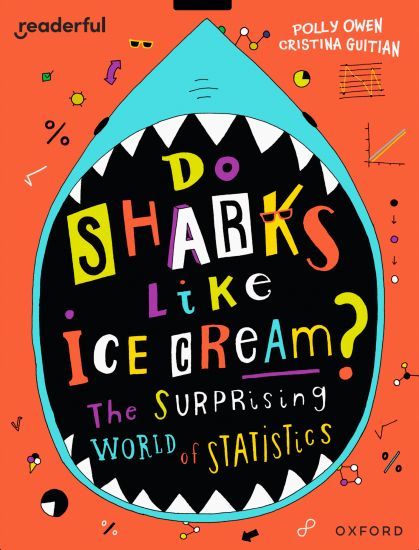
Readerful Independent Library: Oxford Reading Level 19: Do Sharks Like Ice Cream?: The Surprising World of Statistics
Polly Owen
Oxford University Press
2024
nidottu
Statistics can be applied everywhere, from catching criminals and predicting the future, to making groundbreaking discoveries and winning at games. This book is bursting with real-life examples of how statistics is used. Find out how your friends are statistically more likely to have more friends than you, and what links ice cream sales with the number of shark attacks! This book is from Readerful's Independent Library. It is for children aged 10 to 11 to read without support. Readerful is a reading library specially designed to motivate children to read more. The series offers contemporary, inclusive books for children from 4 to 11 years, including: Books for Sharing: picture books to be read aloud by an adult for inspiring reading sessions Independent Library: fiction, graphic texts, character mini-series and non-fiction for children to read independently Rise: fully decodable books for older struggling readers to read independently. How Readerful works: - Read aloud the Books for Sharing for magical reading sessions that motivate children to read more. - Then encourage children to choose a book to read by themselves, from Readerful's Independent Library or from Rise. You'll find links between the books' topics, vocabulary, characters and authors - all designed to keep children reading, boost their vocabulary and develop their knowledge of the world around them.
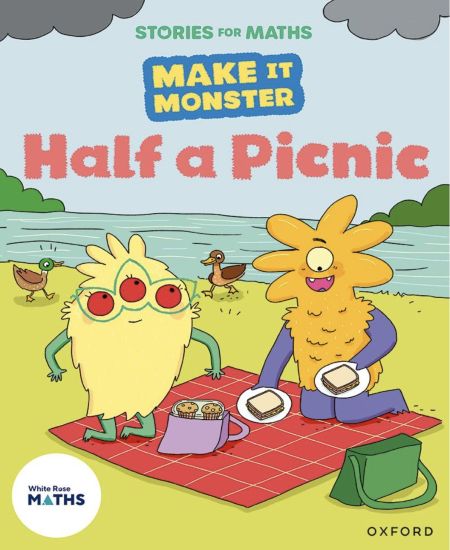
Ralf and Netty's picnic doesn't go well. Some grapes fall in mud and a duck walks off with a sandwich. Then it starts to rain. But Ralf has an idea to save the picnic and have a whole lot of fun. This book aligns with White Rose Maths for Year 1, Fractions, Step 1. Recognize a half of an object or shape and Step 3. Recognize a half of a quantity.
The 18th century was a wealth of knowledge, exploration and rapidly growing technology and expanding record-keeping made possible by advances in the printing press. In its determination to preserve the century of revolution, Gale initiated a revolution of its own: digitization of epic proportions to preserve these invaluable works in the largest archive of its kind. Now for the first time these high-quality digital copies of original 18th century manuscripts are available in print, making them highly accessible to libraries, undergraduate students, and independent scholars.Western literary study flows out of eighteenth-century works by Alexander Pope, Daniel Defoe, Henry Fielding, Frances Burney, Denis Diderot, Johann Gottfried Herder, Johann Wolfgang von Goethe, and others. Experience the birth of the modern novel, or compare the development of language using dictionaries and grammar discourses. ++++The below data was compiled from various identification fields in the bibliographic record of this title. This data is provided as an additional tool in helping to insure edition identification: ++++Bodleian Library (Oxford)T180357Polly Pindar is a pseudonym. Also printed in London, for the author, in 1787.Dublin: printed by P. Byrne, 1787. 16p.; 8

Let's Explore! How Things Work: See Inside Vehicles, Instruments, Gadgets, and More!
Polly Cheeseman
Arcturus Editions
2022
sidottu
The youngest of readers can explore the inner workings of everyday inventions with this fascinating, fact-packed book. Beautifully illustrated in full color, this hardback reference guide explains the science behind different gadgets and technologies, from planes and bicycles to clocks and computers Tricky ideas are set out in clear, easy-to-understand terms, with colorful and engaging artworks that really help to clarify concepts on STEM topics. It answers questions such as: - What makes bicycles go?- How does a spacecraft launch?- What makes a hot-air balloon go up?- What makes a clock tick? Finishing with a quiz to test their new knowledge, this is a fabulous introduction to machines for curious children aged 5+ and anyone who has ever asked "Why?". ABOUT THE SERIES: Arcturus Publishing's Let's Explore series encourages the youngest of readers to think about the world around them. Featuring vibrant illustrations and concise, easy-to-read text, these reference books are perfect for mini explorers