

Kirjahaku
Etsi kirjoja tekijän nimen, kirjan nimen tai ISBN:n perusteella.
1000 tulosta hakusanalla R L Butler
Words have determinable sense only within a complex of unstated assumptions, and all interpretation must therefore go beyond the given material. This book addresses what is man's place in the Aristotelian world. It also describes man's abilities and prospects in managing his life, and considers how far Aristotle's treatment of time and history licenses the sort of dynamic interpretation of his doctrines that have been given. The ontological model that explains much of Aristotle's conclusions and methods is one of life-worlds, in which the material universe of scientific myth is no more than an abstraction from lived reality, not its transcendent ground.
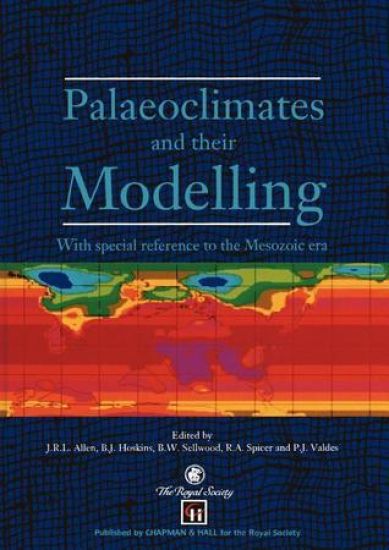
Palaeoclimates and their Modelling
J.R.L. Allen; B.J. Hoskins; P.J. Valdes; B.W. Sellwood; R. Spicer
Chapman and Hall
1994
sidottu
The climate of the Earth has undergone many changes and for those times when geologic data are widespread and abundant the Mesozoic appears to have been one of the warmest intervals. This was a time during which the single continent Pangea disintegrated into continental units similar to those of today, a time when there were no significant polar ice caps and sea level was generally much higher than at the present time, and a time when dinosaurs apparently dominated terrestrial faunas and the flowering plants evolved. Understanding this alien world, ancestral to ours, is intrinsically interesting, intellectually challenging, and offers opportunities for more effective targeting of sites where commercially important geological resources may be found. It also provides critical insights into the operation of coupled Earth systems (biospheric, atmospheric, hydrospheric and geospheric) under extreme 'greenhouse' conditions, and therefore may have relevance to possible future global change. Our intention in organizing this Discussion Meeting was to bring together those who gather and interpret geologic data with those who model global climates from first principles. The community of workers who study the Quaternary have made significant advances by integrating and comparing palaeodata and climate model experiments. Although we have focused not on the Quaternary 'icehouse' but on the Mesozoic 'hothouse' climate we are well aware that approaches used in the study of the Quaternary may have relevance to earlier times.
Immortality is a subject which has long been explored and imagined by science fiction writers. In his intriguing new study, Stephen R.L.Clark argues that the genre of science fiction writing allows investigation of philosophical questions about immortality without the constraints of academic philosophy. He reveals how fantasy accounts of issues such as resurrection, disembodied survival, reincarnation and devices or drugs for preserving life can be used as an important resource for philosophical inquiry and examines how a society of immortals might function through a reading of the vampire myth.How to Live Forever is a compelling study which introduces students and professional philosophers to the possibilities of using science fiction in their work. It includes extensive suggestions for further reading, both fictional and philosophical, and examines the work of such major science fiction authors as Arthur C. Clarke, Frank Herbert, Larry Niven, William Gibson, and Colin Wilson.
Twenty years ago, people thought only cranks or sentimentalists could be seriously concerned about the treatment of non-human animals. However, since then philosophers, scientists and welfarists have raised public awareness of the issue; and they have begun to lay the foundations for an enormous change in human practice. This book is a record of the development of 'animal rights' through the eyes of one highly-respected and well-known thinker. This book brings together for the first time Stephen R.L. Clark's major essays in one volume. Written with characteristic clarity and persuasion, Animals and Their Moral Standing will be essential reading for both philosophers and scientists, as well as the general reader concerned by the debates over animal rights and treatment.
Twenty years ago, people thought only cranks or sentimentalists could be seriously concerned about the treatment of non-human animals. However, since then philosophers, scientists and welfarists have raised public awareness of the issue; and they have begun to lay the foundations for an enormous change in human practice. This book is a record of the development of 'animal rights' through the eyes of one highly-respected and well-known thinker. This book brings together for the first time Stephen R.L. Clark's major essays in one volume. Written with characteristic clarity and persuasion, Animals and Their Moral Standing will be essential reading for both philosophers and scientists, as well as the general reader concerned by the debates over animal rights and treatment.
People, as Aristotle said, are political animals. Mainstream political philosophy, however, has largely neglected humankind's animal nature as beings who are naturally equipped, and inclined, to reason and work together, create social bonds and care for their young. Stephen Clark, grounded in biological analysis and traditional ethics, probes into areas ignored in mainstream political theory and argues for the significance of social bonds which bypass or transcend state authority. Understanding the ties that bind us reveals how enormously capable we are in achieving civil order as a species. Stephen Clark advocates that a properly informed political philosophy must take into account the role of women, children, animals, minorities and the domestic virtues at large. Living and comnducting our political lives like the animals we are is a more congenial prospect than is usually supposed.

Emerging from modern history as a remarkable and much-loved family, the Mitfords have remained largely unrepentant concerning theirs and particularly Unity’s enthusiastic support of Hitler, the Nazis, Oswald Mosley and British fascism. However, having initially encouraged and supported Unity’s affair with Hitler, they subsequently insisted that she had in fact been a rather unintelligent, clumsy lump of a girl, whose virginal relationship with one of the most terrifying dictators of all time was a mere unrequited romantic obsession. As this book will show, nothing could be further from the truth.Following further research and reexamination of the family’s, friends’ and journalists’ often contradictory evidence, plus new information supplied by the author’s own family and friends, Hitler’s Valkyrie will reveal that while Unity was, like Hitler, an extreme fantasist, there was very little of the juvenile romantic about her. On the contrary, she was highly intelligent, free-spirited and athletic. She was also the only Englishwoman who came close to being capable of changing the course of the Second World War.Here David R.L. Litchfield untangles the decades-old web of intrigue surrounding Unity Mitford and one of the most dangerous men of all time, creating a fascinating book of unparalleled importance to the Mitford legacy.
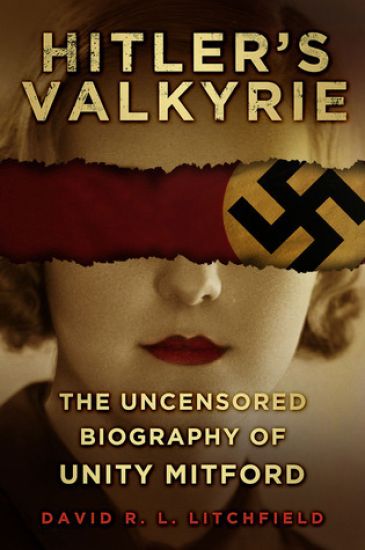
The remarkable and much-loved Mitford family has remained largely unrepentant concerning theirs and particularly Unity’s enthusiastic support of Hitler, the Nazis, Oswald Mosley and British fascism. But having initially encouraged and supported Unity’s affair with Hitler, they subsequently insisted that she had in fact been a rather unintelligent, clumsy lump of a girl, whose virginal relationship with one of the most terrifying dictators of all time was a mere unrequited, romantic obsession. As this book will show; nothing could be further from the truth. Following further research and re-examination of the family’s, friends’ and journalists’ often contradictory evidence, plus new information supplied by the author’s own family and friends, Hitler’s Valkyrie will reveal that while Unity was, like Hitler, an extreme fantasist, there was in fact little of the juvenile romantic about her and that she was, on the contrary, highly intelligent, free-spirited and athletic. She was also the only Englishwoman who came close to being capable of changing the course of the Second World War.

As the state of Ohio prepares to celebrate its bicentennial in 2003, Andrew R. L. Cayton offers an account of ways in which diverse citizens have woven its history. Ohio: The History of a People, centers around the many stories Ohioans have told about life in their state. The founders of Ohio in 1803 believed that its success would depend on the development of a public culture that emphasized what its citizens had in common with each other. But for two centuries the remarkably diverse inhabitants of Ohio have repeatedly asserted their own ideas about how they and their children should lead their lives. The state's public culture has consisted of many voices, sometimes in conflict with each other. Using memoirs, diaries, letters, novels, and paintings, Cayton writes Ohio's history as a collective biography of its citizens. Ohio, he argues, lies at the intersection of the stories of James Rhodes and Toni Morrison, Charles Ruthenberg and Lucy Webb Hayes, Carl Stokes and Alice Cary, Sherwood Anderson and Pete Rose. It lies in the tales of German Jews in Cincinnati, Italian and Polish immigrants in Cleveland, Southern blacks and white Appalachians in Youngstown. Ohio is the mingled voices of farm families, steelworkers, ministers, writers, schoolteachers, reformers, and football coaches. Ohio, in short, is whatever its citizens have imagined it to be.
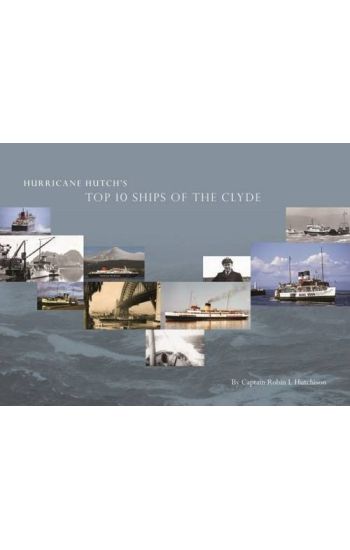
Hurricane Hutch's Top 10 Ships of the Clyde
Capt R L Hutchison; Iain McCrorie
Belle Media Ltd
2015
sidottu
Captain Robin L Hutchison, "Hurricane Hutch", became one of the youngest captain's to serve on Scotland's famous Firth of Clyde after 10 years working deep sea. This book recalls the ships he sailed and the characters he worked with for over 40 years on some of the world's most beautiful, busiest and most challenging waters. Part social history, part memoir. Some of the well known ships he commanded include the world famous Paddle Steamer Waverley (still sailing today), the luxury boutique cruise ship Hebridean Princess and the MV Caledonian Isles.Robin Hutchison was a great raconteur, with a gentle wit and an eye for the comic in any situation. Robin was one of the most prominent of the post-war Masters who served both on the traditional excursion steamers and the modern car ferries. He was in post when the Caledonian Steam Packet Company joined with David MacBrayne Ltd to become Caledonian MacBrayne (CalMac). The Audiobook is narrated by Bill Paterson who came out of 'audiobook retirement' specially to record this book."Robin is an excellent storyteller" Iain McCrorie, CalMac Historian"Wry, sometimes daunting...a lifetime as a Master Mariner" Scottish Daily Mail.
Common Diseases of Horses, Cattle and Swine; a Handbook for Farmers
Tucker R L
Hutson Street Press
2025
sidottu
Common Diseases of Horses, Cattle and Swine; a Handbook for Farmers
Tucker R L
Hutson Street Press
2025
pokkari
Immortality is a subject which has long been explored and imagined by science fiction writers. In his intriguing new study, Stephen R.L.Clark argues that the genre of science fiction writing allows investigation of philosophical questions about immortality without the constraints of academic philosophy. He reveals how fantasy accounts of issues such as resurrection, disembodied survival, reincarnation and devices or drugs for preserving life can be used as an important resource for philosophical inquiry and examines how a society of immortals might function through a reading of the vampire myth.How to Live Forever is a compelling study which introduces students and professional philosophers to the possibilities of using science fiction in their work. It includes extensive suggestions for further reading, both fictional and philosophical, and examines the work of such major science fiction authors as Arthur C. Clarke, Frank Herbert, Larry Niven, William Gibson, and Colin Wilson.

Focusing on the period from the mid-eighteenth century to the First World War, this volume covers a major boom in church building, fuelled by population growth and heightened religiosity as well as socio-economic change, with 115 built or substantially modified in the north Hampshire area under study. Allen takes a geological angle in examining these churches, tracing the distribution and use of different materials through the county, as well as imported materials.

St. Saviour's church and parsonage (1855-6), Mortimer West End, Hampshire-Berkshire border
J R L Allen
BAR Publishing
2011
nidottu
A comprehensive study of the construction of a small Victorian church, designed in the Gothic style, and its associated parsonage. Allen details the architect, the composition of the workforce, the materials used, the progress of the building programme, and other logistics, costs and financing.
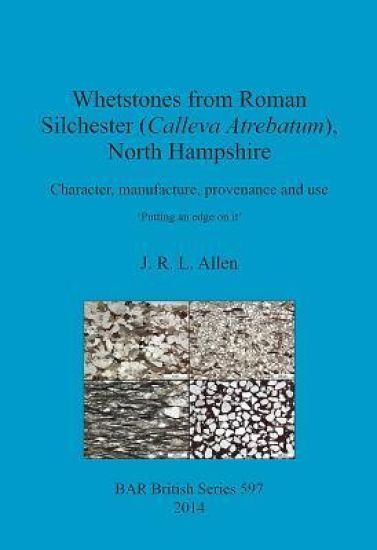
Whetstones from Roman Silchester (Calleva Atrebatum) North Hampshire Character manufacture provenance and use
J R L Allen
BAR Publishing
2014
nidottu
The five-hundred year occupation of Insula IX at Silchester has yielded a sequence of 87 whetstones, mostly tabular but some bar- or rod-shaped. These are described, illustrated and characterized with the help of thin-section microscopic petrography. The whetstones originated in many geological sources, not all of which can at present be identified. Whetstones from the earliest levels at Silchester are comparatively local in origin (sarsen, ironstone) or were made from discarded, imported milling stones (Quartz Conglomerate, Upper Old Red Sandstone). During the first and second centuries AD substantial number of bar-shaped whetstones manufactured in the Wroxeter manner from sandstones in the Weald Clay Formation (earliest Cretaceous) were imported into Silchester. Almost all the whetstones of the later Roman period are secondary in character produced from discarded roofing tiles of Brownstones (Lower Old Red Sandstone) and Pennant sandstone (later Upper Carboniferous) imported from the West Country. Small numbers of whetstones can be traced to the Portland Group (Upper Jurassic) and to the Lower and Upper Greensand Groups (Lower Cretaceous). The provision of sharpening stones to Silchester as a whole is estimated to run into many thousands.