This book is like a friend who advises and guides you on how to use the ggplot2 package for making data visualizations. With this book, you will learn how to get started with data visualization in R. You will learn basic concepts of graphics, and you will also learn how to perform statistical analyses. This book is for everyone who faces a difficult task when trying to make data visualizations using R. It is also for people who are interested in learning more about statistics and graphical techniques. The book also teaches readers how to get started with ggplot2, and it also introduces the basics of R so that readers are aware of the basic commands and functions in R, as well as importing libraries. R has transformed the way statistical modeling approaches are applied, and has become a tool which is commonly used by analysts, programmers and visual artists alike. Its ease of use and flexibility make it an invaluable tool for working with large amounts of data. This book provides you with a comprehensive guide to how R can be used for data visualization. You'll learn how to use the statistical modeling and graphics packages in R, as well as gain an understanding of the principles behind both traditional and modern data visualization techniques. Think of R as a programming language that provides access to the power of machine learning and statistical computing. It's software used by statisticians and data scientists, with its capabilities in statistics, data visualization, machine learning, and more.
R*E*A*L*Resilience. Empowerment. Autonomy. Extraordinary Living. These four ideas are embodied in the inspirational quotes and stories included in R*E*A*L* Reflections: Inspiring Quotes for Empowered Living. These wise words from remarkable individuals are a testament to the strength and resilience that is within everyone. They are a reminder that no matter where you come from or what you have endured, you have the power to create a beautiful life that you deserve Following each series of stories and quotes in R*E*A*L* Reflections are keywords and questions for reflection as well as space for you to express your thoughts and feelings about what you are reading so that you, too, can build and share your own R*E*A*L* with the world
Gwendolyn Gonzales would do anything for her best friend. Even allow herself to be dragged through Macy's dreams by a British coffeeholic who claims to be Macy's Dream Guardian. The rules of the Dream are simple: blend in and don't die. When Macy's dreams take a turn for the worst, following the rules may be harder than it seems. And may end in deadly consequences.
It's 8th grade and the drama never ends A lost diary, a bestie turned frenemy, a crush and the party of all parties Will R.C.O., short for Rubi Carmen O'Shea, find her diary? Will her frenemy become a bestie again? Will her crush stay cool or will he turn into one of the popular kids? Will the party really be the party of all parties?
This book describes the influences that led up to my time in the Army, how my life changed while in the Army, and how army life affected the rest of my life.
This book describes the influences that led up to my time in the Army, how my life changed while in the Army, and how army life affected the rest of my life.
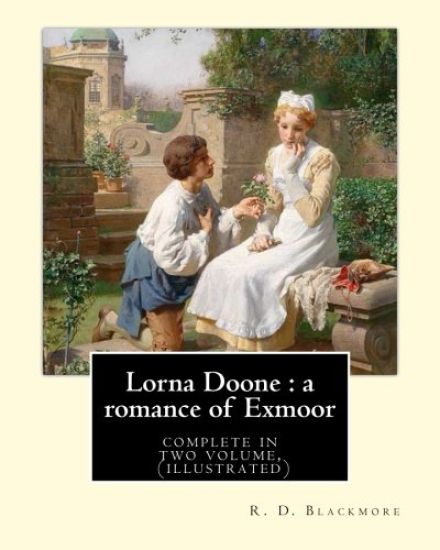
Blackmore considered The Maid of Sker to be his best novel. Plot: The Maid of Sker is set at the end of the 18th century, and the story is told by Davy Llewellyn, an old fisherman. The story concerns a two-year-old girl who drifts in a boat onto a beach in Glamorganshire in the calm before a storm. The little girl calls herself Bardie. Llewellyn is tempted to keep the girl, but decides to give her up and keeps the boat for himself. He quarters the pretty child in a simple, but well-to-do, household in his neighbourhood. As she grows up he dotes upon her so far as he can. He watches anxiously over her fortunes, partly or principally because he thinks his own may be bound up with them. It is clear from the refinement of the girl's manners, and from the fineness of her clothes she was washed ashore in, that she is no common child. Davy joins the crew of a ketch trading between Barnstaple and Porthcawl. Whilst in Devon, he encounters several characters who hold the key to solving the mystery of the maid of Sker. These include Sir Philip Bampfylde who spends most of his time looking for his two grandchildren who have mysteriously disappeared; Parson Chowne, a parson of demoniac wickedness and craft who works his will for many years in the north of Devon, defying God, man, and the law; and Captain Drake Bamfylde who is under suspicion of having made away with the children of his elder brother, and heirs to the family property. Old Davy gradually unravels the mystery and sets matters right, although many distractions delay him including an extended period at sea in which Blackmore gives a graphic account of the Battle of the Nile............. Richard Doddridge Blackmore (7 June 1825 - 20 January 1900), known as R. D. Blackmore, was one of the most famous English novelists of the second half of the nineteenth century. He won acclaim for vivid descriptions and personification of the countryside, sharing with Thomas Hardy a Western England background and a strong sense of regional setting in his works. Blackmore, often referred to as the "Last Victorian", was a pioneer of the movement in fiction that continued with Robert Louis Stevenson and others. He has been described as "proud, shy, reticent, strong-willed, sweet-tempered, and self-centred." Apart from his novel Lorna Doone, which has enjoyed continuing popularity, his work has gone out of print. Biography: Richard Doddridge Blackmore was born on 7 June 1825 at Longworth in Berkshire (now Oxfordshire), one year after his elder brother Henry (1824-1875), where his father, John Blackmore, was Curate-in-charge of the parish. His mother died a few months after his birth - the victim of an outbreak of typhus which had occurred in the village. After this loss John Blackmore moved to Bushey, Herts, then to his native Devon, first to Kings Nympton, then Culmstock, Tor Mohun and later to Ashford, in the same county. 2] Richard, however, was taken by his aunt, Mary Frances Knight, and after her marriage to the Rev. Richard Gordon, moved with her to Elsfield rectory, near Oxford. His father married again in 1831, whereupon Richard returned to live with him. Having spent much of his childhood in the lush and pastoral "Doone Country" of Exmoor, and along the Badgworthy Water (where there is now a memorial stone in Blackmore's honour), Blackmore came to love the very countryside he immortalised in Lorna Doone...........
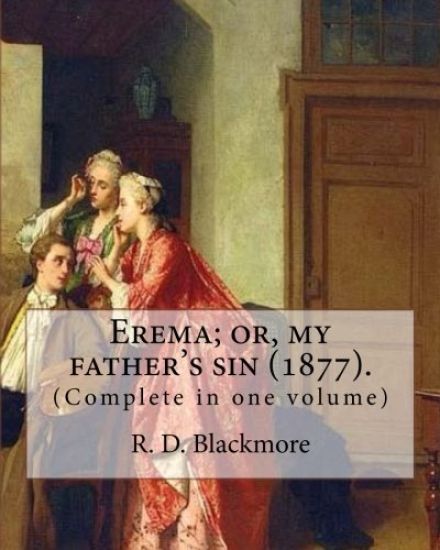
Erema; or, my father's sin is a three-volume novel by R. D. Blackmore published in 1877. The novel is narrated by a teenage girl called Erema whose father escaped from England having been charged with a murder he did not commit. Erema has grown up in exile with her father, and the story begins in California in the 1850s. Plot The novel is narrated by the heroine of the story. Erema is the child of a Captain Castlewood, who had been imprisoned on a charge of murdering his father, an English peer, had made his escape from jail while the enquiry was pending, and spent the rest of his life in a miserable exile. His six children had died of diphtheria while he was in prison, and his wife had quickly followed them, leaving only Erema, a newborn infant, to share her father's exile and disgrace. Hand-in-hand these two have wandered together over the earth, till Erema has become a girl of fifteen, and fate brings the luckless pair to California. Here, in a wild parched region of desert, the father dies, and Erema is left solitary. But at this point of her story she is rescued and taken in hand by an old countryman of her father's, Sampson Gundry, who with his grandson, young Ephraim, works a sawmill in the district. He owns a stretch of country along the banks of the swift Blue River. He made a fortune, not by gold-digging, though the very soil he trod on sparkled with nuggets, but by cutting wood. He takes in the orphan child and rears her as his own. 4] In time Erema picks up the story of her father's life-the accusation of murder that had driven him abroad, but which had never been either proved or contradicted. At last she is determined to devote as much of her own life as shall be found necessary to clearing his memory from all shame and blame. With this purpose she crosses the Atlantic, visits her birthplace, and sets to work to hunt out the mystery. By a series of chances she succeeds in discovering the real murderer, and establishes the fact that her father was not only innocent of the crime, but had acted in silence a hero's part. Moreover, by the death of the reigning Lord Castlewood, her cousin, she comes into the family title and estates. Having completed her self-imposed mission, she sets out on her way back to California and the sawmill; reaches the other side of the Atlantic in time to help in nursing the sick and wounded in the civil war; and among them finds her old friends, Sampson Gundry and his grandson, arrayed on opposite sides in the war. The young peeress concludes her romantic history by becoming the wife of the sawyer's grandson.... Richard Doddridge Blackmore (7 June 1825 - 20 January 1900), known as R. D. Blackmore, was one of the most famous English novelists of the second half of the nineteenth century. He won acclaim for vivid descriptions and personification of the countryside, sharing with Thomas Hardy a Western England background and a strong sense of regional setting in his works. Blackmore, often referred to as the "Last Victorian", was a pioneer of the movement in fiction that continued with Robert Louis Stevenson and others. He has been described as "proud, shy, reticent, strong-willed, sweet-tempered, and self-centred." Apart from his novel Lorna Doone, which has enjoyed continuing popularity, his work has gone out of print..........
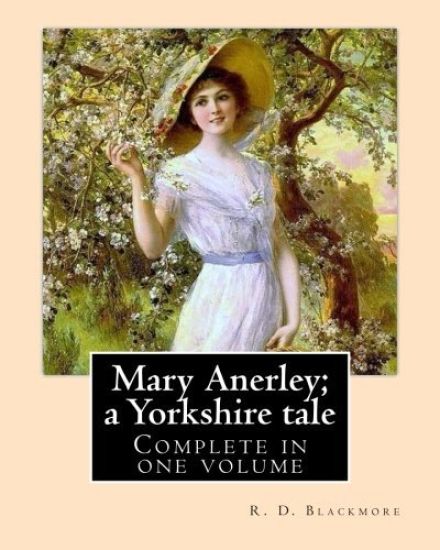
Mary Anerley: a Yorkshire tale is a three-volume novel by R. D. Blackmore published in 1880. The novel is set in the rugged landscape of Yorkshire's North Riding and the sea-coast of its East Riding. Plot introduction The story of Mary Anerley opens in the year 1801, at Scargate Hall, "in the wildest and most rugged part of the wild and rough North Riding"; the first chapter being practically a prologue, which sets forth the strangely dramatic death of Squire Philip Yordas just after he had made a will disinheriting his son Duncan. Thus Scargate Hall, when first described to the reader, is the property two sisters, Philippa Yordas and Eliza Carnaby. Mr. Jellicorse, the family lawyer, comes by chance upon evidence of a fatal flaw in the sisters' title to the estate, and rides over to make them acquainted with this unpleasant fact. In the sixth chapter of the book we are introduced to Anerley Farm, a place about a hundred and twenty miles from Scargate Hall, and the home of Mary Anerley.As Mary rides down the hollow of the Dyke on the same morning on which Mr. Jellicorse leaves Scargate Hall, she falls in with a man who is running for his life from other men who are pursuing him and shooting at him.Acting on the impulse of a moment, she shows him a place where he can hide. This man is Robin Lyth, who as a child was found washed ashore in a little cove north of Flamborough Head, and raised by foster parents. He is on the run from Captain Carroway, a coastguard officer. Love blossoms between Mary and Robin Lyth, but many obstacles interfere with true love's course...... Richard Doddridge Blackmore (7 June 1825 - 20 January 1900), known as R. D. Blackmore, was one of the most famous English novelists of the second half of the nineteenth century. He won acclaim for vivid descriptions and personification of the countryside, sharing with Thomas Hardy a Western England background and a strong sense of regional setting in his works. Blackmore, often referred to as the "Last Victorian", was a pioneer of the movement in fiction that continued with Robert Louis Stevenson and others. He has been described as "proud, shy, reticent, strong-willed, sweet-tempered, and self-centred." Apart from his novel Lorna Doone, which has enjoyed continuing popularity, his work has gone out of print. Biography: Richard Doddridge Blackmore was born on 7 June 1825 at Longworth in Berkshire (now Oxfordshire), one year after his elder brother Henry (1824-1875), where his father, John Blackmore, was Curate-in-charge of the parish. His mother died a few months after his birth - the victim of an outbreak of typhus which had occurred in the village. After this loss John Blackmore moved to Bushey, Herts, then to his native Devon, first to Kings Nympton, then Culmstock, Tor Mohun and later to Ashford, in the same county. 2] Richard, however, was taken by his aunt, Mary Frances Knight, and after her marriage to the Rev. Richard Gordon, moved with her to Elsfield rectory, near Oxford. His father married again in 1831, whereupon Richard returned to live with him. Having spent much of his childhood in the lush and pastoral "Doone Country" of Exmoor, and along the Badgworthy Water (where there is now a memorial stone in Blackmore's honour), Blackmore came to love the very countryside he immortalised in Lorna Doone. ......
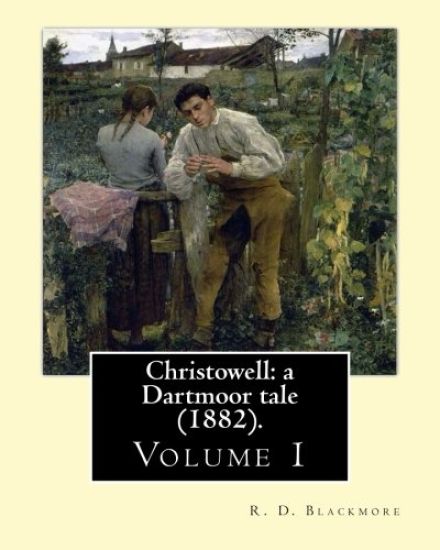
Christowell: a Dartmoor tale is a three-volume novel by R. D. Blackmore published in 1882. It is set in the fictional village of Christowell on the eastern edge of Dartmoor. Plot introduction The complex and picturesque life which goes on in the parish of Christowell is the theme of the novel.The story begins with the garden where resides "Captain Larks," alias Mr. Arthur, who is neither Mr. Arthur nor "Captain Larks," but a mysterious soldier who renounced his own good name to save one who was his brother and fellow officer from disgrace. Misfortune has driven him into retirement, and so he lives among his flowers and fruit. Nobody knows anything about him, save the clergyman, Parson Short.Mr. Arthur has a daughter, Rose, who, after visiting him as a child during her holidays for several years, at last comes to live with him at his cottage. It is when she appears, however, that her father's troubles may be said to begin; for she falls in love with Jack Westcombe the son of a retired officer, whom Rose's father declines to see, conscious of the cloud that rests on himself. Among other characters there are Pugsley the carrier, Sir Joseph Touchwood, who has made a fortune out of shoes supplied by contract to Lord Wellington's army, Julia Touchwood, and a Richard ("Dicky") Touchwood who achieves small honors at Cambridge, but greater ones at home as a rat-catcher. The villain of the plot is a Mr. Gaston who attempts every crime from murder to bribery to compass his ends, and succeeds in hoodwinking every one for some time and keeping Mr. Arthur out of his lawful inheritance................ Richard Doddridge Blackmore (7 June 1825 - 20 January 1900), known as R. D. Blackmore, was one of the most famous English novelists of the second half of the nineteenth century. He won acclaim for vivid descriptions and personification of the countryside, sharing with Thomas Hardy a Western England background and a strong sense of regional setting in his works. Blackmore, often referred to as the "Last Victorian", was a pioneer of the movement in fiction that continued with Robert Louis Stevenson and others. He has been described as "proud, shy, reticent, strong-willed, sweet-tempered, and self-centred." Apart from his novel Lorna Doone, which has enjoyed continuing popularity, his work has gone out of print. Biography: Richard Doddridge Blackmore was born on 7 June 1825 at Longworth in Berkshire (now Oxfordshire), one year after his elder brother Henry (1824-1875), where his father, John Blackmore, was Curate-in-charge of the parish. His mother died a few months after his birth - the victim of an outbreak of typhus which had occurred in the village. After this loss John Blackmore moved to Bushey, Herts, then to his native Devon, first to Kings Nympton, then Culmstock, Tor Mohun and later to Ashford, in the same county. 2] Richard, however, was taken by his aunt, Mary Frances Knight, and after her marriage to the Rev. Richard Gordon, moved with her to Elsfield rectory, near Oxford. His father married again in 1831, whereupon Richard returned to live with him. Having spent much of his childhood in the lush and pastoral "Doone Country" of Exmoor, and along the Badgworthy Water (where there is now a memorial stone in Blackmore's honour), Blackmore came to love the very countryside he immortalised in Lorna Doone. .......