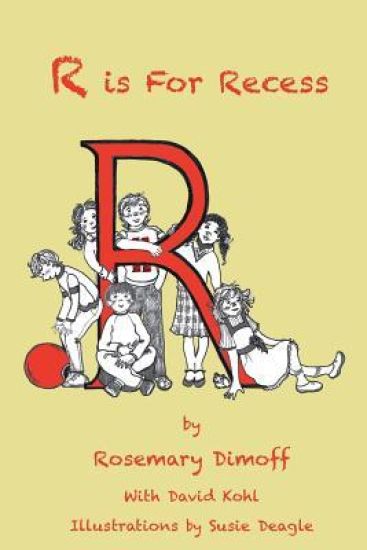
25 maverick 5th graders have devastated 5 teachers in less than a week when Angie Moff steps in as a substitute teacher. A wild ride through antagonism, insults, isolation, and a wayward rodent ensues. With patience, humor, insight, and a bit of sarcasm, Mrs. Moff tells the tale, as a glimmer of hope emerges from clever planning, academic structure, consistency, supportive school staff, parental involvement, and a dose of good luck to redirect this resilient and intelligent core of clever adolescents in search of security, reputation, understanding, and acceptence.This is a true story of high classroom adventure, feral students, unconventional wisdom, empathy, and sound educational practice; an entertaining read for parents, educators, and mature students; and recommended to anyone pondering a career involving education.
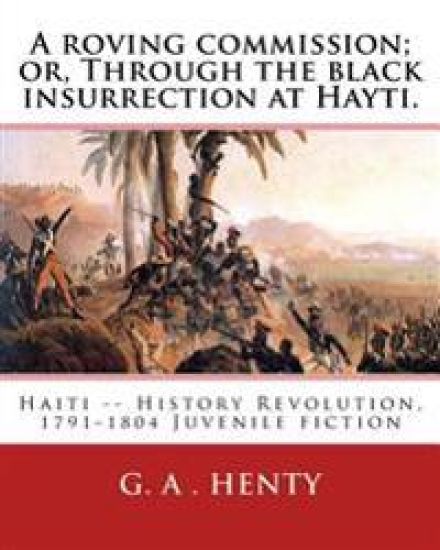
George Alfred Henty (8 December 1832 - 16 November 1902) was a prolific English novelist and war correspondent.He is best known for his historical adventure stories that were popular in the late 19th century. His works include The Dragon & The Raven (1886), For The Temple (1888), Under Drake's Flag (1883) and In Freedom's Cause (1885).Biography--G.A.Henty was born in Trumpington, near Cambridge. He was a sickly child who had to spend long periods in bed. During his frequent illnesses he became an avid reader and developed a wide range of interests which he carried into adulthood. He attended Westminster School, London, and later Gonville and Caius College, Cambridge, where he was a keen sportsman. He left the university early without completing his degree to volunteer for the Army Hospital Commissariat when the Crimean War began. He was sent to the Crimea and while there he witnessed the appalling conditions under which the British soldier had to fight. His letters home were filled with vivid descriptions of what he saw. His father was impressed by his letters and sent them to The Morning Advertiser newspaper which printed them. This initial writing success was a factor in Henty's later decision to accept the offer to become a special correspondent, the early name for journalists now better known as war correspondents. Shortly before resigning from the army as a captain in 1859 he married Elizabeth Finucane. The couple had four children. Elizabeth died in 1865 after a long illness and shortly after her death Henty began writing articles for the Standard newspaper. In 1866 the newspaper sent him as their special correspondent to report on the Austro-Italian War where he met Giuseppe Garibaldi. He went on to cover the 1868 British punitive expedition to Abyssinia, the Franco-Prussian War, the Ashanti War, the Carlist Rebellion in Spain and the Turco-Serbian War.He also witnessed the opening of the Suez Canal and travelled to Palestine, Russia and India. Henty was a strong supporter of the British Empire all his life; according to literary critic Kathryn Castle: "Henty...exemplified the ethos of the new imperialism, and glorified in its successes".Henty's ideas about politics were influenced by writers such as Sir Charles Dilke and Thomas Carlyle.Henty once related in an interview how his storytelling skills grew out of tales told after dinner to his children. He wrote his first children's book, Out on the Pampas in 1868, naming the book's main characters after his children. The book was published by Griffith and Farran in November 1870 with a title page date of 1871. While most of the 122 books he wrote were for children, he also wrote adult novels, non-fiction such as The March to Magdala and Those Other Animals, short stories for the likes of The Boy's Own Paper and edited the Union Jack, a weekly boy's magazine.
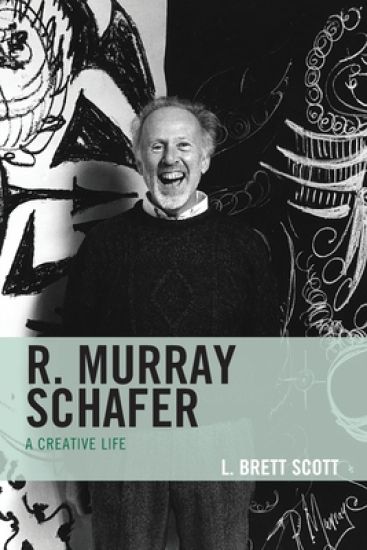
R. Murray Schafer: A Creative Life is the authoritative exploration of the life and work of this preeminent Canadian composer, artist, educator, and activist. Working closely with the composer and his family, L. Brett Scott has created the most up-to-date and accurate exploration of Schafer. Scott draws on many public and private sources, including the composer’s own journals and correspondence, which have not been previously available to researchers. Scott discusses Schafer’s extensive writings, including his research writings on Ezra Pound and E. T. A. Hoffmann, and his multiple works of fiction. The volume also includes a detailed summary of Schafer’s work in the field of acoustic ecology and recognition of his role as founder of the World Soundscape Project as well as an overview of his writings on creative music education.With complete discussions of his theater works, choral compositions, compositions for voice, chamber pieces, orchestral compositions, and early and transitional works and a chronological list of compositions and select discography, this volume presents the most comprehensive study of Schafer and his enduring legacy.
Ralph Waldo Emerson (May 25, 1803 - April 27, 1882), known professionally as Waldo Emerson, was an American essayist, lecturer, and poet who led the transcendentalist movement of the mid-19th century. He was seen as a champion of individualism and a prescient critic of the countervailing pressures of society, and he disseminated his thoughts through dozens of published essays and more than 1,500 public lectures across the United States. Emerson gradually moved away from the religious and social beliefs of his contemporaries, formulating and expressing the philosophy of transcendentalism in his 1836 essay "Nature". Following this groundbreaking work, he gave a speech entitled "The American Scholar" in 1837, which Oliver Wendell Holmes Sr. considered to be America's "intellectual Declaration of Independence". Emerson wrote most of his important essays as lectures first and then revised them for print. His first two collections of essays, Essays: First Series (1841) and Essays: Second Series (1844), represent the core of his thinking. They include the well-known essays "Self-Reliance", "The Over-Soul", "Circles", "The Poet" and "Experience". Together with "Nature", these essays made the decade from the mid-1830s to the mid-1840s Emerson's most fertile period. Emerson wrote on a number of subjects, never espousing fixed philosophical tenets, but developing certain ideas such as individuality, freedom, the ability for humankind to realize almost anything, and the relationship between the soul and the surrounding world. Emerson's "nature" was more philosophical than naturalistic: "Philosophically considered, the universe is composed of Nature and the Soul". Emerson is one of several figures who "took a more pantheist or pandeist approach by rejecting views of God as separate from the world." He remains among the linchpins of the American romantic movement, and his work has greatly influenced the thinkers, writers and poets that followed him. When asked to sum up his work, he said his central doctrine was "the infinitude of the private man."Emerson is also well known as a mentor and friend of Henry David Thoreau, a fellow transcendentalist.
This book is an exploration of the R programming language. It begins by explaining to you the main uses of the R programming language and where it is normally applied. You are then guided on how to setup the programming environment, both on Windows and Linux. The various data types available in R are discussed, and you will learn how to define and use all of these. Variables, which are of great utility in any programming language are explored, thus, you will learn how to define variables in R. The R programming language supports decision-making. The various decision-making statements which are supported in this language are examined. Loops are also of great importance when we are drawing graphs and charts in R. They specify a section of code which is to be executed a number of times. These have been explored in this book in detail. Functions, which are good for the grouping of code are explored, along with order strings, vectors, and lists, which are the data types of great importance in R. Matrices represent a data type which can be used for storing data in a number of dimensions. This book explores the use of matrices in R, thus, you will know how to work with these. Arrays, which are more advanced than matrices have also been discussed. The book also guides you on how to work with factors and data frames.The following topics are discussed in this book: -A Brief Overview of R Programming-Setting up the Environment-Data Types in R-Variables-Decision Making-Loops-Functions-Strings-Vectors-Lists-Matrices-Arrays-Factors-Data Frame