Kirjojen hintavertailu. Mukana 12 390 323 kirjaa ja 12 kauppaa.

Kirjahaku

Etsi kirjoja tekijän nimen, kirjan nimen tai ISBN:n perusteella.

1000 tulosta hakusanalla Reynold Jay

Electoral Systems and Democratization in Southern Africa

Electoral Systems and Democratization in Southern Africa

Andrew Reynolds

Oxford University Press
1999
sidottu
The design of electoral systems and executive types is increasingly being recognized the key lever of constitutional engineering to be applied in the interests of political accommodation and stability in ethnically divided societies. In this groundbreaking comparative study of democratic design in Southern Africa, Andrew Reynolds finds that the decisions about how to constitute representative parliaments have wide ranging effects on the type of parties and party system that develops, the nature of executive-legislative relations, and the inclusiveness of both majority and minority interests in the process of governance. While electoral system design is the primary focus of the book, the related constitutional issues of whether to choose a presidential or parliamentary system, and whether to entrench consensual, consociational or majoritarian government are also discussed. Analysing the experiences of Malawi, Namibia, South Africa, Zambia, and Zimbabwe, the author presents a host of revealing conclusions that help shed light on the success or failure of democratic design in other fledgling democracies, in both Africa and beyond.
Oxford Reading Tree TreeTops Greatest Stories: Oxford Level 12: Who Needs Stories?
What are stories for? Well, let the storyteller show you ... the North Wind and the Sun compete to find out who is better, proving that kindness is better than anger. Can a crocodile and a monkey help solve an argument between friends? Allow children to escape into another world and discover the power of stories for themselves. TreeTops Greatest Stories offers children some of the worlds best-loved tales in a collection of timeless classics. Top children's authors and talented illustrators work together to bring to life our literary heritage for a new generation, engaging and delighting children. The books are carefully levelled, making it easy to match every child to the right book. Each book contains inside cover notes to help children explore the content, supporting their reading development. Teaching notes on Oxford Owl offer cross-curricular links and activities to support guided reading, writing, speaking and listening.
Activate Physics Student Book

Activate Physics Student Book

Helen Reynolds

Oxford University Press
2014
nidottu
Activate is a new Key Stage 3 Science course for the 2014 curriculum, designed to support every student on their journey through Key Stage 3 to Key Stage 4 success. This student book will spark students' curiosity in physics, whilst gradually building the maths, literacy and working scientifically skills vital for success in the new KS4 qualifications. This physics book has three physics units (P1, P2, and P3) with working scientifically integrated throughout. This new area of the curriculum also has its own introductory chapter and activities, so you can be sure students receive maximum support. Use P1 and P2 to cover the Programme of Study in two years. Use P3 for a contextual consolidation and extension of content.
AQA GCSE Physics for Combined Science (Trilogy) Workbook: Foundation
The UK's bestselling GCSE Science series is specifically tailored for the current AQA GCSE Science (9-1) specifications. This workbook is the perfect companion for the series and supports students on their journey from KS3 to success at GCSE. Key features: - Additional support for Foundation students to help them succeed at GCSE - Topics follow the order of the Student Book, with carefully designed questions to help capture important notes as students work through the course - Plenty of engaging activities help consolidate learning and reinforce key concepts - Questions and activities specifically focused on the maths and practical skills required for the exam - 'I can' checklists help students to monitor their own progress - 'What I need to remember' to help students remember key concepts
OCR Gateway Physics for GCSE Combined Science Student Book
Please note this book is suitable for any student studying: Exam board: OCR Level: GCSE (9-1) Subject: Physics First teaching: September 2016 First exams: June 2018 These resources have been created specifically for the new 2016 OCR Gateway GCSE (9-1) specifications, providing support for the new harder GCSE content and increased maths requirements, as well as all required practicals. As OCR's Publishing Partner for Science, we work with OCR throughout the development of the qualifications to deliver high quality resources. - Created specfically for the new OCR Gateway (9-1) specifications - Built-in assessment and differentiation makes progress tracking easy - Students of all abilities are supported through the new, more demanding GCSE with ramped questions and differentiated objectives for every topic - Maths skills are built through exclusive direct, specification-matched links to MyMaths via Kerboodle, alongside worked examples and practice questions throughout the Student Books. - Practical skills are developed throughout the Student Books, with specific practice for the new practical questions and a bank of practical activities on Kerboodle - Multiple-choice, maths, practical and synoptic questions are included throughout
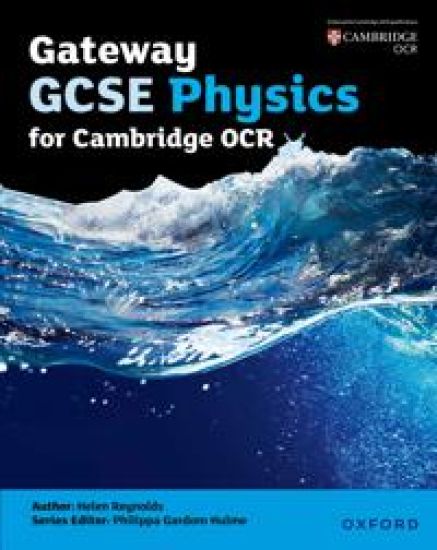
OCR Gateway GCSE Physics Student Book

OCR Gateway GCSE Physics Student Book

Helen Reynolds

Oxford University Press
2016
nidottu
Please note this book is suitable for any student studying: Exam board: OCR Level: GCSE (9-1) Subject: Physics First teaching: September 2016 First exams: June 2018 These resources have been created specifically for the new 2016 OCR Gateway GCSE (9-1) specifications, providing support for the new harder GCSE content and increased maths requirements, as well as all required practicals. As OCR's Publishing Partner for Science, we work with OCR throughout the development of the qualifications to deliver high quality resources. - Created specfically for the new OCR Gateway (9-1) specifications - Built-in assessment and differentiation makes progress tracking easy - Students of all abilities are supported through the new, more demanding GCSE with ramped questions and differentiated objectives for every topic - Maths skills are built through exclusive direct, specification-matched links to MyMaths via Kerboodle, alongside worked examples and practice questions throughout the Student Books. - Practical skills are developed throughout the Student Books, with specific practice for the new practical questions and a bank of practical activities on Kerboodle - Multiple-choice, maths, practical and synoptic questions are included throughout
AQA GCSE Physics for Combined Science (Trilogy) Workbook: Higher
The UK's bestselling GCSE Science series is specifically tailored for the current AQA GCSE Science (9-1) specifications. This workbook is the perfect companion for use throughout the course, supporting students on their journey from KS3 to success at GCSE. Stretches and challenges students sitting the higher tier for AQA GCSE Combined Science: Trilogy Topics follow the order of the Student Book, with carefully designed questions to help capture important notes as students work through the course Activities help develop higher-order skills and deepen understanding of key concepts Includes questions and activities specifically focused on the required maths and practical skills Includes hints to help students answer difficult questions Checklists help students to monitor their own progress
Oxford Reading Tree TreeTops Greatest Stories: Oxford Level 12: Who Needs Stories? Pack 6
What are stories for? Well, let the storyteller show you... the North Wind and the Sun compete to find out who is better, proving that kindness is better than anger. Can a crocodile and a monkey help solve an argument between friends? Allow children to escape into another world and discover the power of stories for themselves. TreeTops Greatest Stories offers children some of the worlds best loved tales in a collection of timeless classics. Top children's authors and talented illustrators work together to bring to life our literary heritage for a new generation, engaging and delighting children. The books are carefully levelled, making it easy to match every child to the right book. Each book contains inside cover notes to help children explore the content, supporting their reading development. Teaching notes on Oxford Owl offer cross-curricular links and activities to support guided reading, writing, speaking and listening. This pack provides 6 copies of the same title.
AQA GCSE Physics Workbook: Higher

AQA GCSE Physics Workbook: Higher

Helen Reynolds; Darren Forbes

Oxford University Press
2017
nidottu
The UK's bestselling GCSE Science series is specifically tailored for the current AQA GCSE Science (9-1) specifications. This workbook is the perfect companion for use throughout the course, supporting students on their journey from KS3 to success at GCSE. Stretches and challenges students sitting the higher tier in AQA Physics GCSE Topics follow the order of the Student Book, with carefully designed questions to help capture important notes as students work through the course Activities help develop higher-order skills and deepen understanding of key concepts Includes questions and activities specifically focused on the required maths and practical skills Includes hints to help students answer difficult questions
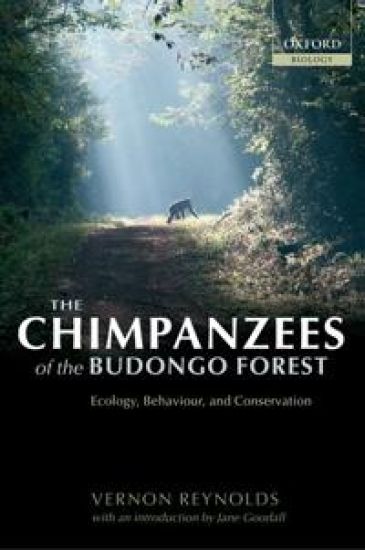
The Chimpanzees of the Budongo Forest

The Chimpanzees of the Budongo Forest

Vernon Reynolds

Oxford University Press
2005
nidottu
Unlike humans, who came down from the trees and developed bipedal locomotion, chimpanzees have remained in the original habitat of our ancestors: the tropical rainforests of Africa. In this book, Vernon Reynolds describes in detail the work of a large number of students and senior researchers on the wild chimpanzees of the Budongo Forest Reserve in Western Uganda. He presents a coherent and in-depth account of one chimpanzee community of more than 60 individuals living in the Sonso area in the middle of the Budongo Forest, which he and his colleagues have studied intensively over the last 15 years. The chimpanzees have never been provisioned and live in an entirely natural state. Reynolds describes their forest habitat, their diet and culture, their social organization and behaviour, their diseases, and the threats to them that derive from the actions of people in the surrounding villages, the most serious of these being the presence of snares set by hunters to catch small antelopes and pigs. As founder and head of the Budongo Forest Project, Professor Reynolds has been responsible for compiling the numerous publications, reports, and dissertations written about these chimpanzees. In this book, he combines these new and often unpublished studies with past publications about Budongo Forest. Where appropriate, he also compares the Budongo chimpanzees with wild chimpanzees studied at other sites across Africa. The result is the most comprehensive account of the Budongo chimpanzees ever published, with a wealth of referenced material that will serve as a source of information for many years to come.
Translation

Translation

Matthew Reynolds

Oxford University Press
2016
nidottu
Translation is everywhere, and matters to everybody. Translation doesn't only give us foreign news, dubbed films and instructions for using the microwave: without it, there would be no world religions, and our literatures, our cultures, and our languages would be unrecognisable. In this Very Short Introduction, Matthew Reynolds gives an authoritative and thought-provoking account of the field, from ancient Akkadian to World English, from St Jerome to Google Translate. He shows how translation determines meaning, how it matters in commerce, empire, conflict and resistance, and why it is fundamental to literature and the arts. ABOUT THE SERIES: The Very Short Introductions series from Oxford University Press contains hundreds of titles in almost every subject area. These pocket-sized books are the perfect way to get ahead in a new subject quickly. Our expert authors combine facts, analysis, perspective, new ideas, and enthusiasm to make interesting and challenging topics highly readable.
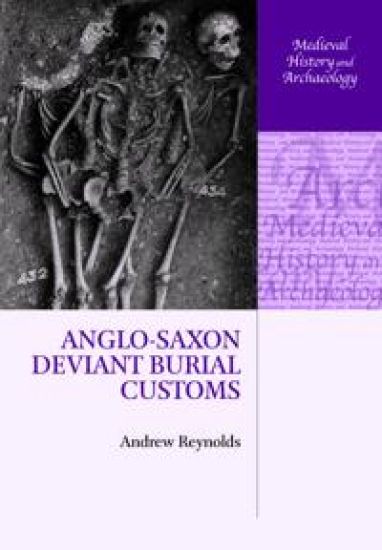
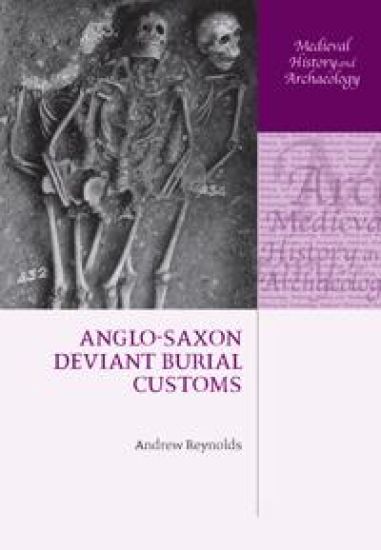
Anglo-Saxon Deviant Burial Customs

Anglo-Saxon Deviant Burial Customs

Andrew Reynolds

Oxford University Press
2014
nidottu
Anglo-Saxon Deviant Burial Customs is the first detailed consideration of the ways in which Anglo-Saxon society dealt with social outcasts. Beginning with the period following Roman rule and ending in the century following the Norman Conquest, it surveys a period of fundamental social change, which included the conversion to Christianity, the emergence of the late Saxon state, and the development of the landscape of the Domesday Book. While an impressive body of written evidence for the period survives in the form of charters and law-codes, archaeology is uniquely placed to investigate the earliest period of post-Roman society - the fifth to seventh centuries - for which documents are lacking. For later centuries, archaeological evidence can provide us with an independent assessment of the realities of capital punishment and the status of outcasts. Andrew Reynolds argues that outcast burials show a clear pattern of development in this period. In the pre-Christian centuries, 'deviant' burial remains are found only in community cemeteries, but the growth of kingship and the consolidation of territories during the seventh century witnessed the emergence of capital punishment and places of execution in the English landscape. Locally determined rites, such as crossroads burial, now existed alongside more formal execution cemeteries. Gallows were located on major boundaries, often next to highways, always in highly visible places. The findings of this pioneering national study thus have important consequences on our understanding of Anglo-Saxon society. Overall, Reynolds concludes, organized judicial behaviour was a feature of the earliest Anglo-Saxon kingdoms, rather than just the two centuries prior to the Norman Conquest.
Left Out

Left Out

Kimberley Reynolds

Oxford University Press
2016
sidottu
Left Out presents an alternative and corrective history of writing for children in the first half of the twentieth century. Between 1910 and 1949 a number of British publishers, writers, and illustrators included children's literature in their efforts to make Britain a progressive, egalitarian, and modern society. Some came from privileged backgrounds, others from the poorest parts of the poorest cities in the land; some belonged to the metropolitan intelligentsia or bohemia, others were working-class autodidacts, but all sought to use writing for children and young people to create activists, visionaries, and leaders among the rising generation.Together they produced a significant number of both politically and aesthetically radical publications for children and young people. This 'radical children's literature' was designed to ignite and underpin the work of making a new Britain for a new kind of Briton. While there are many dedicated studies of children's literature and childrens' writers working in other periods, the years 1910-1949 have previous received little critical attention. In this study, Kimberley Reynolds shows that the accepted characterisation of inter-war children's literature as retreatist, anti-modernist, and apolitical is too sweeping and that the relationship between children's literature and modernism, left-wing politics, and progressive education has been neglected.
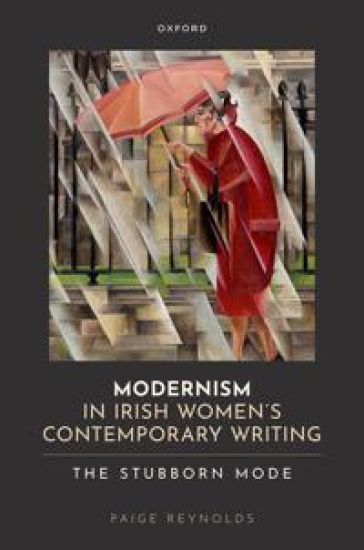
Modernism in Irish Women's Contemporary Writing

Modernism in Irish Women's Contemporary Writing

Paige Reynolds

Oxford University Press
2023
sidottu
Modernism in Irish Women's Contemporary Writing examines the tangled relationship between contemporary Irish women writers and literary modernism. In the early decades of the twenty-first century, Irish women's fiction has drawn widespread critical acclaim and commercial success, with a surprising number of these works being commended for their innovative redeployment of literary tactics drawn from early twentieth-century literary modernism. But this strategy is not a new one. Across more than a century, writers from Kate O'Brien to Sally Rooney have manipulated and remade modernism to draw attention to the vexed nature of female privacy, exploring what unfolds when the amorphous nature of private consciousness bumps up against external ordering structures in the public world. Living amid the tenaciously conservative imperatives of church and state in Ireland, their female characters are seen to embrace, reject, and rework the ritual of prayer, the fixity of material objects, the networks of the digital world, and the ordered narrative of the book. Such structures provide a stability that is valuable and even necessary for such characters to flourish, as well as an instrument of containment or repression that threatens to, and in some cases does, destroy them. The writers studied here, among them Elizabeth Bowen, Edna O'Brien, Anne Enright, Anna Burns, Claire-Louise Bennett, and Eimear McBride, employ the modernist mode in part to urge readers to recognize that female interiority, the prompt for many of the movement's illustrious formal experiments, continues to provide a crucial but often overlooked mechanism to imagine ways around and through seemingly intransigent social problems, such as class inequity, political violence, and sexual abuse.
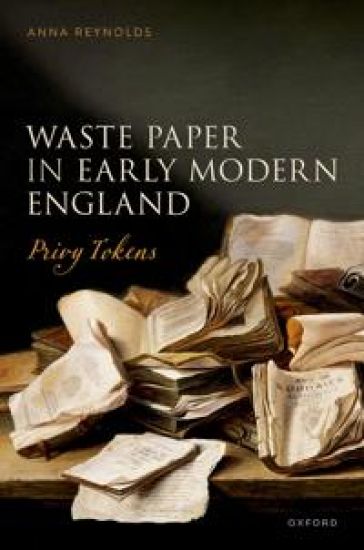
Waste Paper in Early Modern England

Waste Paper in Early Modern England

Anna Reynolds

Oxford University Press
2024
sidottu
The ubiquity of waste paper in early modern England has long been misunderstood. Though insults and modesty tropes that refer to waste paper are widespread, these have often been dismissed as nothing more than rhetorical flourishes. Paired with the common misconception that paper would have been too valuable to 'waste' in the sixteenth and seventeenth centuries, these tropes have been read as scatological flights of fancy. Waste Paper in Early Modern England argues that such commonplaces are in fact indicative of everyday, material experience - of an author's, reader's, housewife's, or city-dweller's immersion in an environment brimming with repurposed scraps and sheets. It demonstrates that waste paper makes visible a radically different understanding of waste matter in the early modern period than in our own. More than a rhetorical aside, repurposed pages were both materially and figuratively useful. Drawing on a range of literary, pictorial, and bibliographical sources, Waste Paper in Early Modern England reveals how layers of meaning accreted around paper fragments in the sixteenth and seventeenth centuries, and how, because of the widespread sensitivity to the life cycle of paper and books, wasted pages prompted meaningful imaginative work. The book's five chapters recount how, in this period, the biography of waste paper provided a thing to think with concerning matter and temporality - a potent and flexible emblem for the troublesome passage of books and all other sorts of bodies through time.
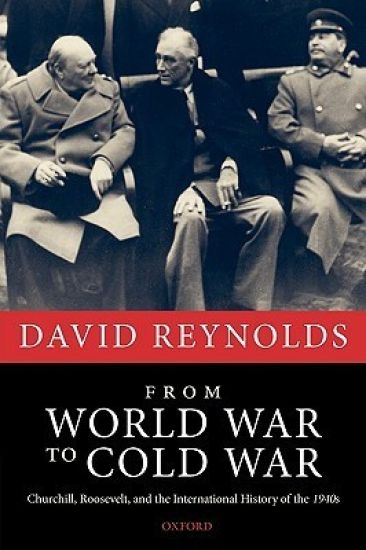
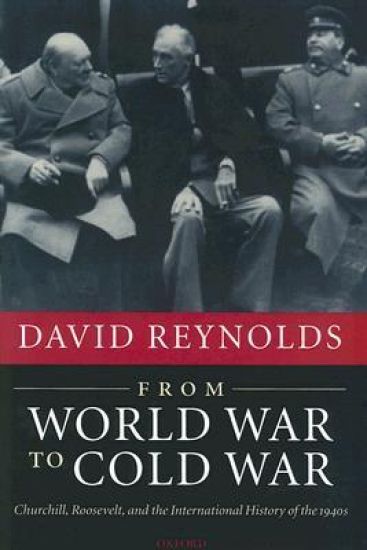
From World War to Cold War

From World War to Cold War

David Reynolds

Oxford University Press
2007
nidottu
The 1940s was probably the most dramatic and decisive decade of the 20th century. This volume explores the Second World War and the origins of the Cold War from the vantage point of two of the great powers of that era, Britain and the USA, and of their wartime leaders, Churchill and Roosevelt. It also looks at their chequered relations with Stalin and at how the Grand Alliance crumbled into an undesired Cold War. But this is not simply a story of top-level diplomacy. David Reynolds explores the social and cultural implications of the wartime Anglo-American alliance, particularly the impact of nearly three million GIs on British life, and reflects more generally on the importance of cultural issues in the study of international history.This book persistently challenges popular stereotypes - for instance on Churchill in 1940 or his Iron Curtain speech. It probes cliches such as 'the special relationship' and even 'the Second World War'. And it offers new views of the familiar, such as the Fall of France in 1940 or Franklin Roosevelt as 'the wheelchair president'. Incisive and readable, written by a leading international historian, these essays encourage us to rethink our understanding of this momentous period in world history.
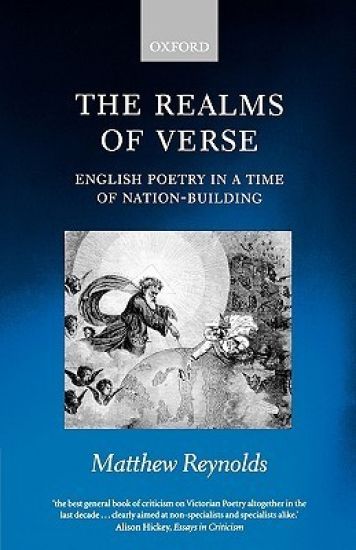
The Realms of Verse 1830-1870

The Realms of Verse 1830-1870

Matthew Reynolds

Oxford University Press
2005
nidottu
The poets of the mid-nineteenth century lived in a time of 'nation-building'. The Realms of Verse brings this political and intellectual context to life. Drawing on a wide range of soources, Matthew Reynolds shows that the Italian Risorgimento raised questions about community and individual liberty which were especially problematic for subjects of the multi-national United Kingdom, and argues that these questions are at the heart of the poetry of Robert and Elizabeth Browning, Tennyson, and Clough. Their long poems characteristically tell stories about marriage, investigating the symbolic and actual interactions between that personal union and national unity. Their verse as a whole exploits correspondences between political government and poetic form, and is alert to its own role in fostering a common culture. Historically detailed, theoretically astute, critically nimble, and stylishly written, The Realms of Verse is the most far-reaching reassessment of Victorian poetry to have been published in recent years.
From World War to Cold War

From World War to Cold War

David Reynolds

Oxford University Press
2006
sidottu
The 1940s was probably the most dramatic and decisive decade of the 20th century. This volume explores the Second World War and the origins of the Cold War from the vantage point of two of the great powers of that era, Britain and the USA, and of their wartime leaders, Churchill and Roosevelt. It also looks at their chequered relations with Stalin and at how the Grand Alliance crumbled into an undesired Cold War. But this is not simply a story of top-level diplomacy. David Reynolds explores the social and cultural implications of the wartime Anglo-American alliance, particularly the impact of nearly three million GIs on British life, and reflects more generally on the importance of cultural issues in the study of international history. This book persistently challenges popular stereotypes - for instance on Churchill in 1940 or his Iron Curtain speech. It probes cliches such as 'the special relationship' and even 'the Second World War'. And it offers new views of the familiar, such as the Fall of France in 1940 or Franklin Roosevelt as 'the wheelchair president'. Incisive and readable, written by a leading international historian, these essays encourage us to rethink our understanding of this momentous period in world history.
A Babylon Calendar Treatise: Scholars and Invaders in the Late First Millennium BC
This volume publishes in full for the first time all known cuneiform manuscripts of an Akkadian calendar treatise that is unified by the theme of Babylonia's invasion. It was composed in the milieu of Marduk's Esagil temple in Babylon, probably in the Hellenistic period before c. 170 BC. Esagil rituals are presented as essential to protect Babylonia, and specifically Marduk's principal cult statue, from foreign attack. The treatise builds the case by drawing on traditional and late Babylonian cuneiform scholarship, including astronomy-astrology, accounts of warfare with Elam and Assyria, battle myths of Marduk and Ninurta, and wordplay. Calendrical sections contain an amalgam of apotropaic ritual against invasion, astrological omens of invasion as ritual triggers, past conflicts as historical precedent, divine combatants representing human foes, and sophisticated exegesis. The work is partially preserved on damaged clay tablets in the British Museum's Babylonian collection and the volume presents hand-drawn cuneiform copies, a composite edition, and a manuscript score. A comprehensive contextualizing introduction provides readers in a range of fields - including Assyriology, classics and ancient history, ancient Iranian studies, Biblical studies, and ancient astronomy and astrology - with a key overview of topics in Mesopotamian scholarship, the manuscripts themselves, and their language and orthography. A detailed commentary explores how the treatise aims to demonstrate the critical importance of the traditional Esagil temple in Babylon for the security of Babylonia and its later imperial rulers.
Anglo-Saxon Deviant Burial Customs

Anglo-Saxon Deviant Burial Customs

Andrew Reynolds

Oxford University Press
2009
sidottu
Anglo-Saxon Deviant Burial Customs is the first detailed consideration of the ways in which Anglo-Saxon society dealt with social outcasts. Beginning with the period following Roman rule and ending in the century following the Norman Conquest, it surveys a period of fundamental social change, which included the conversion to Christianity, the emergence of the late Saxon state, and the development of the landscape of the Domesday Book. While an impressive body of written evidence for the period survives in the form of charters and law-codes, archaeology is uniquely placed to investigate the earliest period of post-Roman society, the fifth to seventh centuries, for which documents are lacking. For later centuries, archaeological evidence can provide us with an independent assessment of the realities of capital punishment and the status of outcasts. Andrew Reynolds argues that outcast burials show a clear pattern of development in this period. In the pre-Christian centuries, 'deviant' burial remains are found only in community cemeteries, but the growth of kingship and the consolidation of territories during the seventh century witnessed the emergence of capital punishment and places of execution in the English landscape. Locally determined rites, such as crossroads burial, now existed alongside more formal execution cemeteries. Gallows were located on major boundaries, often next to highways, always in highly visible places. The findings of this pioneering national study thus have important consequences on our understanding of Anglo-Saxon society. Overall, Reynolds concludes, organized judicial behaviour was a feature of the earliest Anglo-Saxon kingdoms, rather than just the two centuries prior to the Norman Conquest.