Kirjojen hintavertailu. Mukana 12 290 406 kirjaa ja 12 kauppaa.

Kirjahaku

Etsi kirjoja tekijän nimen, kirjan nimen tai ISBN:n perusteella.

1000 tulosta hakusanalla Ritva Hellsten

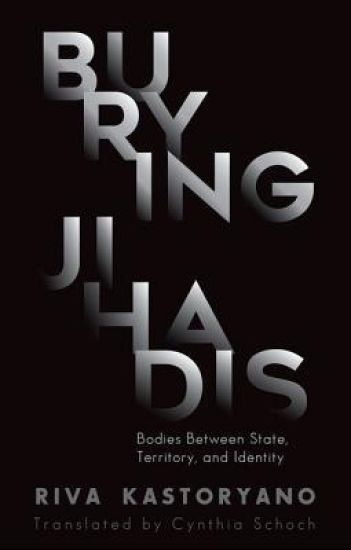
Burying Jihadis: Bodies Between State, Territory, and Identity

Burying Jihadis: Bodies Between State, Territory, and Identity

Riva Kastoryano; Cynthia Schoch

Oxford University Press, USA
2018
sidottu
What should states do with the bodies of suicide bombers and other jihadists who die while perpetrating terrorist attacks? This original and unsettling book explores the host of ethical and political questions raised by this dilemma, from (non-)legitimization of the 'enemy' and their cause to the non-territorial identity of individuals who identified in life with a global community of believers. Because states do not recognize suicide bombers as enemy combatants, governments must decide individually what to do with their remains. Riva Kastoryano offers a window onto this challenging predicament through the responses of the American, Spanish, British and French governments after the Al-Qaeda suicide attacks in New York, Madrid and London, and Islamic State's attacks on Paris in 2015. Interviewing officials, religious and local leaders and jihadists' families, both in their countries of origin and in the target nations, she has traced the terrorists' travel history, discovering unexpected connections between their itineraries and the handling of their burials. This fascinating book reveals how states' approaches to a seemingly practical issue are closely shaped by territory, culture, globalization and identity.
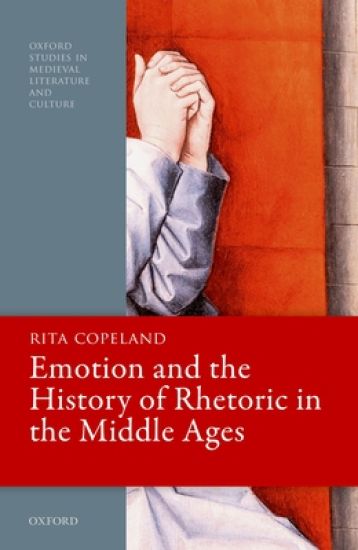
Emotion and the History of Rhetoric in the Middle Ages

Emotion and the History of Rhetoric in the Middle Ages

Rita Copeland

Oxford University Press
2021
sidottu
Rhetoric is an engine of social discourse and the art charged with generating and swaying emotion. The history of rhetoric provides a continuous structure by which we can measure how emotions were understood, articulated, and mobilized under various historical circumstances and social contracts. This book is about how rhetoric in the West, from Late Antiquity to the later Middle Ages, represented the role of emotion in shaping persuasions. It is the first book-length study of medieval rhetoric and the emotions, coloring that rhetorical history between about 600 CE and the cusp of early modernity. Rhetoric in the Middle Ages, as in other periods, constituted the gateway training for anyone engaged in emotionally persuasive writing. Medieval rhetorical thought on emotion has multiple strands of influence and sedimentations of practice. The earliest and most persistent tradition treated emotional persuasion as a property of surface stylistic effect, which can be seen in the medieval rhetorics of poetry and prose, and in literary production. But the impact of Aristotelian rhetoric, which reached the Latin West in the thirteenth century, gave emotional persuasion a core role in reasoning, incorporating it into the key device of proof, the enthymeme. In Aristotle, medieval teachers and writers found a new rhetorical language to explain the social and psychological factors that affect an audience. With Aristotelian rhetoric, the emotions became political. The impact of Aristotle's rhetorical approach to emotions was to be felt in medieval political treatises, in poetry, and in preaching.
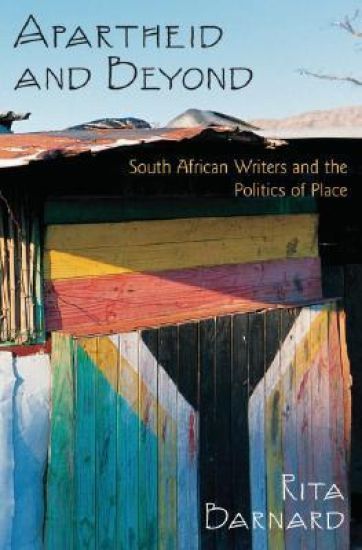
Apartheid and Beyond

Apartheid and Beyond

Rita Barnard

Oxford University Press Inc
2006
sidottu
Apartheid and Beyond is a major contribution to the study of South African literature, offering innovative readings of writers like Coetzee, Gordimer, Fugard, Tlali, and Mda. Focusing on the relationship between place, subjectivity, and literary form, this study enhances our understanding of apartheid as a geographical form of control and of its imagined and actual transformation.
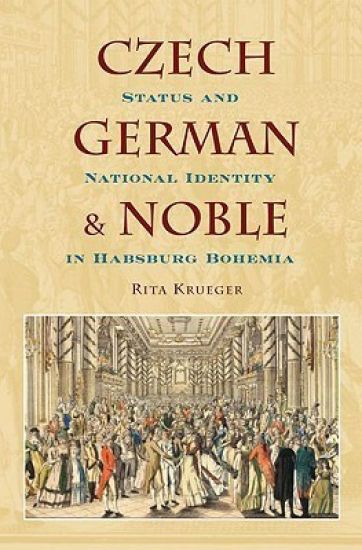
Czech, German, and Noble

Czech, German, and Noble

Rita Krueger

Oxford University Press Inc
2009
sidottu
Czech, German, and Noble examines the intellectual ideas and political challenges that inspired patriotic activity among the Bohemian nobility, the infusion of national identity into public and institutional life, and the role of the nobility in crafting and supporting the national ideal within Habsburg Bohemia. Patriotic aristocrats created the visible and public institutional framework that cultivated national sentiment and provided the national movement with a degree of intellectual and social legitimacy. The book argues that the mutating identity of the aristocracy was tied both to insecurity and to a belief in the power of science to address social problems, commitment to the ideals of enlightenment as well as individual and social improvement, and profound confidence that progress was inevitable and that intellectual achievement would save society. The aristocrats who helped create, endow and nationalize institutions were a critical component of the public sphere and necessary for the nationalization of public life overall. The book explores the myriad reasons for aristocratic participation in new or nationalized institutions, the fundamental changes in legal and social status, new ideas about civic responsibility and political participation, and the hope of reform and fear of revolution. The book examines the sociability within and creation of nascent national institutions that incorporated fundamentally new ways of thinking about community, culture, competition, and status. The argument, that class mattered to the degree that it was irrelevant, intersects with several important historical questions beyond theories of nationalism, including debates about modernization and the longevity of aristocratic power, the nature of the public sphere and class, and the measurable impact of science and intellectual movements on social and political life.
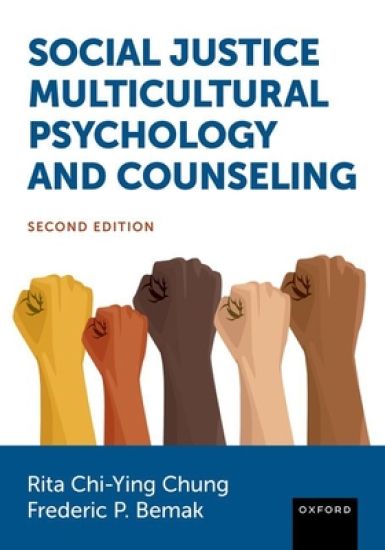
Social Justice Multicultural Psychology and Counseling

Social Justice Multicultural Psychology and Counseling

Rita Chi-Ying Chung

OXFORD UNIVERSITY PRESS INC
2023
nidottu
This book examines the next steps and new frontiers in social justice multicultural psychology and counseling. It addresses how culturally responsive psychology and counseling can effectively ameliorate issues of oppression, racism, intolerance, discrimination, and human rights violations by alleviating the injustices encountered by individuals, groups, and communities. Addressing issues of culture, social class, race and ethnicity, gender, sexual orientation, abilities, religion, and more, the book reflects the critical importance for mental health professionals to attend to social justice and human rights in their work. The book challenges readers to undergo an in-depth examination of the reasons for doing social justice work to ensure that their social actions are truly beneficial to their clients, families, and communities. The book further discusses barriers that prevent readers from doing social advocacy, such as the imposter syndrome, gaslighting, character assassination, culture of fear, and the nice counselor syndrome. It offers new and unique ideas, concepts, and perspectives for culturally responsive social justice-oriented theory, practice, and training, and presents the Multi-Phase Model of Psychotherapy, Counseling, Humans Rights and Social Justice (MPM). The authors are leading authorities on social justice, cross-cultural psychology, multicultural counseling, and human rights, and have been nationally and internationally recognized for their leadership and innovation in culturally responsive social justice-oriented psychology and counseling.
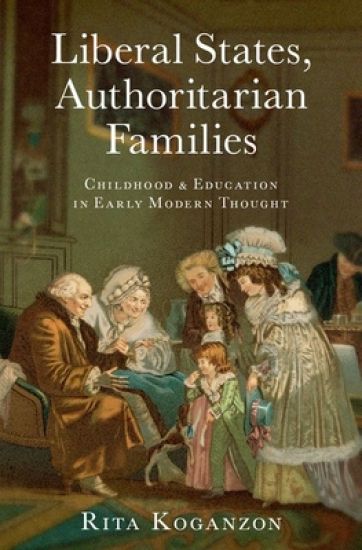
Liberal States, Authoritarian Families

Liberal States, Authoritarian Families

Rita Koganzon

Oxford University Press Inc
2021
sidottu
Children have posed a longstanding dilemma for liberalism. The authority of adults over children has always been difficult to square with liberalism's foundationally anti-authoritarian premises. But since liberal regimes rely heavily on education, finding a way to square adult authority with children's natural liberty is essential. The logic behind anti-authority childrearing and educational advice is that of congruence; to form good citizens of a liberal democracy, families and schools should resemble miniature, protected democracies so that children can practice liberty and equality in a low-risk environment. This kind of congruence between family and state has very old philosophical roots, surfacing first in ancient Greek and Christian thought and re-emerging in its modern form in the seventeenth century. In Liberal States, Authoritarian Families, Rita Koganzon rejects this impulse, demonstrating that it rests on misunderstanding and neglect of the arguments of early liberals--specifically John Locke and Jean-Jacques Rousseau--about what kind of upbringing and education liberal regimes require. Koganzon shows that not only did early liberals emphatically deny the possibility of congruence between pedagogical and political authority, but they counterintuitively demanded that parents and teachers exercise extensive personal authority over children, while denying the legitimacy of such authority over adults in politics. While contemporary theorists argue that the family should be democratized to reflect the egalitarian ideals of the liberal state, this book argues that the desire for "congruence" between familial and state authority was originally illiberal in origin, advanced by theorists of absolute sovereignty like Bodin and Hobbes. Early liberals opposed modelling the family on the state, even on a democratic, egalitarian state, because they viewed the "authoritarian" family as a necessary educational buttress for children against the new fashionable forms of social tyranny that liberal, commercial states would develop. Unlike the old authorities, these forces might leave our bodies and properties alone, but they would subtly and forcefully shape our understandings, subjecting us to a new tyranny of public opinion. Koganzon finds that the educational writings of early liberals reveal an important corrective insight for modern liberalism: authority is not the enemy of liberty, but a necessary prerequisite for it.
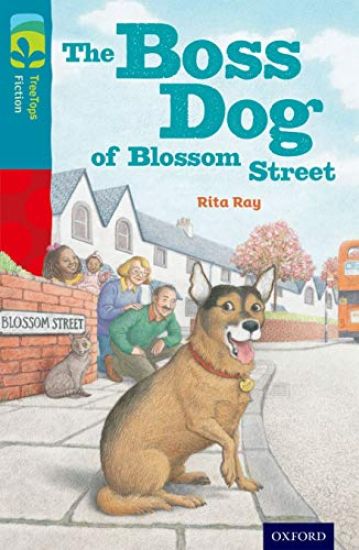
Oxford Reading Tree TreeTops Fiction: Level 9 More Pack A: The Boss Dog of Blossom Street
The Boss Dog of Blossom Street tells the story of Snap. Snap is the boss dog. Everyone knows that. Then his owners move away from Blossom Street. Will Snap find a way to return to his favourite street? TreeTops Fiction contains a wide range of quality stories enabling children to explore and develop their own reading tastes and interests. It contains stories from a variety of genres including humour, sci-fi, adventure, mystery and historical fiction. These exciting stories are ideal for introducing children to a wide selection of authors and illustrators. There is huge variety to ensure every reader finds books they will enjoy and can read. Books contain inside cover notes to support children in their reading. Help with children's reading development also available at www.oxfordowl.co.uk. The books are finely levelled, making it easy to match every child to the right book.
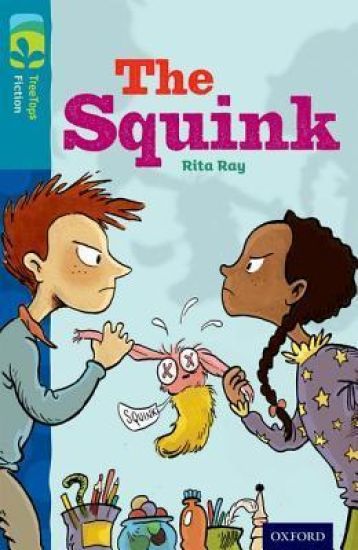
Oxford Reading Tree TreeTops Fiction: Level 9 More Pack A: The Squink
Everyone is making things for the craft fair in The Squink. Shahnaz wants to make something extra special. But what is a squink and will anyone want to buy one? TreeTops Fiction contains a wide range of quality stories enabling children to explore and develop their own reading tastes and interests. It contains stories from a variety of genres including humour, sci-fi, adventure, mystery and historical fiction. These exciting stories are ideal for introducing children to a wide selection of authors and illustrators. There is huge variety to ensure every reader finds books they will enjoy and can read. Books contain inside cover notes to support children in their reading. Help with children's reading development also available at www.oxfordowl.co.uk. The books are finely levelled, making it easy to match every child to the right book.
Emotion and the History of Rhetoric in the Middle Ages

Emotion and the History of Rhetoric in the Middle Ages

Rita Copeland

Oxford University Press
2023
nidottu
Rhetoric is an engine of social discourse and the art charged with generating and swaying emotion. The history of rhetoric provides a continuous structure by which we can measure how emotions were understood, articulated, and mobilized under various historical circumstances and social contracts. This book is about how rhetoric in the West, from Late Antiquity to the later Middle Ages, represented the role of emotion in shaping persuasions. It is the first book-length study of medieval rhetoric and the emotions, coloring that rhetorical history between about 600 CE and the cusp of early modernity. Rhetoric in the Middle Ages, as in other periods, constituted the gateway training for anyone engaged in emotionally persuasive writing. Medieval rhetorical thought on emotion has multiple strands of influence and sedimentations of practice. The earliest and most persistent tradition treated emotional persuasion as a property of surface stylistic effect, which can be seen in the medieval rhetorics of poetry and prose, and in literary production. But the impact of Aristotelian rhetoric, which reached the Latin West in the thirteenth century, gave emotional persuasion a core role in reasoning, incorporating it into the key device of proof, the enthymeme. In Aristotle, medieval teachers and writers found a new rhetorical language to explain the social and psychological factors that affect an audience. With Aristotelian rhetoric, the emotions became political. The impact of Aristotle's rhetorical approach to emotions was to be felt in medieval political treatises, in poetry, and in preaching.
The Principles and Practice of Narrative Medicine

The Principles and Practice of Narrative Medicine

Rita Charon; Sayantani DasGupta; Nellie Hermann; Craig Irvine; Eric R. Marcus; Edgar Rivera Colsn; Danielle Spencer; Maura Spiegel

Oxford University Press Inc
2016
sidottu
Narrative medicine is a fresh discipline of health care that helps patients and health professionals to tell and listen to the complex and unique stories of illness. The Principles and Practice of Narrative Medicine expresses the collective experience and discoveries of the originators of the field. Arising at Columbia University in 2000 from roots in the humanities and patient-centered care, narrative medicine draws patients, doctors, nurses, therapists, and health activists together to re-imagine a health care based on trust and trustworthiness, humility, and mutual recognition. Over a decade of education and research has crystallized the goals and methods of narrative medicine, leading to increasingly powerful means to improve the care that patients receive. The methods described in this book harness creativity and insight to help the professionals in being with patients, not just to diagnose and treat them but to bear witness to what they undergo. Narrative medicine training in literary theory, philosophy, narrative ethics, and the creative arts increases clinicians' capacity to perceive the turmoil and suffering borne by patients and to help them to cohere or endure the chaos of illness. Narrative medicine has achieved an international reputation and reach. Many health care settings adopt methods of narrative medicine in teaching and practice. Through the Master of Science in Narrative Medicine graduate program and health professions school curricula at Columbia University, more and more clinicians and scholars have obtained the rigorous training necessary to practice and teach narrative medicine. This text is offered to all who seek the opportunity for disciplined training in narrative medicine. By clearly articulating our principles and practice, this book provides the standards of the field for those who want to join us in seeking authenticity, recognition, affiliation, and justice in a narrative health care.
Apartheid and Beyond

Apartheid and Beyond

Rita Barnard

Oxford University Press Inc
2012
nidottu
Apartheid and Beyond offers trenchant, historically sensitive readings of writings by Coetzee, Gordimer, Fugard, Tlali, Dike, Magona, and Mda, focusing on the intimate relationship between place, subjectivity, and literary form. It also explores the way apartheid functioned in its day-to-day operations as a geographical system of control, exerting its power through such spatial mechanisms as residential segregation, bantustans, passes, and prisons. Throughout the study, Rita Barnard provides historical context by highlighting key events such as colonial occupation, the creation of black townships, migration, forced removals, the emergence of informal settlements, and the gradual integration of white cities. Apartheid and Beyond is both an innovative account of an important body of politically inflected literature and an imaginative reflection on the socio-spatial aspects of the transition from apartheid to democracy.
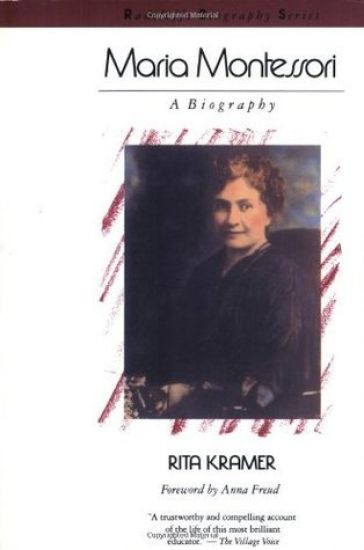
Maria Montessori

Maria Montessori

Rita Kramer

Da Capo Press Inc
1988
pokkari
Maria Montessori (1870--1952) brought about a revolution in the classroom. She developed a method of teaching small children and inspired a movement that carried that method into every corner of the world. In her rich and forthright biography, Rita Kramer brings this powerful woman to life, illuminating not only her lasting contributions to child development and social reform, but also the controversies surrounding her training methods and private life.
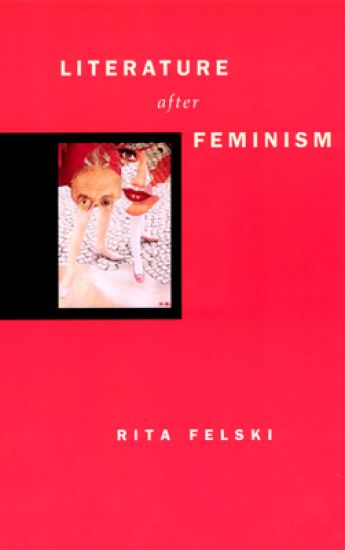
Literature after Feminism

Literature after Feminism

Rita Felski

University of Chicago Press
2003
sidottu
Recent commentators have portrayed feminist critics as grim-faced ideologues who are destroying the study of literature. Feminists, they claim, reduce art to politics and are hostile to any form of aesthetic pleasure. "Literature After Feminism" is the first work to comprehensively rebut such caricatures, while also offering a clear-eyed assessment of the relative merits of various feminist approaches to literature. Spelling out her main arguments clearly and succinctly, Rita Felski explains how feminism has changed the ways people read and think about literature. She organizes her book around four key questions: Do women and men read differently? How have feminist critics imagined the female author? What does plot have to do with gender? And what do feminists have to say about the relationship between literary and political value? Interweaving incisive commentary with literary examples, Felski advocates a double critical vision that can do justice to the social and political meanings of literature without dismissing or scanting the aesthetic. "Literature After Feminism" should be welcomed by anyone looking for a lucid and balanced account of feminist criticism.
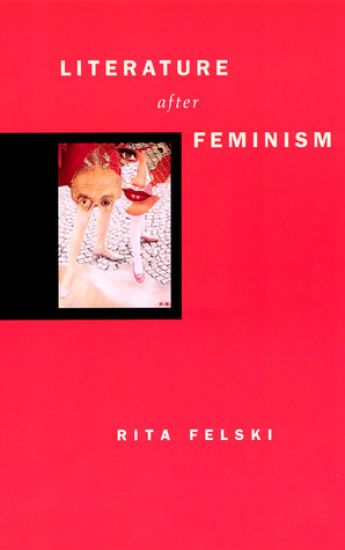
Literature after Feminism

Literature after Feminism

Rita Felski

University of Chicago Press
2003
nidottu
Recent commentators have portrayed feminist critics as grim-faced ideologues who are destroying the study of literature. Feminists, they claim, reduce art to politics and are hostile to any form of aesthetic pleasure. "Literature After Feminism" is the first work to comprehensively rebut such caricatures, while also offering a clear-eyed assessment of the relative merits of various feminist approaches to literature. Spelling out her main arguments clearly and succinctly, Rita Felski explains how feminism has changed the ways people read and think about literature. She organizes her book around four key questions: Do women and men read differently? How have feminist critics imagined the female author? What does plot have to do with gender? And what do feminists have to say about the relationship between literary and political value? Interweaving incisive commentary with literary examples, Felski advocates a double critical vision that can do justice to the social and political meanings of literature without dismissing or scanting the aesthetic. "Literature After Feminism" should be welcomed by anyone looking for a lucid and balanced account of feminist criticism.
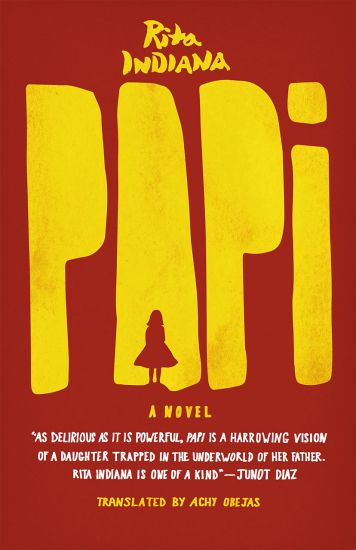
Papi

Papi

Rita Indiana

University of Chicago Press
2016
nidottu
“Papi’s there, around any corner,” says the eight-year-old girl at the heart of Papi. “But you can’t sit down and wait for him cuz that’s a longer and more painful death.” Living in Santo Domingo, she waits for her father to come back from the United States and lavish her with the glorious rewards of his fame and fortune—shiny new cars and polo shirts, gold chains and Nikes. But when Papi does come back, he turns out to be more “like Jason, the guy from Friday the 13th," than a prince. Papi is a drug dealer, a man who is clearly unreliable and dangerous but nevertheless makes his daughter feel powerful and wholly, terrifyingly alive. Drawing on her memories of a childhood split between Santo Domingo and visits with her father amid the luxuries of the United States, Rita Indiana mixes satire with a child’s imagination, horror with science fiction, in a swirling tale of a daughter’s love, the lure of crime and machismo, and the violence of the adult world. Expertly translated into English for the first time by Achy Obejas, who renders the rhythmic lyricism of Indiana’s Dominican Spanish in language that propels the book forward with the relentless beat of a merengue, Papi is furious, musical, and full of wit—a passionate, overwhelming, and very human explosion of artistic virtuosity.
The Limits of Critique

The Limits of Critique

Rita Felski

University of Chicago Press
2015
sidottu
Why must critics unmask and demystify literary works? Why do they believe that language is always withholding some truth, that the critic's task is to reveal the unsaid or repressed? In this book, Rita Felski examines critique, the dominant form of interpretation in literary studies, and situates it as but one method among many, a method with strong allure-but also definite limits. Felski argues that critique is a sensibility best captured by Paul Ricoeur's phrase "the hermeneutics of suspicion." She shows how this suspicion toward texts forecloses many potential readings while providing no guarantee of rigorous or radical thought. Instead, she suggests, literary scholars should try what she calls "postcritical reading": rather than looking behind a text for hidden causes and motives, literary scholars should place themselves in front of it and reflect on what it suggests and makes possible. By bringing critique down to earth and exploring new modes of interpretation, The Limits of Critique offers a fresh approach to the relationship between artistic works and the social world.
The Limits of Critique

The Limits of Critique

Rita Felski

University of Chicago Press
2015
nidottu
Why must critics unmask and demystify literary works? Why do they believe that language is always withholding some truth, that the critic's task is to reveal the unsaid or repressed? In this book, Rita Felski examines critique, the dominant form of interpretation in literary studies, and situates it as but one method among many, a method with strong allure-but also definite limits. Felski argues that critique is a sensibility best captured by Paul Ricoeur's phrase "the hermeneutics of suspicion." She shows how this suspicion toward texts forecloses many potential readings while providing no guarantee of rigorous or radical thought. Instead, she suggests, literary scholars should try what she calls "postcritical reading": rather than looking behind a text for hidden causes and motives, literary scholars should place themselves in front of it and reflect on what it suggests and makes possible. By bringing critique down to earth and exploring new modes of interpretation, The Limits of Critique offers a fresh approach to the relationship between artistic works and the social world.
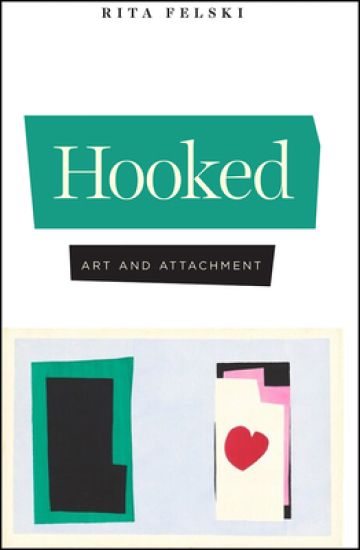
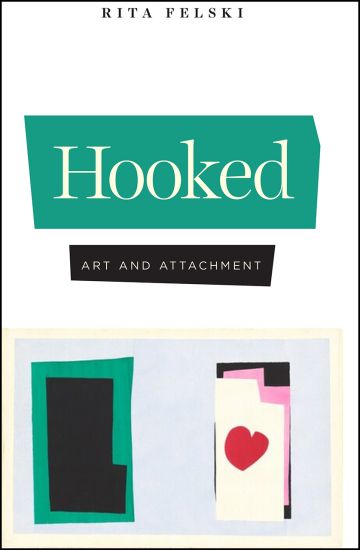
Hooked

Hooked

Rita Felski

University of Chicago Press
2020
sidottu
How does a novel entice or enlist us? How does a song surprise or seduce us? Why do we bristle when a friend belittles a book we love, or fall into a funk when a favored TV series comes to an end? What characterizes the aesthetic experiences of feeling captivated by works of art? In Hooked, Rita Felski challenges the ethos of critical aloofness that is a part of modern intellectuals’ self-image. The result is sure to be as widely read as Felski’s book, The Limits of Critique. Wresting the language of affinity away from accusations of sticky sentiment and manipulative marketing, Felski argues that “being hooked” is as fundamental to the appreciation of high art as to the enjoyment of popular culture. Hooked zeroes in on three attachment devices that connect audiences to works of art: identification, attunement, and interpretation. Drawing on examples from literature, film, music, and painting—from Joni Mitchell to Matisse, from Thomas Bernhard to Thelma and Louise—Felski brings the language of attachment into the academy. Hooked returns us to the fundamentals of aesthetic experience, showing that the social meanings of artworks are generated not just by critics, but also by the responses of captivated audiences.
Hooked

Hooked

Rita Felski

University of Chicago Press
2020
nidottu
How does a novel entice or enlist us? How does a song surprise or seduce us? Why do we bristle when a friend belittles a book we love, or fall into a funk when a favored TV series comes to an end? What characterizes the aesthetic experiences of feeling captivated by works of art? In Hooked, Rita Felski challenges the ethos of critical aloofness that is a part of modern intellectuals’ self-image. The result is sure to be as widely read as Felski’s book, The Limits of Critique. Wresting the language of affinity away from accusations of sticky sentiment and manipulative marketing, Felski argues that “being hooked” is as fundamental to the appreciation of high art as to the enjoyment of popular culture. Hooked zeroes in on three attachment devices that connect audiences to works of art: identification, attunement, and interpretation. Drawing on examples from literature, film, music, and painting—from Joni Mitchell to Matisse, from Thomas Bernhard to Thelma and Louise—Felski brings the language of attachment into the academy. Hooked returns us to the fundamentals of aesthetic experience, showing that the social meanings of artworks are generated not just by critics, but also by the responses of captivated audiences.