
Kirjahaku
Etsi kirjoja tekijän nimen, kirjan nimen tai ISBN:n perusteella.
1000 tulosta hakusanalla Robert Cornforth
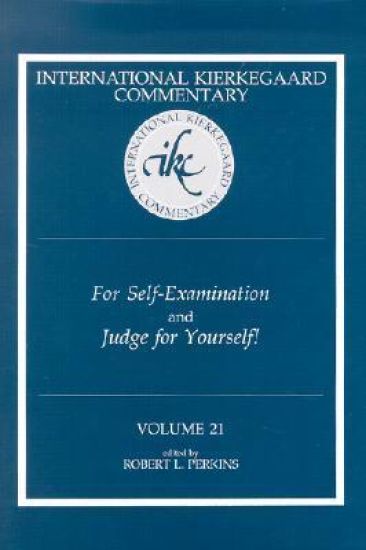
For Self-Examination and Judge for Yourself! / Edited by Robert L. Perkins.
Robert L. Perkins
Mercer University Press
2002
sidottu
For the first time in English the world community of scholars is systematically assembling and presenting the results of recent research in the vast literature of Soren Kierkegaard. Based on the definitive English edition of Kierkegaard's works by Princeton University Press, this series of commentaries addresses all the published texts of the influential Danish philosopher and theologian.

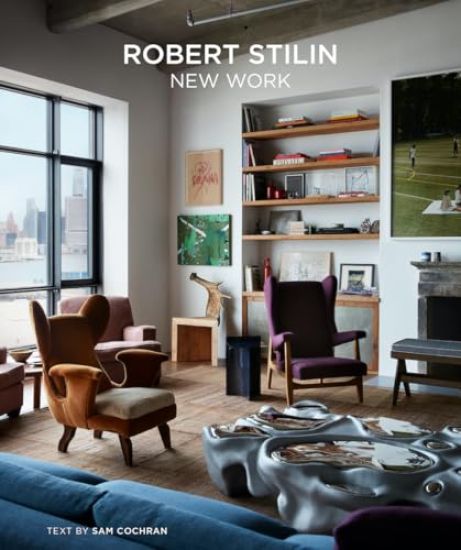
The latest projects by interior designer Robert Stilin, whose work Paper City has called "cultured and smart, with a layered and textural look" "Robert's signature combination of richly upholstered furnishings and expertly chosen antiques invites both artistic appreciation and deep relaxation." --Homes & Gardens "Interior design powerhouse Robert Stilin is admired by many for his innate ability to craft spaces that fuse elegance and edge with ease, and flawlessly deliver on the distinct desires of each client he works with." --Hamptons Since the publication of his first book, Robert Stilin: Interiors, six years ago, demand for Robert Stilin's work has spread far beyond his home base of New York City and the Hamptons. In this, his second book, he brings the signature elements of his aesthetic--strong, clean lines, warm, rich palette, antique and vintage furnishings, and custom upholstery, combined with modern and contemporary art--to projects all over the country. Among the 14 projects featured in this book are homes in Seattle, Kentucky, Montana, Connecticut, and Palm Beach, in addition to lofts and apartments in New York and country and beach houses in the Hamptons. Whether the architecture is traditional, rustic, or ultramodern, Stilin's interiors exude a casual, comfortable elegance that he expertly tailors to the specific needs and taste of each client. Sustainability is integral to Vendome's publishing process. All materials used in our books are 100% FSC-certified and we are proud to be a brand partner of Trees for the Future (https: //trees.org), supporting global communities through sustainable land use. By planting trees, we help create thriving regional economies, robust food systems, and a healthier planet.
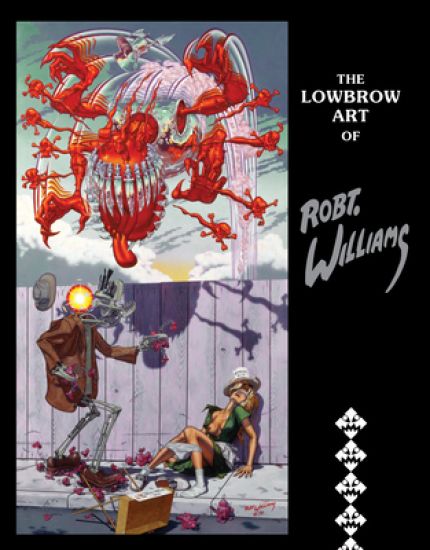
The Lowbrow Art Of Robert Williams (new Hardcover Edition)
Robert Williams
LAST GASP,U.S.
2022
sidottu

The Lowbrow Art Of Robert Williams (2nd Edition, New Edition)
Robert Williams
LAST GASP,U.S.
2022
nidottu
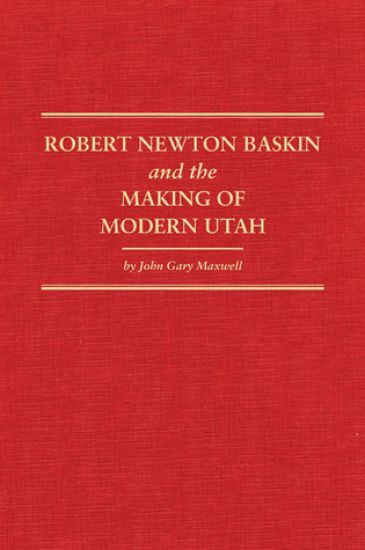
Robert Newton Baskin and the Making of Modern Utah
John Gary Maxwell
Arthur H. Clark Company
2013
sidottu
For years Robert Newton Baskin (1837 1918) may have been the most hated man in Utah. Yet his promotion of federal legislation against polygamy in the late 1800s and his work to bring the Mormon territory into a republican form of government were pivotal in Utah s achievement of statehood. The results of his efforts also contributed to the acceptance of the Church of Jesus Christ of Latter-day Saints by the American public. In this engaging biography the first full-length analysis of the man author John Gary Maxwell presents Baskin as the unsung father of modern Utah. As Maxwell shows, Baskin s life was defined by conflict and paradox.Educated at Harvard Law School, Baskin lived as a member of a minority: a gentile in Mormon Utah. A loner, he was highly respected but not often included in the camaraderie of contemporary non-Mormon professionals. When it came to the Saints, Baskin s role in the legal aftermath of the Mountain Meadows massacre did not endear him to the Mormon people or their leadership. He was convinced that Brigham Young made John D. Lee the scapegoat the planner and perpetrator of the massacre to obscure complicity of the LDS church.Baskin was successful in Utah politics despite using polygamy as a sledgehammer against Utah s theocratic government and despite his role as a federal prosecutor. He was twice elected mayor of Salt Lake City, served in the Utah legislature, and became chief justice of the Utah Supreme Court. He was also a visionary city planner the force behind the construction of the Salt Lake City and County Building, which remains the architectural rival of the city s Mormon temple.For more than a century historians have maligned Baskin or ignored him. Maxwell brings the man to life in this long-overdue exploration of a central figure in the history of Utah and of the LDS church."

Jackson Pollock, Roy Lichtenstein, Robert Rauschenberg and Jasper Johns each made a tremendous impact on modern art in the 20th century. As pioneers of revolutionary movements such as Abstract Expressionism and Pop art, they are key figures in the postwar transitions that brought American art to the forefront of the international scene. These latest volumes in the MoMA Artist Series, which explores important artists and favourite works in the collection of The Museum of Modern Art, guide readers through a dozen of each artist’s most memorable achievements. A short and lively essay by Carolyn Lanchner, a former curator of painting and sculpture at the Museum, accompanies each work, illuminating its significance and placing it in its historical moment in the development of modern art and the artist’s own life. These books provide a unique overview of the individuals who shaped the development of American art since mid-century and are excellent resources for readers interested in the stories behind the masterpieces of the modern canon.
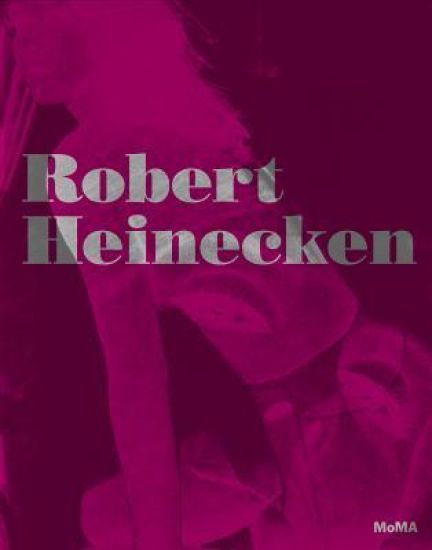
Robert Heinecken (1931-2006) was a pioneer in the postwar Los Angeles art scene who described himself as a para-photographer because his work stood ‘beside’ or ‘beyond’ traditional ideas of the medium. Published in conjunction with the first museum exhibition of the artist’s work since his death in 2006, this publication covers four decades of his remarkable and unique practice, from the early 1960s through the late 1990s, with special emphasis on his early experimentations with technique and materiality, which destabilized the very definition of photography. Culling images from newspapers, magazine advertisements, and television, Heinecken re-contextualized them through collage and assemblage, double-sided photograms, photolithography and re-photography. Although he was rarely behind the lens of a camera, his photo-based works question the nature of photography and radically redefine the perception of it as an artistic medium. As the most comprehensive survey of Heinecken’s oeuvre, this book sets his work in the context of twentieth century history of photographic experimentation and conceptual art. An illustrated essay by conservator Jennifer Jae Gutierrez about the artist’s experimental techniques, which ranged from photograms to photolithography to collage, contributes to the sparse scholarship on Heinecken’s working methods.
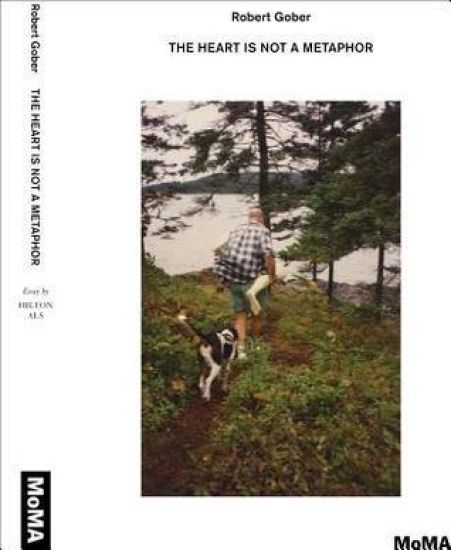
Robert Gober
Museum of Modern Art
2014
sidottu
Robert Gober rose to prominence in the mid-1980s and was quickly acknowledged as one of the most significant artists of his generation. In the years since, his reputation has continued to grow, commensurate with the rich and complex body of work he has produced. Published in conjunction with the first comprehensive large-scale survey of the artist’s career to take place in the United States, this publication presents his works in all mediums, including individual sculptures and immersive sculptural environments, as well as a distinctive selection of drawings, prints, and photographs. Prepared in close collaboration with the artist, it traces the development of a remarkable body of work, highlighting themes and motifs that emerged in the early 1980s and continue to inform the artist’s work today. An essay by Hilton Als, and an in-depth chronology with extensive input from the artist himself, foregrounds images from Gober’s archives, including many neverbefore- published photographs of works in progress.

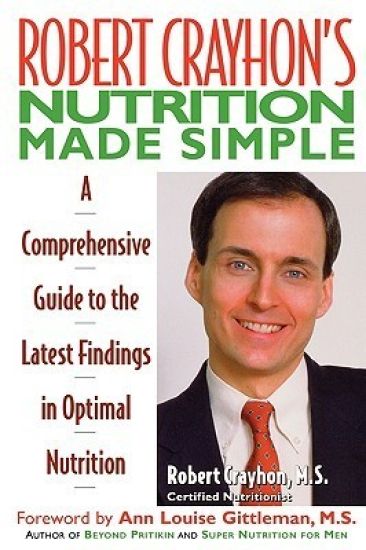
An easy-to-understand guide to human nutrition shares the latest findings in optimal nutrition, explaining how to lose weight, enjoy a better sex life, have more energy, and promote longer, healthier lives. Reprint. IP.
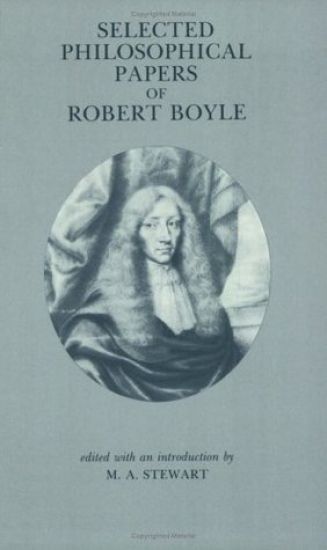
"The availability of a paperback version of Boyle's philosophical writings selected by M. A. Stewart will be a real service to teachers, students, and scholars with seventeenth-century interests. The editor has shown excellent judgment in bringing together many of the most important works and printing them, for the most part, in unabridged form. The texts have been edited responsibly with emphasis on readability. . . . Of special interest in connection with Locke and with the reception of Descarte's Corpuscularianism, to students of the Scientific Revolution and of the history of mechanical philosophy, and to those interested in the relations among science, philosophy, and religion. In fact, given the imperfections in and unavailability of the eighteenth-century editions of Boyle’s works, this collection will benefit a wide variety of seventeenth-century scholars." --Gary Hatfield, University of Pennsylvania
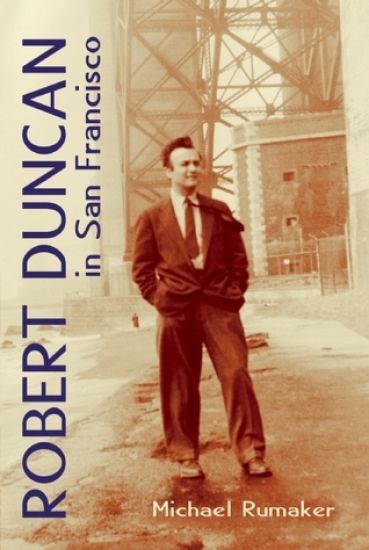
After his graduation from Black Mountain College, Michael Rumaker made his way to the post-Howl, pre-Stonewall gay literary milieu of San Francisco, where he entered the circle of Robert Duncan. Contrasting Duncan's daringly frank homosexuality with Rumaker's own then-closeted life, Robert Duncan in San Francisco conjures up with harrowing detail an era of police prosecution of a clandestine gay community struggling to survive in the otherwise "open city" of San Francisco. This expanded edition includes a selection of previously unpublished letters between Rumaker and Duncan, and an interview conducted for this edition, in which Rumaker provides further reflections on the poet and the period. "This is a wonderfully revealing account of a series of lifechanging collisions between a young writer (Rumaker), an older writer (Duncan), a still older mentor for both (Charles Olson), a city (San Francisco), and an important era in American literature (the 1950s), when it was being turned upside down by these individuals and their friends. It's also a tender and intelligent account of a young man's coming to grips with being gay in the midst of this upheaval. Much more than memoir; it's history." --Russell Banks, author of Cloudsplitter Robert Duncan in San Francisco offers a surprising portrait of a mentor in all his witty, wicked, luminous, and vulnerable complexity. Straddling the lines of memoir and cultural history, Michael Rumaker gives a rare and delightful view of Duncan at home in the gay community while also documenting the struggles of that community in 1950s America." --Lisa Jarnot, author of Robert Duncan, The Ambassador from Venus "In this fine memoir of this 16 months in San Francisco, Rumaker learns many lessons about being at home with who he is, in what he calls 'Robert's city.'" --Joanne Kyger, About Now: Collected Poems Michael Rumaker has written several novels and short story collections, as well as the memoir Black Mountain Days. He was born in Philadelphia and is a graduate of Black Mountain College -- where Duncan served as his outside thesis advisor--and Columbia University. He taught at City University of New York and the New School for Social Research. Robert Duncan (1919-1988) was an American poet and well-known as a key figure in the San Francisco Renaissance. City Lights published a book of his poetry titled Selected Poems.
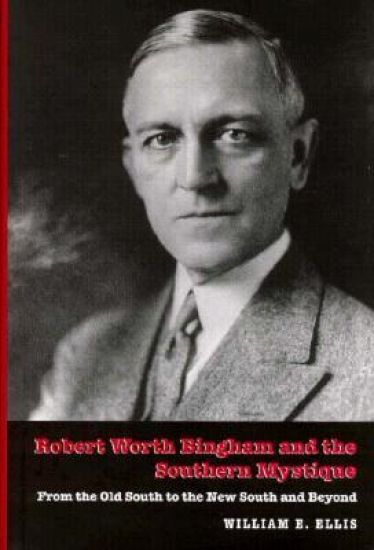
Robert Worth Bingham and the Southern Mystique
Kent State University Press
1997
sidottu
Robert Worth Bingham (1871-1937) rose to great heights as a newspaper publisher, political leader, and ambassador, but his life is surrounded by controversy. Charges that he contributed to the death of his second wife followed him to the grave. This text is a portrait of the man.

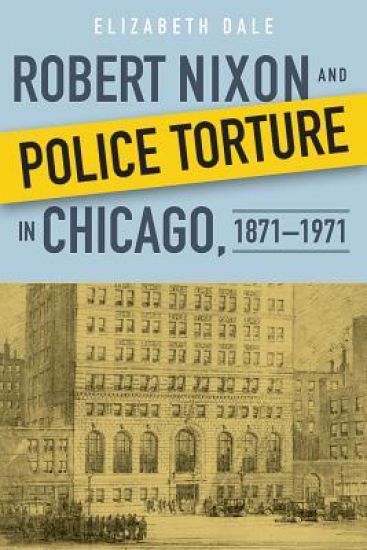
Robert Nixon and Police Torture in Chicago, 1871–1971
Elizabeth Dale
Northern Illinois University Press
2016
sidottu
In 2015, Chicago became the first city in the United States to create a reparations fund for victims of police torture, after investigations revealed that former Chicago police commander Jon Burge tortured numerous suspects in the 1970s, '80s, and '90s. But claims of police torture have even deeper roots in Chicago. In the late 19th century, suspects maintained that Chicago police officers put them in sweatboxes or held them incommunicado until they confessed to crimes they had not committed. In the first decades of the 20th century, suspects and witnesses stated that they admitted guilt only because Chicago officers beat them, threatened them, and subjected them to "sweatbox methods." Those claims continued into the 1960s. In Robert Nixon and Police Torture in Chicago, 1871–1971, Elizabeth Dale uncovers the lost history of police torture in Chicago between the Chicago Fire and 1971, tracing the types of torture claims made in cases across that period. To show why the criminal justice system failed to adequately deal with many of those allegations of police torture, Dale examines one case in particular, the 1938 trial of Robert Nixon for murder. Nixon's case is famous for being the basis for the novel Native Son, by Richard Wright. Dale considers the part of Nixon's account that Wright left out of his story: Nixon's claims that he confessed after being strung up by his wrists and beaten and the legal system's treatment of those claims. This original study will appeal to scholars and students interested in the history of criminal justice, and general readers interested in Midwest history, criminal cases, and the topic of police torture.
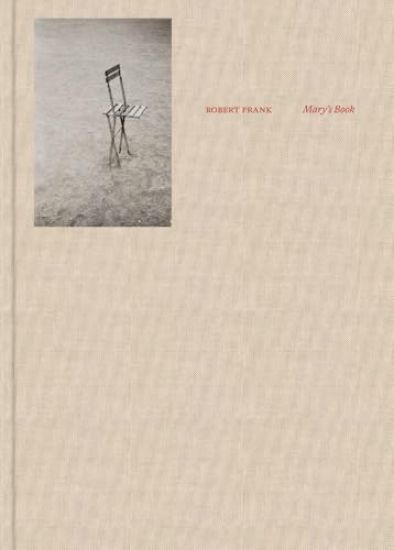
Robert Frank: Mary’s Book
MUSEUM OF FINE ARTS,BOSTON
2025
sidottu
Frank’s artist’s book and love letter for his first wife exemplifies the poetic, virtuosic approach to photobooks that would come to define his storied career Called "a poet with a camera" by Edward Steichen, Robert Frank (1924–2019) was one of many artists who searched for creative freedom in postwar Paris. It was while he was living in the city in 1949 that Frank produced a seminal volume in his oeuvre: a rare, personal photobook made for his then-girlfriend, artist Mary Frank (née Lockspeiser). In Mary’s Book, the photographer chronicled his time in the city with his poetic, insightful and inquisitive eye, and experimented for the first time with combining text and image. This singular object proved an important bookmaking exercise for Frank, and remains as evidence of his maturing artistic vision, which led to one of the most influential photobooks of the 20th century, The Americans (1958). Mary’s Book reproduces this love letter in full for the first time, accompanied by insightful essays from leading scholars. This facsimile clothbound volume, inscribed "this is for you" in Frank’s handwriting, re-creates the series of unbound pages nestled within one another, filled with handwritten notes and hand-cut prints. Readers can experience the Paris of the late 1940s through the visual harmonies of Robert Frank.
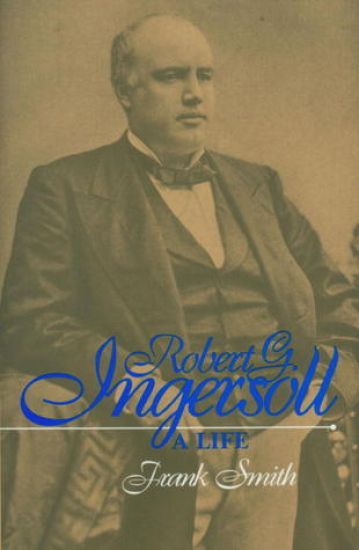
Robert G Ingersoll (1833-1899) was a complex figure - a brilliant lawyer and orator who courageously advanced the concept of free-thought; a magnetic extrovert whose public esteem, eagerly sought, never earned him the private favours he so generously bestowed on others. Ingersoll was a staunch republican in the great tradition of Abraham Lincoln, and he vigorously championed such progressive causes as equal rights for blacks, women, and children; liberal divorce laws; and better wages and conditions for workers. Perhaps Ingersoll's greatest legacy derives from his daring rejection of religious superstition (during an era which saw a tremendous revival of spiritualism and religious fundamentalism) and his ardent belief in humanity.Ingersoll is considered one of the most prominent figures of the 19th century. From about 1880 to his death in 1899, he probably spoke to more Americans in person than anyone before or since; he had daily audiences of as many as three thousand people while he was on tour, several months a year for many years. Despite this, Ingersoll's career has not yet received the attention it clearly merits. In this comprehensive work, Frank Smith explores the life and thought of this charismatic figure, using newspaper accounts of the time and extensive quotations from Ingersoll's correspondence. Ingersoll's words provide a vivid portrait of 19th-century America from the stormy antebellum period to the beginnings of modern industrialism. His life reflects the great current of his age and speaks forcefully to the problems of our own.