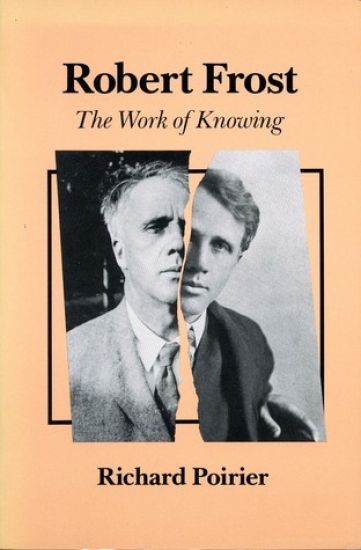
"Wise old Vergil says in one of his Georgics, 'Praise large farms, stick to small ones,'" Robert Frost said. "Twenty acres are just about enough." Frost started out as a school teacher living the rural life of a would-be farmer, and later turned to farming full time when he bought a place of his own. After a sojourn in England where his first two books were published to critical acclaim, he returned to New England, acquired a new farm and became a rustic for much of the rest of his life. Frost claimed that all of his poetry was farm poetry. His deep admiration for Virgil's Georgics, or poems of rural life, inspired the creation of his own New England "georgics," his answer to the haughty 20th-century modernism that seemed certain to define the future of Western poetry. Like the "West-Running Brook" in his poem of the same name, Frost's poetry can be seen as an embodiment of contrariness.
Robert Maxwell -- ruthless, volatile, defiant; a man of gargantuan appetites, for food, wine, women, power, money -- unabashedly bared his ambition to the world, as he strove to build a publishing empire. But, throughout his career, Robert Maxwell also nurtured another, more driving, and -- until now -- altogether hidden ambition, and that was to spy for Israel's Mossad. In the end, as Gordon Thomas, an author who has long been trolling the murky waters of international intelligence, shows in this gripping narrative, the conflict between the tycoon's public interests and spy's secret pursuits led to his mystifying death, officially by drowning, in November 1991, offshore of the Canary Islands. According to Thomas's well-placed sources in Israel, Washington, and London, Maxwell first came into Mossad's orbit in the 1970s, when the crack Israeli spy organization stole from the United States its most sophisticated piece of intelligence-gathering software, Enhanced Promis. Of it Mossad made an electronic Trojan horse, secretly amassing strictly classified information from inside the very organizations worldwide to which they were selling it. Mossad's representative for these extremely sensitive transactions costing tens of millions of dollars in China, Russia, India, and twenty other countries was Robert Maxwell. Only Maxwell was also helping himself to some of Mossad's profits -- as well as 750 million from his employees' pension fund -- in desperate attempts to maintain his empire and to meet the demands of increasingly intolerant creditors. Aboard his yacht that November night in 1991 Maxwell no doubt still clung to the hope of a bailout by Mossad. But Mossad's spy masters could not afford to smile on blackmail. This book reveals all the shocking reasons why. Eight pages of black-and-white photographs add to this astonishing tale of international intrigue, espionage, the Mossad, and murder.
In this critical biography of Robert Desnos (1900-1945), Katharine Conley reevaluates the surrealist movement through the life and works of one of its founders. Desnos was as famous among the surrealists for his independence of mind as for his elaborate "automatic" drawings and his brilliant oral and written performances during the incubational period of the group. He stayed with the official surrealist movement in Paris for only six years but was pivotal during that time in shaping the surrealist notion of "transforming the world" through radical experiments with language and art.After leaving the group, Desnos continued his career of radio broadcasting and writing for commercials. Though no longer part of the official movement, he remained committed to his own version of popular surrealism: Desnosian surrealism and the search for the "marvelous" in everyday life. Near the end of World War II he was deported and imprisoned for his work in the French resistance and died at the newly liberated camp of Terezin in Czechoslovakia. Reports from within the camp indicate that Desnos took with him into Terezin his most deeply held surrealist beliefs. Katharine Conley is an associate professor of French at Dartmouth College. She is the author of "Automatic Woman: The Representation of Woman in Surrealism" (Nebraska 1996).
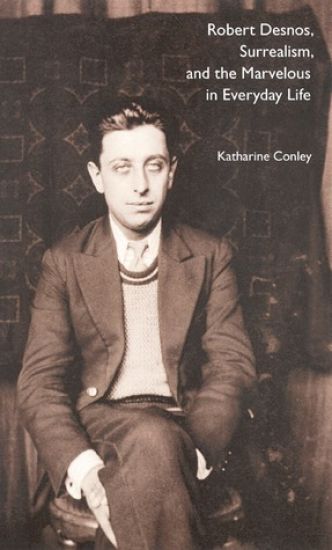
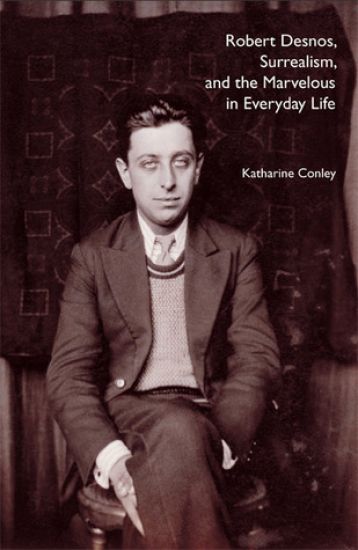
In this critical biography of Robert Desnos (1900–1945), Katharine Conley reevaluates the surrealist movement through the life and works of one of its founders. Desnos was as famous among the surrealists for his independence of mind as for his elaborate "automatic" drawings and his brilliant oral and written performances during the incubational period of the group. He stayed with the official surrealist movement in Paris for only six years but was pivotal during that time in shaping the surrealist notion of "transforming the world" through radical experiments with language and art. After leaving the group, Desnos continued his career of radio broadcasting and writing for commercials. Though no longer part of the official movement, he remained committed to his own version of popular surrealism: Desnosian surrealism and the search for the "marvelous" in everyday life. Near the end of World War II he was deported and imprisoned for his work in the French Resistance and died at the newly liberated camp of Terezin in Czechoslovakia. Reports from within the camp indicate that Desnos took with him into Terezin his most deeply held surrealist beliefs.
Robert Nozick's Anarchy, State, and Utopia is one of the works which dominate contemporary debate in political philosophy. Drawing on traditional assumptions associated with individualism and libertarianism, Nozick mounts a powerful argument for a minimal "night-watchman" state and challenges the views of many contemporary philosophers, most notably John Rawls. This book is the first full-length study of Nozick's work and of the debates to which it has given rise. Wolff situates Nozick's work in the context of current debates and examines the traditions which have influenced his thought. He then critically reconstructs the key arguments of Anarchy, State, and Utopia, focusing on Nozick's doctrine of rights, his derivation of the minimal state, and his Entitlement Theory of Justice. Wolff subjects Nozick's reasoning to rigorous scrutiny and argues that, despite the seductive simplicity of Nozick's libertarianism, it is, in the end, neither plausible nor wholly coherent. The book concludes by assessing Nozick's place in contemporary political philosophy.
Robert Oppenheimer (1904-1967) is one of the few American scientists who have become public and controversial figures in the twentieth century.T his book adds a new dimension to the Oppenheimer story by offering a look at the private man behind the public figure. It consists of letters spanning the period from his Harvard student days in 1922 to his departure from Los Alamos in 1945. The letters are supplemented by recollections of those who knew Oppenheimer and by his own recollections from an interview a few years before his death. 'A beautifully organized collection of letters and reminiscences ...The editors have interviewed those who knew and worked with him, stirred in the necessary explanatory background, and produced an account, both scholarly and highly readable, which throws fresh light on a man who will probably always remain something of an enigma. Amid devotional defense and almost rabid attack, their book is a model of objectivity.' New York Times Book RevieW 'An intimate, carefully documented, and honest book.' Scientific American 'The first scholarly attempt to come to grips with the development of Oppenheimer's elusive personality, it is all the more impressive because its many revealing letters and candid commentary were gathered from those who knew him best.' Science 'A milestone in Oppenheimer scholarship ...The full measure of Oppenheimer the man, the scientist, and the public figure remains to be taken, but the publication of this rich volume will markedly aid the accomplishment of that ultimate and demanding task.'
This volume presents the complete correspondence between two of the most important and influential American poets of the postwar period. The almost 500 letters range widely over the poetry scene and the issues that made the period so lively and productive. But what gives the exchange its special personal and literary resonance is the sense of spiritual affinity and shared conviction about the power of the visionary imagination. Duncan and Levertov explore these matters in rich detail until, under the stress of dealing with the Vietnam War in poetry, they discover deep-seated differences in the religious and ethical convictions underlying their politics and poetic stance. The issues that drew them together and those that drove them apart create a powerful personal drama with far-reaching historical and cultural significance. The editors have provided a critical Introduction, full notes, a chronology, and a glossary of names.
This volume presents the complete correspondence between two of the most important and influential American poets of the postwar period. The almost 500 letters range widely over the poetry scene and the issues that made the period so lively and productive. But what gives the exchange its special personal and literary resonance is the sense of spiritual affinity and shared conviction about the power of the visionary imagination. Duncan and Levertov explore these matters in rich detail until, under the stress of dealing with the Vietnam War in poetry, they discover deep-seated differences in the religious and ethical convictions underlying their politics and poetic stance. The issues that drew them together and those that drove them apart create a powerful personal drama with far-reaching historical and cultural significance. The editors have provided a critical Introduction, full notes, a chronology, and a glossary of names.
This collection of essays, written for this volume and often using unpublished and archival materials, converges around the usually close and intense relationship between Robert Duncan and Denise Levertov, two of the most important and remarkable American poets in the second half of the twentieth century. Their association, played out in their poems and in an extraordinary exchange of letters, was based on a sense of the visionary imagination informing the direction and shape of the poet. However, they had a falling out during the Vietnam crisis over the relationship between poetry and politics, between the private and public responsibilities of the poet. Such issues are vital not only to their poetry and the poetry of that period but to contemporary poetry as well. A distinguished group of critics, led by Albert Gelpi and Robert J. Bertholf, examines the issues that drew Levertov and Duncan together, and split them apart, in a book that has the openness and coherence of an urgent, contemporary dialogue about the form and meaning of poetry.
This collection of essays, written for this volume and often using unpublished and archival materials, converges around the usually close and intense relationship between Robert Duncan and Denise Levertov, two of the most important and remarkable American poets in the second half of the twentieth century. Their association, played out in their poems and in an extraordinary exchange of letters, was based on a sense of the visionary imagination informing the direction and shape of the poet. However, they had a falling out during the Vietnam crisis over the relationship between poetry and politics, between the private and public responsibilities of the poet. Such issues are vital not only to their poetry and the poetry of that period but to contemporary poetry as well. A distinguished group of critics, led by Albert Gelpi and Robert J. Bertholf, examines the issues that drew Levertov and Duncan together, and split them apart, in a book that has the openness and coherence of an urgent, contemporary dialogue about the form and meaning of poetry.
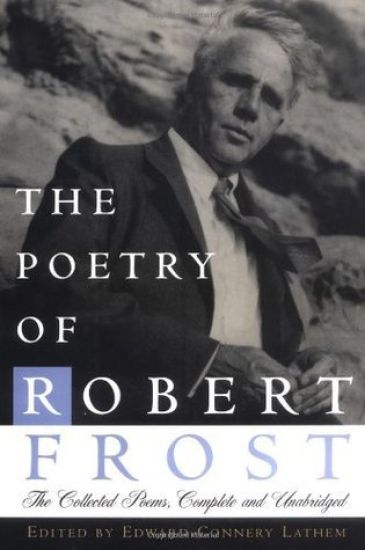
This is the only comprehensive volume of Robert Frost's published verse; in it are the contents of all eleven of his individual books of poetry-from "A Boy's Will" (1913) to" In the Clearing" (1962). The editor, Edward Connery Lathem, has scrupulously annotated the more than 350 poems in this book.
This fascinating reassessment of America's most popular and famous poet reveals a more complex and enigmatic man than many readers might expect. Jay Parini spent over twenty years interviewing friends of Frost and working in the poet's archives at Dartmouth, Amherst, and elsewhere to produce this definitive and insightful portrait of both the public and private man. While he depicts the various stages of Frost's colorful life, Parini also sensitively explores the poet's psyche, showing how he dealt with adversity, family tragedy, and depression. By taking the reader into the poetry itself, which he reads closely and brilliantly, Parini offers an insightful road map to Frost's remarkable world.
A feast for lovers of American literature-the work of our greatest poet, redesigned and relaunched for a new generation of readers No poet is more emblematically American than Robert Frost. From "The Road Not Taken" to "Stopping by Woods on a Snowy Evening," he refined and even defined our sense of what poetry is and what it can do. T. S. Eliot judged him "the most eminent, the most distinguished Anglo-American poet now living," and he is the only writer in history to have been awarded four Pulitzer Prizes. Henry Holt is proud to announce the republication of four editions of Frost's most beloved work for a new generation of poets and readers. The only comprehensive volume of Frost's verse available, comprising all eleven volumes of his poems, this collection has been the standard Frost compendium since its first publication in 1969.
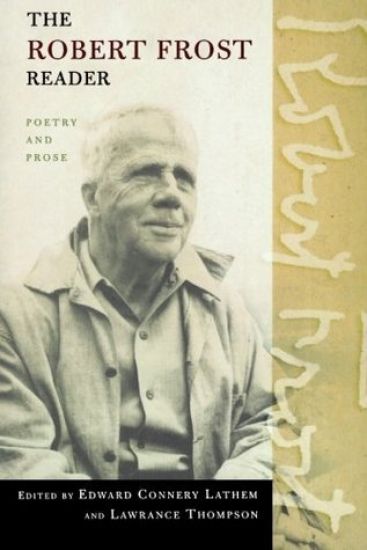
Robert Frost was the most emblematically American of poets, a forthright advocate of both the art and craft of verse who was recognized and cherished as few other poets have ever been. This reader offers students and scholars a plethora of his speeches, interviews, correspondence, one-act plays, and other materials, as well as lengthy selections from all of Frost's books of verse. Though many have been drawn to his seemingly old-fashioned simplicity, this wide-ranging reader in fact reveals that Frost's work was often dark or ironic in tone and always subtle and complex."
Robert E. Lee in Texas introduces a little known phase of the great General's career - his service in Texas during the four turbulent years just preceding the Civil War. In this account Carl Coke Rister takes us with Lee to his lonely posts on the border, and we share with him the hazardous and often fruitless chases after bands of American Indians and Mexicans. We see through the eyes of the ""Academy man"" the raw life on the frontier and hear through his own words his impressions of the country and people.
For years Robert Newton Baskin (1837–1918) may have been the most hated man in Utah. Yet his promotion of federal legislation against polygamy in the late 1800s and his work to bring the Mormon territory into a republican form of government were pivotal in Utah’s achievement of statehood. The results of his efforts also contributed to the acceptance of the Church of Jesus Christ of Latter-day Saints by the American public. In this engaging biography—the first full-length analysis of the man—author John Gary Maxwell presents Baskin as the unsung father of modern Utah. As Maxwell shows, Baskin’s life was defined by conflict and paradox.Educated at Harvard Law School, Baskin lived as a member of a minority: a “gentile” in Mormon Utah. A loner, he was highly respected but not often included in the camaraderie of contemporary non-Mormon professionals. When it came to the Saints, Baskin’s role in the legal aftermath of the Mountain Meadows massacre did not endear him to the Mormon people or their leadership. He was convinced that Brigham Young made John D. Lee the scapegoat—the planner and perpetrator of the massacre—to obscure complicity of the LDS church.Baskin was successful in Utah politics despite using polygamy as a sledgehammer against Utah’s theocratic government and despite his role as a federal prosecutor. He was twice elected mayor of Salt Lake City, served in the Utah legislature, and became chief justice of the Utah Supreme Court. He was also a visionary city planner—the force behind the construction of the Salt Lake City and County Building, which remains the architectural rival of the city’s Mormon temple.For more than a century historians have maligned Baskin or ignored him. Maxwell brings the man to life in this long-overdue exploration of a central figure in the history of Utah and of the LDS church.