

Kirjahaku
Etsi kirjoja tekijän nimen, kirjan nimen tai ISBN:n perusteella.
1000 tulosta hakusanalla Roberta Gately

Parents want a special relationship with their children Parents care. They want to guide their children through the rough spots in life and help them make the right decisions. Research shows that a special parental connection is extremely important in safeguarding children against dangers such as substance abuse, sexual promiscuity, criminal activity, and suicide. This is more important than ever before in today's troubled world. But what does making this connection mean? Based on Bowen family systems theory, Connecting with Our Children shows parents how to build the connection found in better relationships. Now parents have a new way to think about and respond to family problems. The author examines common concerns, such as: * How substance abuse can repeat through generations* Why fusions between family members drive conflict* How family anxiety can erupt into violence* Whether stepfamilies can create a new family unit* What roles faith and humor play in a family* How effective are special contributions made by connections with grandparentsNumerous practical examples and stories illustrate familiar situations and concerns, so that parents can learn how to deal with the often confusing situations surrounding their children, as well as those within their own lives. With a different perspective, parents can learn to overcome these difficulties, creating a stronger family and a happier, more open relationship between parent and child.



This book by Roberta Senechal de la Roche explores themes that in part reflect her Native American background: a rage against transience, a sense of alienation from nature, and a discouraging search for the supernatural lost in a disenchanted world. Faith placed in the visible world seems problematic, as does the search for stability in human love. Hope instead seems to lie in the courage to be vulnerable and, in the end, in a single candle flickering in the dark.

Roberta Senechal de la Roche's poems express a rage against transience, a sense of alienation from nature, and a search for the lost supernatural in a secular age. Darkly lyrical and tenderly elegiac, her poems reach across space and time in a yearning search for transcendence. Here voices speak to the dead, and the dead speak back. Gods, parents, lovers, refugees, and tribal people speak, then disappear. In their disenchanted world, lost voices lament the fall of empires, faithlessness, betrayal, and decay.
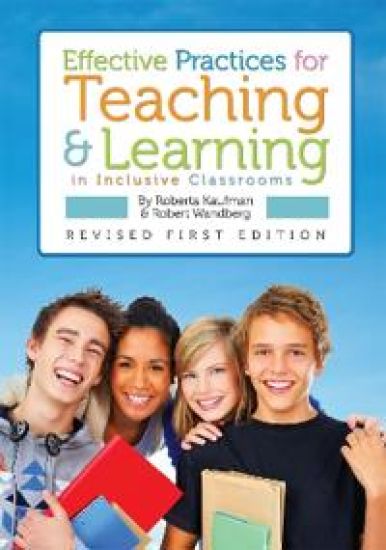
Effective Practices for Teaching and Learning in Inclusive Classrooms
Roberta Kaufman; Robert Wandberg
Cognella, Inc
2014
nidottu
Effective Practices for Teaching and Learning in Inclusive Classrooms gives educators insight into the eight most widely researched instructional practices known to have a powerful impact on diverse student populations. The material serves as an effective bridge to the best practices that can be used consistently with students, regardless of placement.Each chapter begins with objectives and key vocabulary. It then presents a series of questions for readers to consider as they explore teaching and learning in action. All chapters conclude with brief summaries, review questions or activities that encourage critical thinking and applications of the principles, and templates readers can access immediately for classroom use.Topics include setting the stage for student learning, learner objectives, visual representations, student engagement, grouping and cooperative learning, questioning techniques, assessment, and grading.This textbook is recommended for pre-service teachers in special education and general education preparation programs. Experienced teachers will also find this book an excellent addition to their professional resource library.
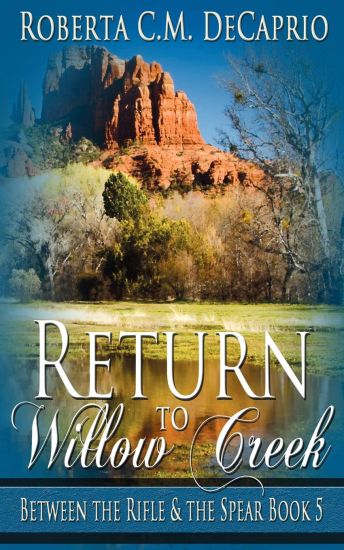
Broken-hearted after losing the only woman he ever loved to another man, Reverend Joshua Holmes returns to England. But after thirty years, he is summoned to Willow Creek, Arizona. His rival has died, and his deathbed request is for Josh to marry Amanda and keep her safe from harm. But he fears she will not accept his steadfast love. Fearing for her life, Amanda Gregory, or Golden Lady to the Apaches amongst whom she has lived, is forced to flee the white agents infiltrating the reservation. Amanda seeks refuge until Joshua arrives from England. Once she sees him again, her heart reawakens, and she believes true love could happen a second time around. But just as she becomes Joshua's wife, she worries she will again be made a widow by the enemies from her past.
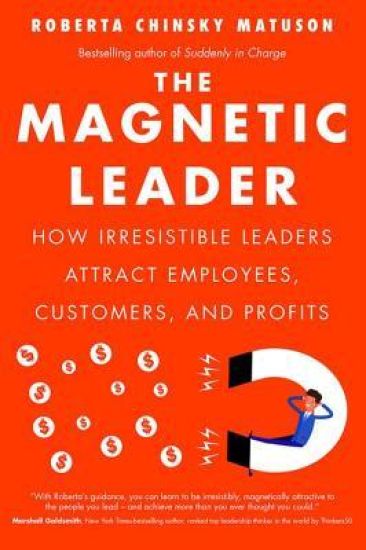
Employees don’t work for companies; they work for people. The more irresistible you are as a leader, the more pull you have for employees to want to stay and for your customers to remain loyal. In The Magnetic Leader, Roberta Matuson asks us to consider that the quality of a company’s leadership is the most important factor in attracting and retaining high-quality employees. Matuson has spent 20 years helping organizations achieve both market leadership and dynamic growth by maximizing the talent they already have, in addition to creating a magnetic environment that attracts high-caliber new hires.Many are searching for a magical formula, but the fact is that the answer lies inside businesses’ organizations. Instead of offering crazy perks, companies need to focus on the one perk they can’t get anywhere else, which is the opportunity to work with a truly magnetic leader.The Magnetic Leader aids readers in transforming their leadership style from push to pull, repel to attract, dismal to good, and then good to great. They’ll become magnetic leaders who attract the cream of the crop and ultimately create legions of loyal, talented superstars eager to beat the competition.
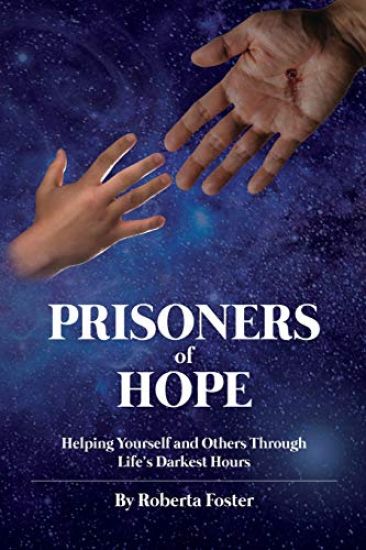
You can do this get Ready to be an overcomer and help others overcome the pain in their lives Loss and tragedy can paralyze our life or it can be a springboard into our purpose and destiny. This book will help you to live again, to have hope again, and to see that God takes all things in our life and works them for His good Through prayers, declarations, and sharing real life experience this book will help you to become a PRISONER OF HOPE. Reverend Roberta Foster is President and Founder of PRISONERS OF HOPE. Reverend Roberta is a licensed counselor, and certified grief recovery specialist, PRISONERS OF HOPE is a ministry to those outside of the four walls of the church; homeless shelter, prison, women's rehab, group home for the mentally ill, and any other doors that open. You can learn more about this ministry at www.facebook.com/prinsonerofhope

In 1823, United States Supreme Court Chief Justice John Marshall, based on his analysis of custom, not precedential law, proclaimed the "Doctrine of Discovery" as the supreme law of the land in the case, Johnson v. M'Intosh. This "doctrine" held that whichever European nation first "discovered" land, then not ruled by a Christian prince or people, could claim ownership. From President Washington on it was a foregone conclusion that America's legacy was a continental empire. Indigenous people in this New World, as it was called, were a mere obstacle to be eliminated or moved out of the way of colonial settlers in their westward expansion from coast to coast. The Johnson case followed Chief Justice Marshall's earlier opinion in 1810 that states owned all of the land within their boundaries, regardless of whether it was inhabited by indigenous peoples. It led the southern states to sell indigenous land, pass legislation incorporating it into their counties and abrogate indigenous national sovereignty. The federal government faced the real threat of these southern states seceding from the union if their land-grabbing was thwarted. Transforming indigenous peoples to tenants on their land made it easier to breach solemn treaties the government had entered into with sovereign polities. It made it possible to acquire millions and millions of acres of land. What followed was the loss of indigenous lives, land, game and valuable natural resources, along with the federal government imposing brutal economic sanctions and destructive assimilation policies. Thus, the United States acquired an empire at fire sale, rock-bottom prices, or without compensation at all, facilitated by Chief Justice Marshall's decisions in two heinous, feigned cases.
In 1998, Colorado state lawmakers mandated that American Indian history and culture be included in the curriculum of high schools in Colorado, based on the persistent efforts of Comanche State Senator Suzanne Williams. In 2003, they broadened the law mandating that in order to graduate students must satisfactorily complete a civil government course which includes the history, culture and social contributions of Indians and other groups. Yet tens of thousands of students graduate each year in the state without learning any of the information that is mandated in that single state graduation requirement. The U.S. Civil Rights Commission noted in 2018 that the "lack of appropriate cultural awareness in school curriculum focusing on Native American history or culture" can (1) be harmful to American Indian students; (2) contribute to a negative learning environment; (3) be isolating and limiting; (4) trigger bullying; and (5) result in negative stereotypes across the board. In Colorado, 81% of American Indian students don't meet state math benchmarks, 85% don't meet state science benchmarks, and 70% don't meet state English language benchmarks. Colorado's continuing neglect of Indian students by excluding anything Indian from their education is harmful. The state is denying Indian students' rights to see themselves in their education, which is necessary to ensure their academic success. The arguments made in this book are rooted in a sacred commitment to protect Indian children.
In 1998, Colorado state lawmakers mandated that American Indian history and culture be included in the curriculum of high schools in Colorado, based on the persistent efforts of Comanche State Senator Suzanne Williams. In 2003, they broadened the law mandating that in order to graduate students must satisfactorily complete a civil government course which includes the history, culture and social contributions of Indians and other groups. Yet tens of thousands of students graduate each year in the state without learning any of the information that is mandated in that single state graduation requirement. The U.S. Civil Rights Commission noted in 2018 that the "lack of appropriate cultural awareness in school curriculum focusing on Native American history or culture" can (1) be harmful to American Indian students; (2) contribute to a negative learning environment; (3) be isolating and limiting; (4) trigger bullying; and (5) result in negative stereotypes across the board. In Colorado, 81% of American Indian students don't meet state math benchmarks, 85% don't meet state science benchmarks, and 70% don't meet state English language benchmarks. Colorado's continuing neglect of Indian students by excluding anything Indian from their education is harmful. The state is denying Indian students' rights to see themselves in their education, which is necessary to ensure their academic success. The arguments made in this book are rooted in a sacred commitment to protect Indian children.
This book on timberland and timber resources is part of a series on the dispossession of Indian natural resources by the "iron triangle" of the federal government, big business and colonial settlers. The primary period covered in this book is 1840-1900. The areas focused on include the Great Lakes and the Pacific Northwest. Congress acknowledged that from "...the beginning, Federal policy toward the Indian was based on the desire to dispossess him of his land." Under the United States' dictatorial "doctrine of discovery," Indians were mere tenants on their land, with no right to the natural resources. The trajectory was clear: removal, cession of millions of acres of land, interment on reservations, allotment of tribal land to individuals to break up tribes, and the sale of those allotments. Disease, starvation, extermination, massacres, private wars and war crimes ensued. This opened the "inexhaustible mineral, agricultural and natural resources within their dominion" for white exploitation. Congressional legislation opened the land of the west for $1.25 per acre or at times for free, without buying Indian land, just to get settlers' boots-on-the-ground. Land sharks, in collusion with federal agents, cheated Indians out of their land and timber. Big business used its political and economic clout to assure its control of the country's natural wealth. Lumber barons monopolized the timber industry and set prices. By 1920, three-fifths of the United States' original timber was gone. Indians served as menial laborers for logging companies, cutting timber and peeling bark. "Scalped" of the wealth inherent in their natural resources, they were left destitute. This book is for them.
Social Contributions of Colorado's American Indian Leaders For the Seven Generations to Come
Roberta Carol Harvey
Sunstone Press
2023
pokkari
In 1998, Colorado state lawmakers mandated that American Indian history and culture be included in the curriculum of high schools in Colorado, based on the persistent efforts of Comanche State Senator Suzanne Williams. In 2003, they broadened the law mandating that in order to graduate students must satisfactorily complete a civil government course which includes the history, culture and social contributions of American Indians and other groups, Colorado Revised Statute 22-1-104. Yet tens of thousands of students graduate each year in the state without taking the single course Colorado requires to earn a high-school diploma. It is simply not offered. This book on Colorado's American Indian leaders is intended to help Colorado fulfill this educational mandate.

U.S. General Pope in 1878 stated that it was absolutely imperative that Indian Nations realize the United States' premeditated and calculated determination to dispossess the "savage" and occupy his lands and that "it is certain that the larger part of the country claimed by him will, in some manner, pass into the possession of the white race." The insatiable drive for a continental empire resulted in the iron triangle of the federal government, the military and big business working in concert to steal Indian mineral lands. They knowingly and willfully unleashed the pioneer vigilantes to commandeer Indian resources. The Commissioner of Indian Affairs J.Q. Smith wrote in 1876: "Wherever an Indian reservation has on it good land, or timber, or minerals, the cupidity of the white man is excited, and a constant struggle is inaugurated to dispossess the Indian, in which the avarice and determination of the white man usually prevails." "Every art, trick, and device of the unscrupulous land pirate is resorted to," admonished Colonel Preston. Yet it was brutal warfare, massacres, disease, and starvation that decimated Indian populations, leaving them destitute, to be replaced by industrial tycoons, timber barons, mineral magnates, and capital investors profiting from the "savage's" minerals in the bowels of the Earth.