Kirjojen hintavertailu. Mukana 11 213 693 kirjaa ja 12 kauppaa.

Kirjahaku

Etsi kirjoja tekijän nimen, kirjan nimen tai ISBN:n perusteella.

1000 tulosta hakusanalla Roderick Beaton

For Fuhrer and Fatherland

For Fuhrer and Fatherland

Roderick Normann

The History Press Ltd
2010
nidottu
For Fuhrer and Fatherland is the extraordinary story of how British and American Intelligence thwarted a wartime plan for a daring mass break-out of German prisoners-of-war from the PoW camp at Devizes in Wiltshire, led by a hard core of SS troops. As December 1944 drew to a close, trained US interrogators stumbled on a plan so fantastic in concept that it was hard to take seriously. The Interrogation Centre operatives broke the wills of the prisoners involved and got to the bottom of the story. With their escape plan in tatters, the SS took their revenge and 'tried' and murdered one of their fellow prisoners, who was accused of betraying the Fuhrer. Despite the SS code of silence, those involved were brought to justice and hanged at Pentonville Prison in October 1945. In this book, the author asks the questions: Why was Devizes Camp so woefully unprepared for a possible break-out? Why were the SS allowed to continue their reign of terror on British soil? Why did the Government of the day try to cover up the events?
For Fuhrer and Fatherland

For Fuhrer and Fatherland

Roderick Normann

The History Press Ltd
2009
nidottu
For Fuhrer and Fatherland is the extraordinary story of how British and American Intelligence thwarted a wartime plan for a daring mass break-out of German prisoners-of-war from the PoW camp at Devizes in Wiltshire, led by a hard core of SS troops. As December 1944 drew to a close, trained US interrogators stumbled on a plan so fantastic in concept that it was hard to take seriously. The Interrogation Centre operatives broke the wills of the prisoners involved and got to the bottom of the story. With their escape plan in tatters, the SS took their revenge and 'tried' and murdered one of their fellow prisoners, who was accused of betraying the Fuhrer. Despite the SS code of silence, those involved were brought to justice and hanged at Pentonville Prison in October 1945. In this book, the author asks the questions: Why was Devizes Camp so woefully unprepared for a possible break-out? Why were the SS allowed to continue their reign of terror on British soil? Why did the Government of the day try to cover up the events?
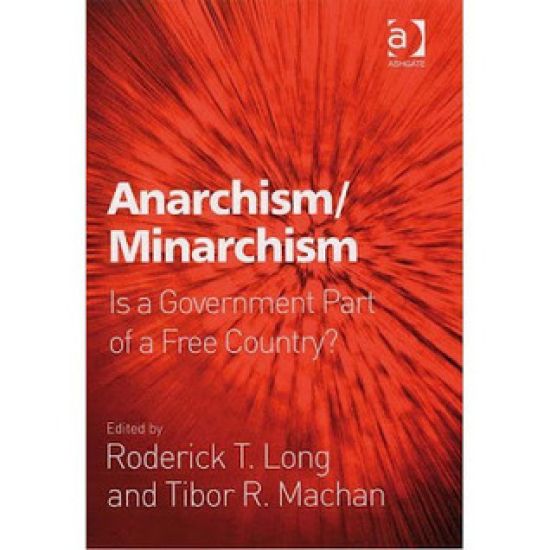
Anarchism/Minarchism

Anarchism/Minarchism

Roderick T. Long

Ashgate Publishing Limited
2008
sidottu
It is well known that the radical libertarian philosopher Robert Nozick sharply distinguished his vision of the free society from egalitarian liberals such as John Rawls. Less remarked upon is the distinction he drew between the free society governed by a strictly limited government, commonly referred to as 'minarchism', and the society without any government at all - anarchism. In this volume, the editors, Long - an anarchist - and Machan - a minarchist - have brought together a selection of specially commissioned essays from key theorists actively involved in this debate. Each tackles the question of whether or not a government forms a legitimate part of a free society or whether anarchy/minarchy is merely a distinction without a difference.
Seducing America

Seducing America

Roderick P. Hart

SAGE Publications Inc
1998
nidottu
Roderick P. Hart's revised edition of Seducing America is an eye-opening look at how television's format of presenting politics to its viewers has changed the way television-watching citizens act, vote, and feel about politics in this country. While television makes us feel knowledgeable, important, informed, and close to our political representatives, it disguises dissatisfaction with the political system and with ourselves. Hart's rigorous blend of rhetorical and statistical research plus his eloquent and passionate writing make this book a superb supplementary text for political communication and media studies courses that will help engage students in provocative discussions about media and politics.
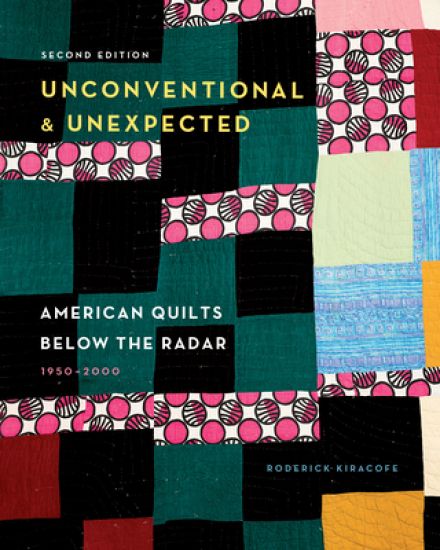
Unconventional & Unexpected, 2nd Edition

Unconventional & Unexpected, 2nd Edition

Roderick Kiracofe

SCHIFFER PUBLISHING LTD
2022
sidottu
Famed quilt collector Roderick Kiracofe's popular classic book on offbeat quilts, now updated with with 20 additional never-before-seen quilts, and a new introduction by curator and quilt scholar Dr. Carolyn Mazloomi. Roderick Kiracofe’s sumptuous hardcover book of 150 offbeat quilts became an instant classic when it was first published in 2014, inspiring a nation of quilt makers and fine artists. The book’s unforgettable quilts (largely made by anonymous quilters in the American South) and essays by leading curators and industry personalities (Amelia Peck, Kaffe Fassett, Denyse Schmidt) eventually went out of print—until now. In a copublishing venture with Quiltfolk, the long-overdue updated 2nd edition of this beloved book is here with a new introduction by internationally lauded author and curator Dr. Carolyn Mazloomi, and 20 additional never-before-seen quilts from Kiracofe’s private collection. At long last, this second edition of Unconventional & Unexpected is available again to audiences clamoring for its return.
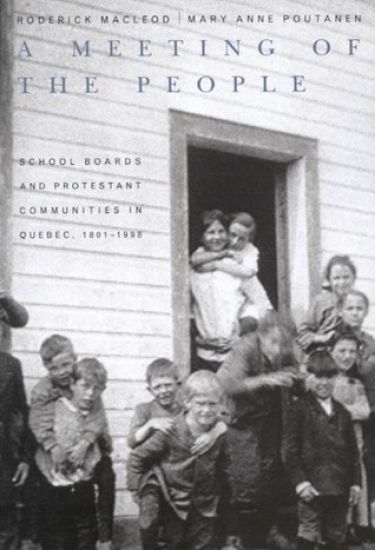
A Meeting of the People

A Meeting of the People

Roderick Macleod; Mary Anne Poutanen

McGill-Queen's University Press
2004
sidottu
In A Meeting of the People Roderick MacLeod and Mary Anne Poutanen look at the Protestant public education system and the communities that established, and were served by, its schools, from the origins of public education in 1801 to the dissolution of confessional school boards in 1998. They focus on key issues such as class, ethnicity, religion, gender, health and welfare, patriotism, and the nature of local administration, bringing to life the people who attempted to establish and maintain schools and considering relationships between school trustees, parents, teachers, and the wider public. Their analysis shows that communities recognized the importance of providing schooling, despite what were often bleak circumstances. The authors show that Protestant families often had to make a difficult choice between supporting better educational facilities in a central place far away or encouraging the survival of the local community through maintaining one of its key institutions, the local school. They explore the ambiguous nature of Protestant education, at times understood as schooling reserved for a religious minority and at others as a liberal approach similar to public schooling across North America. The Protestant community, begun as a British element within a small colony, has developed into a diverse array of people from across the religious spectrum, periodically redefining itself to meet the needs of a changing Quebec society.
A Meeting of the People

A Meeting of the People

Roderick Macleod; Mary Anne Poutanen

McGill-Queen's University Press
2004
nidottu
In A Meeting of the People Roderick MacLeod and Mary Anne Poutanen look at the Protestant public education system and the communities that established, and were served by, its schools, from the origins of public education in 1801 to the dissolution of confessional school boards in 1998. They focus on key issues such as class, ethnicity, religion, gender, health and welfare, patriotism, and the nature of local administration, bringing to life the people who attempted to establish and maintain schools and considering relationships between school trustees, parents, teachers, and the wider public. Their analysis shows that communities recognized the importance of providing schooling, despite what were often bleak circumstances. The authors show that Protestant families often had to make a difficult choice between supporting better educational facilities in a central place far away or encouraging the survival of the local community through maintaining one of its key institutions, the local school. They explore the ambiguous nature of Protestant education, at times understood as schooling reserved for a religious minority and at others as a liberal approach similar to public schooling across North America. The Protestant community, begun as a British element within a small colony, has developed into a diverse array of people from across the religious spectrum, periodically redefining itself to meet the needs of a changing Quebec society.
Spirited Commitment

Spirited Commitment

Roderick Macleod; Eric John Abrahamson

McGill-Queen's University Press
2010
sidottu
Showing how the SSBFF has balanced its commitments to Jewish charitable causes and to Canadian culture, Spirited Commitment explores how the Foundation dealt with the challenge of respecting the wishes of its famous founders while still making a difference in contemporary Canadian society. A detailed account of the Foundation's numerous programs over three decades - including the Centre for Cultural Management and the Saidye Bronfman Centre - Spirited Commitment highlights the innovations that SSBFF grants have led to in the arts, community development, and scientific research. An illuminating and vibrant portrait of the personalities, motivations, and strategies behind the Samuel and Saidye Bronfman Family Foundation, Spirited Commitment is a revealing, insightful account of the inner workings of philanthropic foundations.
Phoenix

Phoenix

Roderick Stewart; Sharon Stewart

McGill-Queen's University Press
2012
nidottu
In Phoenix: The Life of Norman Bethune Roderick and Sharon Stewart provide the intriguing details of Bethune's controversial career as a surgeon, his turbulent personal life, his passionate crusade to eradicate tuberculosis, and his pioneering commitment to the establishment of medicare in Canada. They also examine the reasoning that led Bethune to embrace Marxism and show the depth of his faith in the triumph of communism over fascism - a commitment that drove him to take risk after risk and ultimately led to his death from an infection caught while performing battlefield surgery in remote northern China. Based on extensive research in Canada, Spain, and China, and in-depth interviews with Bethune's family, friends, colleagues, and patients, Phoenix: The Life of Norman Bethune is the definitive Bethune biography for our time.
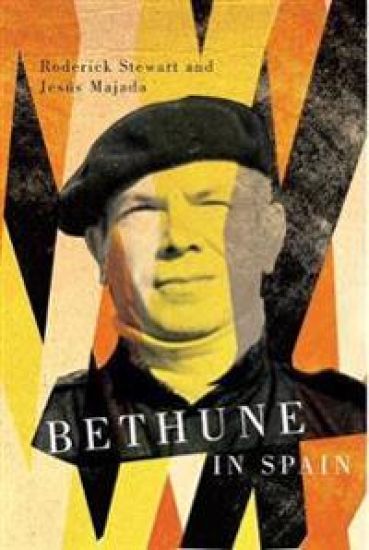
Bethune in Spain

Bethune in Spain

Roderick Stewart; Jesús Majada

McGill-Queen's University Press
2014
sidottu
Norman Bethune (1890-1939) was a man who had everything, and yet had nothing. Although he had achieved international prominence as a surgeon, he was unhappy in his personal life and deeply frustrated by a failed attempt to introduce medicare to Canada. An uncompromising humanitarian in search of a cause, Bethune became immersed in the Spanish Civil War. In Bethune in Spain, Roderick Stewart and Jesus Majada recount Bethune's achievements in Spain and the events that led to his decision to assist the Loyalist forces. The narrative contains Bethune's letters and reports, some of them reproduced here for the first time, as well as newspaper articles, and interviews with him. It covers his creation and operation of a mobile blood transfusion unit, his rescue of fleeing Loyalist civilians during the Malaga-Almeria road tragedy, and his efforts to aid children orphaned by the War. It also deals with the gruelling public-speaking tour Bethune undertook on his return to Canada in 1937 to plead for intervention in support of democracy in Spain and to raise awareness of atrocities committed against civilians by the fascist-backed Spanish Nationalists. Illustrated with photographs from Bethune's seven months in Spain, Bethune in Spain is a poignant portrait of an early advocate for universal health care, an unwavering communist, and a crusader for the Spanish Republican cause.
The 21st Century Health Care Leader

The 21st Century Health Care Leader

Roderick W. Gilkey

Jossey-Bass Inc.,U.S.
1999
sidottu
Discover how top health care leaders envision the decades ahead and ensure your future as a 21st century health care leader. The 21st Century Health Care Leader brings together today's most influential and successful health care professionals whose valuable insight will assist current and future leaders exchange reactivity for proactivity, remain effective, and transform their organizations. In 37 original chapters, this distinguished group of contributors describe the skills and competencies that will be required of tomorrow's health care executives and caregivers who desire to renew their organizations. With insight and candor, the authors show what it will take to prevail as a health care leader of tomorrow. Meet the myriad challenges of health care delivery including how to eliminate unnecessary duplication, competition, and inefficiency. In addition, health care professionals will learn how they can combine creativity and knowledge to design new business approaches and innovative organizations. The 21st Century Health Care Leader offers a unique and compelling perspective on health care leadership and a powerful tool for any leader who wants to guarantee their future in the health care industry.
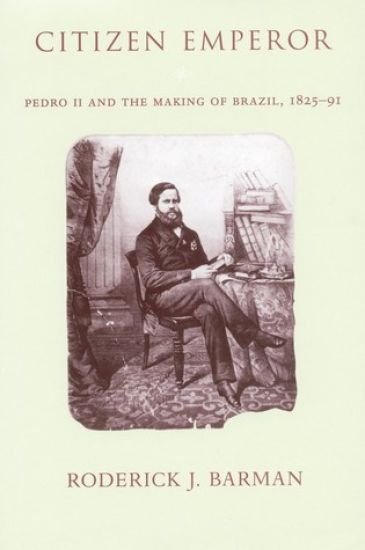
Citizen Emperor

Citizen Emperor

Roderick J. Barman

Stanford University Press
1999
sidottu
In the history of post-colonial Latin America no person has held power so firmly and for so long as did Pedro II as emperor of Brazil. Called to the throne in 1840 at the age of 14, Pedro II devoted himself for the next half century to transforming Brazil into a functioning nation-state, applying "all my forces and all my devotion to assuring the progress and prosperity of my people." This is the first full-length biography in 60 years, and the first in any language to make close use of Pedro II's diaries and family papers. Resourceful, patient, cautious, and above all persevering, Pedro II acquired undisputed control of public affairs and was indispensable in establishing Brazil's viability as a nation. By his personal character, behavior, and interests, he created a model of citizenship that commanded acceptance at home and respect abroad. A friend of Longfellow, Emerson, and Oliver Wendell Holmes, he was the first foreign head of state to visit the United States. By the 1880s, the rising generation had so internalized the model of Pedro II that it greatly resembled him in outlook and culture. Ironically, his success was such that the ruling circles took Brazil's existence as a nation for granted and viewed him as old-fashioned and irrelevant to the nation's needs. In effect, he had made himself redundant. Unable to change his ways of ruling, weakened by illness, and increasingly marginal to public affairs, he was overthrown by a military coup in 1889. Exiled to Europe, he died in Paris two years later. This volume reveals how the political and the personal intertwined to make Pedro II the person he was. Many facets of his character appear innate—his great energy and his love of books and learning, for example—but his personality was also shaped by a privileged background, painful childhood experiences, and convoluted relationships with his parents, siblings, wife, and children. He was remarkably self-centered, with a distrust of intimacy that left him emotionally deprived. He worked alone, and his principal advisors were never human beings but books. A man of monumental restraint and iron self-discipline, Pedro II took great care in speech and writing to reveal little of his inner self. These defenses once penetrated, as in this book, we encounter a complex personality who simultaneously compels sympathy, exasperation, and respect.
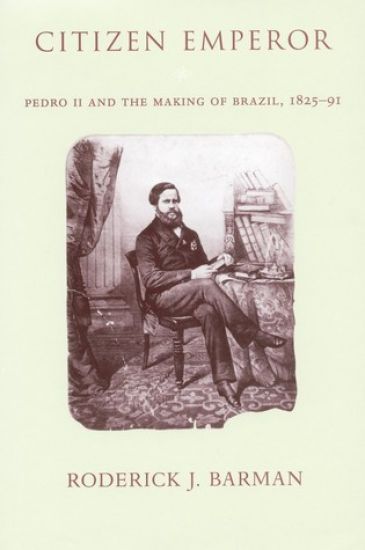
Citizen Emperor

Citizen Emperor

Roderick J. Barman

Stanford University Press
2002
pokkari
In the history of post-colonial Latin America no person has held power so firmly and for so long as did Pedro II as emperor of Brazil. Called to the throne in 1840 at the age of 14, Pedro II devoted himself for the next half century to transforming Brazil into a functioning nation-state, applying "all my forces and all my devotion to assuring the progress and prosperity of my people." This is the first full-length biography in 60 years, and the first in any language to make close use of Pedro II's diaries and family papers. Resourceful, patient, cautious, and above all persevering, Pedro II acquired undisputed control of public affairs and was indispensable in establishing Brazil's viability as a nation. By his personal character, behavior, and interests, he created a model of citizenship that commanded acceptance at home and respect abroad. A friend of Longfellow, Emerson, and Oliver Wendell Holmes, he was the first foreign head of state to visit the United States. By the 1880s, the rising generation had so internalized the model of Pedro II that it greatly resembled him in outlook and culture. Ironically, his success was such that the ruling circles took Brazil's existence as a nation for granted and viewed him as old-fashioned and irrelevant to the nation's needs. In effect, he had made himself redundant. Unable to change his ways of ruling, weakened by illness, and increasingly marginal to public affairs, he was overthrown by a military coup in 1889. Exiled to Europe, he died in Paris two years later. This volume reveals how the political and the personal intertwined to make Pedro II the person he was. Many facets of his character appear innate—his great energy and his love of books and learning, for example—but his personality was also shaped by a privileged background, painful childhood experiences, and convoluted relationships with his parents, siblings, wife, and children. He was remarkably self-centered, with a distrust of intimacy that left him emotionally deprived. He worked alone, and his principal advisors were never human beings but books. A man of monumental restraint and iron self-discipline, Pedro II took great care in speech and writing to reveal little of his inner self. These defenses once penetrated, as in this book, we encounter a complex personality who simultaneously compels sympathy, exasperation, and respect.

Test Theory

Test Theory

Roderick P. McDonald

Psychology Press
1999
sidottu
This book introduces the reader to the main quantitative concepts, methods, and computational techniques needed for the development, evaluation, and application of tests in the behavioral/social sciences, including educational tests. Two empirical examples are carried throughout to illustrate alternative methods. Other data sets are used for special illustrations. Self-contained programs for confirmatory and exploratory factor analysis are available on the Web.Intended for students of psychology, particularly educational psychology, as well as social science students interested in how tests are constructed and used, prerequisites include a course on statistics.The programs and data files for this book can be downloaded from www.psypress.com/test-theory/
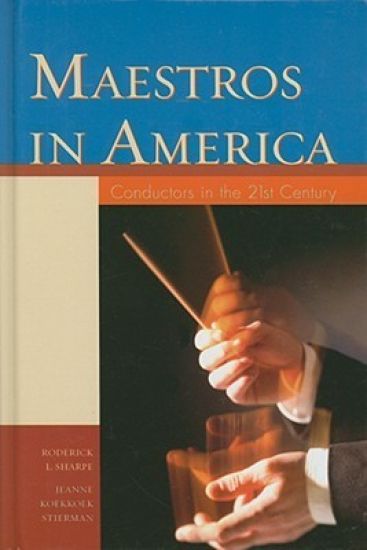
Maestros in America

Maestros in America

Roderick L. Sharpe; Jeanne Koekkoek Stierman

Scarecrow Press
2008
sidottu
Maestros in America: Conductors in the 21st Century provides short biographical and critical essays of over 100 American conductors-and conductors in America-in the twenty-first century. Roderick L. Sharpe and Jeanne Koekkoek Stierman made their selections based on three categories of persons: American-born; naturalized US citizens; and foreign conductors holding a permanent appointment in the US. In addition, all individuals included had to have been active as conductors at the start of the new millennium. These criteria allowed the authors to incorporate up-and-comers as well as those more established, offering an extensive cross-section of the upper echelons of the conducting profession focused on the present, recent past, and future. Each entry is a biographical essay containing essential facts of the conductor's life and work, as well as assessment and commentary gleaned from articles, interviews, reviews, and, in some cases, personal observation. The entries conclude with the conductor's website, a list of further reading, and selected recordings. These sketches of currently or recently practicing conductors provide insight into the state of orchestral music-making in the US as it is, has been, and may become, highlighting the efforts these conductors made to ensure its survival. Complete with two appendixes and an index, this important reference will be beneficial to music students and faculty, reference librarians, orchestral administrators, and music lovers alike.
The A to Z of Irish Cinema

The A to Z of Irish Cinema

Roderick Flynn; Patrick Brereton

Scarecrow Press
2010
nidottu
In 1898, documentary footage of a yacht race was shot by Robert A. Mitchell, making him the first Irishman to shoot a film within Ireland. Despite early exposure to the filmmaking process, Ireland did not develop a regular film industry until the late 1910s when James Mark Sullivan established the Film Company of Ireland. Since that time, Ireland has played host to many famous films about the country—Man of Aran, The Quiet Man, The Crying Game, My Left Foot, and Bloody Sunday—as well as others not about the country—Braveheart and Saving Private Ryan. It has also produced great directors such as Neil Jordan and Jim Sheridan, as well as throngs of exceptional actors and actresses: Colin Farrel, Colm Meaney, Cillian Murphy, Liam Neeson, Maureen O'Hara, and Peter O'Toole. The A to Z of Irish Cinema provides essential facts on the history of Irish cinema through a chronology; an introduction; a bibliography; and hundreds of cross-referenced dictionary entries on the pioneers and current leaders in the industry, the actors, directors, distributors, exhibitors, schools, arts centers, the government bodies and some of the legislation they passed, and the films.