Kirjojen hintavertailu. Mukana 12 390 323 kirjaa ja 12 kauppaa.

Kirjahaku

Etsi kirjoja tekijän nimen, kirjan nimen tai ISBN:n perusteella.

1000 tulosta hakusanalla Rohan Haggart

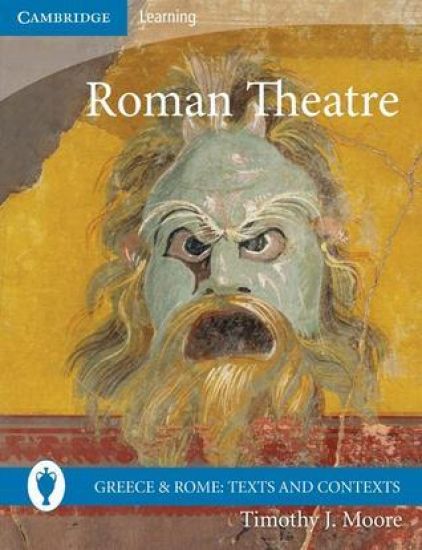
Roman Theatre

Roman Theatre

Timothy J. Moore

Cambridge University Press
2012
pokkari
When we think of ancient theatre today, we tend to think of Greek theatre. Yet the Romans also had a lively and varied set of theatrical traditions, which have had a considerable influence on later drama. This book offers an introduction to these traditions, including the origins of Roman theatre, the extant plays of Plautus, Terence and Seneca, and the many works of comedy, tragedy, mime and pantomime that no longer survive as written texts. The emphasis throughout is on performance, the role of these theatrical works within Roman society, and Roman theatre's legacy.
Roman Imperialism and Local Identities

Roman Imperialism and Local Identities

Louise Revell

Cambridge University Press
2010
pokkari
In this book, Revell examines questions of Roman ethnic identity and explores Roman imperialism as a lived experience based around the paradox of similarity and difference. Her case studies of public architecture provide an understanding of how urbanism, the emperor and religion were part of the daily encounters of these communities. Revell applies the ideas of agency and practice in her examination of the structures that held the empire together and how they were implicated within repeated daily activities. Rather than offering a homogenised 'ideal type' description of Roman cultural identity, she uses these structures as a way to understand how encounters differed between communities, thus producing a more nuanced interpretation of what it was to be Roman. Bringing an innovative approach to the problem of Romanisation, Revell breaks from traditional models, cutting across a number of entrenched debates such as arguments about the imposition of Roman culture or resistance to Roman rule.
Roman Pottery in the Archaeological Record

Roman Pottery in the Archaeological Record

J. Theodore Peña

Cambridge University Press
2011
pokkari
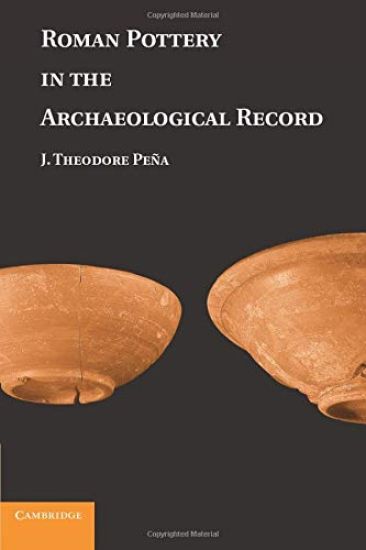
This book examines how Romans used their pottery and the implications of these practices on the archaeological record. It is organized around a flow model for the life cycle of Roman pottery that includes a set of eight distinct practices: manufacture, distribution, prime use, reuse, maintenance, recycling, discard, reclamation. J. Theodore Peña evaluates how these practices operated, how they have shaped the archaeological record, and the implications of these processes on archaeological research through the examination of a wide array of archaeological, textual, representational and comparative ethnographic evidence. The result is a rich portrayal of the dynamic that shaped the archaeological record of the ancient Romans that will be of interest to archaeologists, ceramicists, and students of material culture.
Roman Imperialism and Civic Patronage

Roman Imperialism and Civic Patronage

Brenda Longfellow

Cambridge University Press
2010
sidottu
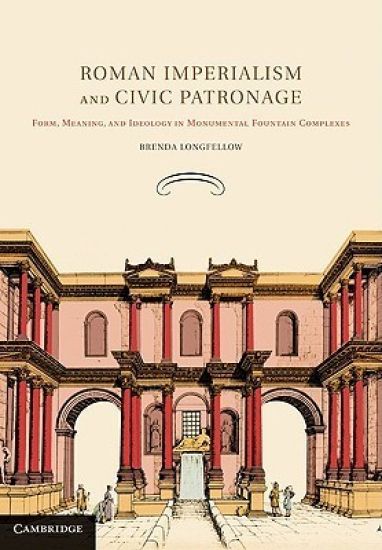
In this book, Brenda Longfellow examines one of the features of Roman Imperial cities, the monumental civic fountain. Built in cities throughout the Roman Empire during the first through third centuries AD, these fountains were imposing in size, frequently adorned with grand sculptures, and often placed in highly trafficked areas. Over twenty-five of these urban complexes can be associated with emperors. Dr Longfellow situates each of these examples within its urban environment and investigates the edifice as a product of an individual patron and a particular historical and geographical context. She also considers the role of civic patronage in fostering a dialogue between imperial and provincial elites with the local urban environment. Tracing the development of the genre across the empire, she illuminates the motives and ideologies of imperial and local benefactors in Rome and the provinces and explores the complex interplay of imperial power, patronage, and the local urban environment.
Roman Political Thought

Roman Political Thought

Dean Hammer

Cambridge University Press
2014
sidottu
Roman Political Thought is the first comprehensive treatment of the political thought of the Romans. Dean Hammer argues that the Romans were engaged in a wide-ranging and penetrating reflection on politics. The Romans did not create utopias. Instead, their thinking was relentlessly shaped by their own experiences of violence, the enormity and frailty of power, and an overwhelming sense of loss of the traditions that oriented them to their responsibilities as social, political, and moral beings. However much the Romans are known for their often complex legal and institutional arrangements, the power of their political thought lies in their exploration of the extra-institutional, affective foundations of political life. The book includes chapters on Cicero, Lucretius, Sallust, Virgil, Livy, Seneca, Tacitus, Marcus Aurelius, and Augustine, and discussions of Polybius, the Stoics, Epicurus, and Epictetus.
Roman Monarchy and the Renaissance Prince

Roman Monarchy and the Renaissance Prince

Peter Stacey

Cambridge University Press
2012
pokkari
Beginning with a sustained analysis of Seneca's theory of monarchy in the treatise De clementia, in this text Peter Stacey traces the formative impact of ancient Roman political philosophy upon medieval and Renaissance thinking about princely government on the Italian peninsula from the time of Frederick II to the early modern period. Roman Monarchy and the Renaissance Prince offers a systematic reconstruction of the pre-humanist and humanist history of the genre of political reflection known as the mirror-for-princes tradition - a tradition which, as Stacey shows, is indebted to Seneca's speculum above all other classical accounts of the virtuous prince - and culminates with a comprehensive and controversial reading of the greatest work of renaissance political theory, Machiavelli's The Prince. Peter Stacey brings to light a story which has been lost from view in recent accounts of the Renaissance debt to classical antiquity, providing a radically revisionist account of the history of the Renaissance prince.
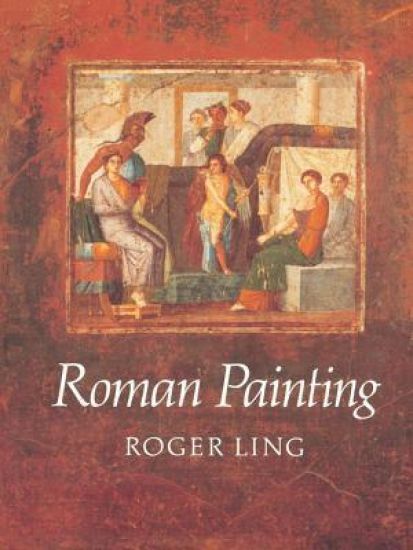
Roman Painting

Roman Painting

Roger Ling

Cambridge University Press
1991
pokkari
This book is the first general history of Roman painting written specifically for English-language readers. Large numbers of wall-paintings have survived from the Roman world, and particularly from Rome itself and from the cities of Pompeii, Herculaneum and Stabiae, buried in the eruption of Mount Vesuvius in AD 79; they include examples of elaborate decorative schemes as well as mythological pictures, landscapes, still lifes, and scenes from everyday life. Their influence upon European artists of the Renaissance and Neo-Classical periods has been considerable. Recent research has provided a much clearer idea of the chronology of these paintings, of their sources of inspiration, and of their meaning to the various classes of patrons who commissioned them. Now for the first time all aspects of our knowledge are brought together in an up-to-date survey. Among other topics the book discusses the so-called Four Pompeian Styles, their spread to the provinces, the broad developments in scheme, style and subject-matter which followed them, the relation of mythological pictures to Greek ‘old masters’, the factors which dictated the choice of particular subjects and the way in which they were represented, the technical processes of ancient wall-painting, and what we know about the painters and the organisation of their workshops.
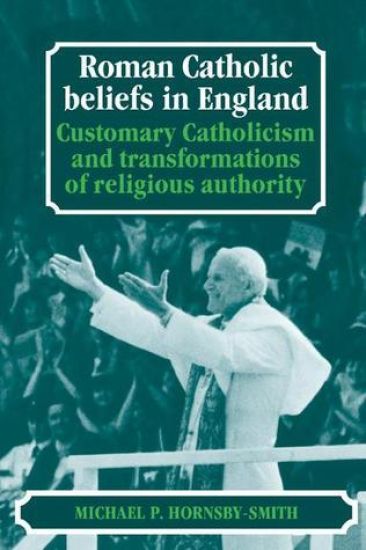
Roman Catholic Beliefs in England

Roman Catholic Beliefs in England

Michael P. Hornsby-Smith

Cambridge University Press
1991
sidottu
This 1991 book makes available an empirical study of the transformations in religious beliefs that have occurred amongst English Catholics. It complements Dr Hornsby-Smith's well received Roman Catholics in England (1987) which provides the social and historical context for this present study. In Roman Catholic beliefs in England, Michael Hornsby-Smith explores Catholic beliefs over a range of concerns from doctrinal matters to questions of personal and social morality and assesses how religious beliefs are differentiated between different types of Catholics. He also examines the legitimacy accorded by English Catholics to both papal authority and religious authority in general.
Roman Canon Law in Reformation England

Roman Canon Law in Reformation England

R. H. Helmholz

Cambridge University Press
1990
sidottu
In this book one of the world’s foremost legal historians draws upon the evidence of the canon law, court records and the English common-law system to demonstrate the extent to which, contrary to received wisdom, Roman canon law survived in England after the upheavals of the Protestant Reformation. R. H. Helmholz provides an extensive examination of the manuscript records of the ecclesiastical courts and professional literature of the English civilians. Rebutting the views of Maitland and others, he shows how English looked to the Continent for guidance and authority in administering the system of justice they had inherited from the Middle Ages. Intellectual links between England and the Continent are shown to have survived the Reformation and the abolition of papal jurisdiction. The extent to which papal material was still used in England during the sixteenth and seventeenth centuries will interest all readers and surprise many.
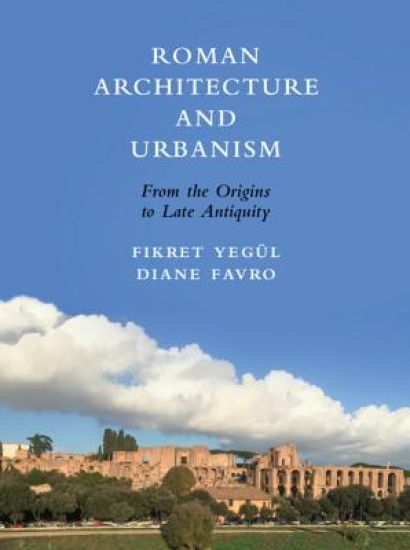
Roman Architecture and Urbanism

Roman Architecture and Urbanism

Fikret Yegül; Diane Favro

Cambridge University Press
2019
sidottu
Since antiquity, Roman architecture and planning have inspired architects and designers. In this volume, Diane Favro and Fikret Yegül offer a comprehensive history and analysis of the Roman built environment, emphasizing design and planning aspects of buildings and streetscapes. They explore the dynamic evolution and dissemination of architectural ideas, showing how local influences and technologies were incorporated across the vast Roman territory. They also consider how Roman construction and engineering expertise, as well as logistical proficiency, contributed to the making of bold and exceptional spaces and forms. Based on decades of first-hand examinations of ancient sites throughout the Roman world, from Britain to Syria, the authors give close accounts of many sites no longer extant or accessible. Written in a lively and accessible manner, Roman Architecture and Urbanism affirms the enduring attractions of Roman buildings and environments and their relevance to a global view of architecture. It will appeal to readers interested in the classical world and the history of architecture and urban design, as well as wide range of academic fields. With 835 illustrations including numerous new plans and drawings as well as digital renderings.
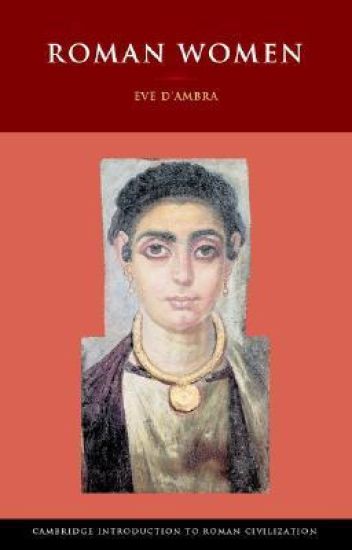
Roman Women

Roman Women

Eve D'Ambra

Cambridge University Press
2006
pokkari
This book examines the daily lives of Roman women by focusing on the mundane and less celebrated aspects of daily life - family and household, work and leisure, worship and social obligations - of women of different social ranks. Using a variety of sources, including literary texts, letters, inscriptions, coins, tableware, furniture, and the fine arts, from the late Republic to the high Imperial period, Eve D'Ambra shows how these sources serve as objects of social analysis, rather than simply as documents that recreate how life was lived. She also demonstrates how texts and material objects take part in shaping realities and what they can tell us about the texture of lives and social attitudes, if not emotions of women in Roman antiquity.
Roman Canon Law in Reformation England

Roman Canon Law in Reformation England

R. H. Helmholz

Cambridge University Press
2004
pokkari
In this book one of the world’s foremost legal historians draws upon the evidence of the canon law, court records and the English common-law system to demonstrate the extent to which, contrary to received wisdom, Roman canon law survived in England after the upheavals of the Protestant Reformation. R. H. Helmholz provides an extensive examination of the manuscript records of the ecclesiastical courts and professional literature of the English civilians. Rebutting the views of Maitland and others, he shows how English looked to the Continent for guidance and authority in administering the system of justice they had inherited from the Middle Ages. Intellectual links between England and the Continent are shown to have survived the Reformation and the abolition of papal jurisdiction. The extent to which papal material was still used in England during the sixteenth and seventeenth centuries will interest all readers and surprise many.
Roman, Provincial and Islamic Law

Roman, Provincial and Islamic Law

Patricia Crone

Cambridge University Press
2002
pokkari
This book examines the cultural origins of Islamic law. Some authorities stress the importance of the contribution of Roman law; others that of Arabian law. Most are agreed that Jewish law contributed, but not explained further. Dr Crone tests the Roman hypothesis with reference to one institution, the patronate, which does indeed appear to owe something to Roman law. He concludes that Roman law contributed only in so far as it was part and parcel of the rather different legal practice of the Near Eastern provinces, and that provincial law would repay further consideration by legal historians.
Roman Religion

Roman Religion

Valerie M. Warrior

Cambridge University Press
2006
pokkari
Examining sites that are familiar to many modern tourists, Valerie Warrior avoids imposing a modern perspective on the topic by using the testimony of the ancient Romans to describe traditional Roman religion. The ancient testimony recreates the social and historical contexts in which Roman religion was practised. It shows, for example, how, when confronted with a foreign cult, official traditional religion accepted the new cult with suitable modifications. Basic difficulties, however, arose with regard to the monotheism of the Jews and Christianity. Carefully integrated with the text are visual representations of divination, prayer, and sacrifice as depicted on monuments, coins, and inscriptions from public buildings and homes throughout the Roman world. Also included are epitaphs and humble votive offerings that illustrate the piety of individuals, and that reveal the prevalence of magic and the occult in the spiritual lives of the ancient Romans.
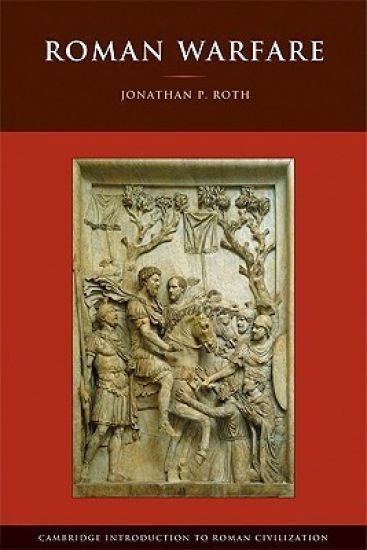
Roman Warfare

Roman Warfare

Jonathan P. Roth

Cambridge University Press
2009
pokkari
Roman Warfare surveys the history of Rome's fighting forces from their inception in the 7th century BCE to the fall of the Western Empire in the 5th century CE. In non-technical, lively language, Jonathan Roth examines the evolution of Roman war over its thousand-year history. He highlights the changing arms and equipment of the soldiers, unit organisation and command structure, and the wars and battles of each era. The military narrative is used as a context for Rome's changing tactics and strategy and to discuss combat techniques, logistics, and other elements of Roman war. Political, social, and economic factors are also considered. Full of detail, up-to-date on current scholarly debates, and richly illustrated with 39 halftones and 27 colour plates, Roman Warfare is intended for students of the ancient world and military history.
Roman Presences

Roman Presences

Cambridge University Press
1999
sidottu
This collection of essays explores aspects of the reception of ancient Rome in a number of European countries from the late eighteenth century to the end of the Second World War. Rome has been made to stand for literary authority, republican heroism, imperial power and decline, the Catholic Church, the pleasure of ruins. The studies offered here examine some of the sometimes strange and unexpected places where Roman presences have manifested themselves during this period. Scholars from several disciplines, including English literature and history of art, as well as classics, bring to bear a variety of approaches on a wide range of images and texts, from statues of Napoleon to Freud's analysis of dreams. Rome's seemingly boundless capacity for multiple, indeed conflicting, signification has made it an extraordinarily fertile paradigm for making sense of - and also for destabilizing - history, politics, identity, memory and desire.
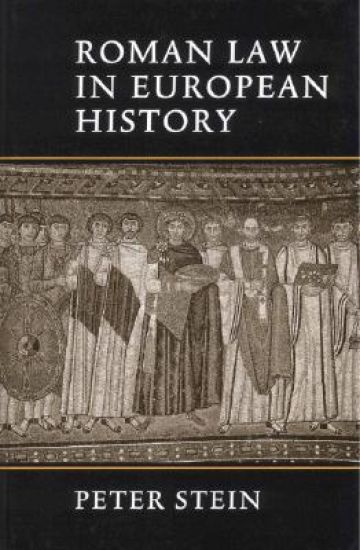
Roman Law in European History

Roman Law in European History

Peter Stein

Cambridge University Press
1999
sidottu
This is a short and succinct summary of the unique position of Roman law in European culture by one of the world's leading legal historians. Peter Stein's masterly study assesses the impact of Roman law in the ancient world, and its continued unifying influence throughout medieval and modern Europe. Roman Law in European History is unparalleled in lucidity and authority, and should prove of enormous utility for teachers and students (at all levels) of legal history, comparative law and European Studies. Award-winning on its appearance in German translation, this English rendition of a magisterial work of interpretive synthesis is an invaluable contribution to the understanding of perhaps the most important European legal tradition of all.