Kirjojen hintavertailu. Mukana 12 384 702 kirjaa ja 12 kauppaa.

Kirjahaku

Etsi kirjoja tekijän nimen, kirjan nimen tai ISBN:n perusteella.

1000 tulosta hakusanalla Ronald Benjamin

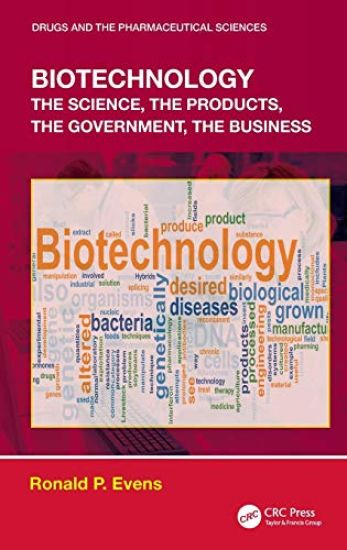
Biotechnology

Biotechnology

Ronald P. Evens

CRC Press
2020
sidottu
The over-riding premise for biotechnology in this book is bringing novel products to market to substantially advance patient care and disease mitigation. Biotechnology, over its relatively brief existence of 40 years, has experienced a mercurial growth. The vast educational need for biotechnology information in this rapidly burgeoning field is a basic rationale here. However a more prominent underpinning is that, bringing biotech products to market for patient care involves success in the following four areas of engagement simultaneously - scientific advances for healthcare technologies, novel and varied products for untreated diseases, regulatory authorities, and biotech companies.Features Comprehensive coverage of biotechnology science topics used in development and manufacturing Addresses all the scientific technologies within biotechnology responsible for products on the market and the pipeline Presents business issues such as marketing and sales of the products, as well as companies engaged, and how biotech business has evolved
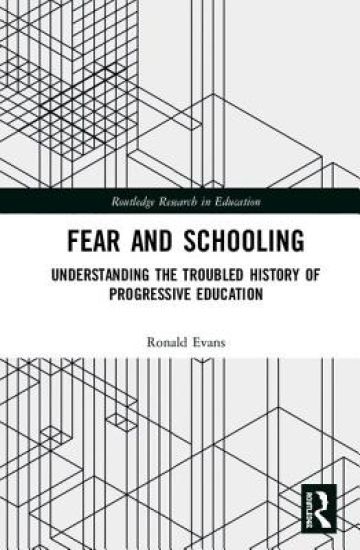
Fear and Schooling

Fear and Schooling

Ronald W. Evans

Routledge
2019
sidottu
By exploring the tensions, impacts, and origins of major controversies relating to schooling and curricula since the early twentieth century, this insightful text illustrates how fear has played a key role in steering the development of education in the United States.Through rigorous historical investigation, Evans demonstrates how numerous public disputes over specific curricular content have been driven by broader societal hopes and fears. Illustrating how the population’s concerns have been historically projected onto American schooling, the text posits educational debate and controversy as a means by which we struggle over changing anxieties and competing visions of the future, and in doing so, limit influence of key progressive initiatives. Episodes examined include the Rugg textbook controversy, the 1950s "crisis" over progressive education, the MACOS dispute, conservative restoration, culture war battles, and corporate school reform. In examining specific periods of intense controversy, and drawing on previously untapped archival sources, the author identifies patterns and discontinuities and explains the origins, development, and results of each case. Ultimately, this volume powerfully reveals the danger that fear-based controversies pose to hopes for democratic education.This informative and insightful text will be of interest to graduate and postgraduate students, researchers, and academics in the fields of educational reform, history of education, curriculum studies, and sociology of education.
Industrialisation, Employment and Income Distribution

Industrialisation, Employment and Income Distribution

Ronald Hsia; Laurence Chau

Routledge
2018
sidottu
First published in 1978. In spite of the wide recognition of Hong Kong’s successful growth record, little is known about the impact that rapid industrialisation has had on income distribution. The transformation of an entrepôt economy into an industrial one has been accompanied by a transition from a labour surplus to a labour shortage economy, which has had a profound influence on the distribution of income by size. The effect has been channelled through a number of variables such as the composition of employment by industry, occupational structure, labour force participation rate and wage structure. All these changes have, moreover, owed much to the existence of a market mechanism which has been virtually free from government intervention. Beginning with a comprehensive evaluation of the effects of the various characteristics of employment and the labour force on household income distribution, this study assesses the impact of Hong Kong’s industrialisation and employment growth on its income distribution. Through an analysis of the changes in industrial and occupational structures, employment status, household size, labour participation rate, inflow of labour and wage and employment structures, it considers not only how income distribution alters with economic development, but also the mechanism that has brought about these changes. The redistribution effect of government activities is examined and the incidence of particular taxes to different income groups is apportioned to give a clear overall picture. Finally, the benefits obtained from government expenditures on housing, education and health are measured and are allocated to different income groups, illustrating how this has appreciably reduced income inequality in Hong Kong.
Industrialisation, Employment and Income Distribution

Industrialisation, Employment and Income Distribution

Ronald Hsia; Laurence Chau

Routledge
2020
nidottu
First published in 1978. In spite of the wide recognition of Hong Kong’s successful growth record, little is known about the impact that rapid industrialisation has had on income distribution. The transformation of an entrepôt economy into an industrial one has been accompanied by a transition from a labour surplus to a labour shortage economy, which has had a profound influence on the distribution of income by size. The effect has been channelled through a number of variables such as the composition of employment by industry, occupational structure, labour force participation rate and wage structure. All these changes have, moreover, owed much to the existence of a market mechanism which has been virtually free from government intervention. Beginning with a comprehensive evaluation of the effects of the various characteristics of employment and the labour force on household income distribution, this study assesses the impact of Hong Kong’s industrialisation and employment growth on its income distribution. Through an analysis of the changes in industrial and occupational structures, employment status, household size, labour participation rate, inflow of labour and wage and employment structures, it considers not only how income distribution alters with economic development, but also the mechanism that has brought about these changes. The redistribution effect of government activities is examined and the incidence of particular taxes to different income groups is apportioned to give a clear overall picture. Finally, the benefits obtained from government expenditures on housing, education and health are measured and are allocated to different income groups, illustrating how this has appreciably reduced income inequality in Hong Kong.
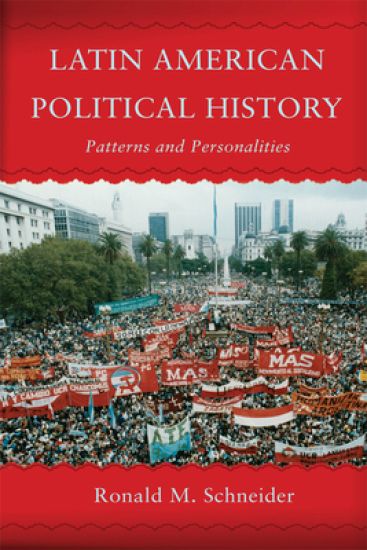
Comparative Latin American Politics

Comparative Latin American Politics

Ronald M. Schneider

Routledge
2019
sidottu
Latin America is a region of great diversity and a rich laboratory for understanding the processes of political development and their interaction with economic growth, social modernization, and cultural influences. Highlighting crucial periods of dynamic socioeconomic and political change, Comparative Latin American Politics provides a balanced, concise overview of select Latin American countries without underestimating the complexities of a region noted for its striking differences. The book focuses on the dominant dyad of Mexico and Brazil while also considering in detail Argentina, Chile, Peru, Columbia, and Venezuela - seven countries that contain four-fifths of the region's inhabitants as well as an even higher proportion of its economy.Recognizing that political institutions and cultures are built over generations, author Ronald M. Schneider divides his analysis into two parts. Part one examines the period from independence to 1930, when countries were coping with an array of post-independence problems and challenges of national consolidation. Part two concentrates on 1930 to the present day and fleshes out current political practices and structures. Each part devotes chapters to specific country coverage as well as meaningful comparative perspectives that illuminate the political evolution of the region and offer salient lessons for other developing parts of the world.
The Oedipus Complex Today

The Oedipus Complex Today

Ronald Britton; Michael Feldman; Edna O'Shaughnessy

Routledge
2019
sidottu
A collection of papers focusing on the Kleinian conception of the Oedipus complex, how this is now understood, and what effect it has had on clinical practice. The papers by the authors which form the greater part of The Oedipus Complex Today were originally given at the Melanie Klein Conference on the Oedipus Complex in September 1987 at University College, London. The conference, jointly organized by Professor J. Sandler of the Psychoanalysis Unit at University College and Mrs. Ruth Riesenberg-Malcolm on behalf of the Melanie Klein Trust, was considered such a successful statement of modern Kleinian views on the subject that the Trust has decided to present the papers in book form, together with an expanded version of the introduction by Dr Hanna Segal, and also a reprint of Melanie Klein's 1945 paper 'The Oedipus Complex in the Light of Early Anxieties'. The three papers, writes Dr Segal, 'are based on central concepts first put forward by Mrs Klein.
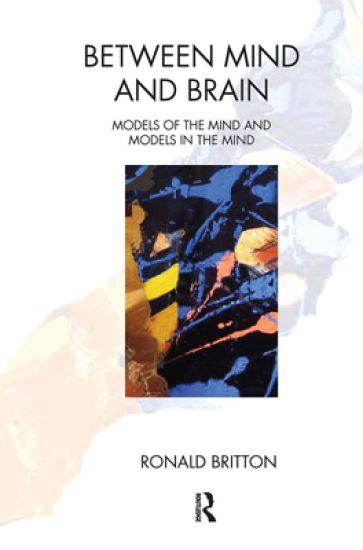
Between Mind and Brain

Between Mind and Brain

Ronald Britton

Routledge
2019
sidottu
This book begins with an exploration of the relationship between mind and brain. It then examines various psychoanalytic models of the mind and moves to the task of the analyst to discover the unconscious models that shape his or her patients' picture of him/herself and others.The familiar models are mainly drawn from psychoanalytic practice but are supplemented from myths, religion, and literature. Developments in adjacent scientific fields such as quantum biology and new ideas about evolution are discussed that suggest cellular genetic modification can take place as a consequence of interaction with the outside world. This gives hope perhaps to the idea that not only the mind can learn from experience but also the brain.
Japan's New Party System

Japan's New Party System

Ronald J Hrebenar

TAYLOR FRANCIS LTD
2022
nidottu
The authors of this book have joined together for a third time to produce a book on Japanese political parties and elections. The first two books under the title of The Japanese Party System were also published by Westview Press in 1986 and 1992. This book, Japan's New Party System, has a different purpose than the previous volumes. The first two books had as their task the presentation of a vast amount of material on the various parties of the 1955-1993 party system. Since 1955, Japanese politics and parties had been rather uneventful and predictable; consequently, many Japanese political scientists preferred to study other nations. Decade after decade, the Liberal Democratic Party (LDP) ruled Japan while the permanent opposition party, the Japan Socialist Party GSP) revolved around it but could never even come close to replacing it in power on the national level. All of this changed in 1993 after the LOP split, new parties emerged and formed a non-LOP government, and a new party system began. This book is about the Second Party System and how Japanese politics has changed from the old LOP-dominated First Party System.
Marrying & Burying

Marrying & Burying

Ronald L. Grimes

Routledge
2020
nidottu
In this book, Ronald Grimes tells an intensely personal story about the role of ritual in his own rich and sometimes difficult life. His critique of ritual impoverishment in North America reveals the extraordinary potential that ritualizing holds for negotiating and enriching transitions.
Livestock Behaviour

Livestock Behaviour

Ronald Kilgour

CRC Press
2020
nidottu
The book aims to bring together the essential information on animal behaviour for those concerned with the husbandry, management and welfare of farm animals. It provides information to make fuller use of labour, reduce accidents, and increase the wellbeing and productivity of farm livestock.
Readiness for Religion

Readiness for Religion

Ronald Goldman

Routledge
2018
sidottu
In this study, first published in 1965, the author explores the implications of research for an alternative approach to religious education. The book deals with the psychological bases of religious development, reviewing the natural limitations as well as the basic needs of the young, and how religious education should be affected by educational theory and practice. The author also examines what content and methods of teaching are consistent with the healthy development of children and adolescents. Teachers in schools, students in training, lecturers, clergy and ministers, and local education authority committees will welcome the book as an important aid to the task of rethinking syllabuses and the need for more child-centred methods of teaching.
Readiness for Religion

Readiness for Religion

Ronald Goldman

Routledge
2020
nidottu
In this study, first published in 1965, the author explores the implications of research for an alternative approach to religious education. The book deals with the psychological bases of religious development, reviewing the natural limitations as well as the basic needs of the young, and how religious education should be affected by educational theory and practice. The author also examines what content and methods of teaching are consistent with the healthy development of children and adolescents. Teachers in schools, students in training, lecturers, clergy and ministers, and local education authority committees will welcome the book as an important aid to the task of rethinking syllabuses and the need for more child-centred methods of teaching.
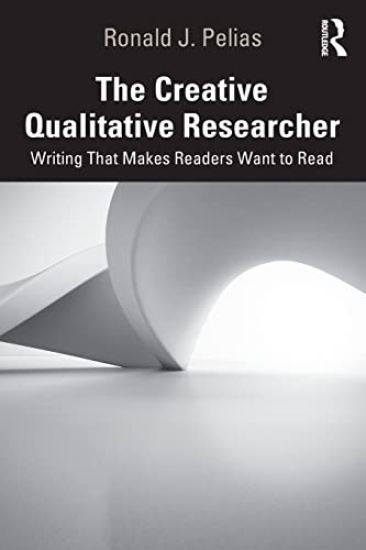
The Creative Qualitative Researcher

The Creative Qualitative Researcher

Ronald J. Pelias

Routledge
2019
sidottu
The Creative Qualitative Researcher is designed to help readers see the range of possibilities of creative scholarship. The phrase "creative qualitative researchers" points toward scholars who call upon their literary skills to evoke the emotional and intellectual complexity of their subjects; who deploy their vulnerable, relational, and reflexive selves to expose and change problematic cultural practices; and who engage their embodied ideological and ethical sensibilities as researchers.Part I introduces chapters on four qualitative methods: autoethnography, performative writing, narrative inquiry and poetic inquiry. Each of these four method chapters presents the method written in the style it features, provides writing prompts for exploring the chapter’s themes, and offers written examples of the method. Part II, divided into four chapters, aims to develop creative qualitative research skills relevant to the methods discussed in Part I. Chapter 5 discusses empathy and ethics; Chapter 6 is a primer on creative writing; Chapter 7 identifies some alternative ideas for using the words of others; and Chapter 8 focuses on collaborative improvisation to compose scholarly work. Each of the chapters in Part II includes a large number of writing exercises, prompts and strategies to assist scholars in becoming better creative researchers. By the end of the book, readers will know what creative research might entail and will have a clear understanding of the methods. Working with the various writing strategies, readers will see the potential of creative research and gain skills for its use.
The Creative Qualitative Researcher

The Creative Qualitative Researcher

Ronald J. Pelias

Routledge
2019
nidottu
The Creative Qualitative Researcher is designed to help readers see the range of possibilities of creative scholarship. The phrase "creative qualitative researchers" points toward scholars who call upon their literary skills to evoke the emotional and intellectual complexity of their subjects; who deploy their vulnerable, relational, and reflexive selves to expose and change problematic cultural practices; and who engage their embodied ideological and ethical sensibilities as researchers.Part I introduces chapters on four qualitative methods: autoethnography, performative writing, narrative inquiry and poetic inquiry. Each of these four method chapters presents the method written in the style it features, provides writing prompts for exploring the chapter’s themes, and offers written examples of the method. Part II, divided into four chapters, aims to develop creative qualitative research skills relevant to the methods discussed in Part I. Chapter 5 discusses empathy and ethics; Chapter 6 is a primer on creative writing; Chapter 7 identifies some alternative ideas for using the words of others; and Chapter 8 focuses on collaborative improvisation to compose scholarly work. Each of the chapters in Part II includes a large number of writing exercises, prompts and strategies to assist scholars in becoming better creative researchers. By the end of the book, readers will know what creative research might entail and will have a clear understanding of the methods. Working with the various writing strategies, readers will see the potential of creative research and gain skills for its use.
An Introduction to Multilevel Modeling Techniques

An Introduction to Multilevel Modeling Techniques

Ronald Heck; Scott L. Thomas

Routledge
2020
sidottu
Multilevel modelling is a data analysis method that is frequently used to investigate hierarchal data structures in educational, behavioural, health, and social sciences disciplines. Multilevel data analysis exploits data structures that cannot be adequately investigated using single-level analytic methods such as multiple regression, path analysis, and structural modelling. This text offers a comprehensive treatment of multilevel models for univariate and multivariate outcomes. It explores their similarities and differences and demonstrates why one model may be more appropriate than another, given the research objectives. New to this edition: An expanded focus on the nature of different types of multilevel data structures (e.g., cross-sectional, longitudinal, cross-classified, etc.) for addressing specific research goals; Varied modelling methods for examining longitudinal data including random-effect and fixed-effect approaches; Expanded coverage illustrating different model-building sequences and how to use results to identify possible model improvements; An expanded set of applied examples used throughout the text; Use of four different software packages (i.e., Mplus, R, SPSS, Stata), with selected examples of model-building input files included in the chapter appendices and a more complete set of files available online.This is an ideal text for graduate courses on multilevel, longitudinal, latent variable modelling, multivariate statistics, or advanced quantitative techniques taught in psychology, business, education, health, and sociology. Recommended prerequisites are introductory univariate and multivariate statistics.
An Introduction to Multilevel Modeling Techniques

An Introduction to Multilevel Modeling Techniques

Ronald Heck; Scott L. Thomas

Routledge
2020
nidottu
Multilevel modelling is a data analysis method that is frequently used to investigate hierarchal data structures in educational, behavioural, health, and social sciences disciplines. Multilevel data analysis exploits data structures that cannot be adequately investigated using single-level analytic methods such as multiple regression, path analysis, and structural modelling. This text offers a comprehensive treatment of multilevel models for univariate and multivariate outcomes. It explores their similarities and differences and demonstrates why one model may be more appropriate than another, given the research objectives. New to this edition: An expanded focus on the nature of different types of multilevel data structures (e.g., cross-sectional, longitudinal, cross-classified, etc.) for addressing specific research goals; Varied modelling methods for examining longitudinal data including random-effect and fixed-effect approaches; Expanded coverage illustrating different model-building sequences and how to use results to identify possible model improvements; An expanded set of applied examples used throughout the text; Use of four different software packages (i.e., Mplus, R, SPSS, Stata), with selected examples of model-building input files included in the chapter appendices and a more complete set of files available online.This is an ideal text for graduate courses on multilevel, longitudinal, latent variable modelling, multivariate statistics, or advanced quantitative techniques taught in psychology, business, education, health, and sociology. Recommended prerequisites are introductory univariate and multivariate statistics.