The years 1658-1667 form one of the most vital and eventful periods in English history, witnessing the Plague, the Great Fire of London, the naval wars against the Dutch, and, above all, the transformation of Oliver Cromwell's Commonwealth into the Restoration monarchy of Charles II. Ronald Hutton's detailed study of the period returns to nearly all the extant manuscript sources and reworks every issue afresh. The result is an absorbing and perceptive account of national experience as government policy changed, influenced by the interaction of central concerns, local perspectives, and the various social, political, and religious groups.
From the twelve days of Christmas to the Spring traditions of Valentine, Shrovetide, and Easter eggs, through May Day revels and Midsummer fires, and on to the waning of the year, Harvest Home, and Hallowe'en; Ronald Hutton takes us on a fascinating journey through the ritual year in Britain. His comprehensive study covers all the British Isles and the whole sweep of history from the earliest written records to the present day. Great and lesser, ancient and modern, Christian and pagan, all rituals are treated with the same attention. The result is a colourful and absorbing account in which Ronald Hutton illuminates the history of the calendar we live by, and challenges many commonly held assumptions about the customs of the past and the festivals of the present. The Stations of the Sun is the first complete scholarly work to cover the full span of British rituals, challenging the work of specialists from the late Victorian period onwards, reworking our picture of the field thoroughly, and raising issues for historians of every period.
Ronald Hutton is known for his colourful, provocative, and always exhaustively researched, studies on original subjects. This work is no exception: the first full-scale scholarly study of the only religion England has ever given the world, that of modern pagan witchcraft, which has now spread from English shores across four continents. Hutton examines the nature of that religion and its development, and offers a microhistory of attitudes to paganism, witchcraft, and magic in British society since 1800. Village cunning folk and Victorian ritual magicians, classicists and archaeologists, leaders of woodcraft and scouting movements, Freemasons and members of rural secret societies, all appear in the pages of this book. Also included are some of the leading figures of English literature, from the Romantic poets to W B Yeats, D H Lawrence, and Robert Graves, as well as the main personalities who have represented pagan witchcraft to the world since 1950.
This is the first scholarly biography of the king who is remembered by the English with more popular affection than almost any other. Covering his entire life, it takes in his colourful years as a prince and as an exiled monarch during the Civil War and Interregnum, in addition to his later career as effective ruler of three kingdoms. A unique feature of Ronald Hutton's authoritative study is the attention given to Charles's reign over Scotland and Ireland, as well as England, giving us the first united history of the British Isles in this period. The work is based throughout on all the known surviving sources, some of which have never been used before. This lively and comprehensive biography fills an important gap in Stuart historiography, and will be indispensable to anyone interested in the period.
"The Constitution is America's moral sail, and we must hold to the courage of the conviction that fills it, a conviction that we can all be equal citizens of a moral republic. That is a noble faith, and only optimism can redeem it." So writes Ronald Dworkin in the introduction to this characteristically robust and provocative new book in which Dworkin argues the fidelity to the constitution and to law demands that judges make contemporary judgements backed on political morality, and why it encourages, or ought to encourage, an open display of the true grounds of judgement. The book discusses almost all of the great constitutional issues of the last two decades including abortion, affirmative action, pornography, race, homosexuality, euthanasia and free-speech and in doing so consistently offers a liberal view of the American Constitution. Dworkin's "moral reading" proposes that we all, judges, lawyers, citizens - interpret and apply the abstract language of the Constitution on the understanding that they invoke moral principles about political decency and justice. The "moral reading" therefore brings political morality into the heart of constitutional law. The various chapters of this book were first published seperately; now drawn together they bear all the hallmarks of Dworkin's legal and philosophical sophistication, his acute understanding of political process and his understanding of history. principles
Written by the world's best-known political and legal theorist, Freedom's Law: The Moral Reading of the American Constitution is a collection of essays that discuss almost all of the great constitutional issues of the last two decades, including abortion, euthanasia, capital punishment, homosexuality, pornography, and free speech. Professor Dworkin offers a consistently liberal view of the Constitution and argues that fidelity to it and to law demands that judges make moral judgments. He proposes that we all interpret the abstract language of the Constitution by reference to moral principles about political decency and justice. His `moral reading therefore brings political morality into the heart of constitutional law. The various chapters of this book were originally published separately and are now drawn together to provide the reader with a rich, full-length treatment of Dworkin's general theory of law.
The Distillers Company (DCL) existed from 1877 until 1986 when it was acquired by Guinness. This book covers DCL's history from its founding as the merger of six firms to its position as one of Britain's largest manufacturing companies with diversified interests around the world. It is an extraordinary story of growth, acquisition, and diversification. By the 1920s DCL dominated the whisky industry in Scotland eventually acquiring the then big three blending firms - James Buchanan, John Dewar, and John Walker. With unfettered access to company records Dr Weir has been able to piece together the story of the company that was once described as concealing its activities behind a `tartan curtain'. He traces the role of key individuals like William ross; its lobbying and campaigning activities against drink controls; its international marketing in North America, where its partners included Joseph Kennedy; and its later diversification into industrial alcohol, fuel alcohol, and chemicals to meet the demands of the growing science-based industries. This book is the first full-length study of DCL based on the company's own archives and will appeal to a wide range of readers - those interested in the history of whisky and the Scottish distilleries; economic and business historians concerned with the growth of major corporations; and management analysts studying the processes of growth, diversification, entrepreneurship, and R&D that are the necessary ingredients of the sustained growth of successful companies.
Transition Banking assesses the efforts since 1989 to develop financial sectors in the economies of Central and Eastern Europe. In finance above all, the principles of central planning were radically opposed to those of capitalism, and moving from one system to the other has required entirely new institutions and skills. This financial development is crucial to growth and to full partnership with the West. The approach taken here is comprehensive, empirical, and comparative. Anderson and Kegels seek to answer a series of key questions: * Has the State retreated from controlling the allocation of savings? * Is the banking sector competitive? * Do investors direct the use of capital? * Are securities markets developing? * Is outside finance supporting economic growth? * Is the financial system stable? In explaining the logic of finance in a transition setting, Transition Banking both documents the important progress made in institution-building to date and pinpoints the areas where the region remains vulnerable.
This volume collects twenty-six previously unpublished studies on Republican history by the late Sir Ronald Syme (1903-1989), drawn from the archive of Syme's papers at the Bodleian Library. This set of papers sheds light on aspects of Republican history that were either overlooked or tangentially discussed in Syme's published work. They range across a wide spectrum of topics, including the political history of the second century BC, the age of Sulla, the conspiracy of Catiline, problems of constitutional law, and the Roman conquest of Umbria. Each of them makes a distinctive contribution to specific historical problems. Taken as a whole, they enable us to reach a more comprehensive assessment of Syme's intellectual and historiographical profile. The papers are preceded by an introduction that places them within the context of Syme's work and of the current historiography on the Roman Republic, and are followed by a full set of bibliographical addenda.
What is a firm? Why do firms exist? How is production and administration best co-ordinated? What are the reasons for vertical integration? And disintegration? Is there a conflict between establishing and developing long-term relationships on the one hand, and the operation of free market competition on the other? Is there a choice between markets and hierarchies? What about networks and clans? These questions continue to be explored with economics, management, sociology and other related disciplines. Firms, Organizations and Contracts brings together the best inter-disciplinary analysis of the topic, and contains classic contributions and material not normally seen by those outside their own particular disciplines. It combines pioneer articles with more recent discussions of an area attracting growing attention amongst those studying industrial organization--whether on courses in economics, management, strategy, organization, law, or public administration. The volume includes Coase's initial enquiry into `The Nature of the Firm' and Ouchi's analysis of `Markets, bureaucracies and clans'; Kaldor's questioning of `The Nature of the Firm' and Dore's discussion of `Goodwill and the spirit of market capitalism'. This book will be an invaluable tool for students in economics, management and sociology. In view of the growing use of contracts within the public sector, and within the private regulated sector, the book also sets out some of the key issues of concern to policy makers and public sector strategists.
What is a firm? Why do firms exist? How is production and administration best co-ordinated? What are the reasons for vertical integration? And disintegration? Is there a conflict between establishing and developing long-term relationships on the one hand, and the operation of free market competition on the other? Is there a choice between markets and hierarchies? What about networks and clans? These questions continue to be explored with economics, management, sociology and other related disciplines. Firms, Organizations and Contracts brings together the best inter-disciplinary analysis of the topic, and contains classic contributions and material not normally seen by those outside their own particular disciplines. It combines pioneer articles with more recent discussions of an area attracting growing attention amongst those studying industrial organization - whether on courses in economics, management, strategy, organization, law or public administration. The volume includes Coase's initial enquiry into `The Nature of the Firm' and Ouchi's analysis of `Markets, bureaucracies and clans'; Kaldor's questioning of `The Nature of the Firm' and Dore's discussion of `Goodwill and the spirit of market capitalism'. This book will be an invaluable tool for students in economics, management and sociology. In view of the growing use of contracts within the public sector, and within the private regulated sector, the book also sets out some of the key issues of concern to policy makers and public sector strategists.
Humanism and the Death of God is a critical exploration of secular humanism and its discontents. Through close readings of three exemplary nineteenth-century philosophical naturalists or materialists, who perhaps more than anyone set the stage for our contemporary quandaries when it comes to questions of human nature and moral obligation, Ronald E. Osborn argues that "the death of God" ultimately tends toward the death of liberal understandings of the human as well. Any fully persuasive defense of humanistic values--including the core humanistic concepts of inviolable dignity, rights, and equality attaching to each individual--requires an essentially religious vision of personhood. Osborn shows such a vision is found in an especially dramatic and historically consequential way in the scandalous particularity of the Christian narrative of God becoming a human. He does not attempt to provide logical proofs for the central claims of Christian humanism along the lines some philosophers might demand. Instead, this study demonstrates how philosophical naturalism or materialism, and secular humanisms and anti-humanisms, might be persuasively read from the perspective of a classically orthodox Christian faith.
This is the second, and extensively revised, edition of the first full-scale scholarly study of what is arguably the only fully-formed religion that England has ever given the world: that of modern pagan witchcraft, which has now spread from English shores across four continents. Ronald Hutton examines the nature of that religion and its development, and offers a history of attitudes to witchcraft, paganism and magic in British society since 1800. Its pages reveal village cunning folk, Victorian ritual magicians, classicists and archaeologists, leaders of woodcraft and scouting movements, Freemasons, and members of rural secret societies. We also find some of the leading figures of English literature, from the Romantic poets to W. B. Yeats, D. H. Lawrence and Robert Graves, as well as the main personalities who have represented pagan witchcraft to the public world since 1950. Thriller writers like Dennis Wheatley, and films and television programmes, get similar coverage, as does tabloid journalism. The material is by its very nature often sensational, and care is taken throughout to distinguish fact from fantasy, in a manner not hitherto applied to most of the stories involved. Consistently densely researched, Triumph of the Moon presents an authoritative insight into an aspect of modern cultural history which has attracted sensational publicity but has hitherto been little understood. This edition incorporates all of the new research carried out into the subject by the author, and by others who have often been inspired by this book, during the twenty years since it was first published.
Why do some countries and populations suffer from poverty and ill health, whilst others are more prosperous and healthy? What are the inherently global (trans-border) issues that affect inequities in disease burden and health opportunities for individuals and nations? Traditionally, the focus of global health has been 'international health': the concern for high burdens of disease in generally low-income countries. To answer these questions however, we need to modernise our understanding of globalization as a phenomenon. Health Equity in a Globalizing Era: Past Challenges, Future Prospects examines how globalization processes since the on-set of neoliberalism affect equity in global health outcomes, and emphasises access to important social determinants of health. With a basis in political economy, the book covers key globalization concepts and theory, and presents a thorough background to the field. Case studies, illustrations, and new research all combine to make this title a comprehensive and current discussion of the various pathways that connect globalization to health equity outcomes. It looks at changes in migration, labour markets, trade and investment rules, international development assistance, health systems, infectious and non-communicable disease risks, environmental health, and gendered aspects of globalization's health dialectic. In addition, it argues for a reform of the global governance structure, the significant role of human rights, and the importance of a strong civil society in achieving greater social justice in health. Ideal for senior undergraduate and graduate students in global health programs, global health scholars and practitioners in government policy and health/development NGOs, Health Equity in a Globalizing Era: Past Challenges, Future Prospects is a significant contribution to our new understanding of globalization and global public health.
'a brilliant history' The Sunday Times 'makes for riveting reading' The Independent Modern pagan witchcraft is arguably the only fully-formed religion England has given the world, and has now spread across four continents. This second edition of The Triumph of the Moon extensively revises the first full-scale scholarly study of modern pagan witchcraft. Ronald Hutton examines the nature and development of this religion, and offers a history of attitudes to witchcraft, paganism and magic in British society since 1800. Its pages reveal village cunning folk, Victorian ritual magicians, classicists and archaeologists, leaders of woodcraft and scouting movements, Freemasons, and members of rural secret societies. We also find some of the leading figures of English literature, from the Romantic poets to W. B. Yeats, D. H. Lawrence and Robert Graves, as well as the main personalities who have represented pagan witchcraft to the public world since 1950. Thriller writers like Dennis Wheatley, and films and television programmes, get similar coverage, as does tabloid journalism. The material is by its nature often sensational, and care is taken throughout to distinguish fact from fantasy, in a manner not previously applied to most of the stories involved. Meticulously researched, The Triumph of the Moon presents an authoritative insight into an aspect of modern cultural history which has attracted sensational publicity but has hitherto been little understood. This edition incorporates new research carried out by the author as well as research by others who have been inspired by this book over the twenty years since its first publication.
Some understanding of the biochemistry of exercise is fundamental to any study of the factors that contribute to sports performance. It is the physical, chemical and biochemical properties of cells and tissues that determine the physiological responses to exercise, and yet the teaching of exercise biochemistry is poorly developed compared with exercise physiology. Where the subject is taught, the student often finds the approach somewhat daunting, with its focus on thermodynamics, chemical structures and metabolic pathways. Many students find the subject difficult, when it should not be so. This book introduces the student of sports science or exercise physiology to the biochemical processes that underpin exercise performance and the adaptations that occur with training. The focus is on skeletal muscle metabolism and the provision of energy for working muscles and the principles of exercise biochemistry are introduced in a context that is immediately relevant to the student of sports science. Instead of the traditional approach of working through the main classes of biomolecules and metabolic pathways, the subject is tackled by considering the biochemical processes involved in energy provision for different sports events and the way in which limitations in energy supply can cause fatigue, and thus limit performance. Recovery from exercise is important for athletes who train and compete with only a limited rest period, and the biochemical processes that influence recovery and restoration of performance capacity are also addressed. The processes fuelling the activities that contribute to sport form the core of this book, together with the changes that occur with training and the role of diet in providing the necessary fuels. But sporting talent is a rare gift, and a brief description of its hereditary basis is included. · A complete introduction to the biochemical basis of sports performance, appealing to undergraduate students, coaches, and athletes · Numerous links made between biochemistry and physiology for an integrated view of the subject · The student is directed to carefully chosen further reading articles, allowing them to readily explore key topics in more detail Online Resource Centre The Online Resource Centre to accompany The Biochemical Basis of Sports Performance features: For students: · 'In the News' updates · Multiple choice questions · Hyperlinked bibliography · Extended case study following an athlete through a season, with exercises For lecturers: · Figures from the book, available to download
This book is about the life and thought of Origen (c.185-254 A.D.), the most important Greek-speaking Christian theologian and Biblical scholar in antiquity. His writings included works on the text of the Bible, commentaries and sermons on most of the books of the Bible, a major defense of the Christian faith against a philosophical skeptic, and the first attempt at writing systematic theology ever made. Ronald E. Heine presents Origen's work in the context of the two urban centers where he lived-Alexandria in Egypt, and Caesarea in Palestine. Heine argues that these urban contexts and their communities of faith had a discernable impact on Origen's intellectual work. The study begins with a description of Roman Alexandria where Origen spent the first forty-six years of his life. The thought of the Alexandrian Christian community in which Origen was born and in whose service he produced his first written works is examined from the limited resources that have survived. The remains of Origen's writings produced in Alexandria provide information about his early theological views as well as the circumstances of his life in Alexandria. Heine discusses the issues of the canon and text of the Bible used by Origen and the Alexandrian Christian community and the special work called the Hexapla which he produced on the text of the Septuagint. Origen's later life in Caesarea was shaped by pastoral as well as teaching duties. These responsibilities put him in contact with the city's large Jewish population. Heine argues that the focus of Origen's thought shifts in this period from his earlier Alexandrian occupation with Gnostic issues to the complex questions concerning the relationship between church and synagogue and the ultimate fate of the Jews. In his final years it appears that Origen was rethinking some of the views he had espoused in his earlier work.
This book is about the life and thought of Origen (c.185-254 A.D.), the most important Greek-speaking Christian theologian and Biblical scholar in antiquity. His writings included works on the text of the Bible, commentaries and sermons on most of the books of the Bible, a major defense of the Christian faith against a philosophical skeptic, and the first attempt at writing systematic theology ever made. Ronald E. Heine presents Origen's work in the context of the two urban centers where he lived-Alexandria in Egypt, and Caesarea in Palestine. Heine argues that these urban contexts and their communities of faith had a discernable impact on Origen's intellectual work. The study begins with a description of Roman Alexandria where Origen spent the first forty-six years of his life. The thought of the Alexandrian Christian community in which Origen was born and in whose service he produced his first written works is examined from the limited resources that have survived. The remains of Origen's writings produced in Alexandria provide information about his early theological views as well as the circumstances of his life in Alexandria. Heine discusses the issues of the canon and text of the Bible used by Origen and the Alexandrian Christian community and the special work called the Hexapla which he produced on the text of the Septuagint. Origen's later life in Caesarea was shaped by pastoral as well as teaching duties. These responsibilities put him in contact with the city's large Jewish population. Heine argues that the focus of Origen's thought shifts in this period from his earlier Alexandrian occupation with Gnostic issues to the complex questions concerning the relationship between church and synagogue and the ultimate fate of the Jews. In his final years it appears that Origen was rethinking some of the views he had espoused in his earlier work.
The book is a fully annotated translation of al-Shayzari's Nihayat al-Rutba fi Talab al-Hisba (The Utmost Degree in the Pursuit of Hisba), a manual written in the 12th century AD for the practical use of the Islamic inspector of markets. It is the earliest extant book of its kind to appear in the Islamic East. Dr Buckley's introduction deals with the historical development of the Islamic market inspector, the author of the manual and the text itself. A useful Appendix contains translations of official diplomas of investiture, along with an abbreviated translation of al-Ghazali's treatise of isba. Within the main text, individual chapters deal with such as confectioners, perfumers, money-changers, slave traders and physicians. The book therefore provides a thorough examination of the market inspector and his role, and an unparalleled insight into the inhabitants of a medieval Muslim market.
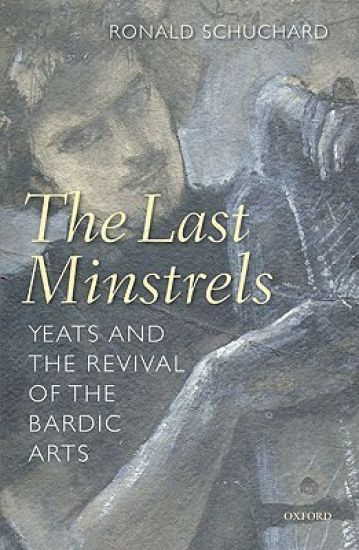
Recovering a lost literary movement that was the most consuming preoccupation of W. B. Yeats's literary life and the most integral to his poetry and drama, Ronald Schuchard's The Last Minstrels provides an historical, biographical, and critical reconstruction of the poet's lifelong attempt to restore an oral tradition by reviving the bardic arts of chanting and musical speech. From the beginning of his career Yeats was determined to return the 'living voice' of the poet from exile to the centre of culture - on its platforms, stages, and streets - thereby establishing a spiritual democracy in the arts for the non-reading as well as the reading public. Schuchard's study enhances our understanding of Yeats's cultural nationalism, his aims for the Abbey Theatre, and his dynamic place in a complex of interrelated arts in London and Dublin. With a wealth of new archival materials, the narrative intervenes in literary history to show the attempts of Yeats and Florence Farr to take the 'new art' of chanting to Great Britain, America, and Europe, and it reveals for the first time the influence of their auditory poetics on the visual paradigm of the Imagists. The penultimate chapter examines the adjustments Yeats made for his movement during the war, including chanting and other adaptations from Noh drama for his dance plays and choruses, until the practice of his 'unfashionable art' became dormant in the 1920s before the restless rise of realism. The final chapter resurrects his heroic effort in the 1930s to reunite poetry and music and reconstitute his dream of a spiritual democracy through the medium of public broadcasting.