
Kirjahaku
Etsi kirjoja tekijän nimen, kirjan nimen tai ISBN:n perusteella.
1000 tulosta hakusanalla Russell Edwards


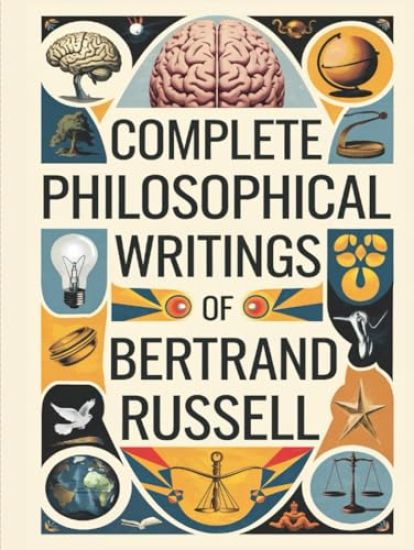
Discover the intellectual wealth of Bertrand Russell in the 'Collected Works of Bertrand Russell, ' an expansive compilation that encapsulates the prolific and influential contributions of this eminent philosopher, mathematician, and social critic. This monumental collection spans the full spectrum of Russell's diverse output, including his groundbreaking philosophical treatises, thought-provoking social and political commentaries, illuminating essays, and insightful works on mathematics. Within these pages, you'll find enduring classics such as 'The Problems of Philosophy, ' which explores fundamental questions of knowledge and existence. Betrand offers a sweeping overview of philosophical thought through the ages, and also delves into the dynamics of authority and influence in society. 'Collected Works of Bertrand Russell' is an indispensable resource for anyone eager to engage with the enduring wisdom of this remarkable thinker.

RUSSELL AND THE LINGUISTIC PHILOSOPHY I t is generally acknowledged that Bertrand Russell played a vital role in the so-called "revolution" that has taken place in twentieth century Anglo-American philosophy, the revolution that has led many philo sophers virtually to equate philosophy with some variety - or varieties - of linguistic analysis. His contributions to this revolution were two fold: (I) together with G. E. Moore he led the successful revolt against the neo-Hegelianism of Idealists such as Bradley and McTaggert; (2) again with Moore he provided much of the impetus for a somewhat revolutionary way of doing philosophy. (I) and (2) are, of course, close ly related, since the new way of philosophizing could be said to consti tute, in large part, the revolt against Idealism. Be this as it may, how ever, the important fact for present consideration is that Russell was a major influence in turning Anglo-American philosophy in the direction it has subsequently taken - toward what may be termed, quite general ly, the "linguistic philosophy. " Unfortunately, though his importance as a precursor of the linguistic philosophy is well-known, the precise sense in which Russell himself can be considered a "philosopher of language" has not, to the present time, been sufficiently clarified. Useful beginnings have been made toward an investigation of this question, but they have been, withal, only begin nings, and nothing like an adequate picture of Russell's overall philoso phy of language is presently available.


Mary Russell Mitford and Her Surroundings
Constance Hill; Ellen G Hill
Anson Street Press
2025
pokkari

Mary Russell Mitford and Her Surroundings
Constance Hill; Ellen G Hill
Anson Street Press
2025
sidottu

Jack Russell Puppies 2026 12 X 12 Wall Calendar
Willow Creek Press Calendars
2025
kalenteri
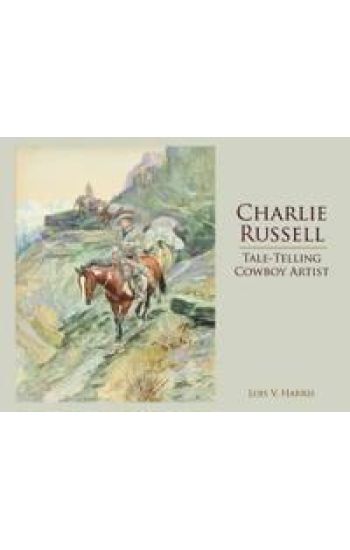
As a boy, Charlie Russell shaped small clay figures and drew pictures. He would one day become known as the Cowboy Artist. In this picture-book biography, young readers will discover the tales of the Old West that his much-admired art and writings tell. As a young boy in the 1870s, Charlie Russell had two passions: art and the West. When he was just fifteen, he established himself as a ranch hand in Montana Territory, where he was able to draw upon his surroundings to develop his artistic gifts. Soon, he was living the life he had always imagined. Twenty-three samples of the artist's paintings and sculptures illustrate this biography, a story that traces Russell's life from young man to cowboy.

The Russell Cosmogony; A New Concept of Light, Matter, and Energy
Martino Fine Books
2025
sidottu

Jack Russell Puppies Square Mini Calenda
CAROUSEL CALENDARS 2026
2025
muu
Calendar.

Jack Russell Terriers Slim Diary 2026
CAROUSEL DIARIES 2026
2025
muu
Jack Russell Terriers Slim Diary 2026.
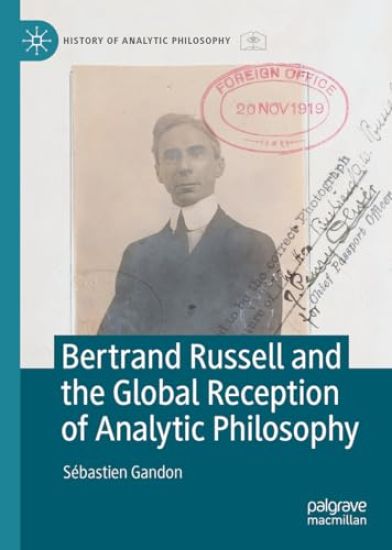
Bertrand Russell and the Global Reception of Analytic Philosophy
Sébastien Gandon
Springer Nature Switzerland AG
2026
sidottu
This book provides the first exploration of a new field of study, that of the global reception of analytic philosophy. Its aim is to understand how Russell's program of logical analysis of philosophy was received, interpreted and transformed during the interwar period in different geographical and cultural areas. Russell's idea was that the new mathematical logic could provide definitive solutions to traditional philosophical problems. But which problems and from which traditions? Based on three case studies (the works of Norbert Wiener, Jean Nicod and Feng Youlan), this book shows how Russellian logical analysis becomes transformed through contact with three philosophical configurations (pragmatism in the US, Bergsonism in France and new Confucianism in China). The book describes in detail the changes introduced into Russellian logical analysis by authors who applied it to philosophical problems and traditions that Russell was unfamiliar with. The logical method is seen to adjust to the culturally determined material it encounters. That there is this adjustment raises the delicate and intriguing question of whether logical analysis (and/or logic) depends on variable cultural traits. This issue is addressed in the book's general conclusion. Bertrand Russell and the Global Reception of Analytic Philosophy is essential reading for all scholars, researchers and advanced students of the history of analytic philosophy and especially the reception of analytic philosophy in different countries and cultures.


The Friendships of Mary Russell Mitford. As Recorded in Letters from Her Literary Correspondents
Mary Russell Mitford; Alfred Guy L'Estrange
Antigonos Verlag
2025
nidottu

The Friendships of Mary Russell Mitford. As Recorded in Letters from Her Literary Correspondents
Mary Russell Mitford
Antigonos Verlag
2025
nidottu

James Russell Lowell: A Biographical Sketch
Antigonos Verlag
2025
sidottu



Jack Russell Terrier.....Ein Verwandlungskünstler namens Jake (hochwertiger Premium Wandkalender 2026 DIN A2 quer), Kunstdruck in Hochglanz
AWS S. J. Schröder Schröder
Calvendo
2025
kalenteri