Kirjojen hintavertailu. Mukana 11 699 587 kirjaa ja 12 kauppaa.

Kirjahaku

Etsi kirjoja tekijän nimen, kirjan nimen tai ISBN:n perusteella.

1000 tulosta hakusanalla Ryan C. Thomas

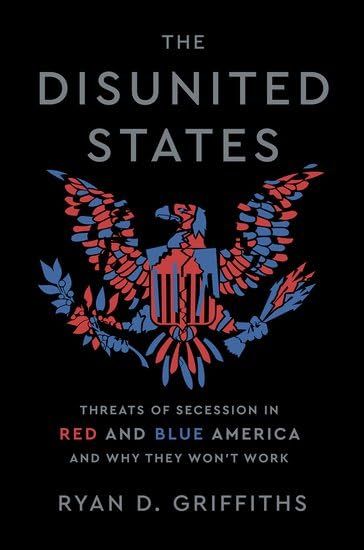
The Disunited States

The Disunited States

Ryan D. Griffiths

OXFORD UNIVERSITY PRESS INC
2026
sidottu
Is the breakup of an increasingly polarized America into separate red and blue countries even possible? There is a growing interest in American secession. In February 2023, Marjorie Taylor Greene tweeted that "We need a national divorce...We need to separate by red states and blue states." Recent movements like Yes California have called for a national divorce along political lines. A 2023 Axios poll shows that 20 percent of Americans favor a national divorce. These trends show a sincere interest in American secession, and they will likely increase in the aftermath of the 2024 Presidential election. Proponents of secession make three arguments: the two sides have irreconcilable differences; secession is a legal right; and smaller political units are better. Through interviews with secessionist advocates in America, Ryan Griffiths explores the case for why Red America and Blue America should split up. But as The Disunited States shows, these arguments are fundamentally incorrect. Secession is the wrong solution to the problem of polarization. Red and Blue America are not neatly sorted and geographically concentrated. Splitting the two parts would require a dangerous unmixing of the population, one that could spiral into violence and state collapse. Drawing on his expertise on secessionism worldwide, he shows how the process has played out internationally-and usually disastrously. Ultimately, this book will disabuse readers of the belief that secession will fix America's problems. Rather than focus on national divorce as a solution, the better course of action is to seek common ground.

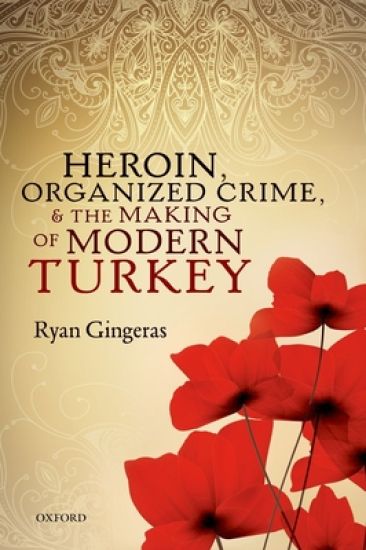
Heroin, Organized Crime, and the Making of Modern Turkey
Heroin, Organized Crime, and the Making of Modern Turkey explores the history of organized crime in Turkey and the roles which gangs and gangsters have played in the making of the Turkish state and Turkish politics. Turkey's underworld, which has been at the heart of several devastating scandals over the last several decades, is strongly tied to the country's long history of opium production and heroin trafficking. As an industry at the centre of the Ottoman Empire's long transition into the modern Turkish Republic, as important as the silk road had been in earlier centuries, the modern rise of the opium and heroin trade helped to solidify and complicate long-standing relationships between state officials and criminal syndicates. Such relationships produced not only ongoing patterns of corruption, but helped fuel and enable repeated acts of state violence. Drawing upon new archival sources from the United States and Turkey, including declassified documents from the Prime Minister's Archives of the Republic of Turkey and the Central Intelligence Agency, Heroin, Organized Crime, and the Making of Modern Turkey provides a critical window into how a handful of criminal syndicates played supporting roles in the making of national security politics in the contemporary Turkey. The rise of the 'Turkish mafia', from its origins in the late Ottoman period to its role in the 'deep state' revealed by the so-called Susurluk and Ergenekon scandals, is a story that mirrors troubling elements in the republic's establishment and emphasizes the transnational and comparative significance of narcotics and gangs in the country's past.
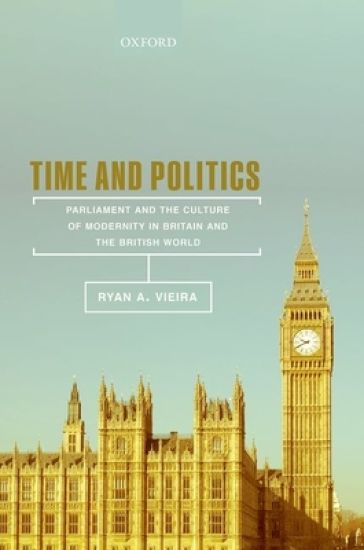
Time and Politics

Time and Politics

Ryan A. Vieira

Oxford University Press
2015
sidottu
Time and Politics is the first cultural and transnational history of modern procedural reform in the Westminster parliamentary system. The study centres on the nineteenth-century emergence of a desire to modernise and make more efficient the procedural rules of parliamentary law-making. Contrary to existing interpretations, which see this as a product of transformations in political structure and practice, this volume demonstrates how the evolution of Parliament's rules was structured by transformations within the wider culture of time. Ryan Vieira argues that the spread of an increasingly rigorous time discipline in concert with a growing consciousness of being modern worked to progressively erode the legitimacy of the historically developed rules of parliamentary debate and law-making, while simultaneously implanting new ways of judging the effectiveness of parliamentary institutions. By the 1880s, this process had transformed efficiency into the ultimate criteria of parliamentary effectiveness. Using the conceptual framework of the British world, Time and Politics demonstrates how this new understanding of parliamentary effectiveness was exported to the colonies of settlement through a series of communicative networks and provided colonial parliamentarians with the ability to imagine the inefficiencies of their own legislatures as part of a larger transnational problem. In making these arguments, this volume lays the groundwork for a new type of parliamentary history.
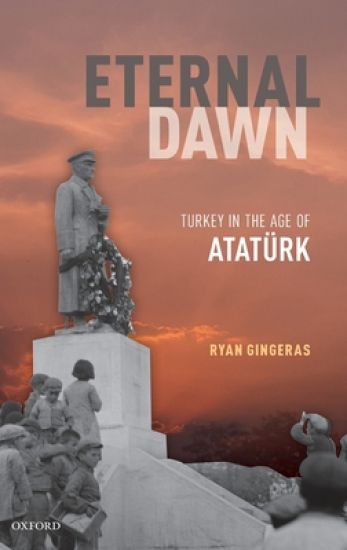
Eternal Dawn

Eternal Dawn

Ryan Gingeras

Oxford University Press
2019
sidottu
Amid the tensions and uncertainties that plagued the globe before the Second World War, the Republic of Turkey appeared to many as a unique and constructive model for how a state was to be reformed and governed in the modern era. For many interwar observers, Turkey was a country that seemed to have radically transformed itself into a nation that was united, strong, and progressive, one that was unburdened by its past. A general consensus held that Turkey's founding president, Mustafa Kemal Atatürk, was the chief architect and engineer of this feat, a belief that placed him among the greatest reforming statesmen in world history. This general perception of Atatürk and his revolutionary rule has largely endured to this day. As a study grounded in largely untapped archival and scholarly sources, Eternal Dawn presents a definitive look inside the development and evolution of Atatürk's Turkey. Rather than presenting the country's founding and transformation as an extension of Mustafa Kemal's life and achievements, scholar Ryan Gingeras presents Turkey's early years as the culmination of a variety of social and political forces dating back to the late Ottoman Empire. Eternal Dawn presses beyond the reigning mythology that still envelops this period and challenges many of the standing assumptions about the limits, successes, and consequences of the reforms that comprised Mustafa Kemal's revolution. Through a detailed survey of social and political conditions that defined life in the capital as well as Turkey's diverse provinces, Gingeras lays bare many of the harsh realities and bitter legacies incurred as a result of the republic's establishment and transformation. Atatürk's revolution, upon final analysis, destroyed as much as it built, and established precedents that both strengthen and torment the country to this day.
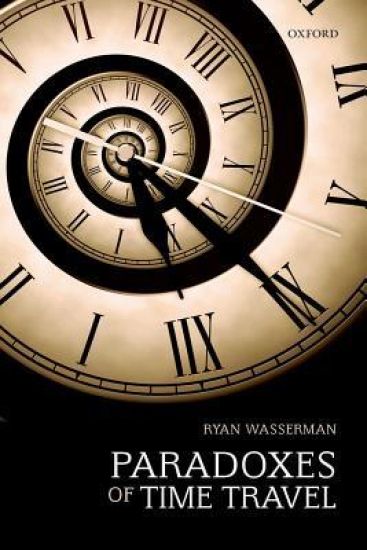
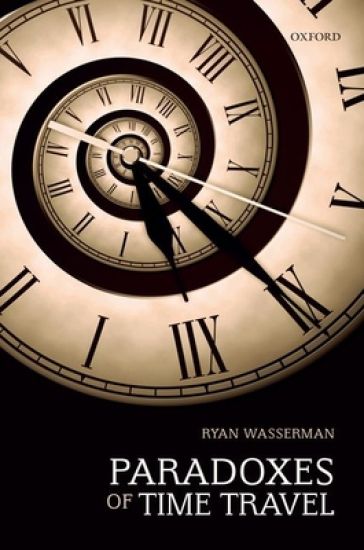
Paradoxes of Time Travel

Paradoxes of Time Travel

Ryan Wasserman

Oxford University Press
2017
sidottu
Ryan Wasserman presents a wide-ranging exploration of puzzles raised by the possibility of time travel, including the grandfather paradox, the bootstrapping paradox, and the twin paradox of special relativity. He draws out their implications for our understanding of time, tense, freedom, fatalism, causation, counterfactuals, laws of nature, persistence, change, and mereology. The Paradoxes of Time Travel is written in an accessible style, and filled with entertaining examples from physics, science fiction, and popular culture.
Heroin, Organized Crime, and the Making of Modern Turkey
Heroin, Organized Crime, and the Making of Modern Turkey explores the history of organized crime in Turkey and the roles which gangs and gangsters have played in the making of the Turkish state and Turkish politics. Turkey's underworld, which has been at the heart of several devastating scandals over the last several decades, is strongly tied to the country's long history of opium production and heroin trafficking. As an industry at the centre of the Ottoman Empire's long transition into the modern Turkish Republic, as important as the silk road had been in earlier centuries, the modern rise of the opium and heroin trade helped to solidify and complicate long-standing relationships between state officials and criminal syndicates. Such relationships produced not only ongoing patterns of corruption, but helped fuel and enable repeated acts of state violence. Drawing upon new archival sources from the United States and Turkey, including declassified documents from the Prime Minister's Archives of the Republic of Turkey and the Central Intelligence Agency, Heroin, Organized Crime, and the Making of Modern Turkey provides a critical window into how a handful of criminal syndicates played supporting roles in the making of national security politics in the contemporary Turkey. The rise of the 'Turkish mafia', from its origins in the late Ottoman period to its role in the 'deep state' revealed by the so-called Susurluk and Ergenekon scandals, is a story that mirrors troubling elements in the republic's establishment and emphasizes the transnational and comparative significance of narcotics and gangs in the country's past.
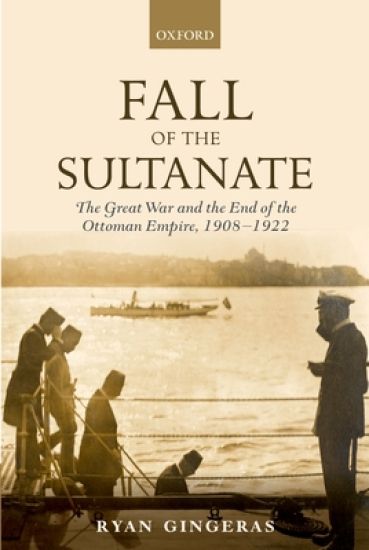
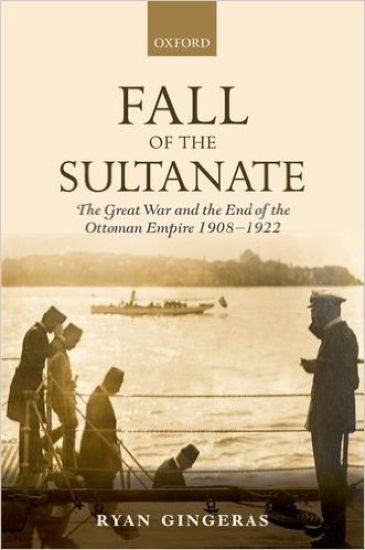
Fall of the Sultanate

Fall of the Sultanate

Ryan Gingeras

Oxford University Press
2019
nidottu
The collapse of the Ottoman Empire was by no means a singular event. After six hundred years of ruling over the peoples of North Africa, the Balkans and Middle East, the death throes of sultanate encompassed a series of wars, insurrections, and revolutions spanning the early twentieth century. This volume encompasses a full accounting of the political, economic, social, and international forces that brought about the passing of the Ottoman state. In surveying the many tragedies that transpired in the years between 1908 and 1922, Fall of the Sultanate explores the causes that eventually led so many to view the legacy of the Ottomans with loathing and resentment. The volume provides a retelling of this critical history as seen through the eyes of those who lived through the Ottoman collapse. Drawing upon a large gamut of sources in multiple languages, Ryan Gingeras strikes a critical balance in presenting and interpreting the most impactful experiences that shaped the lives of the empire's last generation. The story presented here takes into account the perspectives of the empire's diverse population as well as the leaders who piloted the state to its end. In surveying the personal, communal and national struggles that defined Italy's invasion of Libya, the Balkan War, the Great War, and the Turkish War of Independence, Fall of the Sultanate presents readers with a fresh and comprehensive exposition of how and why Ottoman imperial rule ended in bloodshed and disillusionment.
Paradoxes of Time Travel

Paradoxes of Time Travel

Ryan Wasserman

Oxford University Press
2020
nidottu
Ryan Wasserman explores a range of fascinating questions raised by the possibility of time travel. This volume explores a wide-range of puzzles such as the grandfather paradox, the bootstrapping paradox, and the twin paradox of special relativity. Ryan Wasserman draws out their implications for our understanding of time, tense, freedom, fatalism, causation, counterfactuals, laws of nature, persistence, change, and mereology. Paradoxes of Time Travel is written in an accessible style, and filled with entertaining examples from physics, science fiction, and popular culture.
Thomas Reid's Theory of Perception

Thomas Reid's Theory of Perception

Ryan Nichols

Clarendon Press
2007
sidottu
The thesis that the mind cannot directly apprehend features of the physical world - what Reid calls the Way of Ideas - is a staple of Early Modern philosophical tradition. This commitment to the direct awareness of, and only of, mental representations unifies the otherwise divergent philosophical systems of Rationalists and Empiricists. Thomas Reid battles against this thesis on many fronts, in particular over the nature of perception. Ryan Nichols lays the groundwork for Reid's theory of perception by developing Reid's unheralded argument against a representational theory of thought, which Nichols applies to his discussion of the intentionality of perceptual states and Reid's appeal to 'signs'. Reid's efforts to preserve common sense epistemic commitments also lead him to adopt unique theories about our concepts of primary and secondary qualities, and about original and acquired perceptions. About the latter pair, Nichols argues that most perceptual beliefs depend for their justification upon inferences. The Way of Ideas holds that sensations are objects of awareness and that our senses are not robustly unified. Nichols develops Reid's counter-proposals by examining his discussion of the evolutionary purpose of sensations, and the nature of our awareness of sensations, as well as his intriguing affirmative answer to Molyneux's questions. Nichols brings to the writing of this book a consummate knowledge of Reid's texts, published and unpublished, and a keen appreciation for Reid's responses to his predecessors. He frequently reconstructs arguments in premise/conclusion form, thereby clarifying disputes that have frustrated previous Reid scholarship. This clarification, his lively examples, and his plainspoken style make this book especially readable. Reid's theory of perception is by far the most important feature of Reid's philosophical system, and Nichols offers what will be, for a long time to come, the definitive analysis of this theory.
Socializing States

Socializing States

Ryan Goodman; Derek Jinks

Oxford University Press Inc
2013
sidottu
The role of international law in global politics is as poorly understood as it is important. But how can the international legal regime encourage states to respect human rights? Given that international law lacks a centralized enforcement mechanism, it is not obvious how this law matters at all, and how it might change the behavior or preferences of state actors. In Socializing States, Ryan Goodman and Derek Jinks contend that what is needed is a greater emphasis on the mechanisms of law's social influence--and the micro-processes that drive each mechanism. Such an emphasis would make clearer the micro-foundations of international law. This book argues for a greater specification and a more comprehensive inventory of how international law influences relevant actors to improve human rights conditions. Substantial empirical evidence suggests three conceptually distinct mechanisms whereby states and institutions might influence the behavior of other states: material inducement, persuasion, and what Goodman and Jinks call acculturation. The latter includes social and cognitive forces such as mimicry, status maximization, prestige, and identification. The book argues that (1) acculturation is a conceptually distinct, empirically documented social process through which state behavior is influenced; and (2) acculturation-based approaches might occasion a rethinking of fundamental regime design problems in human rights law. This exercise not only allows for reexamination of policy debates in human rights law; it also provides a conceptual framework for assessing the costs and benefits of various design principles. While acculturation is not necessarily the most important or most desirable approach to promoting human rights, a better understanding of all three mechanisms is a necessary first step in the development of an integrated theory of international law's influence. Socializing States provides the critical framework to improve our understanding of how norms operate in international society, and thereby improve the capacity of global and domestic institutions to build cultures of human rights,
Socializing States

Socializing States

Ryan Goodman; Derek Jinks

Oxford University Press Inc
2013
nidottu
The role of international law in global politics is as poorly understood as it is important. But how can the international legal regime encourage states to respect human rights? Given that international law lacks a centralized enforcement mechanism, it is not obvious how this law matters at all, and how it might change the behavior or preferences of state actors. In Socializing States, Ryan Goodman and Derek Jinks contend that what is needed is a greater emphasis on the mechanisms of law's social influence--and the micro-processes that drive each mechanism. Such an emphasis would make clearer the micro-foundations of international law. This book argues for a greater specification and a more comprehensive inventory of how international law influences relevant actors to improve human rights conditions. Substantial empirical evidence suggests three conceptually distinct mechanisms whereby states and institutions might influence the behavior of other states: material inducement, persuasion, and what Goodman and Jinks call acculturation. The latter includes social and cognitive forces such as mimicry, status maximization, prestige, and identification. The book argues that (1) acculturation is a conceptually distinct, empirically documented social process through which state behavior is influenced; and (2) acculturation-based approaches might occasion a rethinking of fundamental regime design problems in human rights law. This exercise not only allows for reexamination of policy debates in human rights law; it also provides a conceptual framework for assessing the costs and benefits of various design principles. While acculturation is not necessarily the most important or most desirable approach to promoting human rights, a better understanding of all three mechanisms is a necessary first step in the development of an integrated theory of international law's influence. Socializing States provides the critical framework to improve our understanding of how norms operate in international society, and thereby improve the capacity of global and domestic institutions to build cultures of human rights,
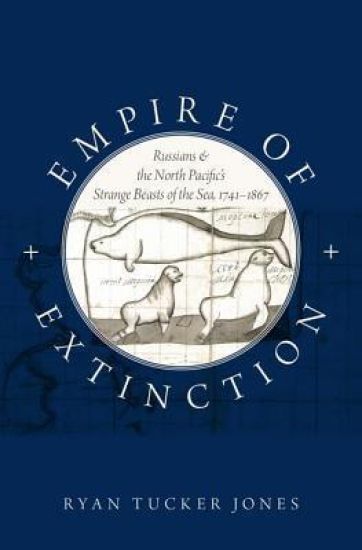
Empire of Extinction

Empire of Extinction

Ryan Tucker Jones

Oxford University Press Inc
2014
sidottu
In the second half of the eighteenth century, the Russian Empire-already the largest on earth-expanded its dominion onto the ocean. Through a series of government-sponsored voyages of discovery and the establishment of a private fur trade, Russians crossed and re-crossed the Bering Strait and the North Pacific Ocean, establishing colonies in Kamchatka and Alaska and exporting marine mammal furs to Europe and China. In the process they radically transformed the North Pacific, causing environmental catastrophe. In one of the most hotly-contested imperial arenas of the day, the Russian empire organized a host of Siberian and Alaskan native peoples to rapaciously hunt for fur seals, sea otters, and other fur-bearing animals. The animals declined precipitously, and Steller's sea cow went extinct. This destruction captured the attention of natural historians who for the first time began to recognize the threat of species extinction. These experts drew upon Enlightenment and Romantic-era ideas about nature and imperialism but their ideas were refracted through Russian scientific culture and influenced by the region's unique ecology. Cosmopolitan scientific networks ensured the spread of their ideas throughout Europe. Heeding the advice of these scientific experts, Russian colonial governors began long-term management of marine mammal stocks and instituted some of the colonial world's most forward-thinking conservationist policies. Highlighting the importance of the North Pacific in Russian imperial and global environmental history, Empire of Extinction focuses on the development of ideas about the natural world in a crucial location far from what has been considered the center of progressive environmental attitudes.
State Building in Boom Times

State Building in Boom Times

Ryan Saylor

Oxford University Press Inc
2014
sidottu
State Building in Boom Times argues that commodity booms and coalitional politics are central to understanding the state building variation within and across Latin America and Africa. It shows how resource booms can trigger the provision of new public goods and institutional strengthening and thus help countries expand their state capacity. But these possibilities hinge on coalitional politics, as seen through six cases. Countries ruled by export-oriented coalitions (Argentina, Chile, and Mauritius) expanded their state capacity as a direct result of commodity booms. But countries in which exporters were politically marginalized (Colombia, Ghana, and Nigeria) missed analogous state building opportunities because ruling coalitions preyed upon export wealth, rather than promoting export interests via state building. The coalitional basis of these divergent outcomes suggests that, contrary to the prevailing belief in a resource curse, natural resource wealth does not necessarily dispose countries to low state capacity. Instead, export-oriented coalitions can harness boom times for developmental gains, even in the context of weak institutions. This finding warrants reappraising some widespread presumptions about the relationship between resource wealth and state building, as well as the public policies that are commonly proposed for developing countries to manage their natural resource wealth.
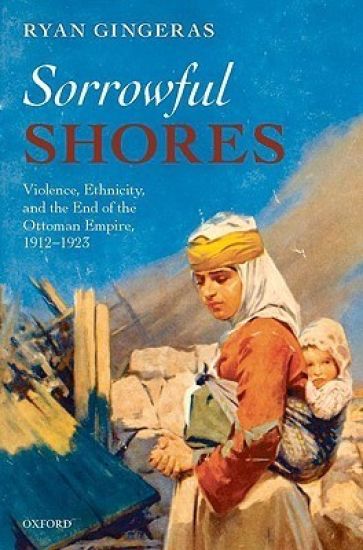
Sorrowful Shores

Sorrowful Shores

Ryan Gingeras

Oxford University Press
2009
sidottu
The Turkish Republic was formed out of immense bloodshed and carnage. During the decade leading up to the end of the Ottoman Empire and the ascendancy of Mustafa Kemal Atatürk, virtually every town and village throughout Anatolia was wracked by intercommunal violence. Sorrowful Shores presents a unique, on-the-ground history of these bloody years of social and political transformation. Challenging the determinism associated with nationalist interpretations of Turkish history between 1912 and 1923, Ryan Gingeras delves deeper into this period of transition between empire and nation-state. Looking closely at a corner of territory immediately south of the old Ottoman capital of Istanbul, he traces the evolution of various communities of native Christians and immigrant Muslims against the backdrop of the Balkan Wars, the First World War, the Armenian Genocide, the Turkish War of Independence, and the Greek occupation of the region. Drawing on new sources from the Ottoman archives, Gingeras demonstrates how violence was organised at the local level. Arguing against the prevailing view of the conflict as a war between monolithic ethnic groups driven by fanaticism and ancient hatreds, he reveals instead the culpability of several competing states in fanning successive waves of bloodshed.
Fall of the Sultanate

Fall of the Sultanate

Ryan Gingeras

Oxford University Press
2016
sidottu
The collapse of the Ottoman Empire was by no means a singular event. After six hundred years of ruling over the peoples of North Africa, the Balkans and Middle East, the death throes of sultanate encompassed a series of wars, insurrections, and revolutions spanning the early twentieth century. This volume encompasses a full accounting of the political, economic, social, and international forces that brought about the passing of the Ottoman state. In surveying the many tragedies that transpired in the years between 1908 and 1922, Fall of the Sultanate explores the causes that eventually led so many to view the legacy of the Ottomans with loathing and resentment. The volume provides a retelling of this critical history as seen through the eyes of those who lived through the Ottoman collapse. Drawing upon a large gamut of sources in multiple languages, Ryan Gingeras strikes a critical balance in presenting and interpreting the most impactful experiences that shaped the lives of the empire's last generation. The story presented here takes into account the perspectives of the empire's diverse population as well as the leaders who piloted the state to its end. In surveying the personal, communal and national struggles that defined Italy's invasion of Libya, the Balkan War, the Great War, and the Turkish War of Independence, Fall of the Sultanate presents readers with a fresh and comprehensive exposition of how and why Ottoman imperial rule ended in bloodshed and disillusionment.
Sorrowful Shores

Sorrowful Shores

Ryan Gingeras

Oxford University Press
2011
nidottu
The Turkish Republic was formed out of immense bloodshed and carnage. During the decade leading up to the end of the Ottoman Empire and the ascendancy of Mustafa Kemal Atatürk, virtually every town and village throughout Anatolia was wracked by intercommunal violence. Sorrowful Shores presents a unique, on-the-ground history of these bloody years of social and political transformation. Challenging the determinism associated with nationalist interpretations of Turkish history between 1912 and 1923, Ryan Gingeras delves deeper into this period of transition between empire and nation-state. Looking closely at a corner of territory immediately south of the old Ottoman capital of Istanbul, he traces the evolution of various communities of native Christians and immigrant Muslims against the backdrop of the Balkan Wars, the First World War, the Armenian Genocide, the Turkish War of Independence, and the Greek occupation of the region. Drawing on new sources from the Ottoman archives, Gingeras demonstrates how violence was organised at the local level. Arguing against the prevailing view of the conflict as a war between monolithic ethnic groups driven by fanaticism and ancient hatreds, he reveals instead the culpability of several competing states in fanning successive waves of bloodshed.
Gordian Knot

Gordian Knot

Ryan M. Irwin

Oxford University Press Inc
2012
sidottu
Writing more than one hundred years ago, African American scholar W.E.B. Du Bois speculated that the great dilemma of the twentieth century would be the problem of "the color line." Nowhere was the dilemma of racial discrimination more entrenched--and more complex--than South Africa. This book looks at South Africa's freedom struggle in the years surrounding African decolonization, and it uses the global apartheid debate to explore the way new nation-states changed the international community during the mid-twentieth century. At the highpoint of decolonization, South Africa's problems shaped a transnational conversation about nationhood. Arguments about racial justice, which crested as Europe relinquished imperial control of Africa and the Caribbean, elided a deeper contest over the meaning of sovereignty, territoriality, and development. This contest was influenced--and had an impact on--the United States. Initially hopeful that liberal international institutions would amicably resolve the color line problem, Washington lost confidence as postcolonial diplomats took control of the U.N. agenda. The result was not only America's abandonment of the universalisms that propelled decolonization, but also the unraveling of the liberal order that remade politics during the twentieth century. Based on research in African, American, and European archives, Gordian Knot advances a bold new interpretation about African decolonization's relationship to American power. The book promises to shed light on U.S. foreign relations with the Third World and recast our understanding of liberal internationalism's fate after World War II.
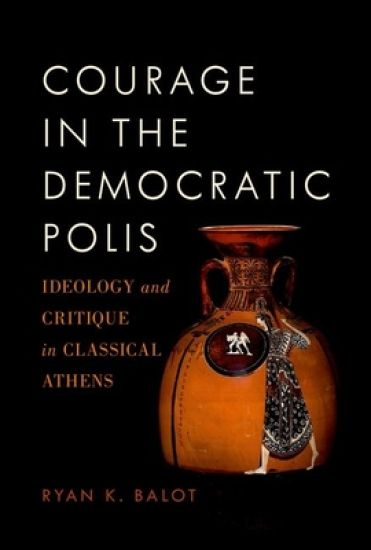
Courage in the Democratic Polis

Courage in the Democratic Polis

Ryan K. Balot

Oxford University Press Inc
2014
sidottu
In this careful and compelling study, Ryan K. Balot brings together political theory, classical history, and ancient philosophy in order to re-conceive of courage as a specifically democratic virtue. Ranging from Thucydides and Aristophanes to the Greek tragedians and Plato, Balot shows that the ancient Athenians constructed a novel vision of courage that linked this virtue to fundamental democratic ideals such as freedom, equality, and practical rationality. The Athenian ideology of courage had practical implications for the conduct of war, for gender relations, and for the citizens' self-image as democrats. In revising traditional ideals, Balot argues, the Athenians reimagined the emotional and cognitive motivations for courage in ways that will unsettle and transform our contemporary discourses. Without losing sight of political tensions and practical conflicts, Balot illustrates the merits of the Athenian ideal, provocatively explaining its potential to enlarge our contemporary understandings of politics and ethics. The result is a remarkably interdisciplinary work that has significant implications for the theory and practice of democracy, both ancient and modern.
Heidegger's Confessions

Heidegger's Confessions

Ryan Coyne

University of Chicago Press
2015
sidottu
Although Martin Heidegger is nearly as notorious as Friedrich Nietzsche for embracing the death of God, the philosopher himself acknowledged that Christianity accompanied him at every stage of his career. In Heidegger's Confessions, Ryan Coyne isolates a crucially important player in this story: Saint Augustine. Uncovering the significance of Saint Augustine in Heidegger's philosophy, he details the complex and conflicted ways in which Heidegger paradoxically sought to define himself against the Christian tradition while at the same time making use of its resources. Coyne first examines the role of Augustine in Heidegger's early period and the development of his magnum opus, Being and Time. He then goes on to show that Heidegger owed an abiding debt to Augustine even after his own rise as a secular philosopher, tracing his early encounters with theological texts through to his late thoughts and writings. Bringing a fresh and unexpected perspective to bear on Heidegger's profoundly influential critique of modern metaphysics, Coyne traces a larger lineage between religious and theological discourse and continental philosophy.
Heidegger's Confessions

Heidegger's Confessions

Ryan Coyne

University of Chicago Press
2016
nidottu
Although Martin Heidegger is nearly as notorious as Friedrich Nietzsche for embracing the death of God, the philosopher himself acknowledged that Christianity accompanied him at every stage of his career. In Heidegger's Confessions, Ryan Coyne isolates a crucially important player in this story: Saint Augustine. Uncovering the significance of Saint Augustine in Heidegger's philosophy, he details the complex and conflicted ways in which Heidegger paradoxically sought to define himself against the Christian tradition while at the same time making use of its resources. Coyne first examines the role of Augustine in Heidegger's early period and the development of his magnum opus, Being and Time. He then goes on to show that Heidegger owed an abiding debt to Augustine even following his own rise as a secular philosopher, tracing his early encounters with theological texts through to his late thoughts and writings. Bringing a fresh and unexpected perspective to bear on Heidegger's profoundly influential critique of modern metaphysics, Coyne traces a larger lineage between religious and theological discourse and continental philosophy.