"The History of Clarissa Harlowe," part of "The Works Of Samuel Richardson," is a monumental achievement in English literature. This epistolary novel, crafted by Samuel Richardson, unfolds through a series of letters, revealing the tragic tale of Clarissa, a young woman of virtue, and her struggles against the oppressive forces of her family and the cunning machinations of the libertine Lovelace. Richardson's detailed exploration of Clarissa's psychological and moral dilemmas offers a profound insight into the social mores of the 18th century. The novel's enduring appeal lies in its complex characters, its poignant depiction of female agency, and its unflinching examination of themes such as virtue, seduction, and familial duty. This edition allows readers to immerse themselves in Richardson's masterpiece, experiencing the emotional depth and narrative complexity that have made "Clarissa" a cornerstone of literary history. This work has been selected by scholars as being culturally important, and is part of the knowledge base of civilization as we know it. This work was reproduced from the original artifact, and remains as true to the original work as possible. Therefore, you will see the original copyright references, library stamps (as most of these works have been housed in our most important libraries around the world), and other notations in the work. This work is in the public domain in the United States of America, and possibly other nations. Within the United States, you may freely copy and distribute this work, as no entity (individual or corporate) has a copyright on the body of the work. As a reproduction of a historical artifact, this work may contain missing or blurred pages, poor pictures, errant marks, etc. Scholars believe, and we concur, that this work is important enough to be preserved, reproduced, and made generally available to the public. We appreciate your support of the preservation process, and thank you for being an important part of keeping this knowledge alive and relevant.
"The History of Clarissa Harlowe," part of "The Works Of Samuel Richardson," is a monumental achievement in English literature. This epistolary novel, crafted by Samuel Richardson, unfolds through a series of letters, revealing the tragic tale of Clarissa, a young woman of virtue, and her struggles against the oppressive forces of her family and the cunning machinations of the libertine Lovelace. Richardson's detailed exploration of Clarissa's psychological and moral dilemmas offers a profound insight into the social mores of the 18th century. The novel's enduring appeal lies in its complex characters, its poignant depiction of female agency, and its unflinching examination of themes such as virtue, seduction, and familial duty. This edition allows readers to immerse themselves in Richardson's masterpiece, experiencing the emotional depth and narrative complexity that have made "Clarissa" a cornerstone of literary history. This work has been selected by scholars as being culturally important, and is part of the knowledge base of civilization as we know it. This work was reproduced from the original artifact, and remains as true to the original work as possible. Therefore, you will see the original copyright references, library stamps (as most of these works have been housed in our most important libraries around the world), and other notations in the work. This work is in the public domain in the United States of America, and possibly other nations. Within the United States, you may freely copy and distribute this work, as no entity (individual or corporate) has a copyright on the body of the work. As a reproduction of a historical artifact, this work may contain missing or blurred pages, poor pictures, errant marks, etc. Scholars believe, and we concur, that this work is important enough to be preserved, reproduced, and made generally available to the public. We appreciate your support of the preservation process, and thank you for being an important part of keeping this knowledge alive and relevant.
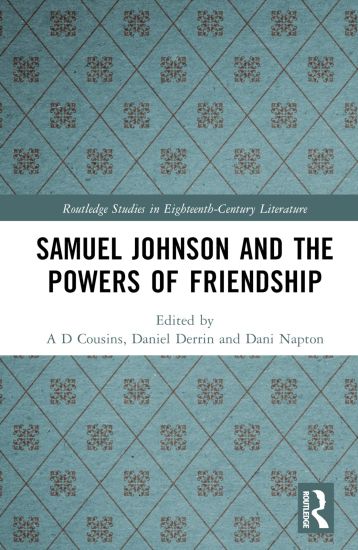
This book is the first to assess Johnson’s diverse insights into friendship—that is to say, his profound as well as widely ranging appreciation of it—over the course of his long literary career. It examines his engagements with ancient philosophies of friendship and with subsequent reformulations of or departures from that diverse inheritance. The volume explores and illuminates Johnson’s understanding of friendship in the private and public spheres—in particular, friendship’s therapeutic amelioration of personal experience and transformative impact upon civil life. Doing so, it considers both his portrayals of interaction with his friends and his more overtly fictional representations of friendship across the many genres in which he wrote. It presents at once an original re-assessment of Johnson’s writings and new interpretations of friendship as an element of civility in mid-eighteenth-century British culture.
This book is the first to assess Johnson’s diverse insights into friendship—that is to say, his profound as well as widely ranging appreciation of it—over the course of his long literary career. It examines his engagements with ancient philosophies of friendship and with subsequent reformulations of or departures from that diverse inheritance. The volume explores and illuminates Johnson’s understanding of friendship in the private and public spheres—in particular, friendship’s therapeutic amelioration of personal experience and transformative impact upon civil life. Doing so, it considers both his portrayals of interaction with his friends and his more overtly fictional representations of friendship across the many genres in which he wrote. It presents at once an original re-assessment of Johnson’s writings and new interpretations of friendship as an element of civility in mid-eighteenth-century British culture.
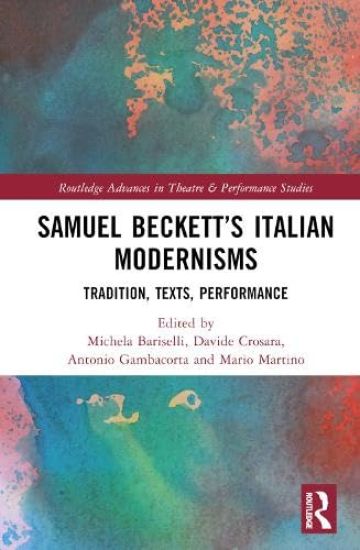
In the wake of both Joycean and Dantean celebrations, this volume aims to investigate the fecund influence of Italian culture on Samuel Beckett’s work, with a specific focus on the twentieth century.Located at the intersection of historical avant-garde movements and a renewed interest in tradition, Italian modernism reimagined Italy and its culture, projecting it beyond the shadow of fascism. Following in Joyce’s footsteps, Samuel Beckett soon became an attentive reader of Italian modernist authors. These had a profound effect on his early work, shaping his artistic identity. The influence of his early readings found its way also into Beckett’s postwar writing and, most poignantly, in his theatre. The contributions in this collection rekindle the debate around Beckett as modernist author through the lenses of Italian culture.This study will be of particular interest to students and scholars in theatre and performance studies, Italian studies, English studies, and comparative literature.
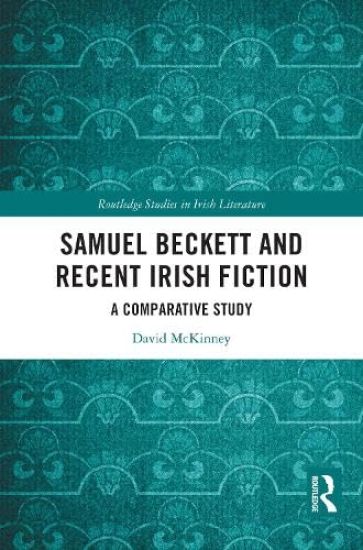
This volume considers Samuel Beckett’s fiction and drama as major aesthetic and thematic influences on the work of Irish authors Eimear McBride, Keith Ridgway, Emma Donoghue, and Kevin Barry in the post-crash period of 2009–2015. Through cross-comparisons between the aesthetics and form of Beckett’s Trilogy, Mercier and Camier, Footfalls and Not I, and those of a range of post-crash Irish novels including Beatlebone, Hawthorn and Child, Room, and A Girl Is A Half-Formed Thing, this book establishes Beckett’s continuing influence on Irish fiction. With particular reference to these newer authors’ treatment of scarcity, trauma, indeterminism, gender and sexuality, and confinement in the context of major societal changes and traumas in Irish society since 2009, topics include the imposition of austerity, collapse of faith in institutions, and the increasing recognition of LGBTQIA+ and reproductive rights.