
Kirjahaku
Etsi kirjoja tekijän nimen, kirjan nimen tai ISBN:n perusteella.
1000 tulosta hakusanalla Shea Serrano


Sea-Air Intermodal Port Pair Selection Criteria in South America
Phillip A Shea
Hutson Street Press
2025
sidottu

Sea-Air Intermodal Port Pair Selection Criteria in South America
Phillip A Shea
Hutson Street Press
2025
pokkari

The Sanskrit word mandala can be translated as "sacred circle." Within the circle sits a microcosm of the universe and/or consciousness, repre-sented by icons. Eastern civilizations developed the spiritual-artistic practice of creating mandalas—with sand, paint, and architecture—to high technical sophistication, making manifest a geometry with layers of esoteric meaning for both the mandala artist and the initiated spectator. James Joyce’s Mandala outlines and explains this iconic sacred geometry, and assesses to what extent Joyce’s works of literature, in particular Finnegans Wake, can be understood as mandalic constructs. Using exam-ples from Dubliners to the Wake, we see how fundamental to Joyce’s fiction is the issue of spiritual paralysis (a problem the mandala attempts to dissolve) and also how fascinated he was by geometric imagery and symmetry, the technical devices employed in mandala construction. This is the first book-length comparison of Joyce’s work with the mythic structure of the mandala. Never discounting the richness of Joyce’s genius, it uses his "collideorscape" to explore the secrets of the mandala principle as much as it uses mandala theory to illuminate his famed book of the night.
The Sanskrit word mandala can be translated as "sacred circle." Within the circle sits a microcosm of the universe and/or consciousness, repre-sented by icons. Eastern civilizations developed the spiritual-artistic practice of creating mandalas—with sand, paint, and architecture—to high technical sophistication, making manifest a geometry with layers of esoteric meaning for both the mandala artist and the initiated spectator. James Joyce’s Mandala outlines and explains this iconic sacred geometry, and assesses to what extent Joyce’s works of literature, in particular Finnegans Wake, can be understood as mandalic constructs. Using exam-ples from Dubliners to the Wake, we see how fundamental to Joyce’s fiction is the issue of spiritual paralysis (a problem the mandala attempts to dissolve) and also how fascinated he was by geometric imagery and symmetry, the technical devices employed in mandala construction. This is the first book-length comparison of Joyce’s work with the mythic structure of the mandala. Never discounting the richness of Joyce’s genius, it uses his "collideorscape" to explore the secrets of the mandala principle as much as it uses mandala theory to illuminate his famed book of the night.

Featuring over forty interviews with America’s leading showrunners, this book provides unique perspectives and insights into the TV industry, and demystifies the craft, backbone, skill, strategies, challenges, and persistence it takes to succeed in Hollywood and internationally.Marygrace O’Shea’s conversations with women showrunners are part master craft lesson, part backstage pass, part career guide from the geniuses who create the best TV. The book shines a light on what it truly means to be a showrunner working in the industry today, and reveals how to navigate a career and a future in the global marketplace. Interviews include Angela Kang (The Walking Dead), Aline Brosh McKenna (Crazy Ex-Girlfriend), Barbara Hall (Madam Secretary), Charlotte Brown (Rhoda), Chris Nee (Doc McStuffins), Elizabeth Berger (This is Us), Gloria Calderón Kellett (One Day at a Time), Ilene Chaiken (The L Word), Liz Meriwether (The New Girl, The Dropout), Liz Tigelaar (Tiny Beautiful Things, Little Fires Everywhere), Marta Kauffman (Friends, Grace and Frankie), Tracy Oliver (Harlem, Awkward Black Girl), Sierra Teller Ornelas (Rutherford Falls), and many more.Ideal for professional and aspiring television writers, as well as students of screenwriting, film and TV, this book is essential reading for anyone interested in the art, craft and business of creating television.

Featuring over forty interviews with America’s leading showrunners, this book provides unique perspectives and insights into the TV industry, and demystifies the craft, backbone, skill, strategies, challenges, and persistence it takes to succeed in Hollywood and internationally.Marygrace O’Shea’s conversations with women showrunners are part master craft lesson, part backstage pass, part career guide from the geniuses who create the best TV. The book shines a light on what it truly means to be a showrunner working in the industry today, and reveals how to navigate a career and a future in the global marketplace. Interviews include Angela Kang (The Walking Dead), Aline Brosh McKenna (Crazy Ex-Girlfriend), Barbara Hall (Madam Secretary), Charlotte Brown (Rhoda), Chris Nee (Doc McStuffins), Elizabeth Berger (This is Us), Gloria Calderón Kellett (One Day at a Time), Ilene Chaiken (The L Word), Liz Meriwether (The New Girl, The Dropout), Liz Tigelaar (Tiny Beautiful Things, Little Fires Everywhere), Marta Kauffman (Friends, Grace and Frankie), Tracy Oliver (Harlem, Awkward Black Girl), Sierra Teller Ornelas (Rutherford Falls), and many more.Ideal for professional and aspiring television writers, as well as students of screenwriting, film and TV, this book is essential reading for anyone interested in the art, craft and business of creating television.
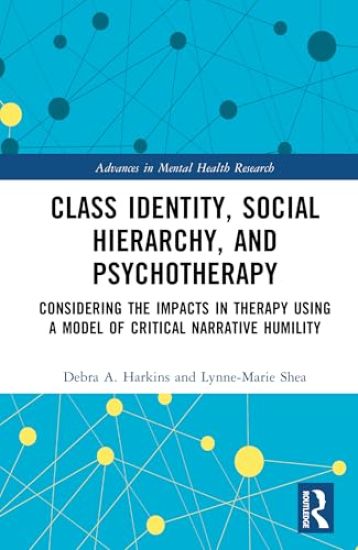
Class Identity, Social Hierarchy, and Psychotherapy
Lynne-Marie Shea; Debra A. Harkins
TAYLOR FRANCIS LTD
2025
sidottu
Class Identity, Social Hierarchy, and Psychotherapy explores the often-ignored influence of class identity on psychological care. Written by two psychologists with working-class roots, this book explores the development of American psychology both within and in support of a capitalist social structure. Through surveys, interviews, and personal experiences, it is revealed how the middle-class norms and neoliberal values in which the practice of psychotherapy is rooted often alienate many of the working-class people it seeks to help. Through the voices of both working- and middle-class clients and clinicians, authors demonstrate how hidden rules about emotional expression, vulnerability, and competence often shape therapy spaces. They explore how those living between socioeconomic worlds experience both marginalization and pressure to conform within clinical spaces not built for them. A model of critical narrative humility is introduced, which encourages therapists to interrogate their own class position, training, and biases, and re-consider how these factors might impact their ability to authentically hear the complex and nuanced accounts of their clients. Urging a shift from individual practice to systems-level thinking, the book offers a radical reimagining of therapeutic practice grounded in critical self-reflection. This book will appeal to advanced students, trainees, and early-career professionals and practitioners interested in decolonizing practice and moving to consider class as an integral aspect of intersectional identity.

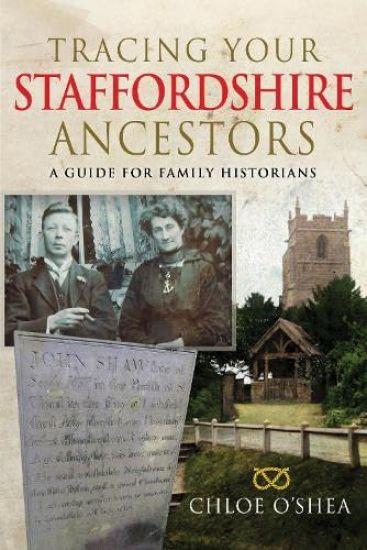
Whether you're just beginning your genealogical journey or have been tracing your family tree for years, Tracing your Staffordshire Ancestors provides a comprehensive roadmap to uncovering your family history in the heart of England. Delve into a variety of historical records, from the well-known census and parish registers to the less-explored realms of manorial court rolls, tithe apportionments, and records from the potteries. Each chapter focuses on a specific type of record, providing clear instructions on where to find it, how to interpret it, and the unique insights it can offer into your family's past. With vivid examples of real Staffordshire people brought to life through these records, you'll see how each piece of the puzzle can reveal more about your ancestors. Beyond the archives, learn how to enhance your research with visits to local museums, utilise social media and DNA testing, and understand the significance of Staffordshire’s surnames and traditional occupations. Tracing Your Staffordshire Ancestors is an invaluable resource for anyone with ties to this historic county. With its practical advice, expert guidance, and real-life examples, it's the perfect companion for bringing your family's history to light.
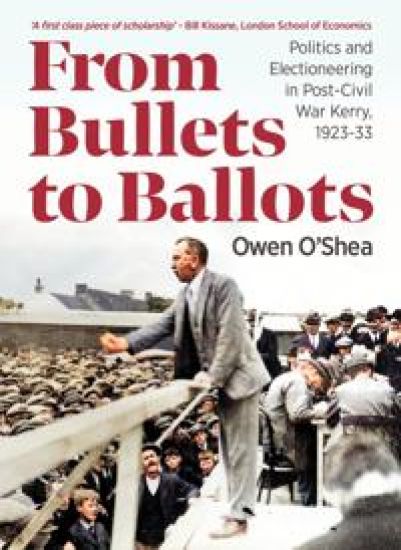
Civil War politics has defined the Irish political landscape for generations. The parties which emerged from the divisions over the Anglo-Irish Treaty of 1921 dominated elections for decades. The war cast a long shadow over party politics and elections in subsequent years. In Kerry, the Civil War was more divisive, violent and protracted than in any other county. Political discourse and electioneering in Kerry were infused with the divisions and hatreds which the war had created. Elections brought underlying tensions to the surface and were often occasions of violence fuelled by fiery rhetoric from election platforms. From Bullets to Ballots offers unique insights into the origins and characteristics of Civil War politics in Ireland with particular focus on Kerry. It is an in-depth examination of how politics developed in this constituency in the decade after 1923. It reveals that, despite the underlying tensions and a profound legacy of suffering and loss, democracy endured and the ballot prevailed over the bullet as a means of settling political differences. The results of elections for the Civil War parties, as well as other parties who were not defined by the Treaty split, are considered in detail and highlight significant deviations from national results. Key influences on electoral behaviour are considered, including the extent of party organisation, the role of party members, the dynamics of election campaigns, how the memory of the Civil War was used to persuade voters, and the crucial role of newspapers and their coverage of elections. Owen O'Shea forensically investigates Kerry's Civil War politics by presenting the lived experience of elections for the party member, the candidate and the voter; how parties organised and campaigned; and what influenced the choice of voters at the polls. Thus, From Bullets to Ballots provides the first ever examination of politics at the constituency level in this divisive and decisive period in Irish history.
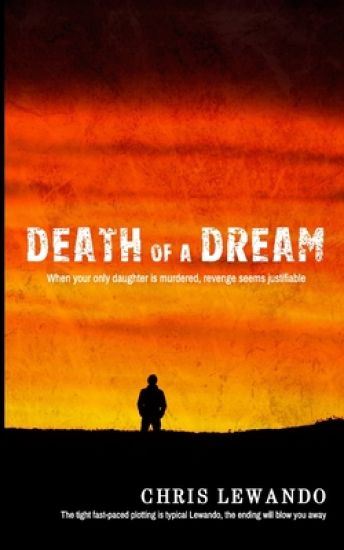
This selection of diverse writing from the versatile pen of Chris Lewando includes several short stories (some previously published), a novelette, poems, muses, and a memoir. Chris Lewando also writes women's fiction, published by Bookouture as Daisy O'Shea. "The short story, Death of a Dream, about grief, murder and revenge, is a story I will not forget any time soon. It was well written and the anguish of Gerry was palpable. I could feel his anger and despair. I will read more by Chris Lewando."