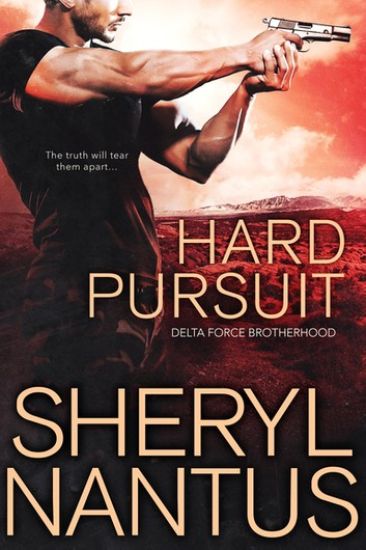
Trey Pierce has spent years helping the Brotherhood, using his computer skills to dig out secrets and help deliver justice. But there's one mission he's yet to finish
No Hats or Bib Overalls On Dance Night is a collection of poetry about people. The sections are Street People, Working Folks, A Bubble That's Slightly Off Center and The Smorgasbord.This book includes poems about bag ladies, bums and panhandlers. There are cremated ashes, a packing plant gut shoveler, an armed robber, a preplanned funeral party, a cross dressing trucker, a dentist, a cowboy, the Copper Queen and a bootlegger.These categories cover the spectrum of life. From sad to happy to belly laughing funny. It is a book of unconditional poetry This book published by Gary Drury Publishing(TM)
This book is to alert and help caregivers to the presence of stress and depression. Both are potential problems went you are a caregiver, especially if it is your parent or spouse.
The Songcatcher traces one American family from the Revolutionary War to the present by following an English ballad as it is handed down through the generations. The Songcatcher tells the story of pioneer settler Malcolm McCourry beginning in 1751, when nine-year old Malcolm was kidnapped from his home on the Scottish island of Islay and to serve aboard a sailing ship. As an adolescent Malcolm turned up in Morristown, New Jersey, where he apprenticed with an attorney, later becoming a lawyer himself. He fought with the Morris Militia in the American Revolution. In the 1790's Malcolm McCourry left his wife and children, and in the company of his daughter and her husband, he made his way down the Wilderness Road to western North Carolina, where he homesteaded, married, and raised a second family. As an old man in the Carolina back country, Malcolm sang the ballad "The Rowan Stave" to his grandson. The child grows up to be a soldier in the Civil War, and he passes the song to his nephew who sings it for the tourists in the boom-town era of the 1880's, and so on. Many writers begin their careers by writing about their own lives and families, but I wrote more than a dozen books before I ventured into family history in the course of a novel. I found Malcolm McCourry while I was doing the research for an earlier book, and I was so intrigued with him that I made him the focal point of The Songcatcher, mostly because I thought he had such an interesting life, and only incidentally because he was my four-times great-grandfather. The Rowan Stave, the ballad that is the centerpiece of this novel, is not an authentic old song. It was written for this book, because I thought that I could not find a song so obscure that no reader would be familiar with it, so I composed one. However, it is true that my family did hand down authentic folk songs from one generation to the next as part of our oral tradition. It took me a while to find this out, though. My father left the mountains for World War II and never went back, so my contact with my mountain kinfolks were limited to visits in the summer and sometimes at Christmas.
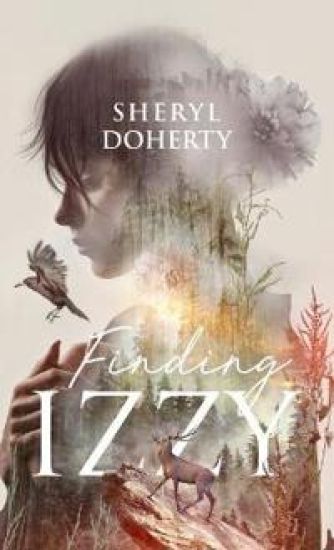
A teen wakes up in a hospital with no memory. There is nothing to indicate who she might be-no identification and no distinguishing marks on her body, not even a freckle. She is brought to a foster home where she wades through relationships all the while trying to figure out her identity. Her skin colour and features indicate she is Indigenous, possibly Cree. But how did she arrive alone and naked in a Vancouver metro station? As she begins to piece together the puzzle with the help of two new friends, she discovers she is no ordinary girl-and her life has no ordinary purpose.
A teen wakes up in a hospital with no memory. There is nothing to indicate who she might be-no identification and no distinguishing marks on her body, not even a freckle. She is brought to a foster home where she wades through relationships all the while trying to figure out her identity. Her skin colour and features indicate she is Indigenous, possibly Cree. But how did she arrive alone and naked in a Vancouver metro station? As she begins to piece together the puzzle with the help of two new friends, she discovers she is no ordinary girl-and her life has no ordinary purpose.
Written by a Metis Canadian woman who has fibromyalgia and chronic fatigue, Blue Highway Sunshine Route: Spring is Book 1 Daily Reader to help to brighten the day of those with fibromyalgia and/or chronic fatigue. Summer, Fall and Winter Books will follow.
Step into the mind of a man battling doubt, anxiety and despair.A collection of over 150 poems about OCD and depression. I wrote these over the last 4 years, after making the shocking discovery that I'd been living with undiagnosed "Pure O" OCD all of my adult life.Through supplementary sections at the back of the book, I'll teach you a little bit about OCD & depression; I'll walk you through my lifelong journey with OCD; I will take a look at certain assumptions that get made about OCD regarding CBT therapy and SSRI medication; and finally I'll tie it all together with a controversial critique on how governments, big pharma and private healthcare companies exploit those assumptions for profit.Maybe you have OCD or depression?Maybe you just want to learn more about these disorders and what it's like to have them?Maybe, just like me 4 years ago, you have undiagnosed Pure O OCD and don't even realise it yet?Whichever the case, I hope that my book will resonate, educate, and illuminate.I hope you learn something new along the way.But most of all, I hope you get a kick out of my poems.
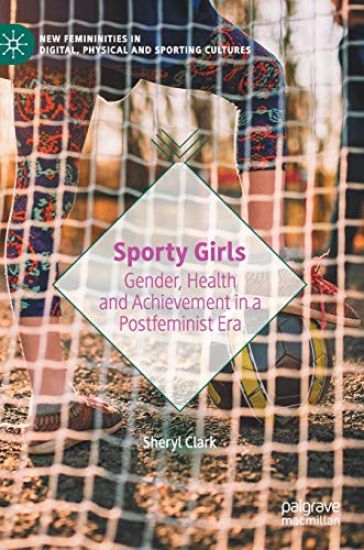
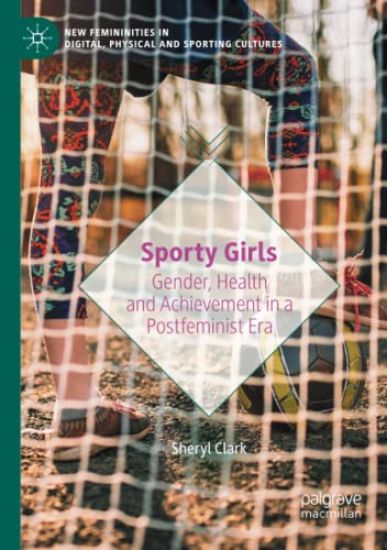
This book engages with the ongoing question of why many girls stop doing sport and physical activity in their teenage years. Previous research has found that many girls’ disengagement from sport takes place despite their childhood enjoyment and that frequently these same women take up sport again as adults. Within these chapters, Sheryl Clark explores what it is about this period of time that persuades many girls to disengage from sports when their male peers continue to take part; why some girls continue to take part; and most importantly how girls understand this participation. She suggests that girls’ participation in sport should be viewed as part of their ongoing constructions of ‘successful girlhood’ within a competitive schooling system and broader socioeconomic context.
This book engages with the ongoing question of why many girls stop doing sport and physical activity in their teenage years. Previous research has found that many girls’ disengagement from sport takes place despite their childhood enjoyment and that frequently these same women take up sport again as adults. Within these chapters, Sheryl Clark explores what it is about this period of time that persuades many girls to disengage from sports when their male peers continue to take part; why some girls continue to take part; and most importantly how girls understand this participation. She suggests that girls’ participation in sport should be viewed as part of their ongoing constructions of ‘successful girlhood’ within a competitive schooling system and broader socioeconomic context.