Financial management practices are likely to have a marked effect on the financial performance of a corporate enterprise. Therefore, sound financial decisions/practices can contribute towards meeting the desired objective of having profitable operations. This subject assumes paramount significance in view of the present dynamic and turbulent business environment, which has produced more intense competition and smaller profit margins across the world. In this context, the financial management practices of the corporates in India, a country with a vast potential for economic growth, can offer valuable insights.The present study explores whether there has been a major change in the financial performance (measured in terms of profitability) and financial policies/decisions of the sample companies over a fixed period (2000-2001 to 2010-2011), with a special focus on pre and post-recession analysis. It delves deeper into current research areas such as zero working capital, real options in capital budgeting, pecking order in capital structures, and clause 49 as reflected in the financial management decisions of sample companies, and provides a broader perspective by identifying trends (if any) in certain aspects of financial decision-making over the past two decades.A comprehensive study, covering all the major aspects of financial management practices, also contains an inter-sectoral study (among the sample companies) and develops an index of professionalism in financial management based on the practices of the sample companies. The book is primarily targeted at teachers/students of finance, management, commerce, accounting and related professional disciplines/fields. Practitioners/professionals will find it an invaluable text that helps guide them to better decision-making.
Financial management practices are likely to have a marked effect on the financial performance of a corporate enterprise. Therefore, sound financial decisions/practices can contribute towards meeting the desired objective of having profitable operations. This subject assumes paramount significance in view of the present dynamic and turbulent business environment, which has produced more intense competition and smaller profit margins across the world. In this context, the financial management practices of the corporates in India, a country with a vast potential for economic growth, can offer valuable insights.The present study explores whether there has been a major change in the financial performance (measured in terms of profitability) and financial policies/decisions of the sample companies over a fixed period (2000-2001 to 2010-2011), with a special focus on pre and post-recession analysis. It delves deeper into current research areas such as zero working capital, real options in capital budgeting, pecking order in capital structures, and clause 49 as reflected in the financial management decisions of sample companies, and provides a broader perspective by identifying trends (if any) in certain aspects of financial decision-making over the past two decades.A comprehensive study, covering all the major aspects of financial management practices, also contains an inter-sectoral study (among the sample companies) and develops an index of professionalism in financial management based on the practices of the sample companies. The book is primarily targeted at teachers/students of finance, management, commerce, accounting and related professional disciplines/fields. Practitioners/professionals will find it an invaluable text that helps guide them to better decision-making.
The book examines the various aspects of non-financial central public sector enterprises (PSEs) in India, for a period from 1986-87 to 2010-11. The analysis is based on all the key financial ratios; namely, profitability, efficiency, liquidity, leverage and productivity. Liberalization and globalization have caused competition in India and have lowered the profit margins. At the same time, Indian government has reduced subsidies and budgetary support for PSEs to curtail their own fiscal deficit. Strategic and economic reforms were also introduced in PSEs to make their operations commercially profitable so that they are not dependent on the government to meet their financial requirements on the one hand, and have their own earnings to finance their expansion/modernization requirements as well as their social obligations, on the other. To what extent, the PSEs have succeeded in this objective constitutes one major aspect of the present research work. The other equally important aspect examined is financial performance of the PSEs which have opted for disinvestment and have signed memorandum of understanding (MoU)/ self obligations. The Indian Government has desired the central PSEs to be profitable in their operations in post-liberation era of 1990s. For this purpose, two major instruments, namely, disinvestment and MoUs, were introduced. This book examines, in detail, financial performance of PSEs which had opted for disinvestment and have signed MoU. Based on analysis/ findings and literature on the subject, the book contains some concrete suggestions that would prove extremely helpful to Indian Government to further improve their financial performance. ?
The book examines the various aspects of non-financial central public sector enterprises (PSEs) in India, for a period from 1986-87 to 2010-11. The analysis is based on all the key financial ratios; namely, profitability, efficiency, liquidity, leverage and productivity. Liberalization and globalization have caused competition in India and have lowered the profit margins. At the same time, Indian government has reduced subsidies and budgetary support for PSEs to curtail their own fiscal deficit. Strategic and economic reforms were also introduced in PSEs to make their operations commercially profitable so that they are not dependent on the government to meet their financial requirements on the one hand, and have their own earnings to finance their expansion/modernization requirements as well as their social obligations, on the other. To what extent, the PSEs have succeeded in this objective constitutes one major aspect of the present research work. The other equally important aspect examined is financial performance of the PSEs which have opted for disinvestment and have signed memorandum of understanding (MoU)/ self obligations. The Indian Government has desired the central PSEs to be profitable in their operations in post-liberation era of 1990s. For this purpose, two major instruments, namely, disinvestment and MoUs, were introduced. This book examines, in detail, financial performance of PSEs which had opted for disinvestment and have signed MoU. Based on analysis/ findings and literature on the subject, the book contains some concrete suggestions that would prove extremely helpful to Indian Government to further improve their financial performance. ?
The quantitative and qualitative analysis of constituents is an essential aspect of any scientific discipline. Analytical chemistry is a collection of analytical methods that are utilized to study chemical problems. It is an essential component of the undergraduate curriculum in science and is used to explain topics such as common laboratory tools and apparatus, volumetric, gravimetric, and instrumental methods. While analytical methods may change over time, the principles of designing and validating analytical methods remain universal. This book has been written in a simple and clear manner to provide undergraduate students with a comprehensive understanding of the basic analytical principles, including volumetry, gravimetry, and instrumental methods. The goal of this book is to achieve a more balanced approach between classical and modern analytical methods, making it an ideal resource for students in the field of analytical chemistry.
The solar boom sweeping the world holds both promise and peril. Although solar PV panels provide a revolution in energy production, it is their end-of-life that poses a serious challenge. This book, Sustainable Management of Solar PV Panel Waste, addresses several aspects of this concern. It assesses the environmental degradation over the entire lifecycle of solar panels, from manufacturing to disposal. Readers will encounter new waste management approaches, explore key policy frameworks, and learn about urban technologies capable of resource recovery.This book should be mandatory reading for researchers, policy-makers and industry professionals who want to reduce the environmental impacts of solar energy and create a truly sustainable solar future.
The book presents a comprehensive view of the Indian equity markets over the past two decades (1994-2014). Equity markets constitute the most important segment of stock exchanges; in fact, the status of equity returns is, by and large, considered as a barometer of the state of a country’s economy. Returns earned by the equity investors on their funds invested in equity markets have become a decisive factor in the growth of such markets. In this context, the book discusses all the major aspects of equity returns and also conducts a dis-aggregative analysis based on underlying factors like age, size, ownership structure, industry affiliation/sector, among others, to explain the factors affecting returns and risk. While on the one hand the study ascertains the market rates of return (earned) on equities from the investors’ perspective (by including both the capital gains and the dividend income), it also shows how to compute the rates of returns on equities from the corporate perspective(that is, rate of return earned on equity funds). It further assesses the required/expected rate of return and examines the volatility in stock returns, with a focus on its behaviour during the period of the study. It deepens investors’ understanding of equity investment, helping them to make more-informed investments. While of interest to the investor community, this book also contributes significantly to the existing literature on market returns and is a valuable reference resource for academics, researchers and market participants, financial institutions and other intermediaries, regulators and policy makers.
The book presents a comprehensive view of the Indian equity markets over the past two decades (1994-2014). Equity markets constitute the most important segment of stock exchanges; in fact, the status of equity returns is, by and large, considered as a barometer of the state of a country’s economy. Returns earned by the equity investors on their funds invested in equity markets have become a decisive factor in the growth of such markets. In this context, the book discusses all the major aspects of equity returns and also conducts a dis-aggregative analysis based on underlying factors like age, size, ownership structure, industry affiliation/sector, among others, to explain the factors affecting returns and risk. While on the one hand the study ascertains the market rates of return (earned) on equities from the investors’ perspective (by including both the capital gains and the dividend income), it also shows how to compute the rates of returns on equities from the corporate perspective(that is, rate of return earned on equity funds). It further assesses the required/expected rate of return and examines the volatility in stock returns, with a focus on its behaviour during the period of the study. It deepens investors’ understanding of equity investment, helping them to make more-informed investments. While of interest to the investor community, this book also contributes significantly to the existing literature on market returns and is a valuable reference resource for academics, researchers and market participants, financial institutions and other intermediaries, regulators and policy makers.
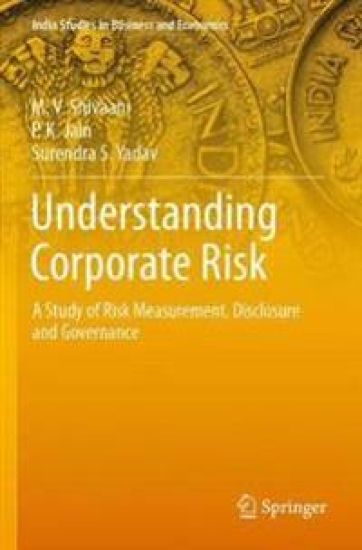
This book proposes three normative frameworks pertaining to risk-measurement, disclosure and governance using expert opinion and data from the top 429 non-financial companies (of the NIFTY 500 index) over a 10-year period. The book offers a novel contribution to the global literature on disclosure quality by presenting a composite measure of the quality as well as quantity of risk disclosures. Focusing on the quality of risk disclosures and risk governance structures, and using sophisticated methodology to tackle the issue of endogeneity, the book explores the important yet uncharted confluence of accounting information, risk and corporate governance. It addresses the interplay between three facets of risk, and is corroborated by practitioners’ perspectives as well as case studies. It is an excellent resource for practitioners, professionals and policy-makers, in addition to researchers working on the topic.
This book proposes three normative frameworks pertaining to risk-measurement, disclosure and governance using expert opinion and data from the top 429 non-financial companies (of the NIFTY 500 index) over a 10-year period. The book offers a novel contribution to the global literature on disclosure quality by presenting a composite measure of the quality as well as quantity of risk disclosures. Focusing on the quality of risk disclosures and risk governance structures, and using sophisticated methodology to tackle the issue of endogeneity, the book explores the important yet uncharted confluence of accounting information, risk and corporate governance. It addresses the interplay between three facets of risk, and is corroborated by practitioners’ perspectives as well as case studies. It is an excellent resource for practitioners, professionals and policy-makers, in addition to researchers working on the topic.
There has been an enormous increase in information relating to microRNA (miRNA) and its strategic role in numerous diseases. This book reviews the emerging role of microRNAs in cerebral ischemia, providing comprehensive details of the links between this small RNA molecule and ischemic stroke, the more prevalent of the two main types of stroke. The chapters address questions relating to microRNA’s function in various pathological features of stroke, like oxidative stress, excitotoxicity and cell death, as well as its role as a biomarker and diagnostic agent, and the current therapeutic interventions. Further, the book highlights the latest research on how miRNAs contribute to neuroregeneration following stroke, discussing the myriad computational tools and databases used in miRNA research, and decsribes how how miRNA modulates other cerebrovascular diseases. The book concludes with fresh insights into the effect of long non-coding RNA in cerebral ischemia.
There has been an enormous increase in information relating to microRNA (miRNA) and its strategic role in numerous diseases. This book reviews the emerging role of microRNAs in cerebral ischemia, providing comprehensive details of the links between this small RNA molecule and ischemic stroke, the more prevalent of the two main types of stroke. The chapters address questions relating to microRNA’s function in various pathological features of stroke, like oxidative stress, excitotoxicity and cell death, as well as its role as a biomarker and diagnostic agent, and the current therapeutic interventions. Further, the book highlights the latest research on how miRNAs contribute to neuroregeneration following stroke, discussing the myriad computational tools and databases used in miRNA research, and decsribes how how miRNA modulates other cerebrovascular diseases. The book concludes with fresh insights into the effect of long non-coding RNA in cerebral ischemia.
Niedob r boru jest powszechnym problemem w uprawach polowych, gdzie co roku występują duże straty plon w, zar wno pod względem ilościowym, jak i jakościowym. Niedob r boru w glebach regionu Vindhyan nasila się z powodu lekkiej tekstury gleby, niskiej zawartości materii organicznej i ciąglego usuwania go przez rośliny strączkowe. Caly obszar regionu Vindhyan jest nawadniany deszczem, a ponad 50 procent grunt w nadaje się do uprawy nasion oleistych i roślin strączkowych na terenach wyżynnych. Og lnie rzecz biorąc, rolnicy nie stosują nawoz w w uprawie roślin strączkowych z powodu braku wiedzy, w wyniku czego wydajnośc upraw roślin strączkowych w tym regionie jest dośc niska. Obecnie dostępnych jest niewiele informacji naukowych na temat rozmieszczenia boru w glebach powierzchniowych i podpowierzchniowych. Brakuje r wnież informacji na temat reakcji roślin strączkowych na stosowanie boru w czerwonych glebach regionu Vindhyan. Mamy nadzieję, że wyniki badań będą interesujące dla agronom w i gleboznawc w, ponieważ przyczynią się do intensyfikacji badań nad żyznością gleby, produkcją roślinną i utrzymaniem bilansu skladnik w odżywczych w glebie.
Bor-Mangel ist ein weit verbreitetes Problem in der Feldfruchtproduktion, wo j hrlich gro e Ertragsverluste sowohl quantitativ als auch qualitativ auftreten. Der Bor-Mangel in den B den der Vindhyan-Region nimmt aufgrund der leichten Bodenbeschaffenheit, des geringen Gehalts an organischen Stoffen und der kontinuierlichen Entnahme durch H lsenfr chte zu. Das gesamte Gebiet der Vindhyan-Region wird mit Regenwasser bew ssert, und mehr als 50 Prozent der Fl che eignen sich f r den Anbau von lsaaten und H lsenfr chten in der Hochlandtopographie. In der Regel verwenden die Landwirte aufgrund mangelnder Kenntnisse keine D ngemittel f r H lsenfr chte, was zu einer recht geringen Produktivit t der H lsenfr chte in dieser Region f hrt. Derzeit liegen nur wenige wissenschaftliche Informationen ber die Verteilung von Bor in Oberfl chen- und Untergrundb den vor. Dar ber hinaus fehlen auch Informationen ber die Reaktion von H lsenfr chten auf die Ausbringung von Bor in den roten B den der Vindhyan-Region. Wir hoffen, dass die Ergebnisse f r Agrarwissenschaftler und Bodenkundler von Interesse sind, um die Forschung zur Bodenfruchtbarkeit, Pflanzenproduktion und Aufrechterhaltung des N hrstoffhaushalts im Boden voranzutreiben.
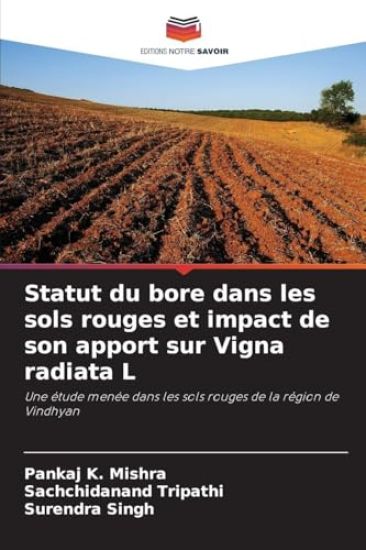
La carence en bore est un probl me tr s r pandu dans la production agricole, o elle entra ne chaque ann e d'importantes pertes de rendement, tant sur le plan quantitatif que qualitatif. La carence en bore dans les sols de Vindhyan s'accentue en raison de la texture l g re du sol, de sa faible teneur en mati re organique et de son appauvrissement continu par les l gumineuses. Toute la r gion de Vindhyan est aliment e par les eaux de pluie et plus de 50 % des terres sont propices la culture de graines ol agineuses et de l gumineuses dans les zones montagneuses. En g n ral, les agriculteurs n'utilisent pas d'engrais pour les l gumineuses en raison d'un manque de connaissances, ce qui explique que la productivit des l gumineuses dans cette r gion soit assez faible. l'heure actuelle, peu d'informations scientifiques sont disponibles sur la r partition du bore dans les sols superficiels et souterrains. De plus, les informations sur la r ponse des l gumineuses l'application de bore dans les sols rouges de la r gion de Vindhyan font galement d faut. Nous esp rons que ces r sultats int resseront les agronomes et les p dologues afin de stimuler la recherche sur la fertilit des sols, la production agricole et le maintien du bilan nutritif des sols.